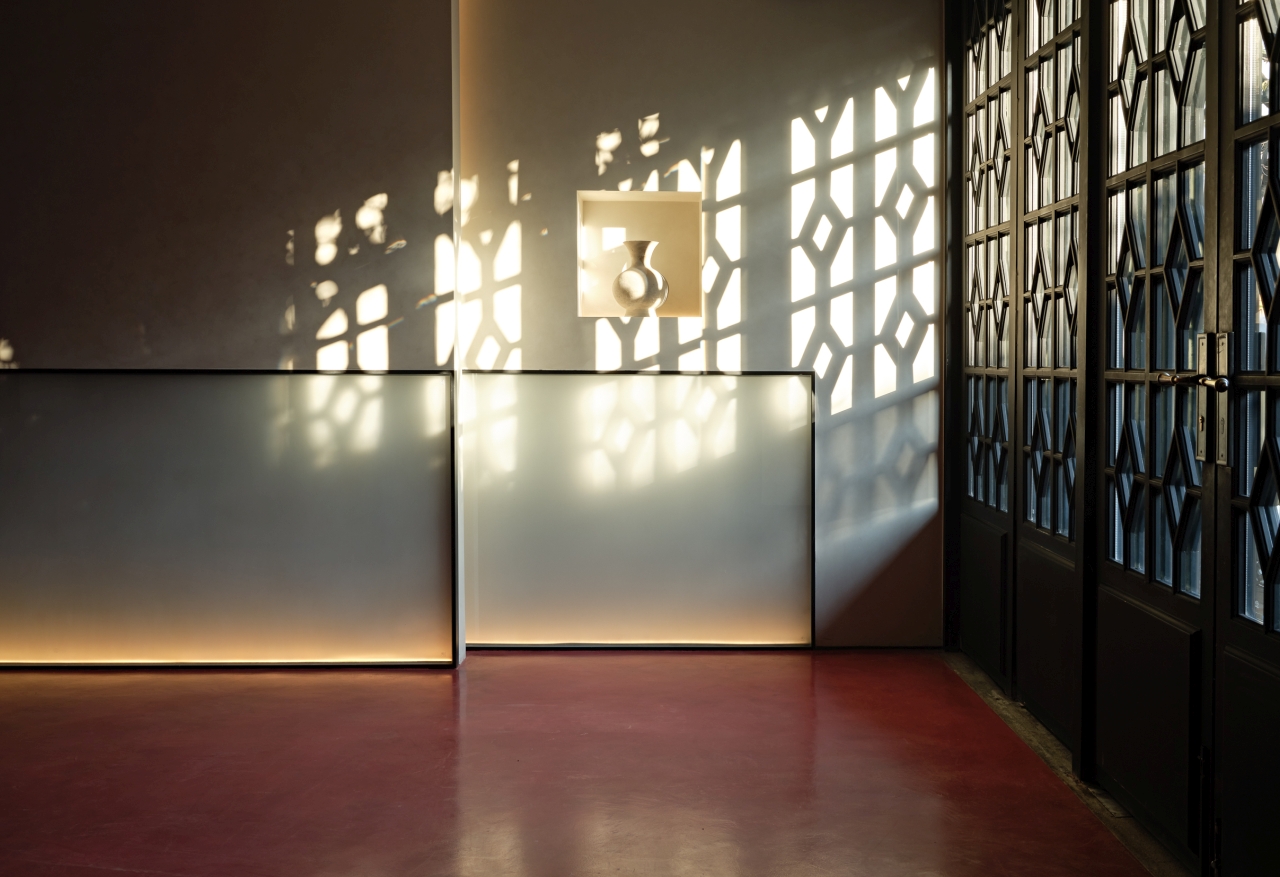
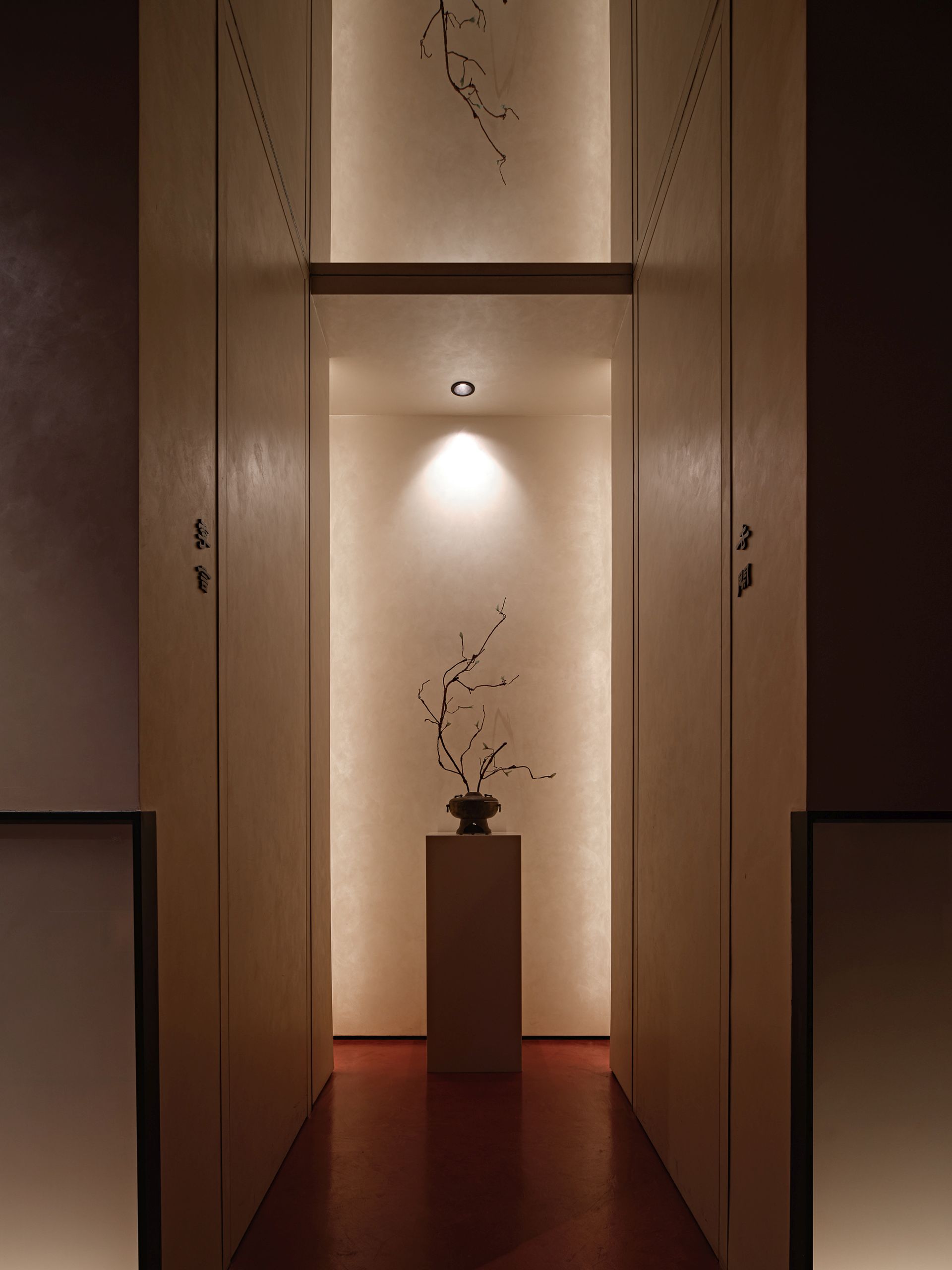
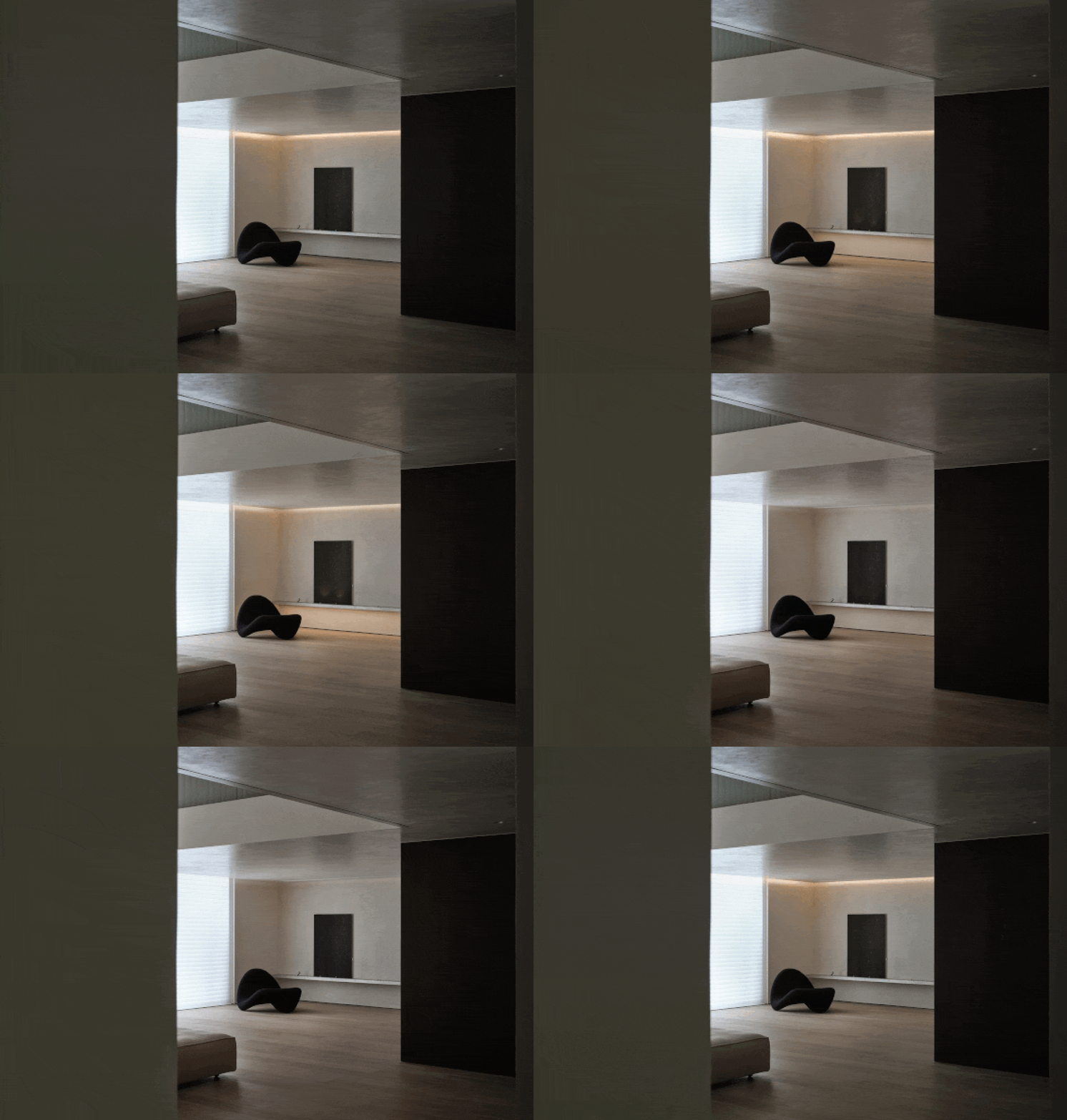
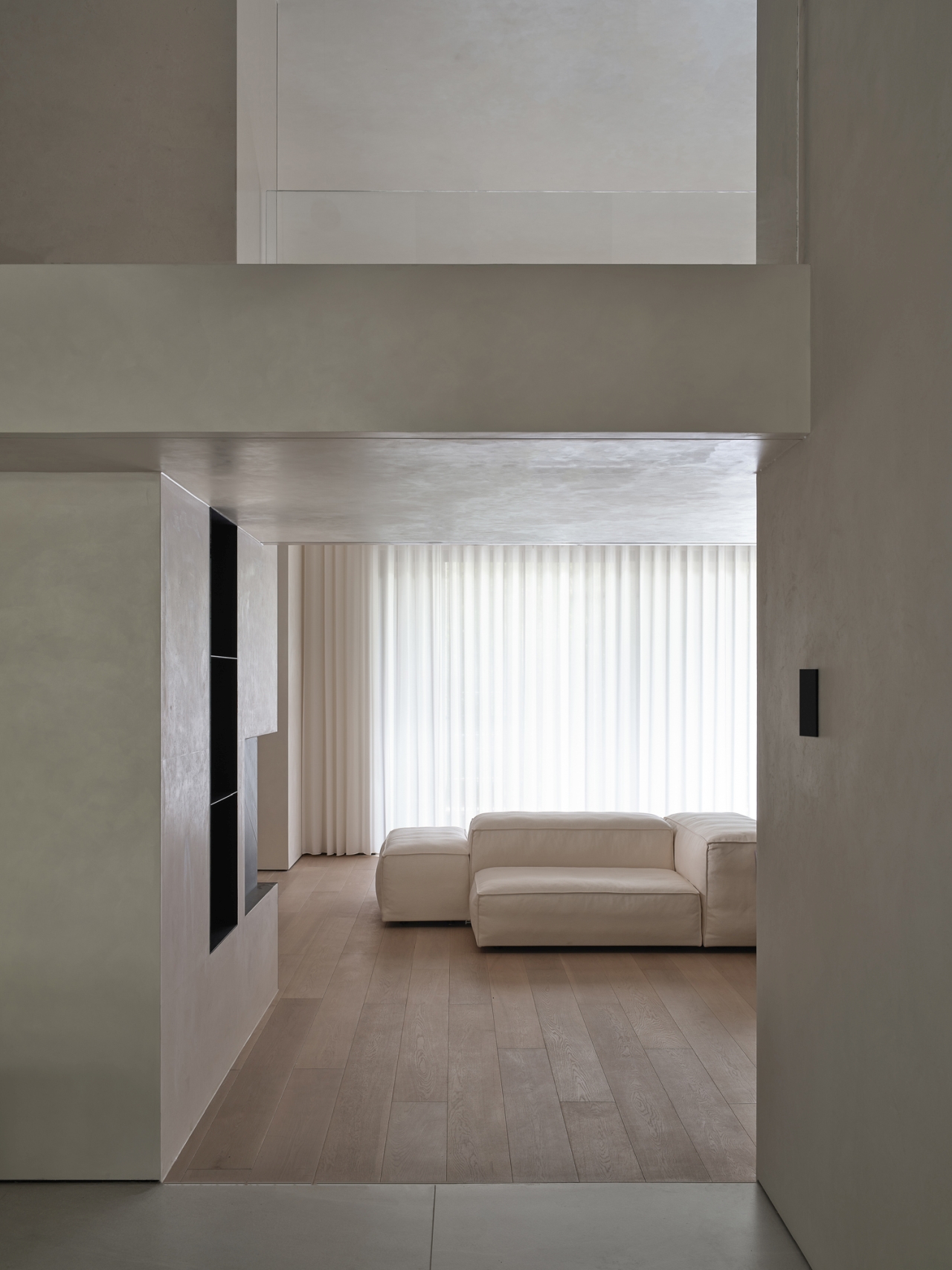
ANADU RESORT 阿那度度假村

LOCATION 地址  | MOGANSHAN 莫干山
CATEGORY 类型  |  HOSPITALITY 酒店度假村

ARCHITECTURE 建筑
INTERIOR 室内设计
FEE 软装设计
VISUAL IDENTITY 视觉识别设计

AREA 1200 m²

READ MORE 更多

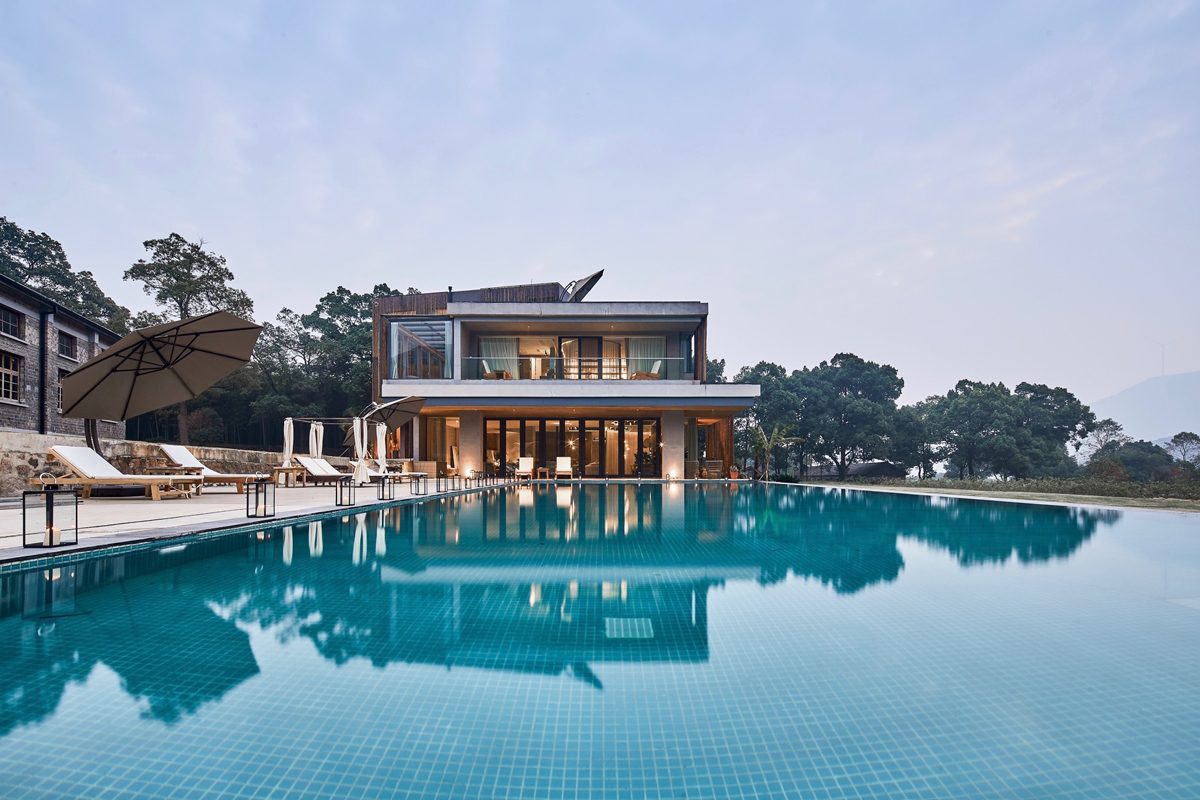
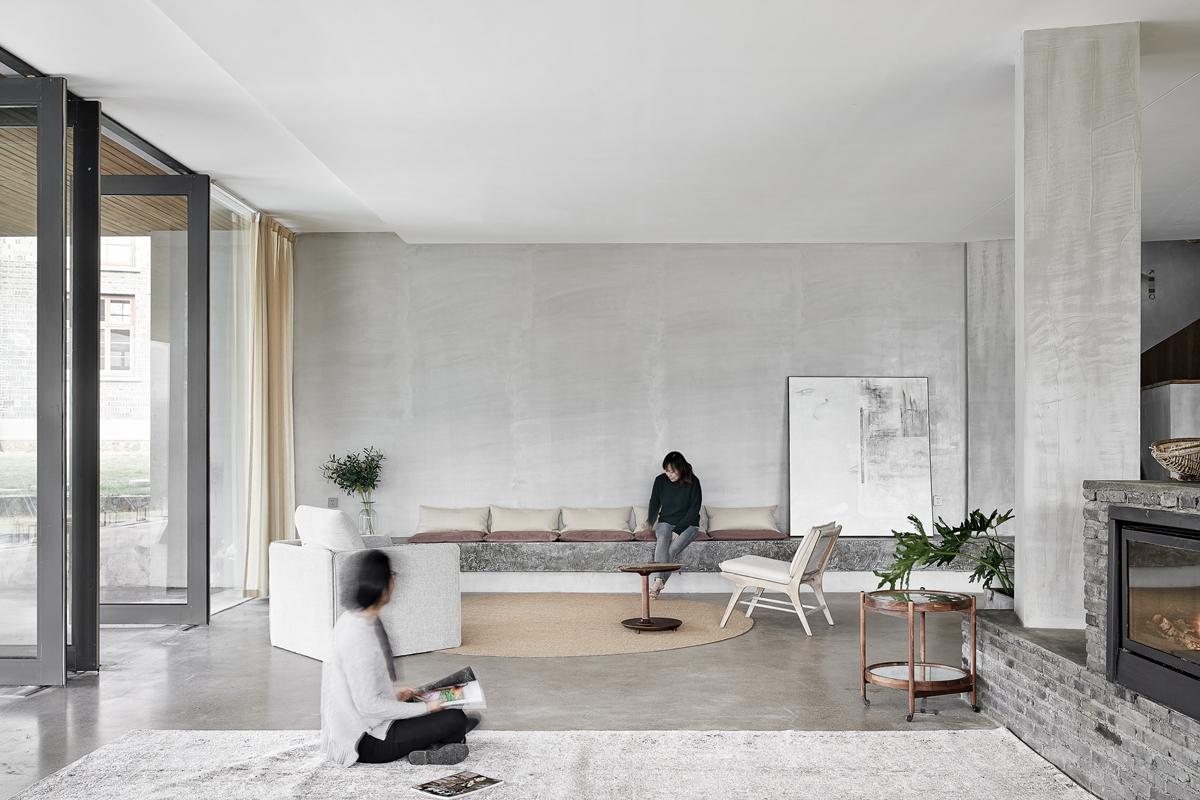
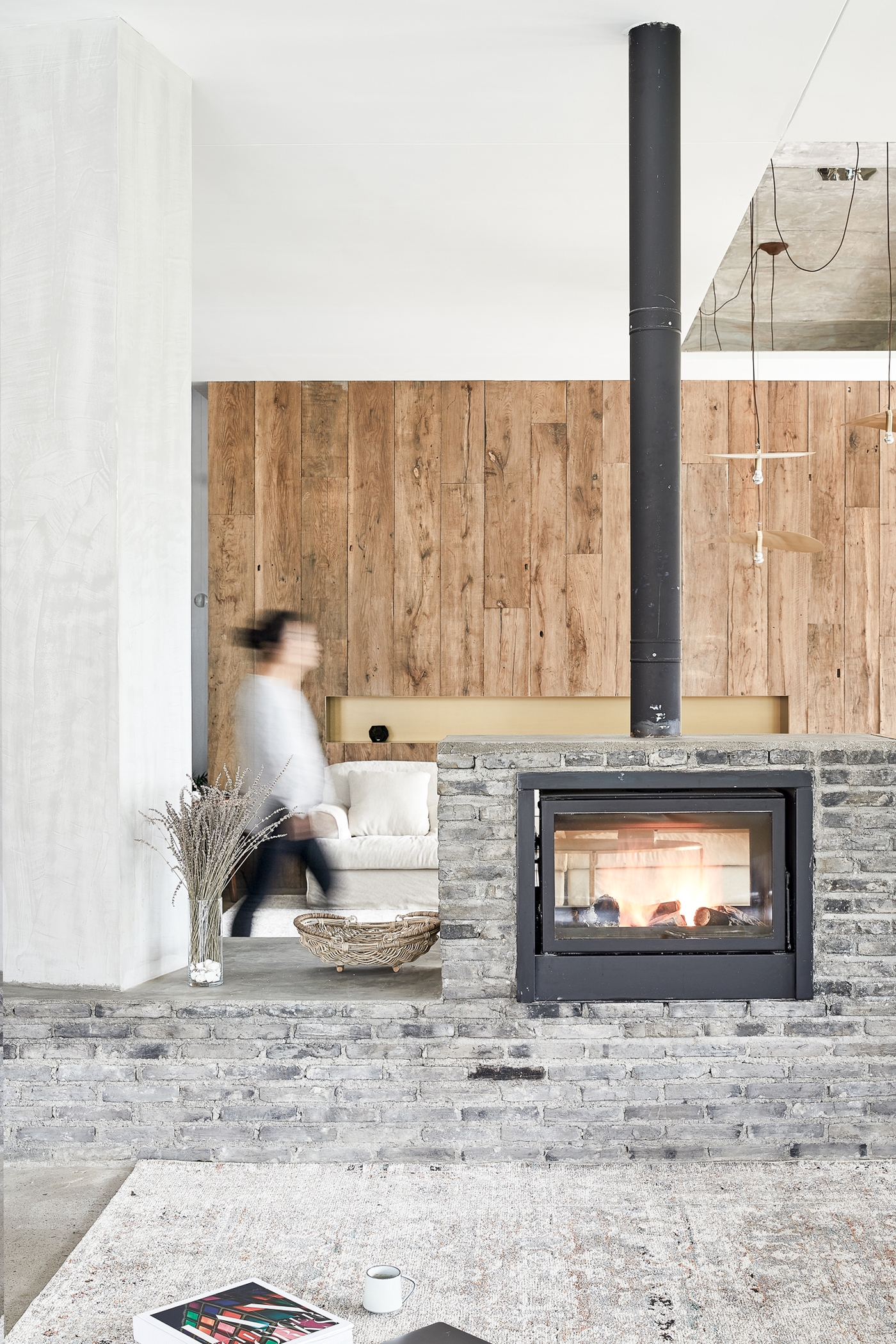
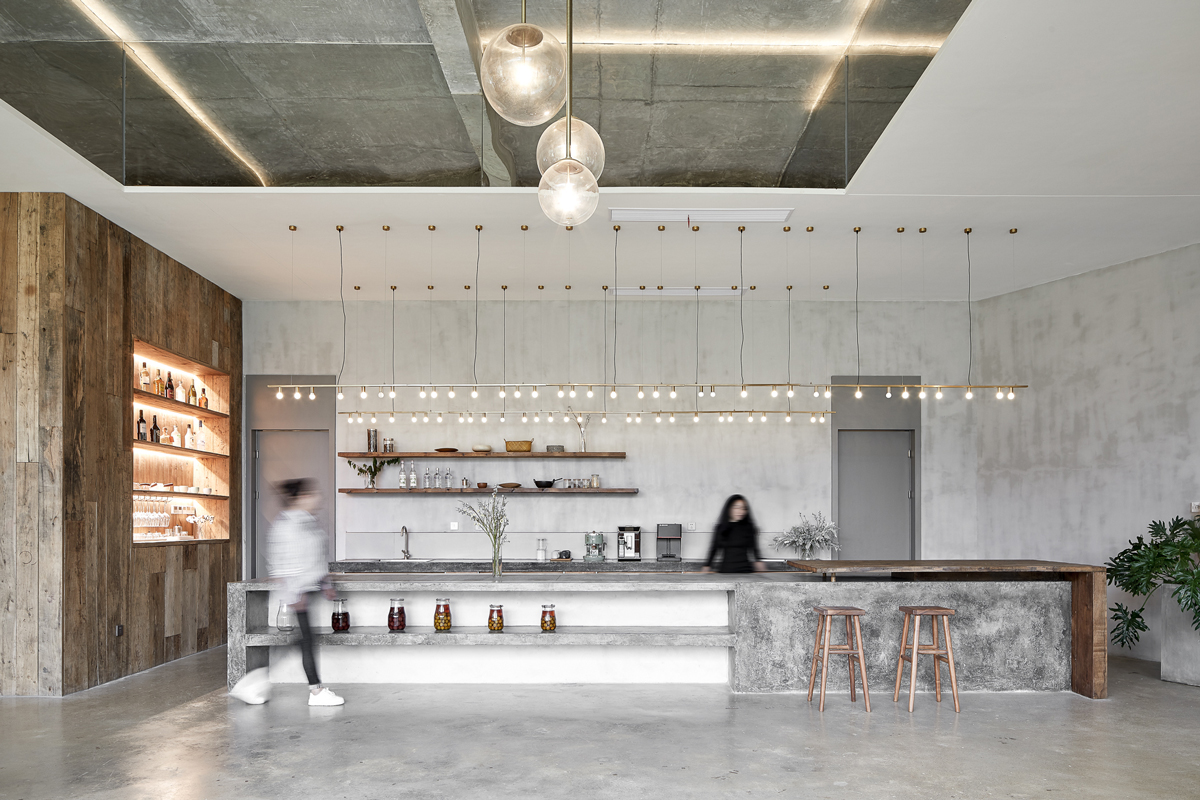
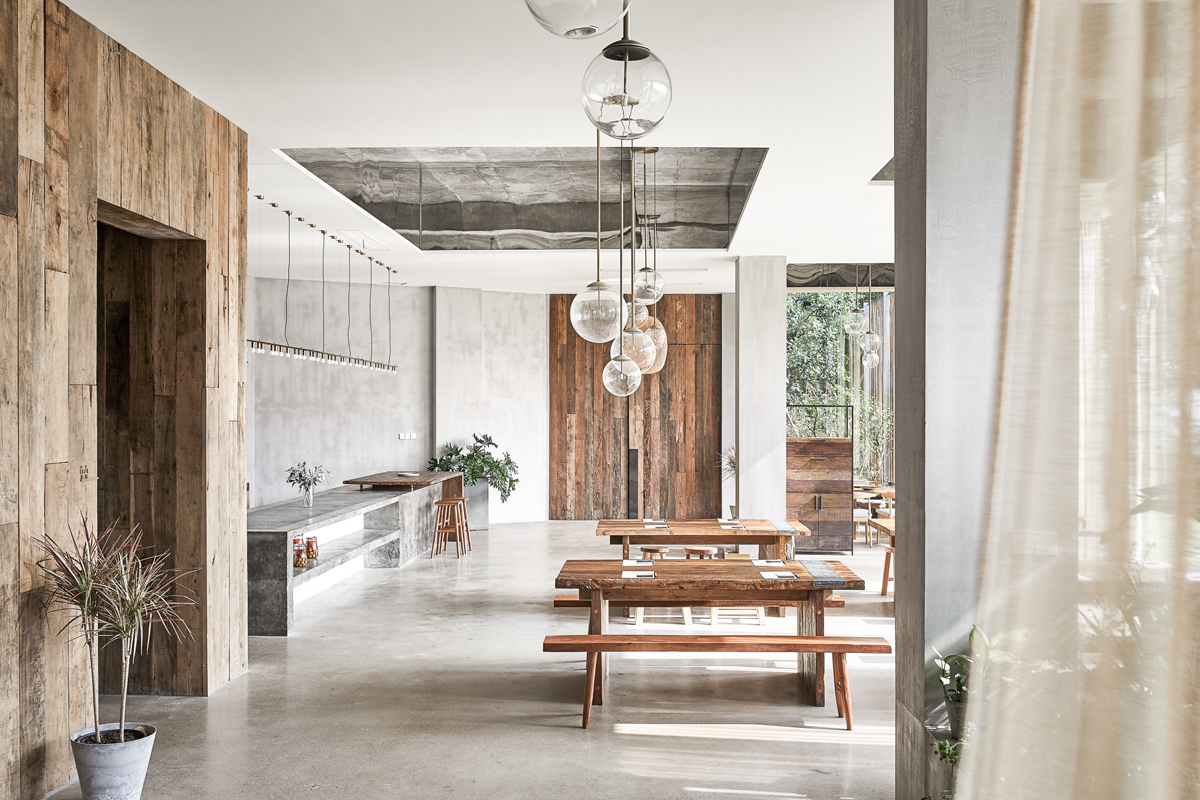
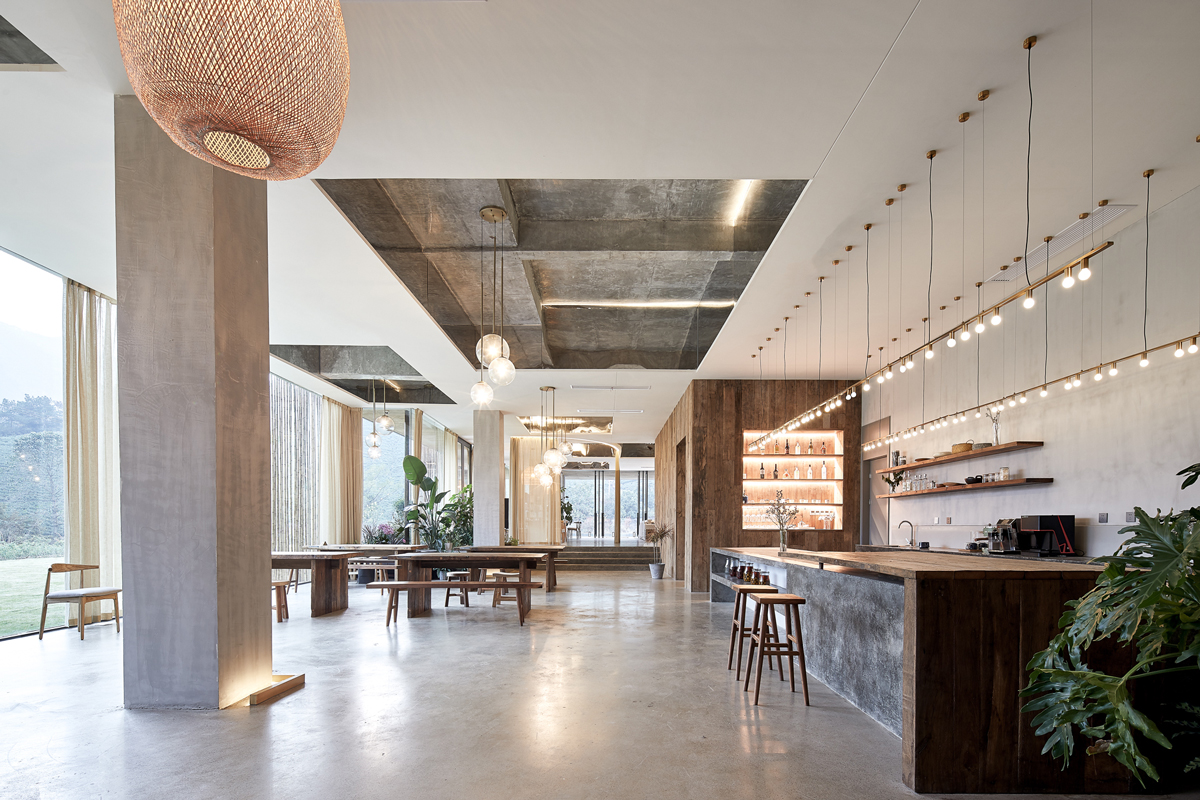
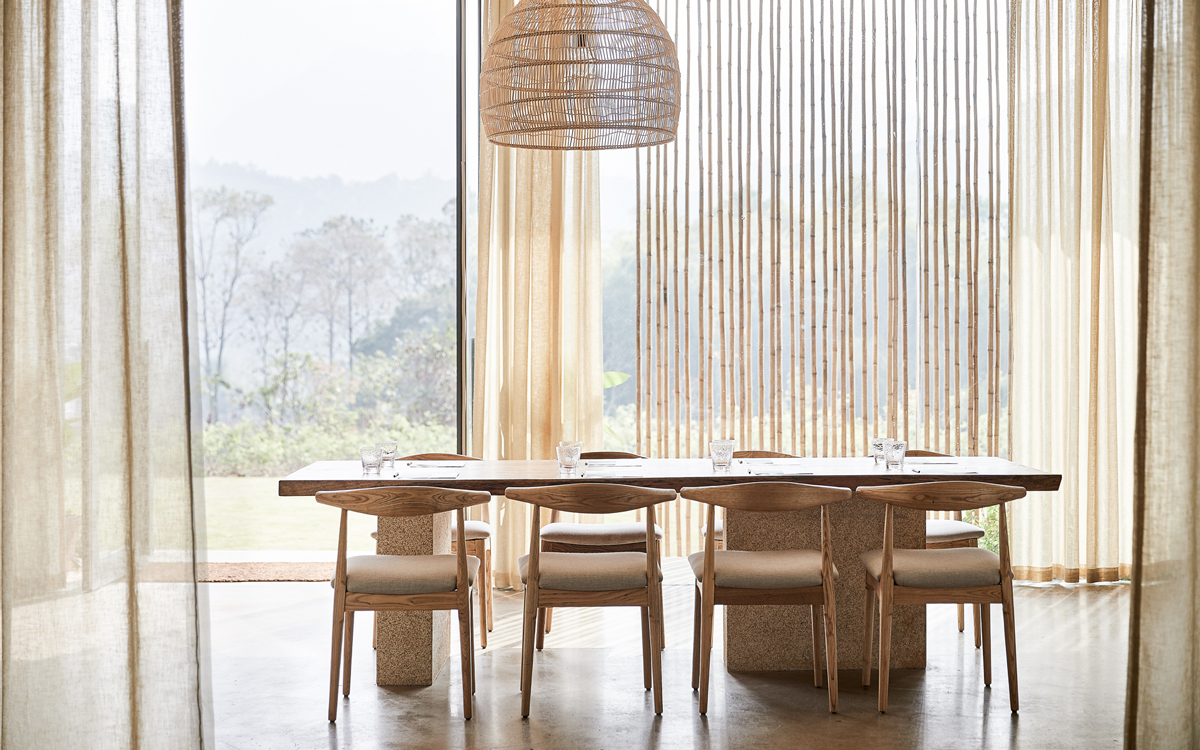
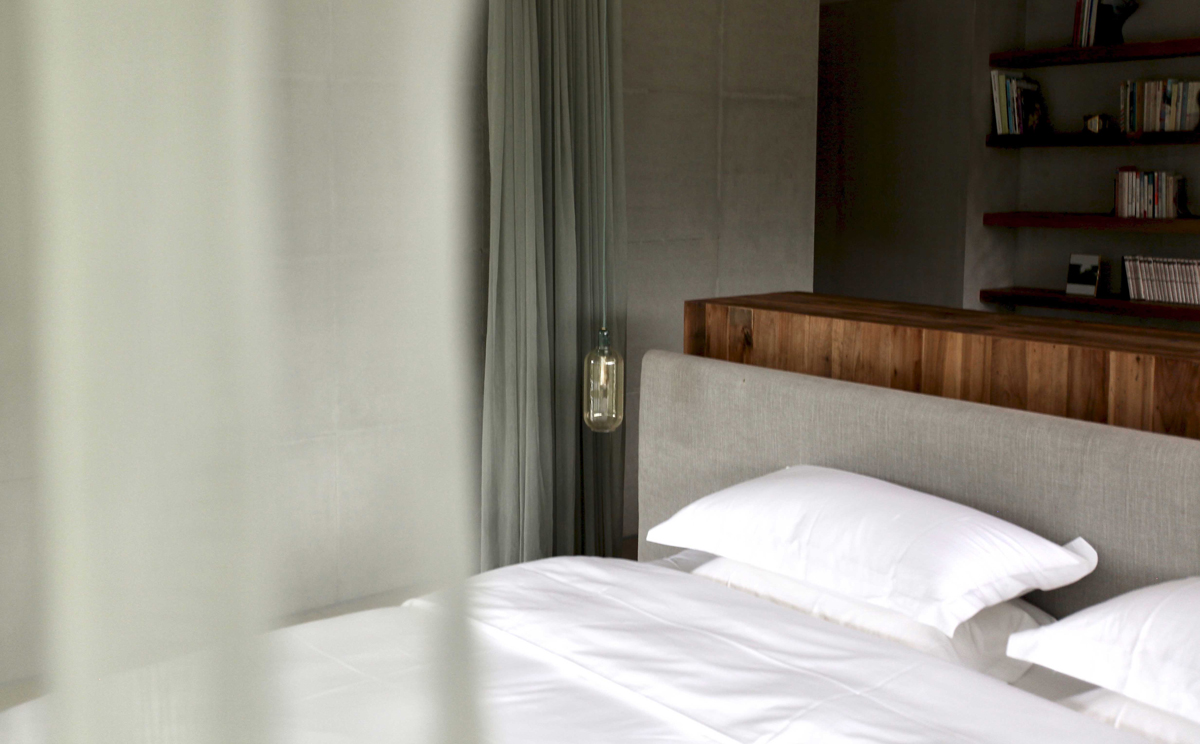
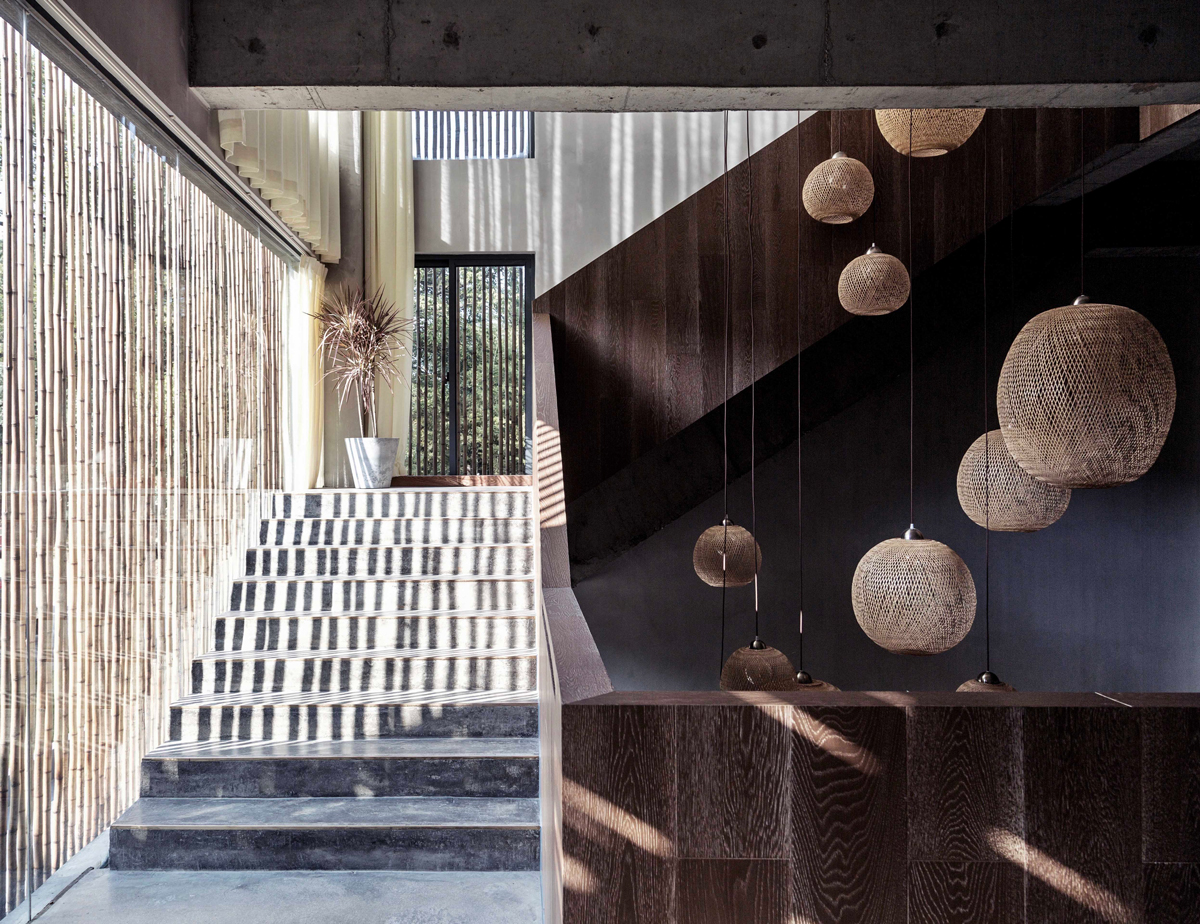
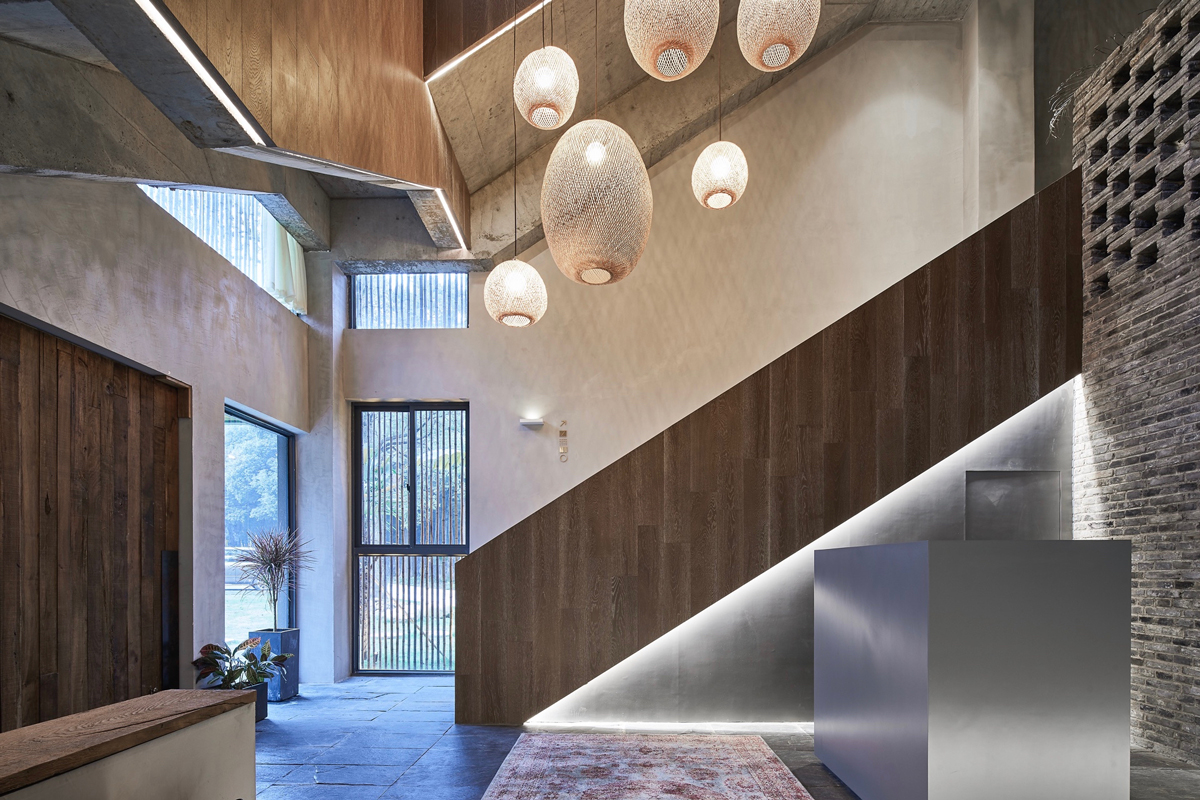
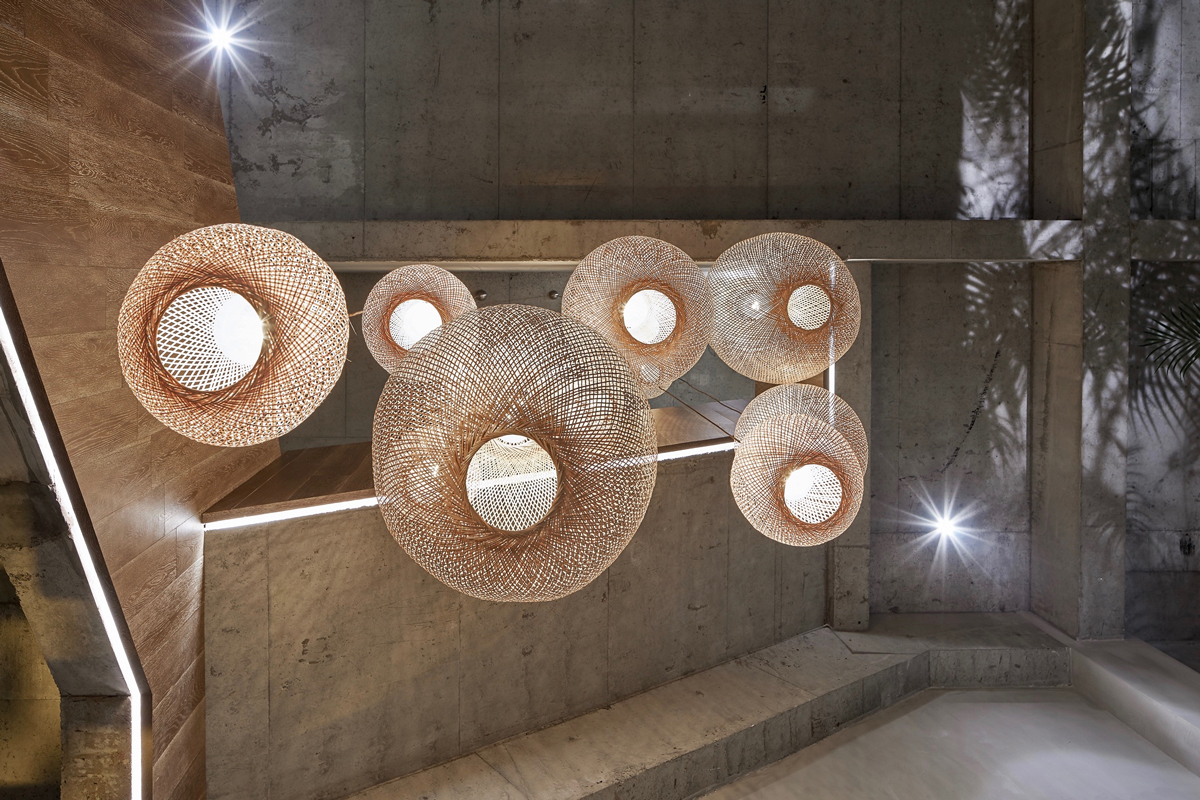
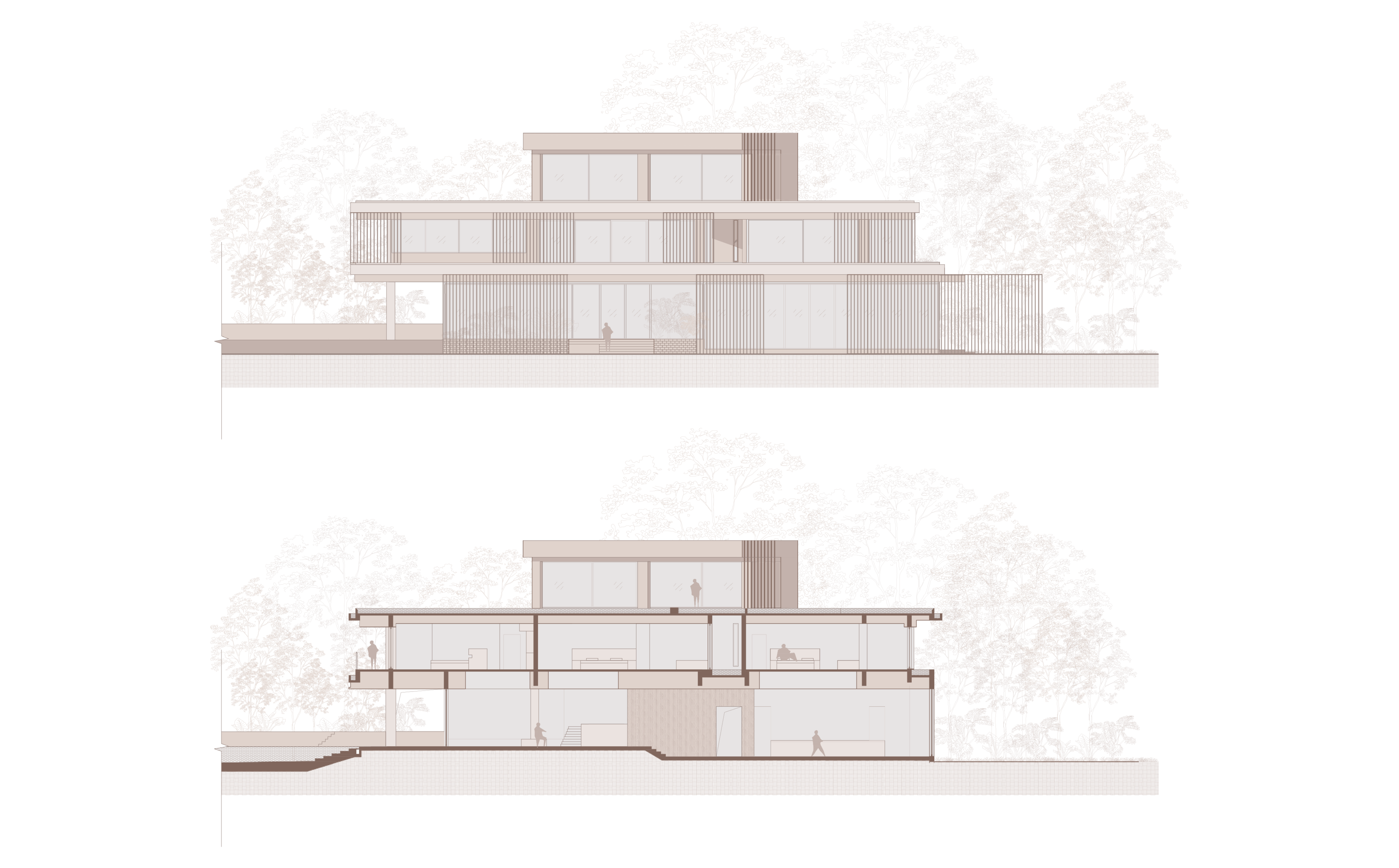
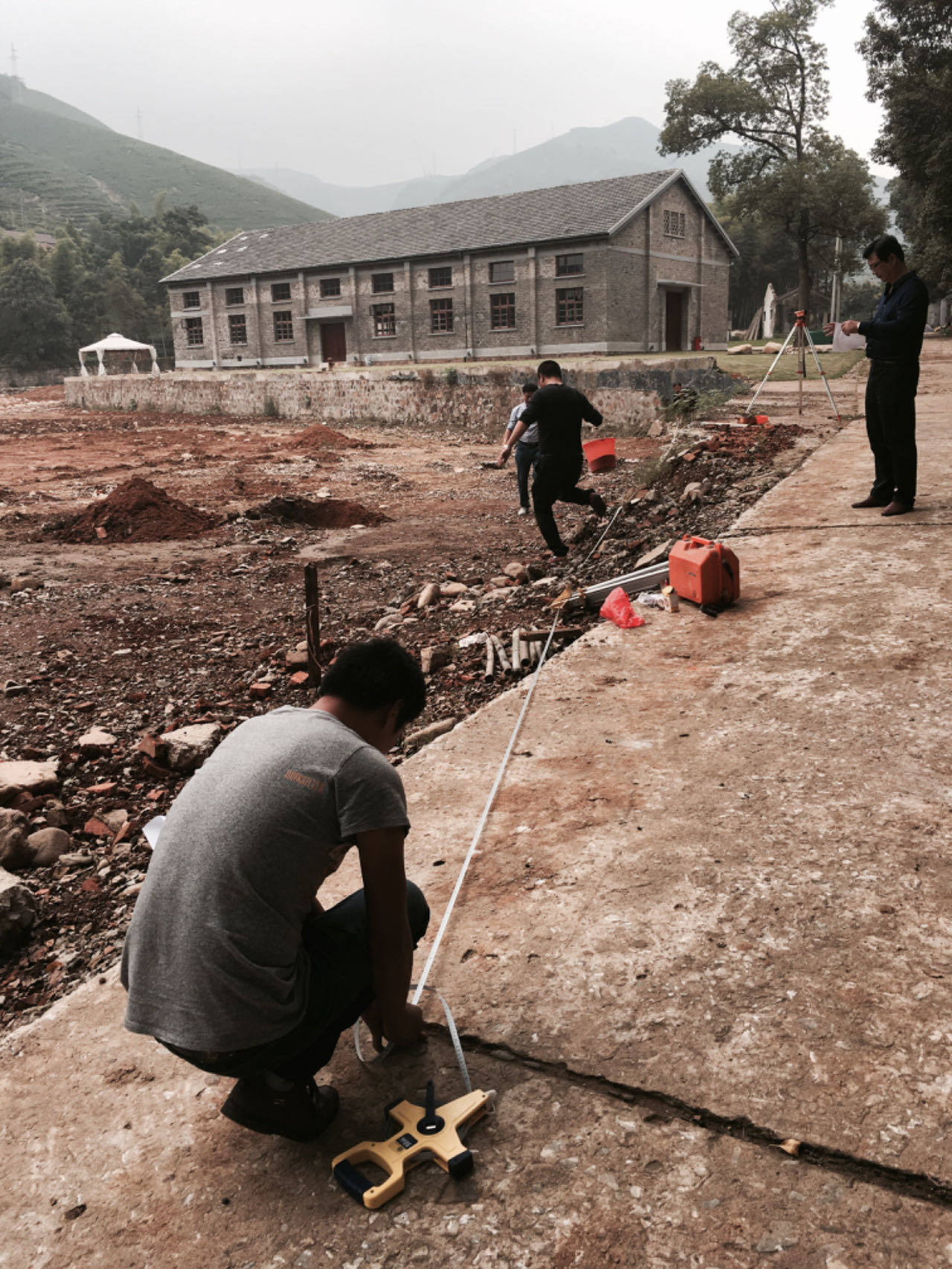
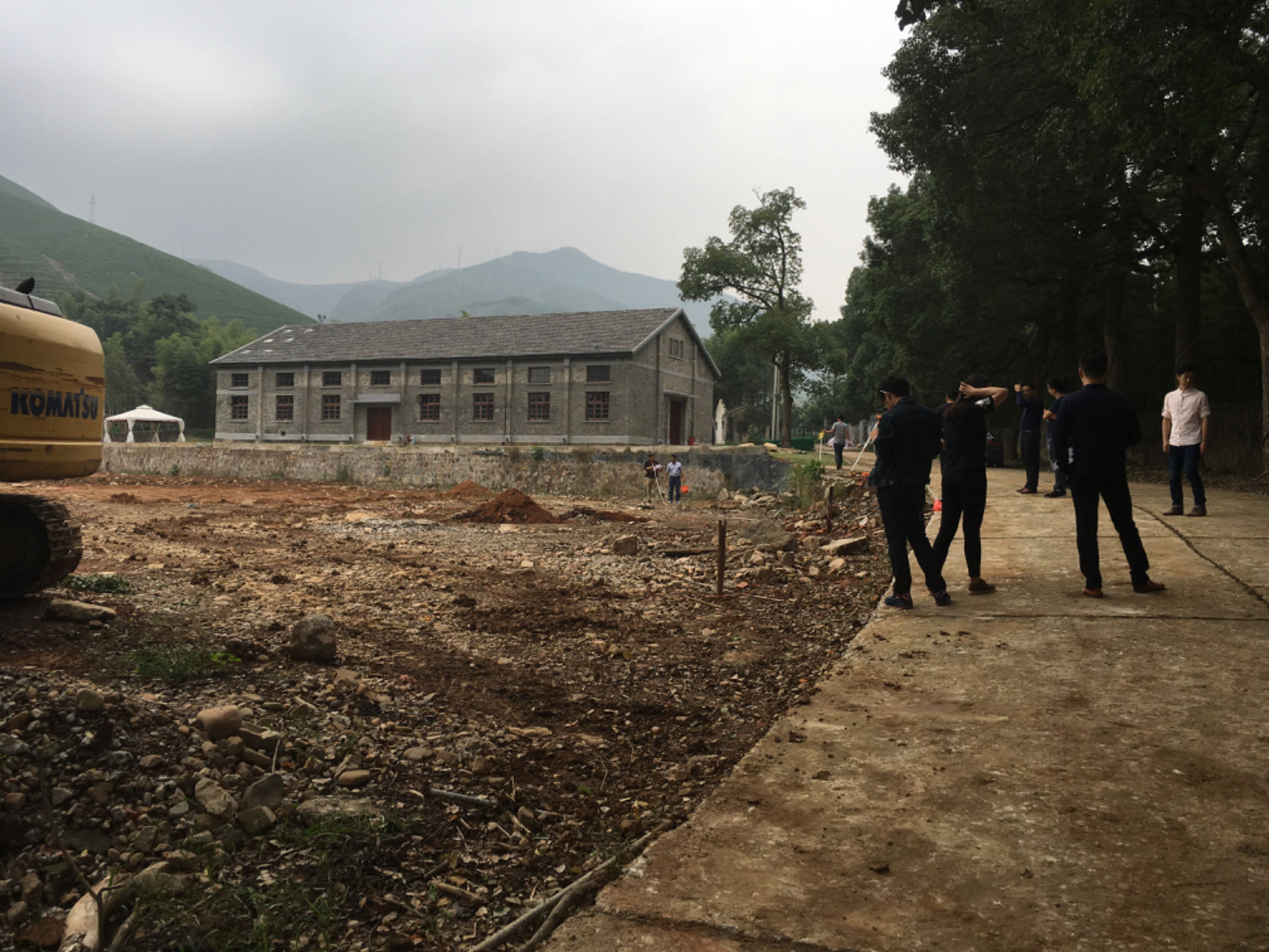
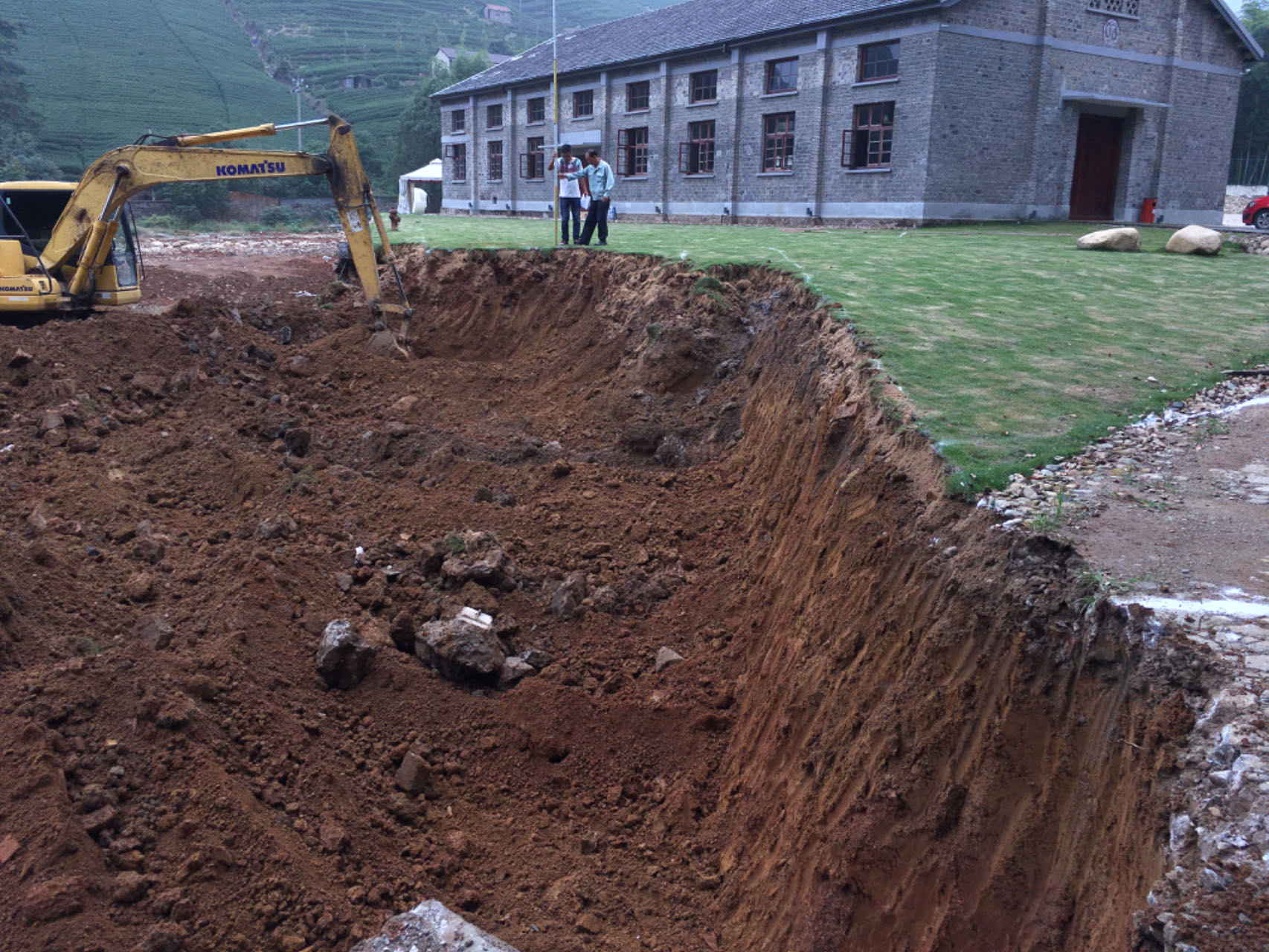
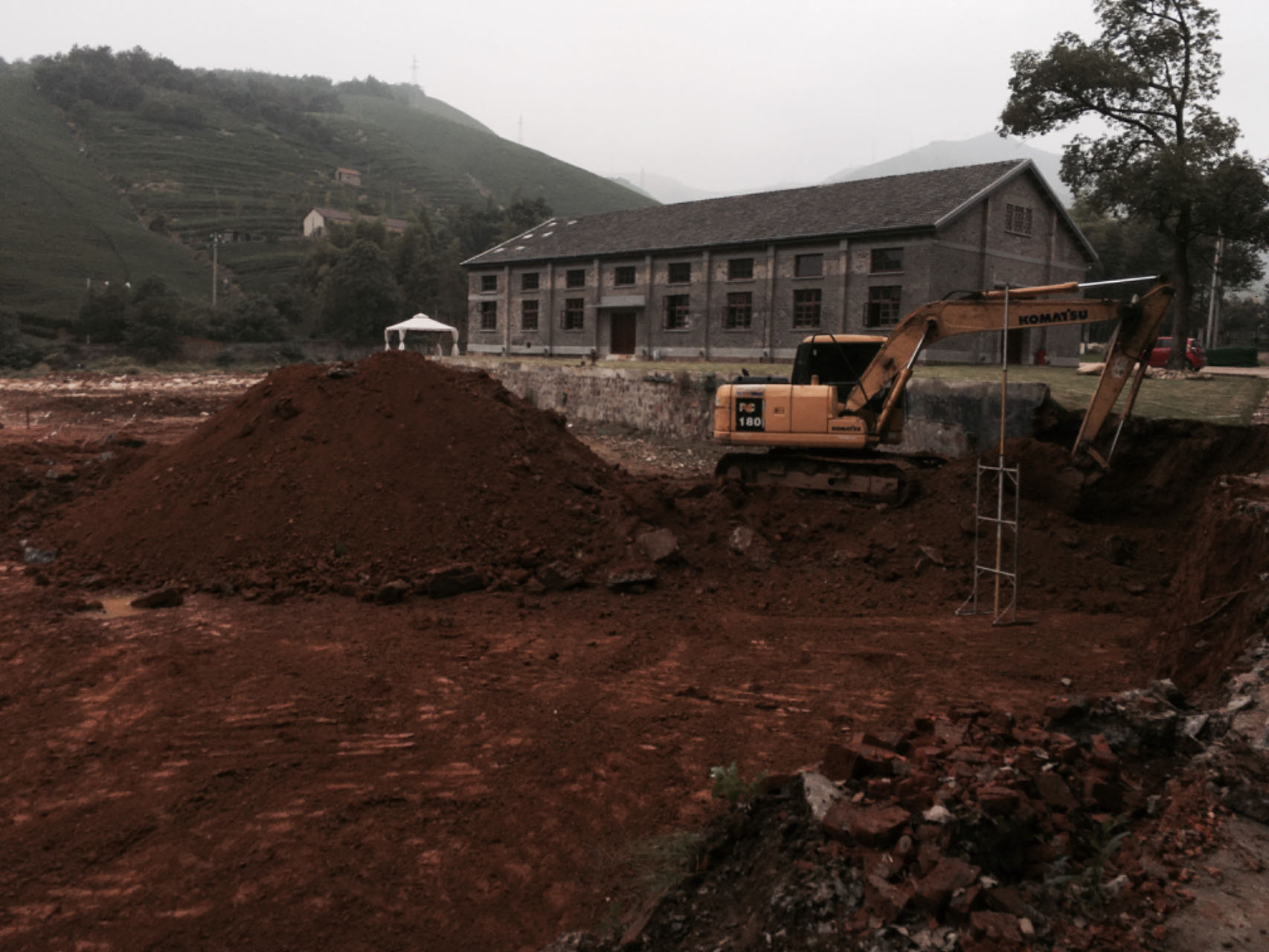
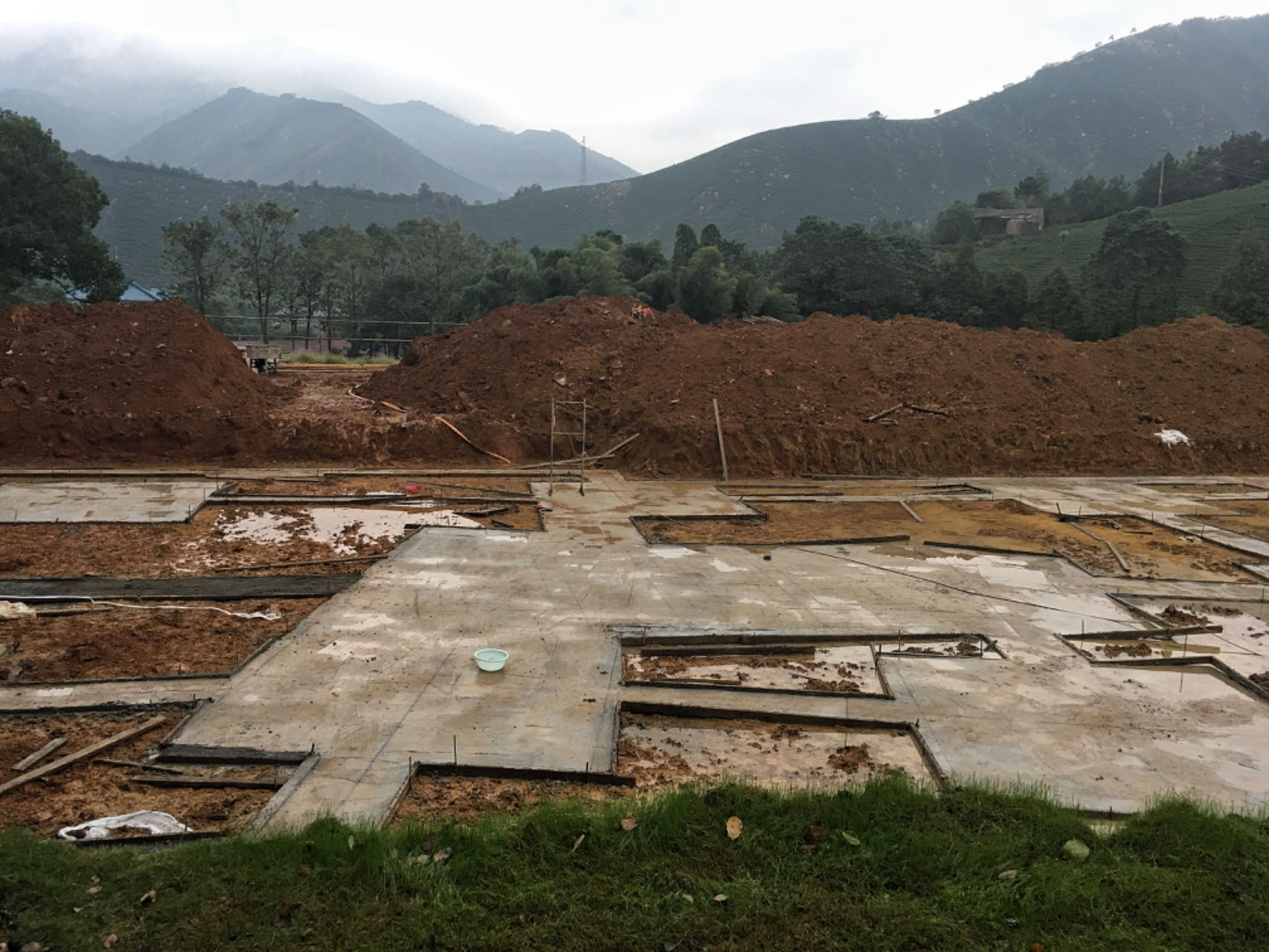
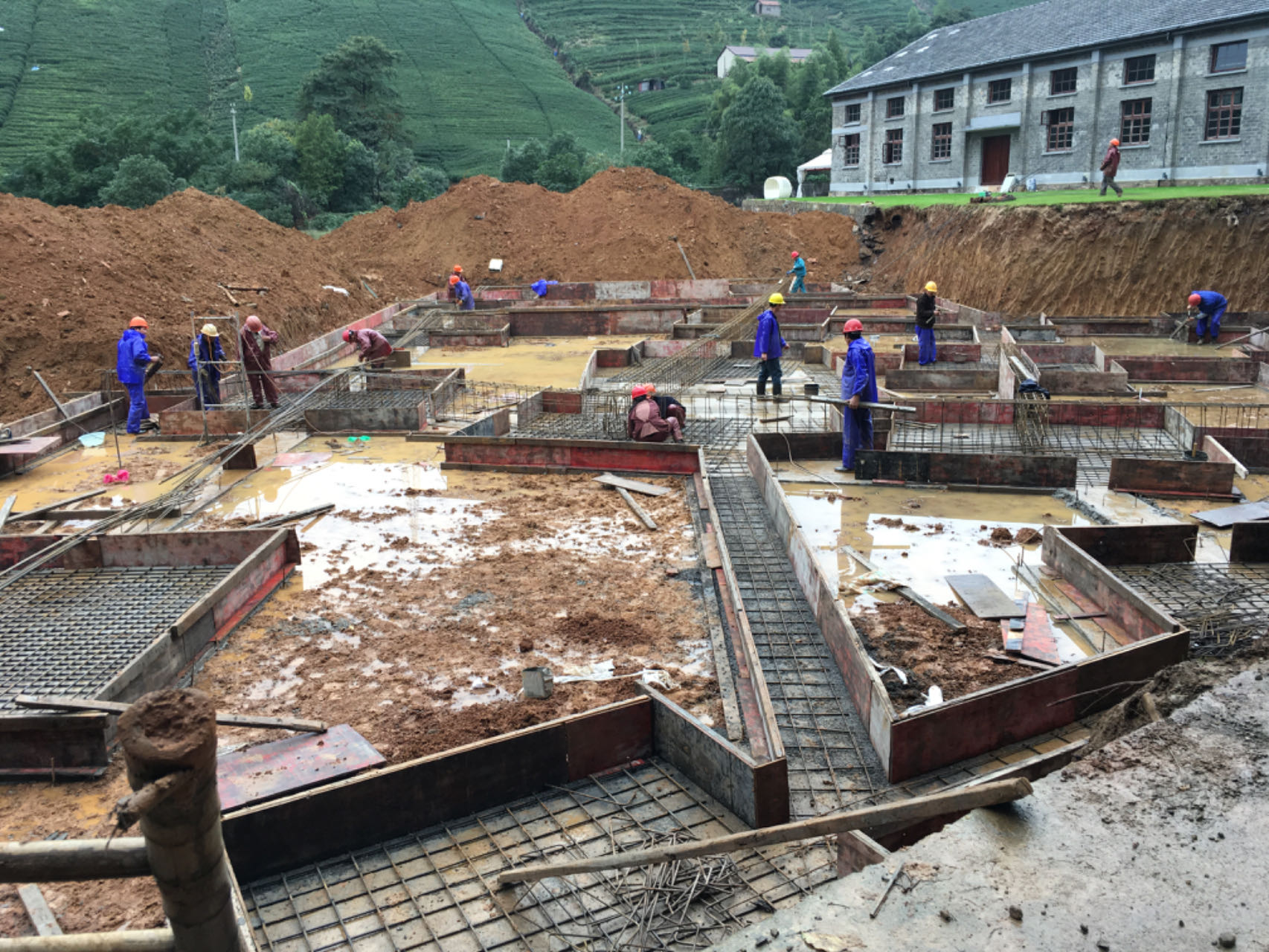
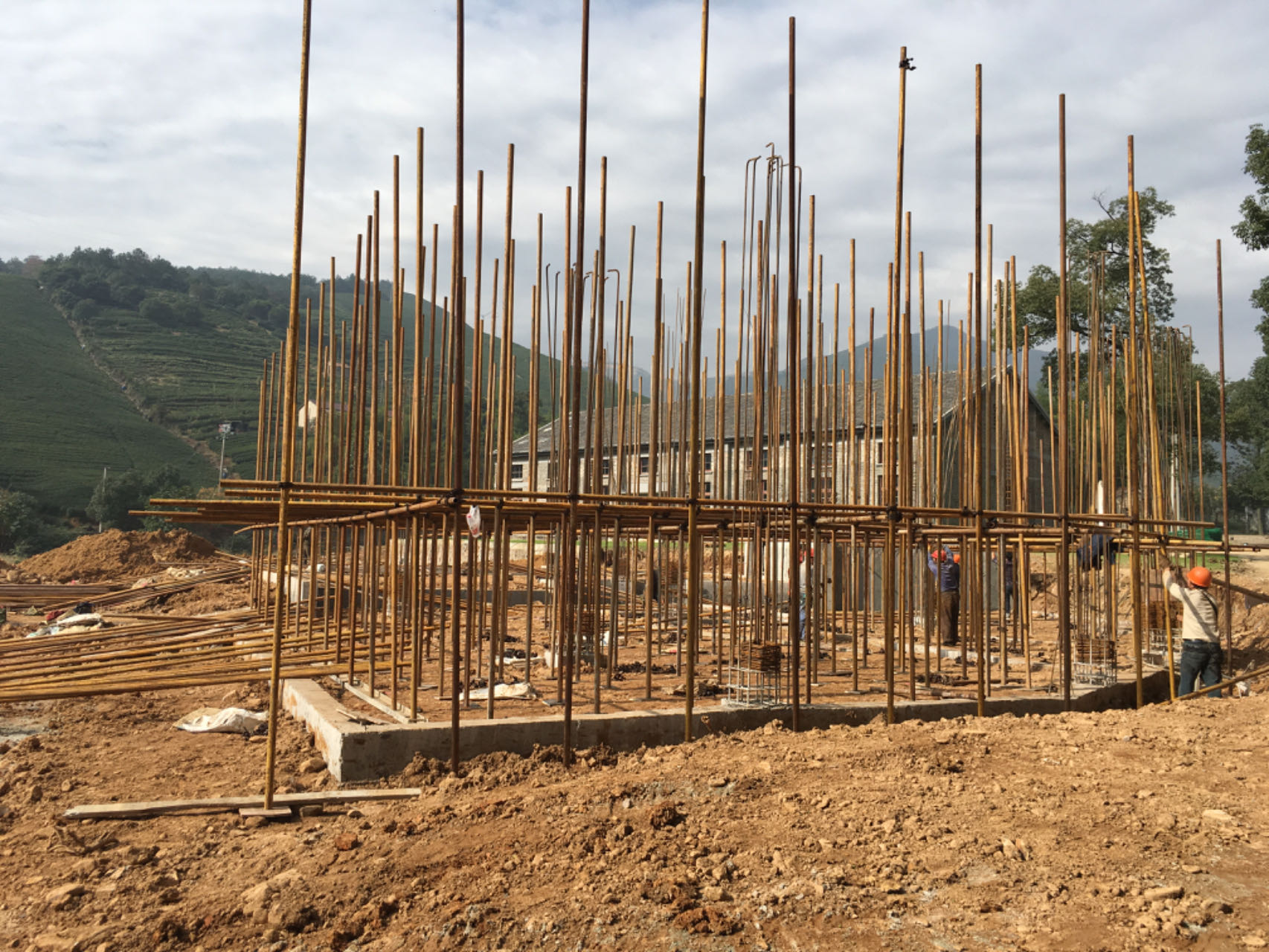
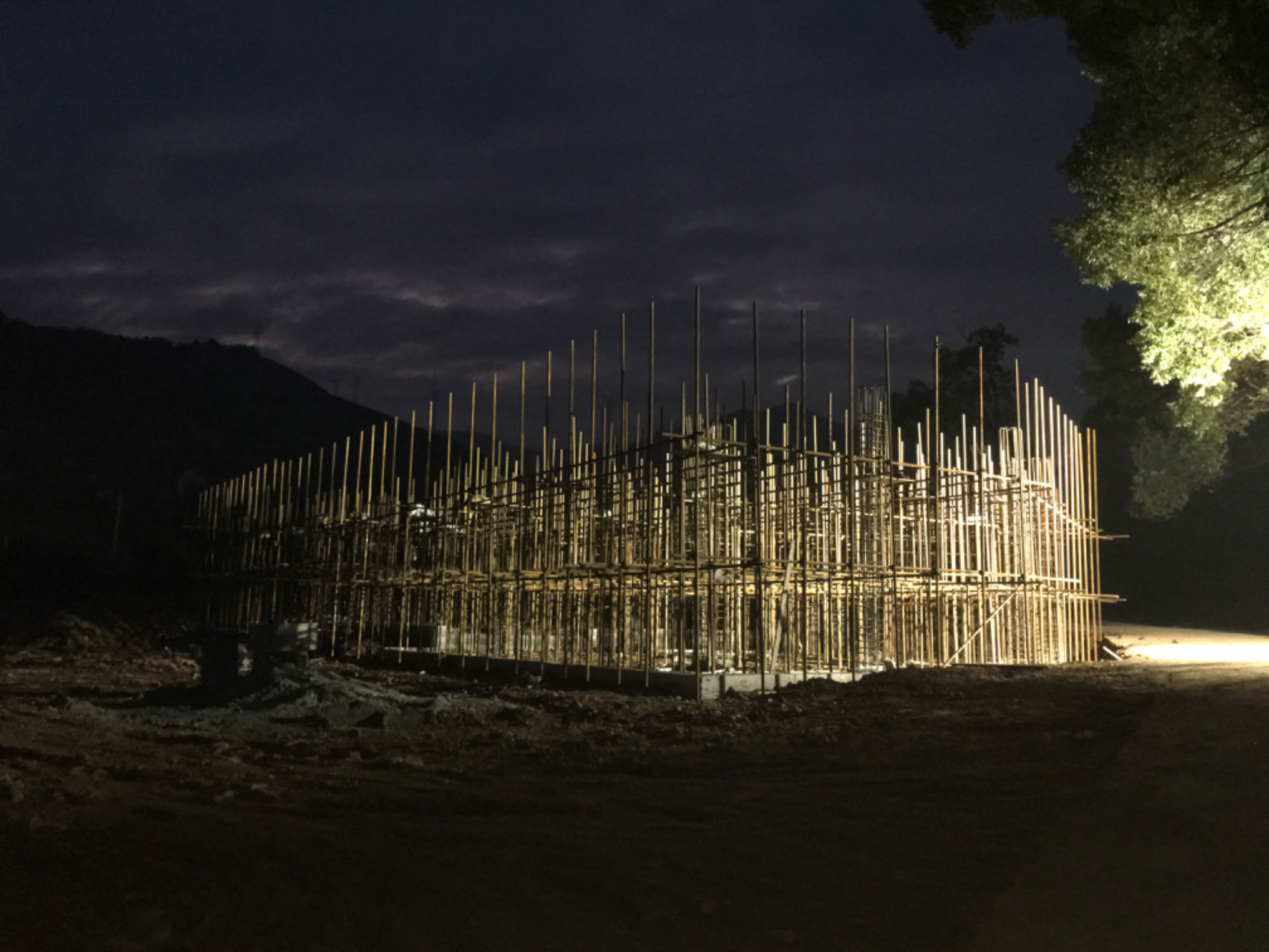
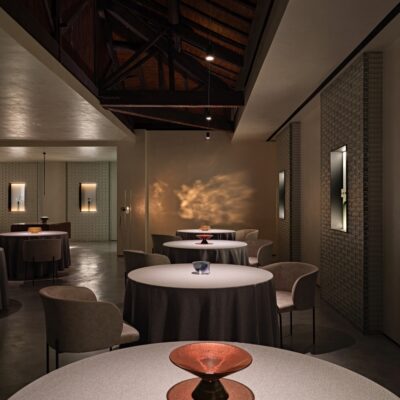
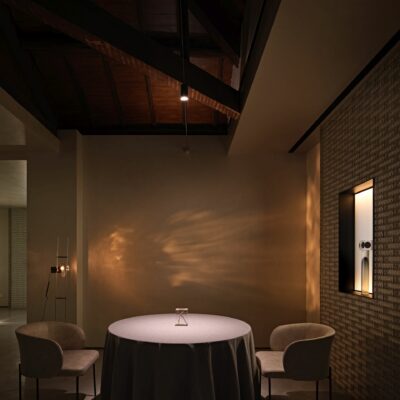
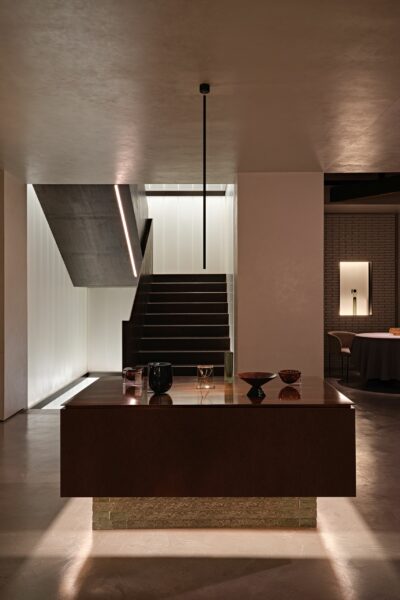
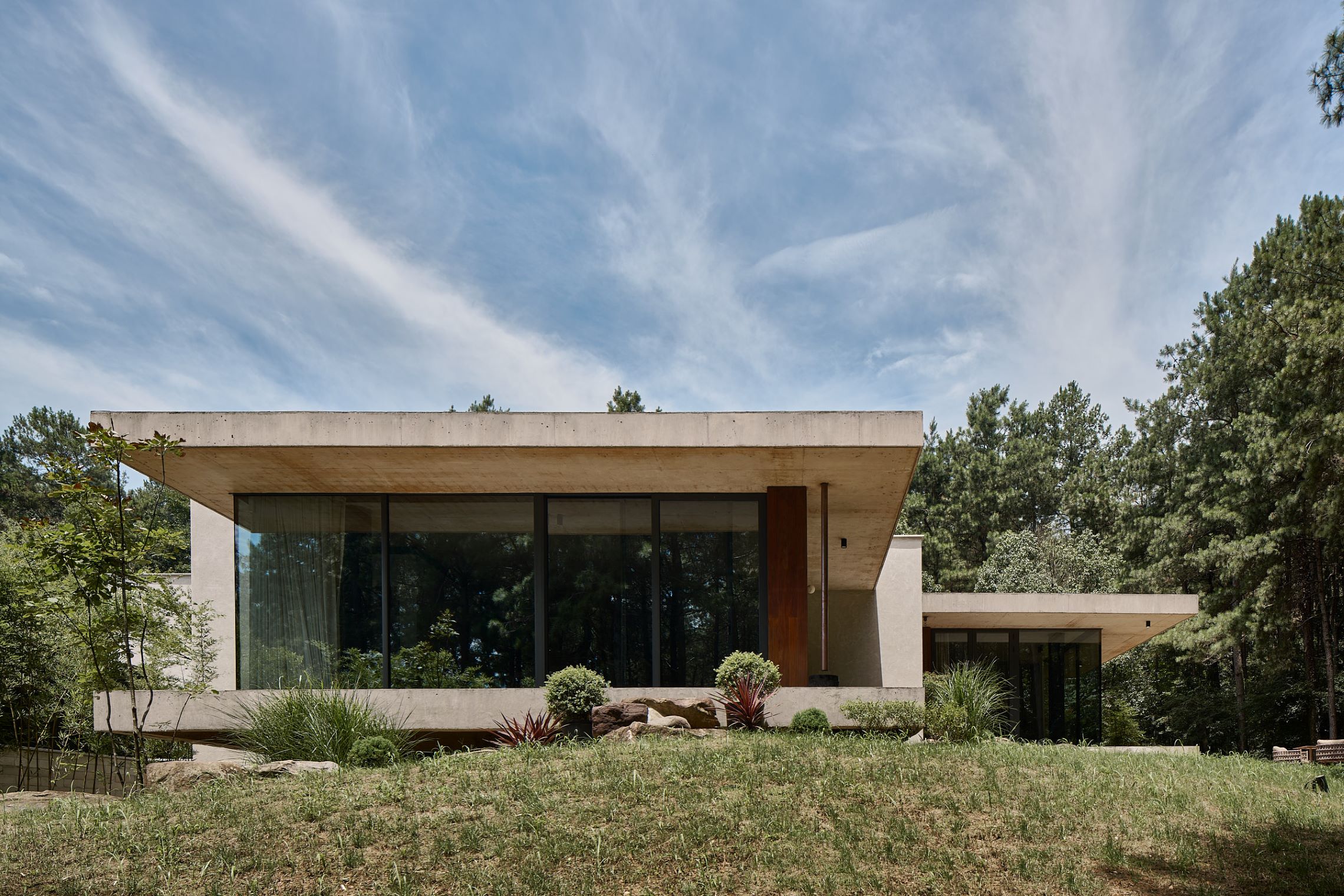
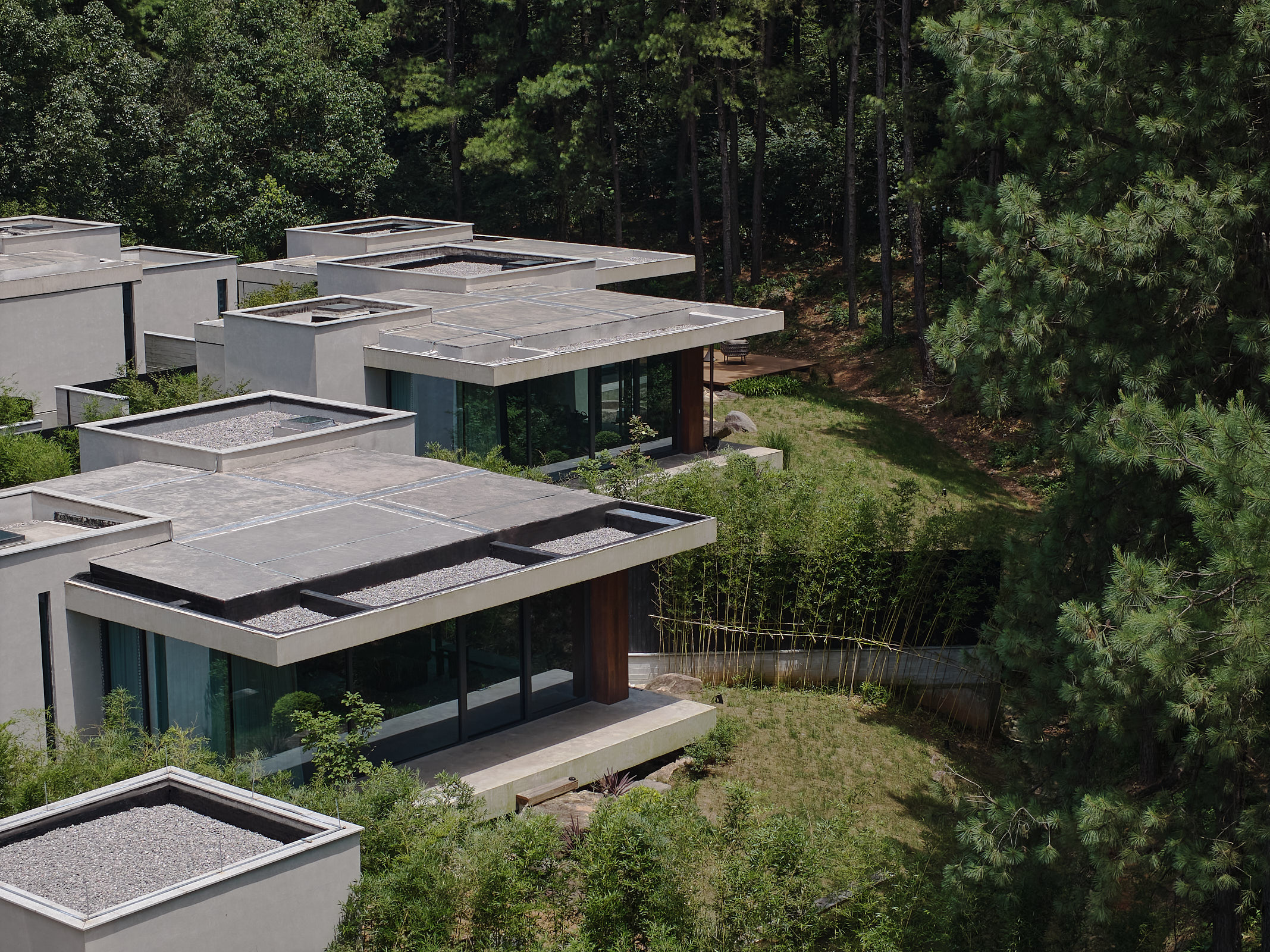
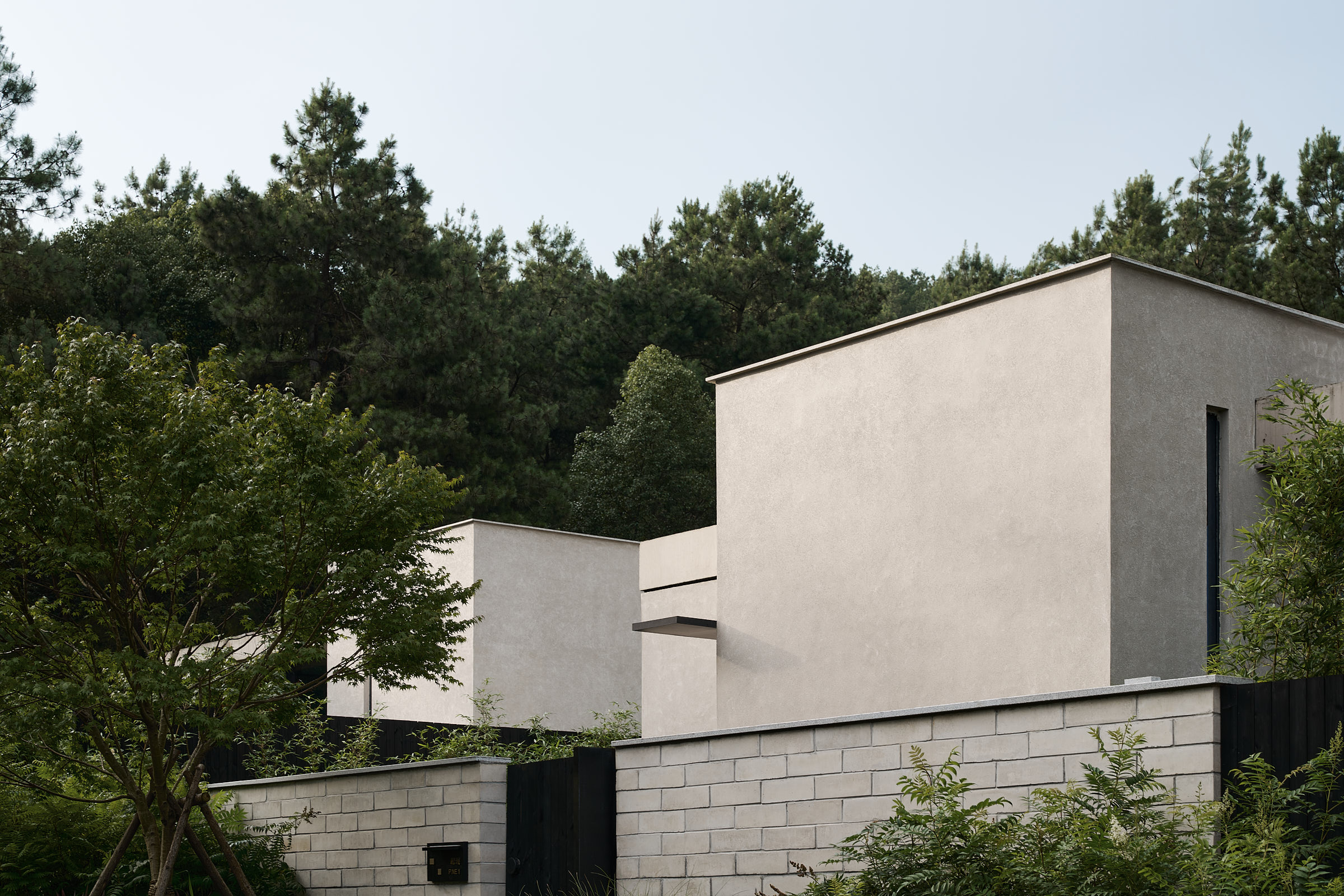
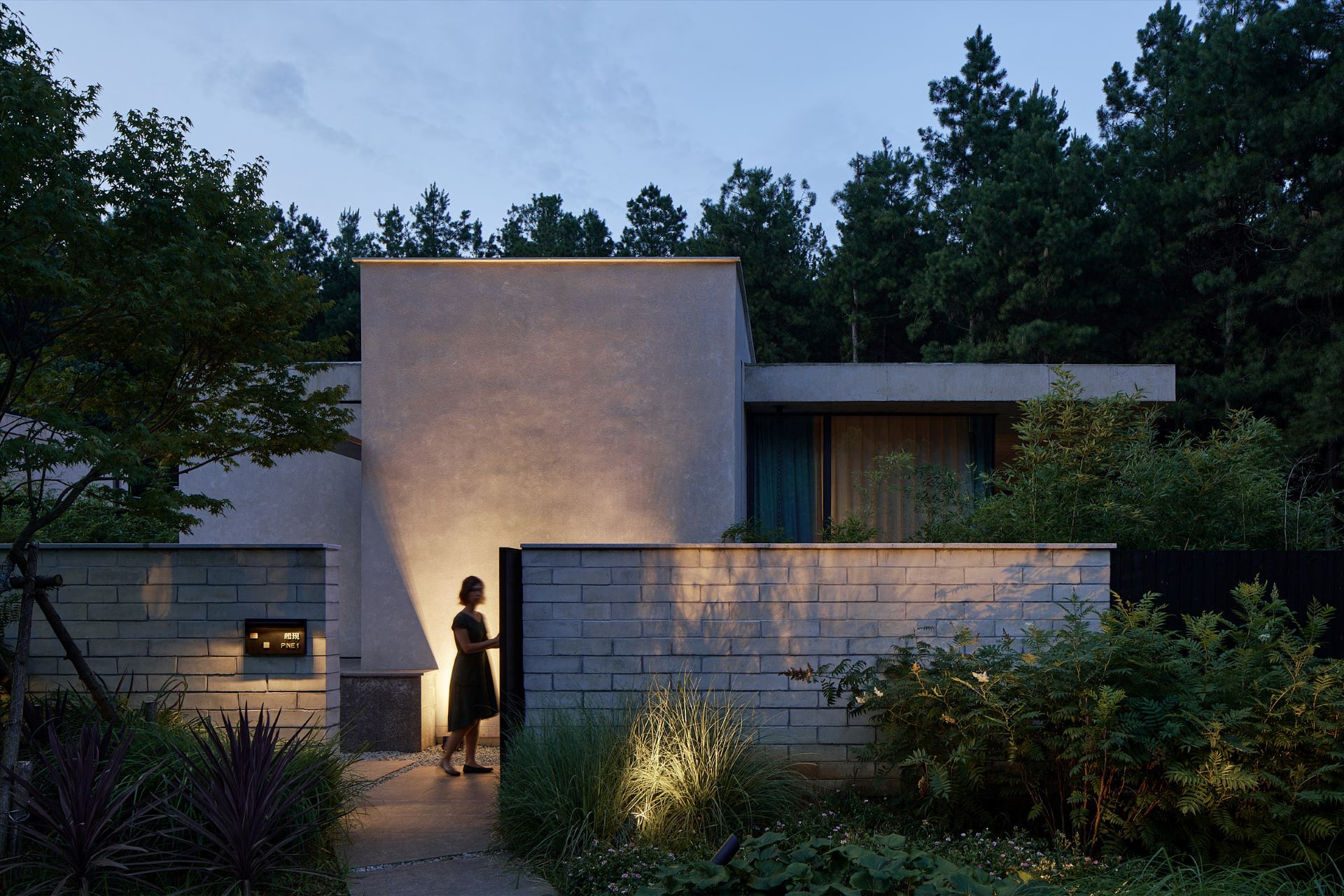
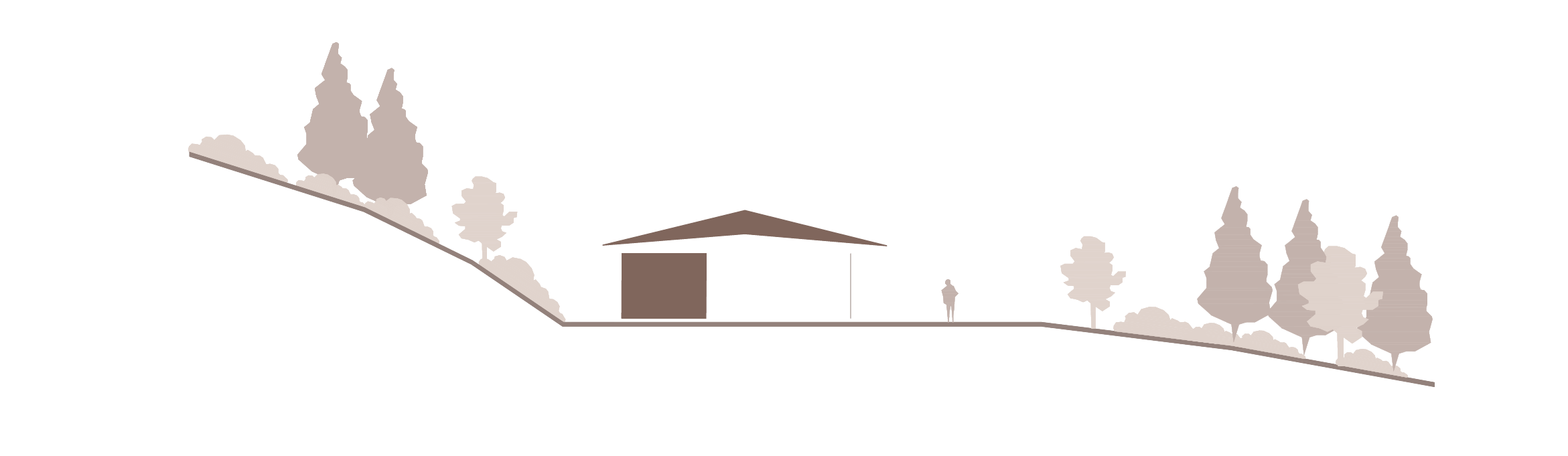
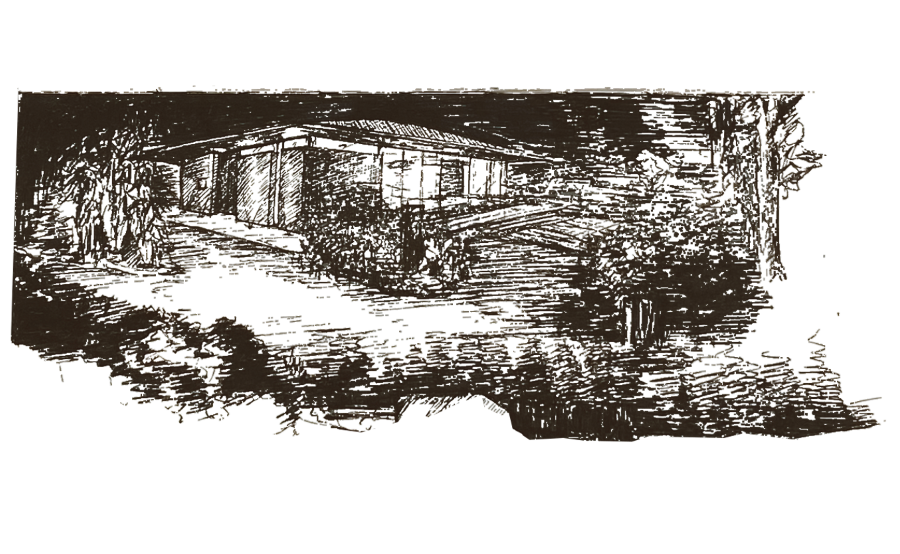
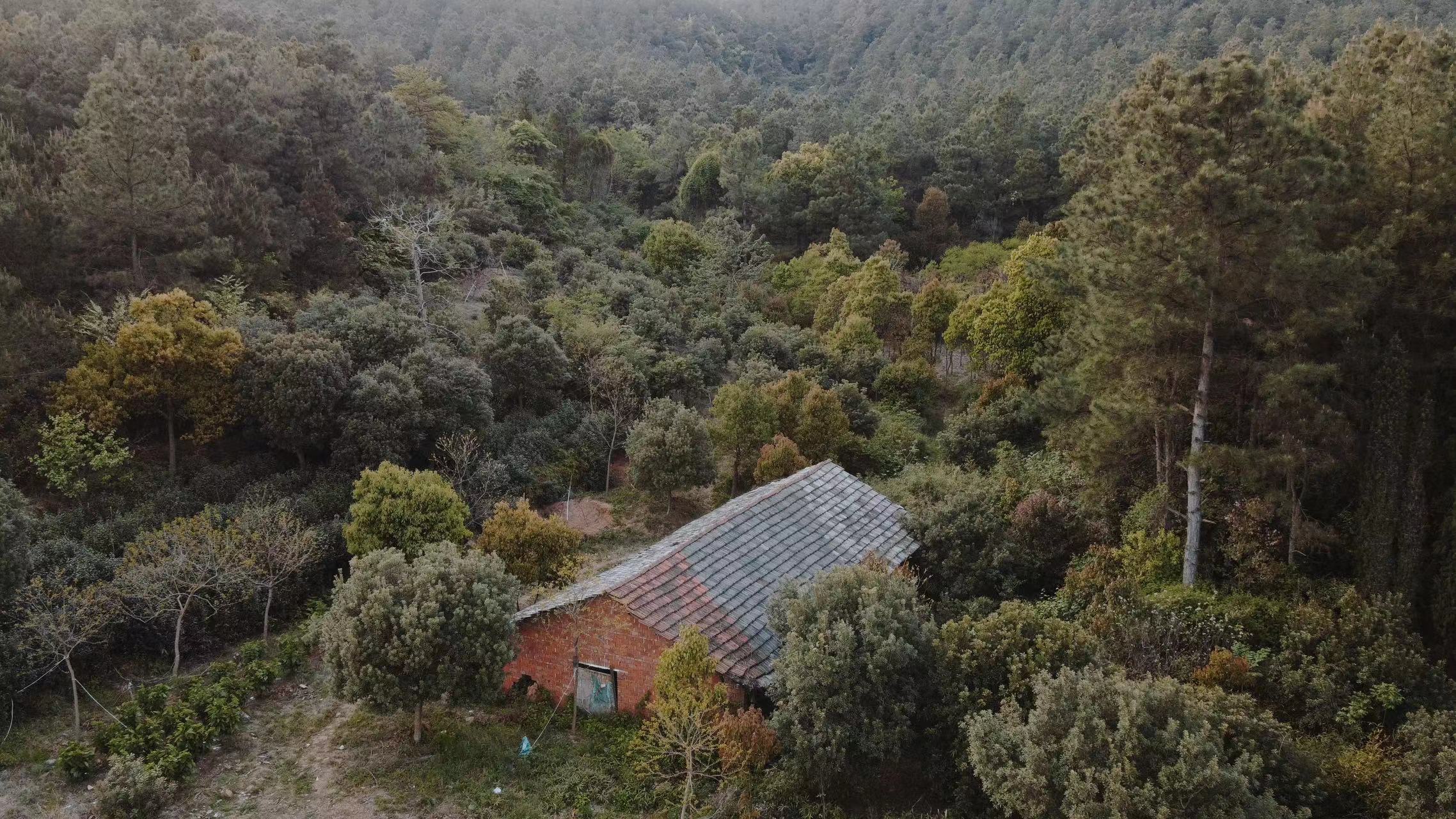
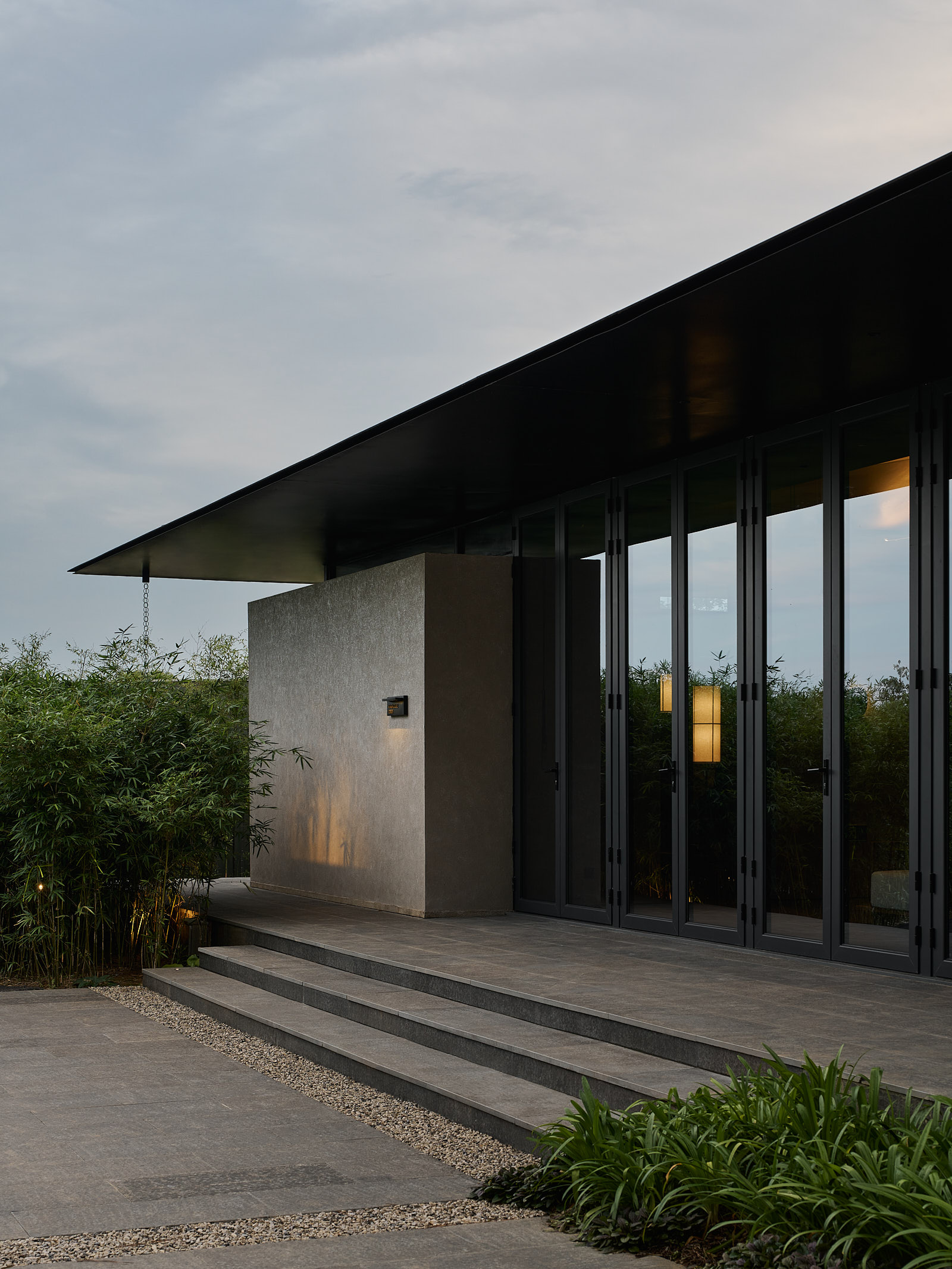
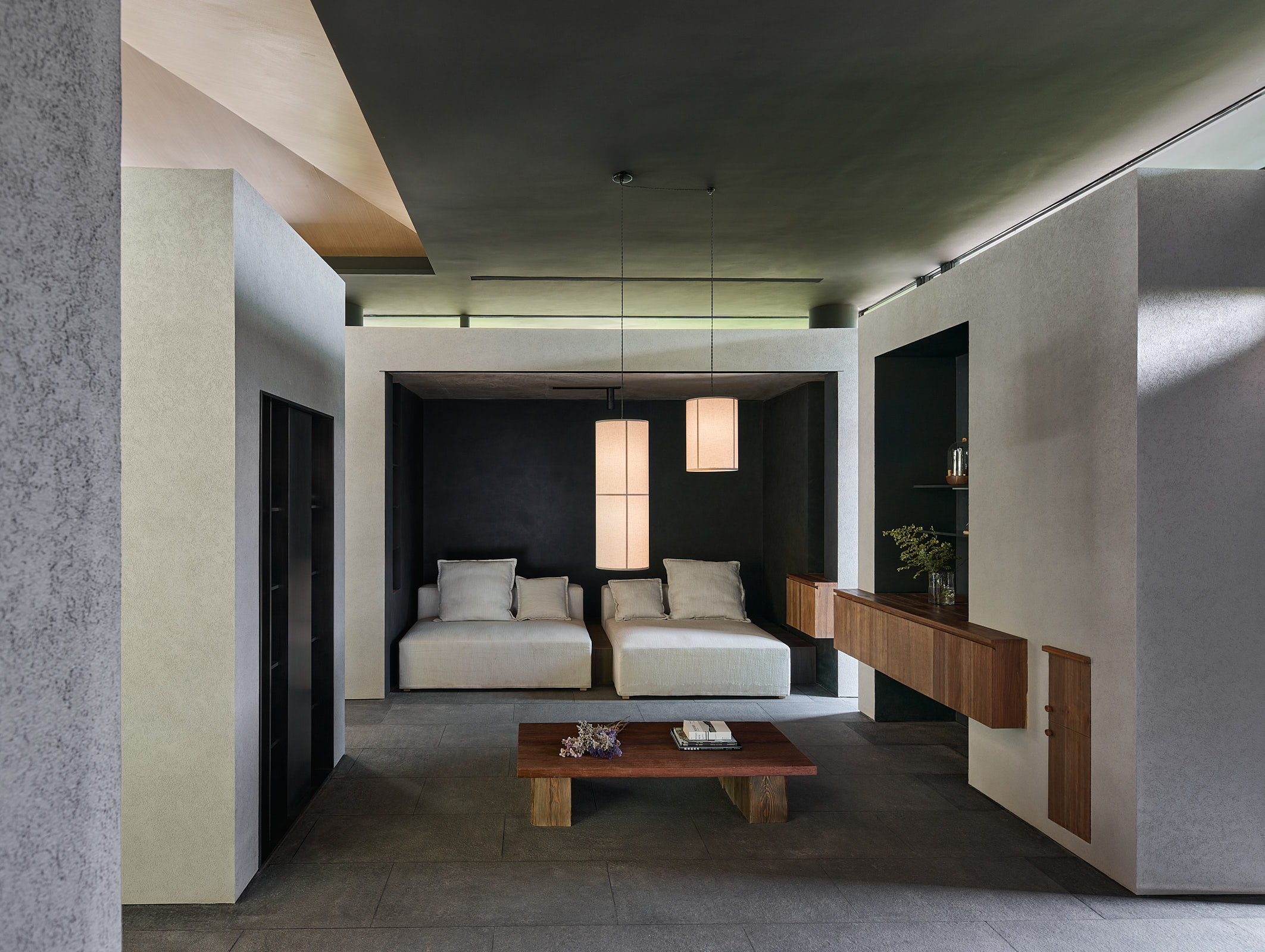
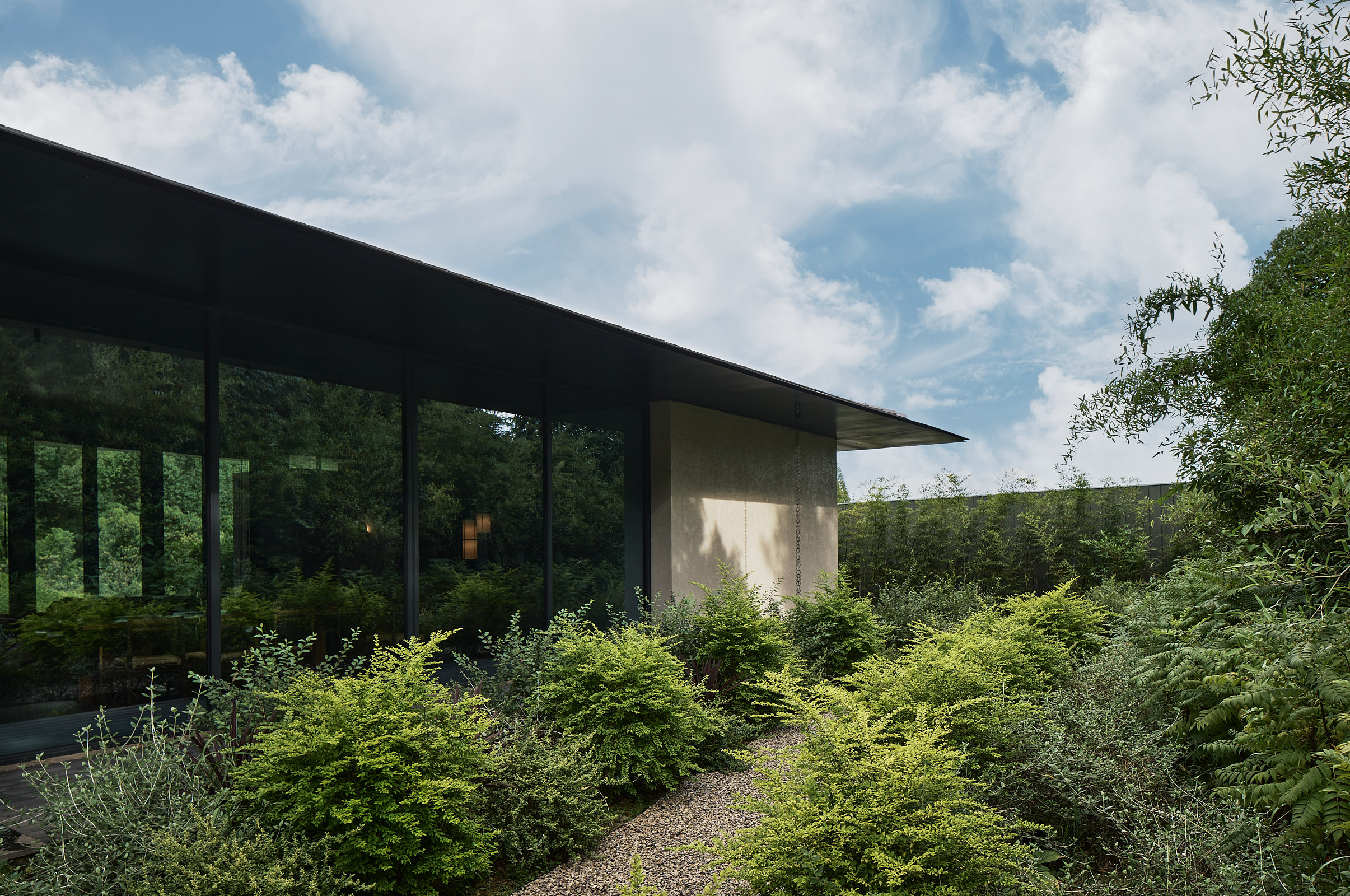
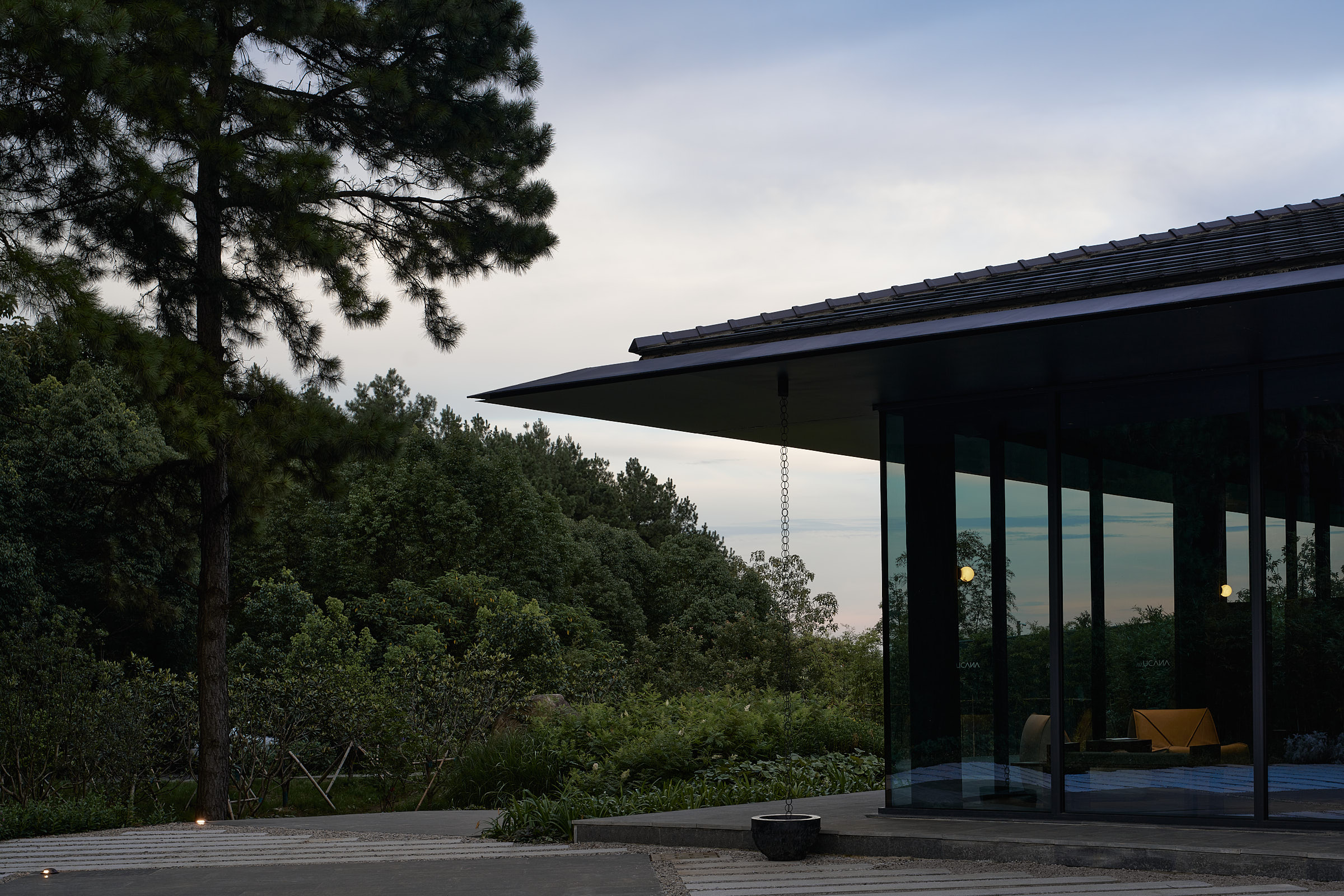
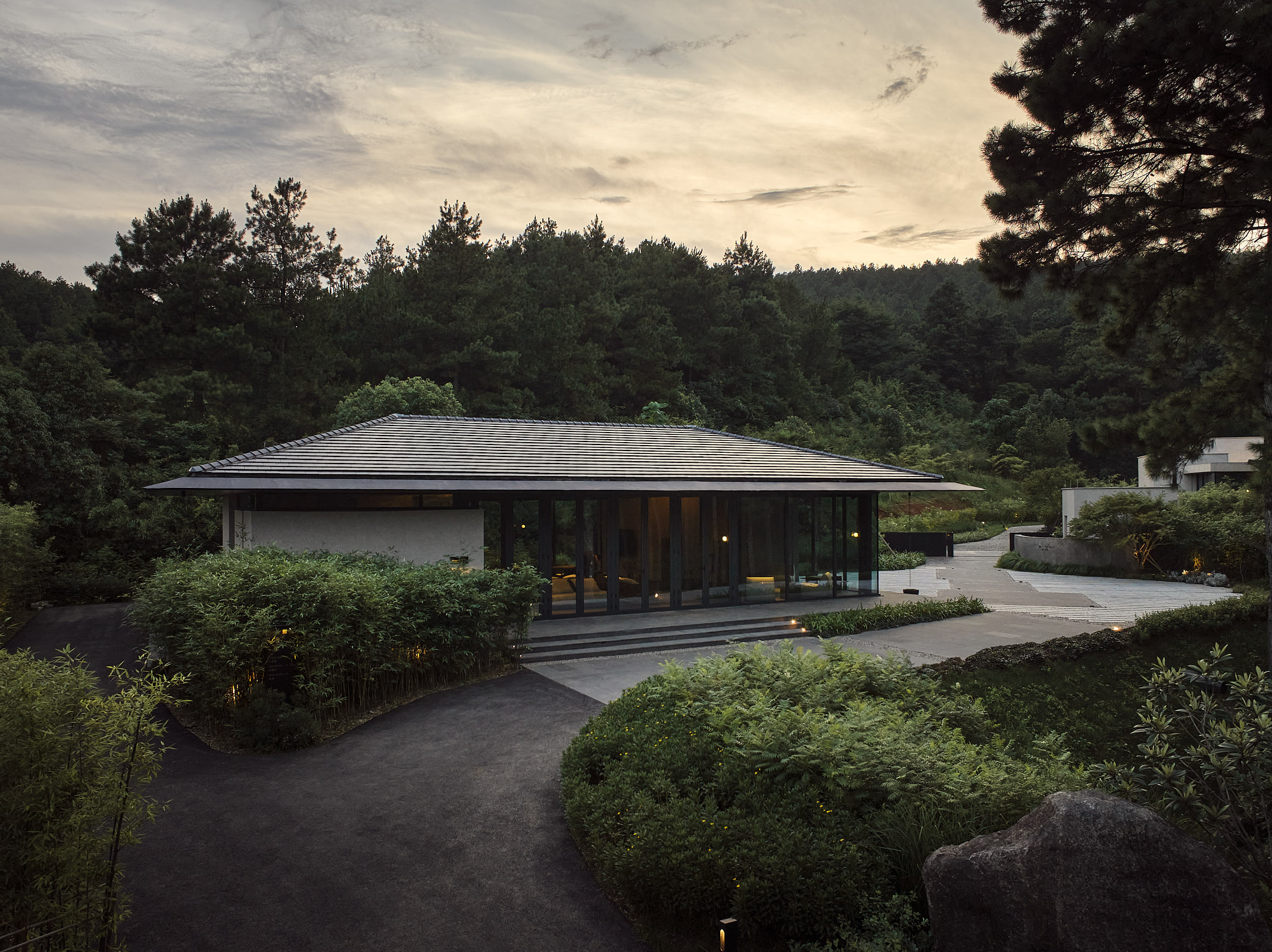
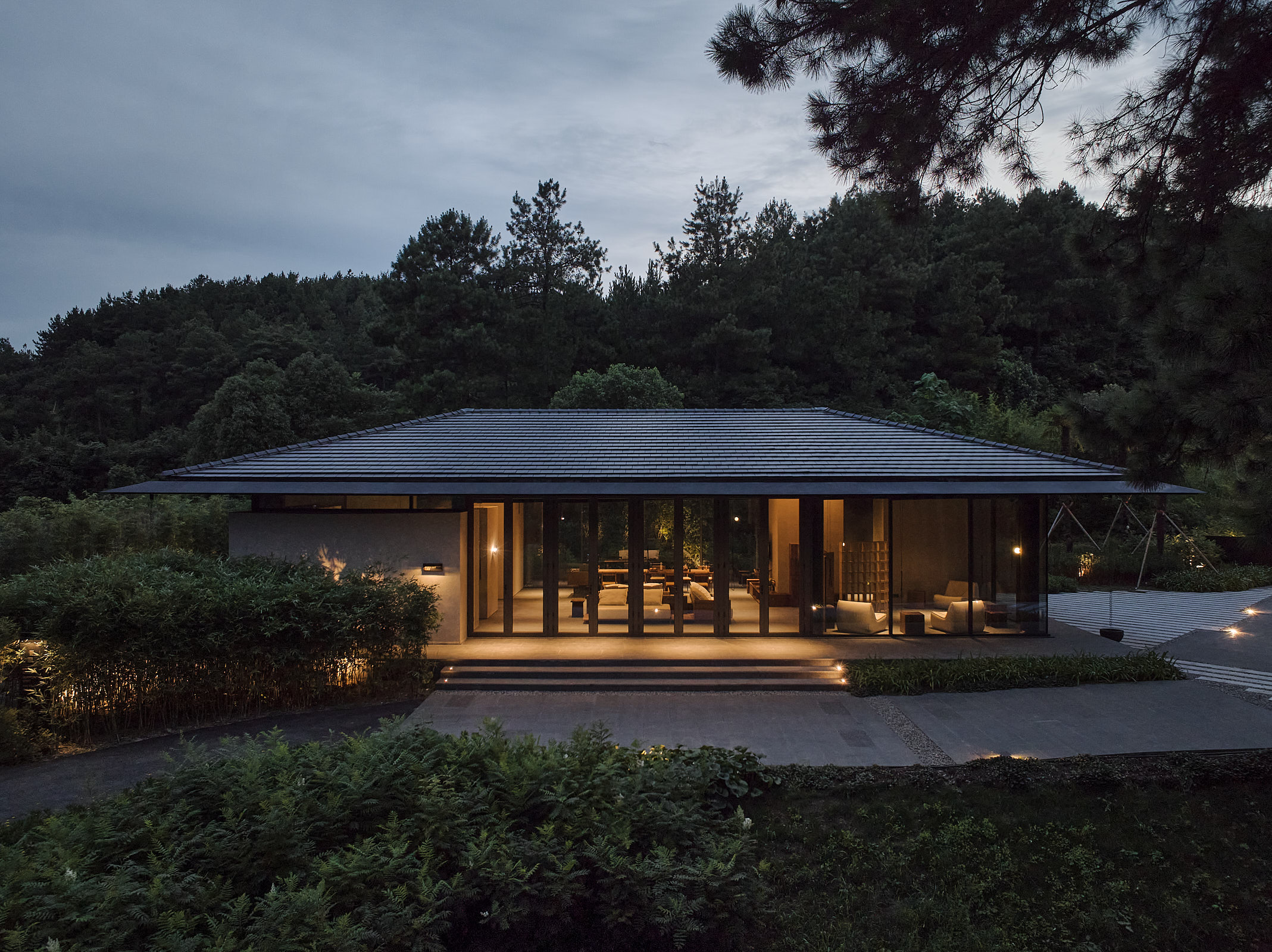
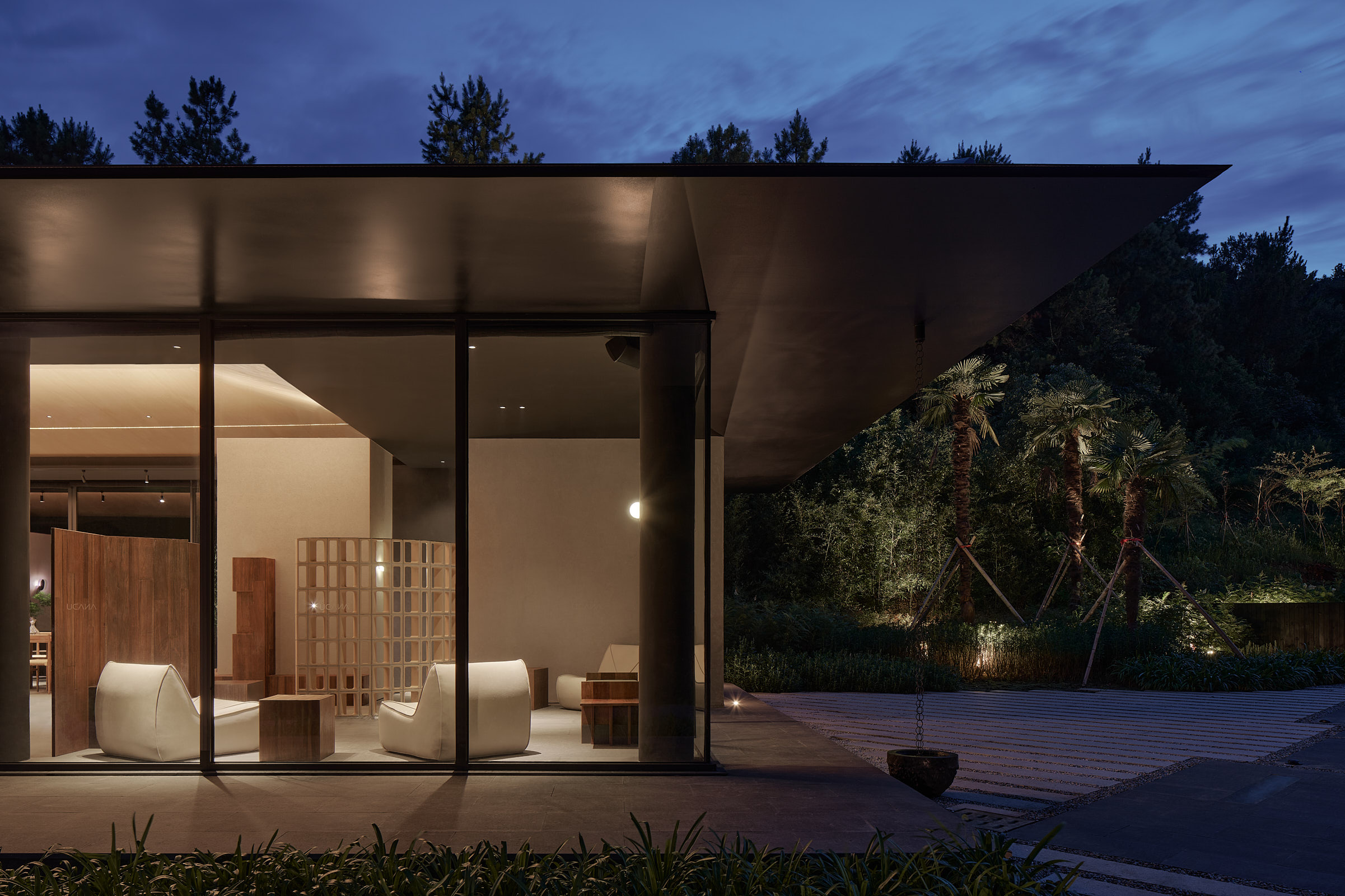
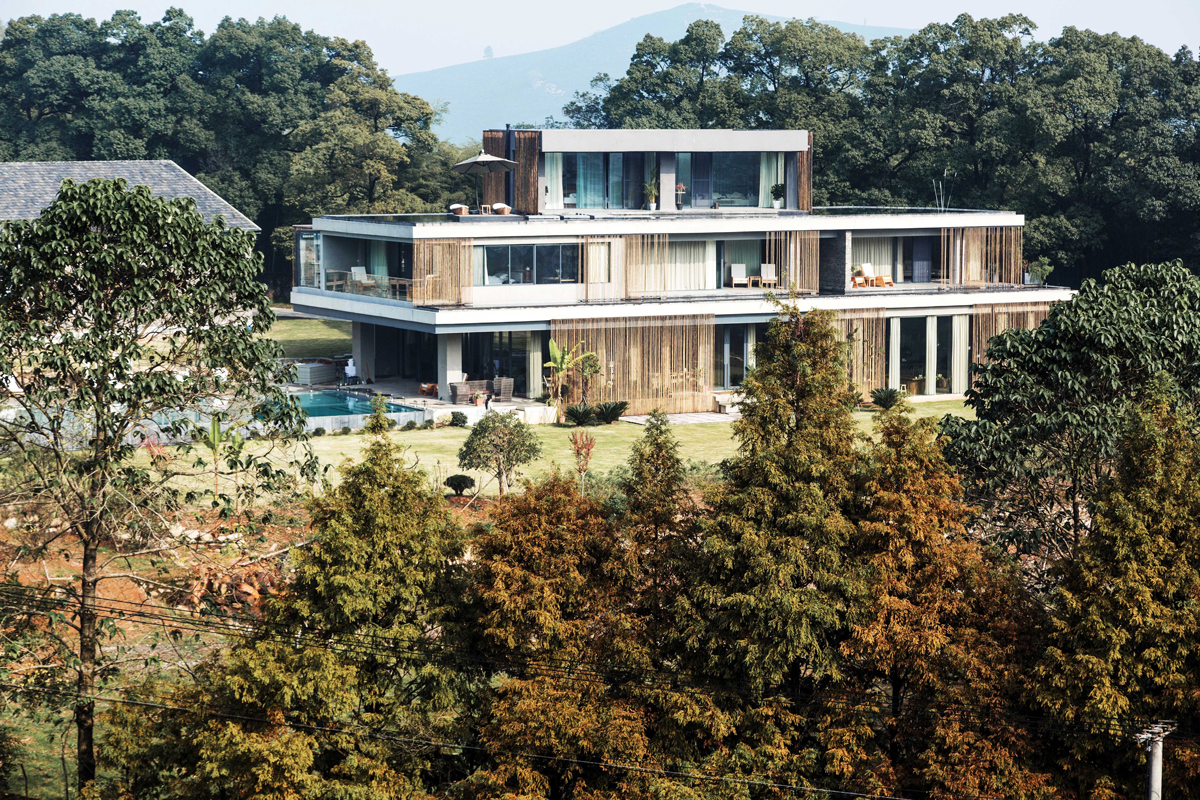
Studio8 was commissioned for the visual identity, interior design and architecture of Anadu. Anadu wishes to provide to its guests with a peaceful holiday experience in nature. Keeping the local and environmental character of the location is one of the main concerns during the project development. From construction materials to design elements, and even food ingredients, Studio8 has tried to take full advantage of local resources. In terms of architecture and space design, Anadu is integrated into the surrounding landscape. The studio’s initial approach to the design concept: “Get along with nature, talk to yourself” gradually evolved into the core of the brand’s motto: “Find yourself in nature”.
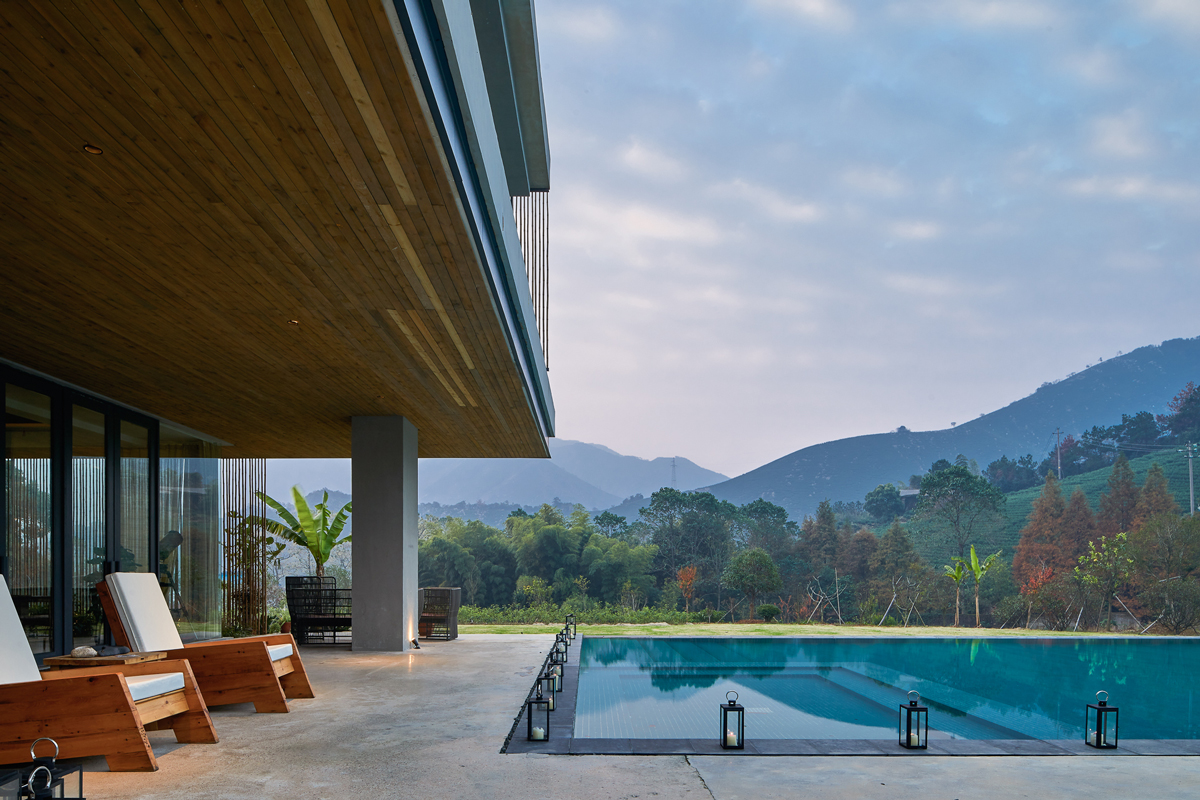
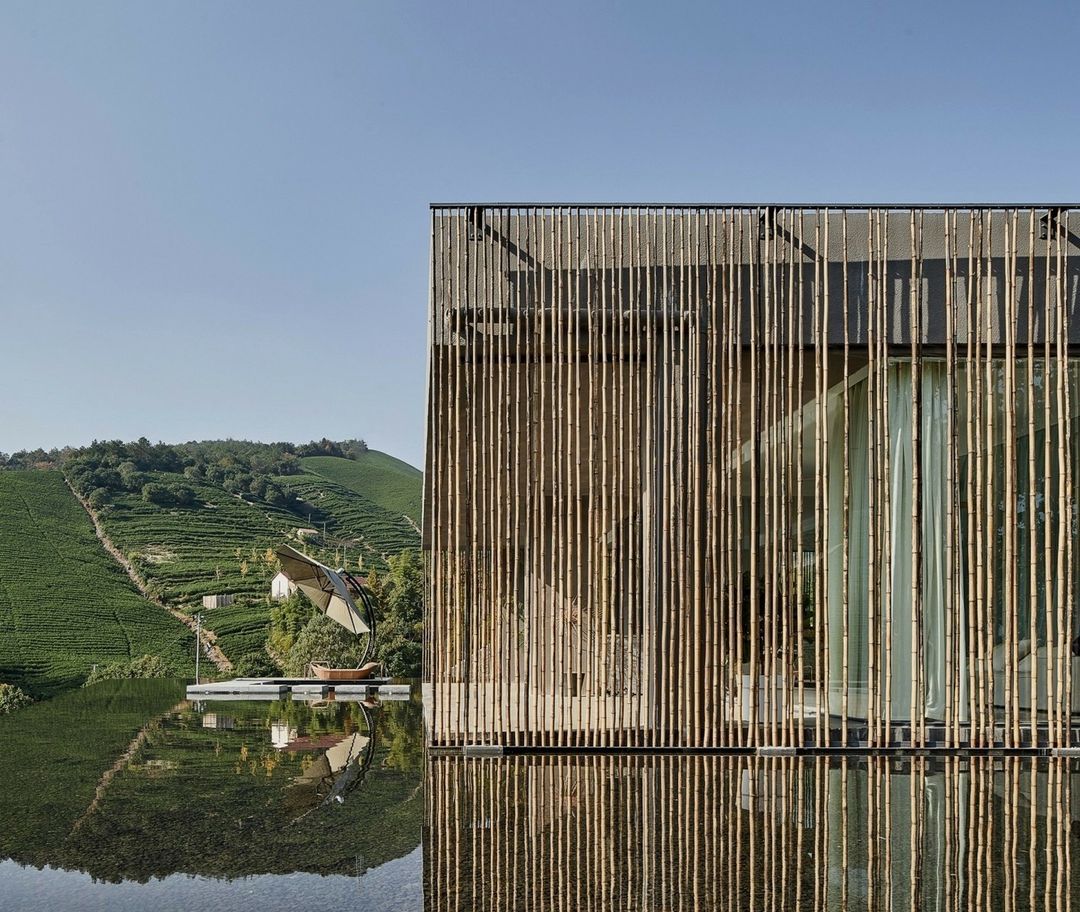
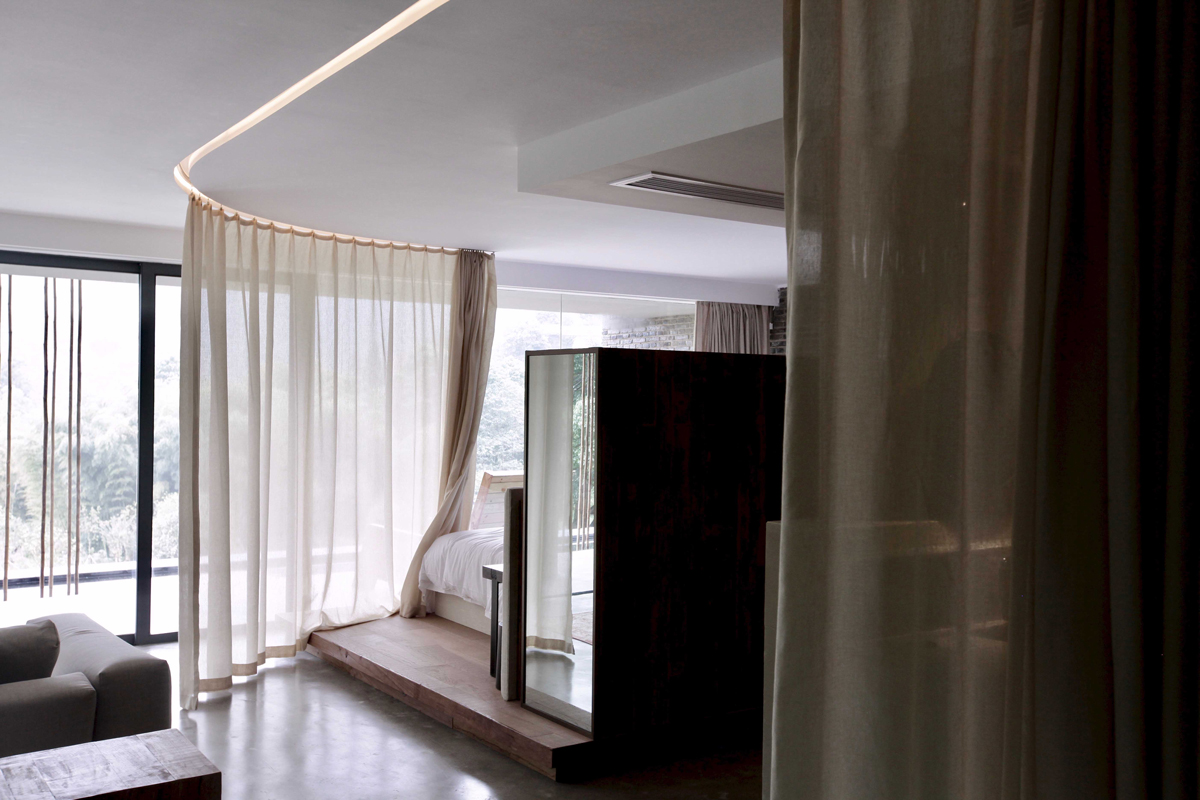
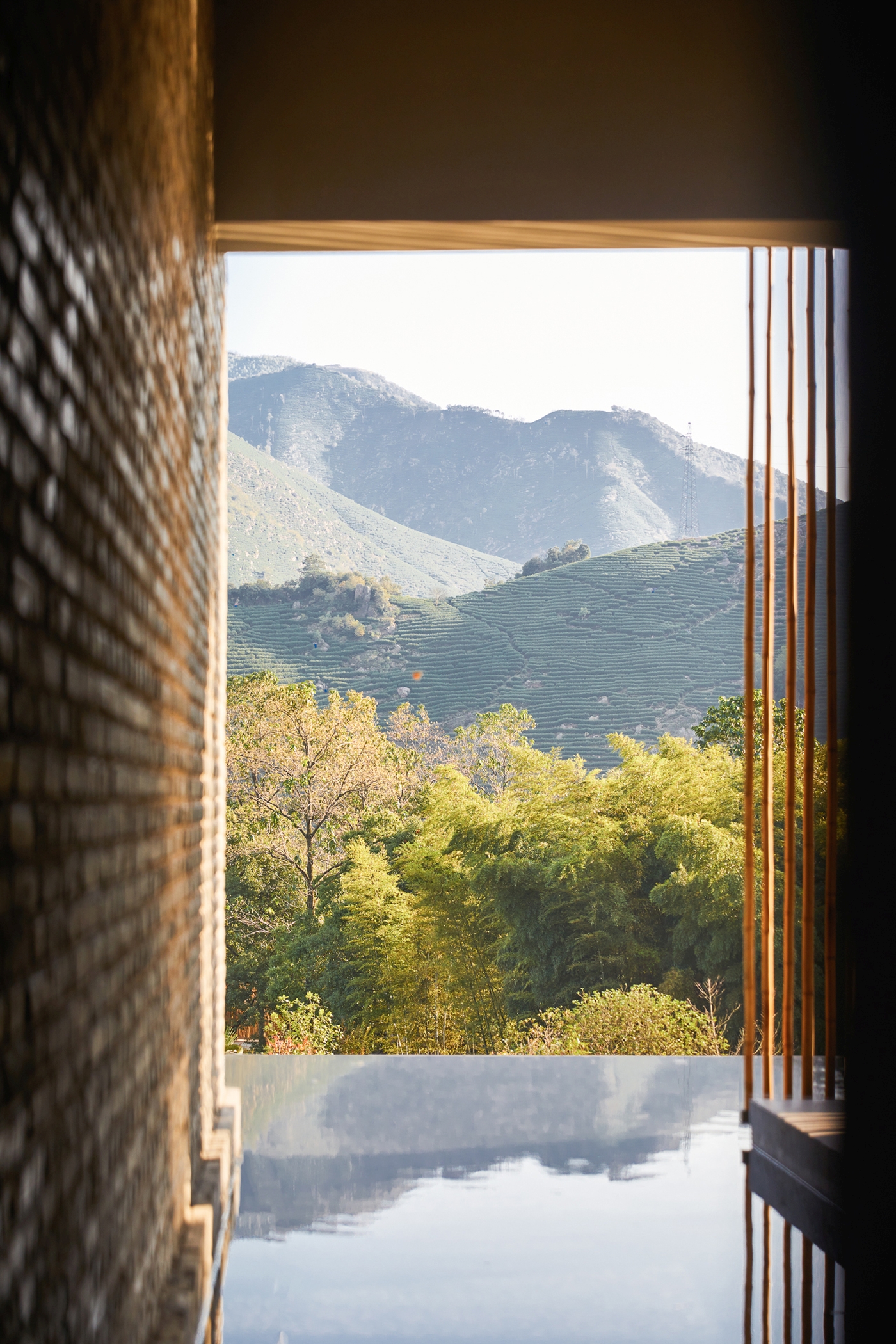
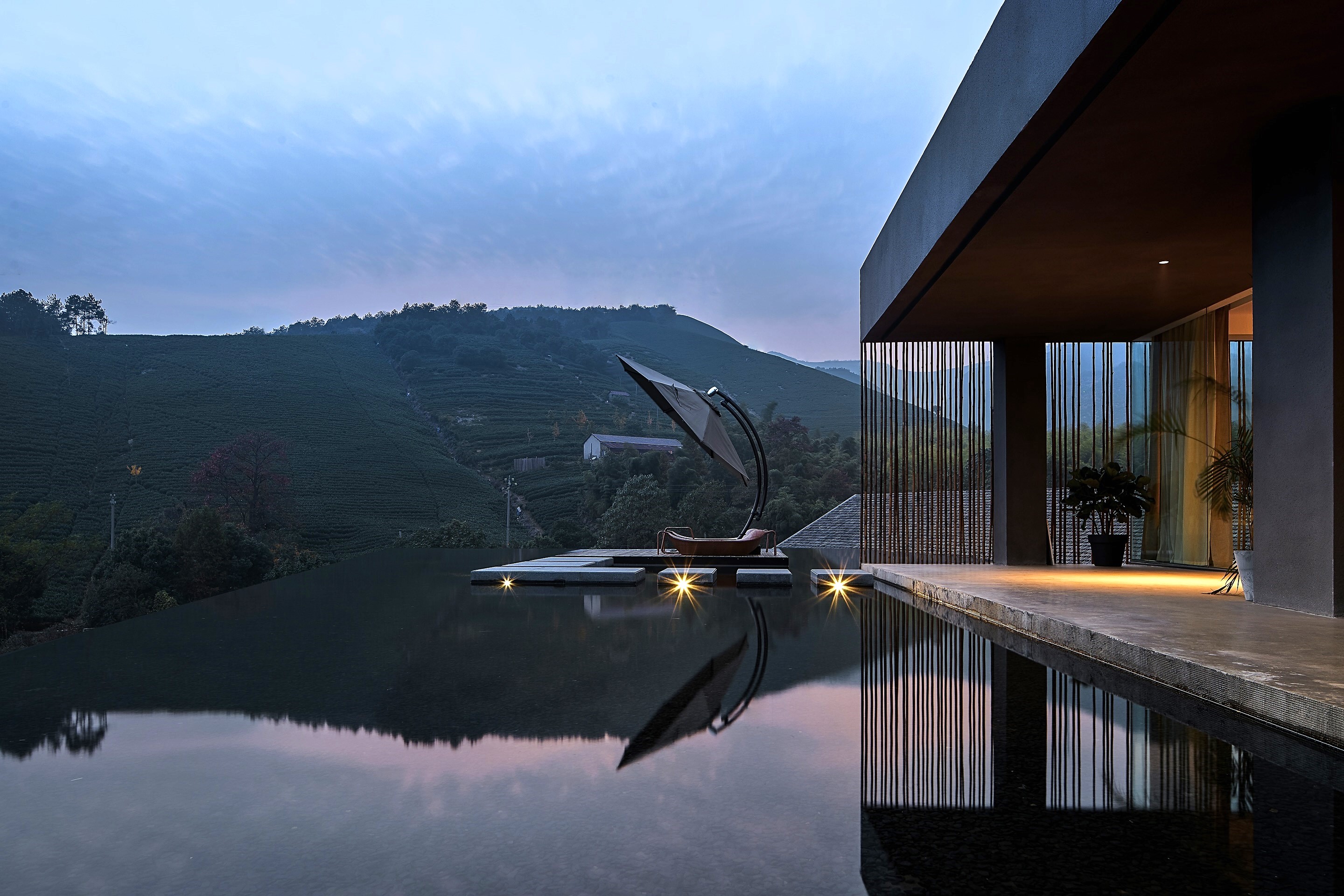
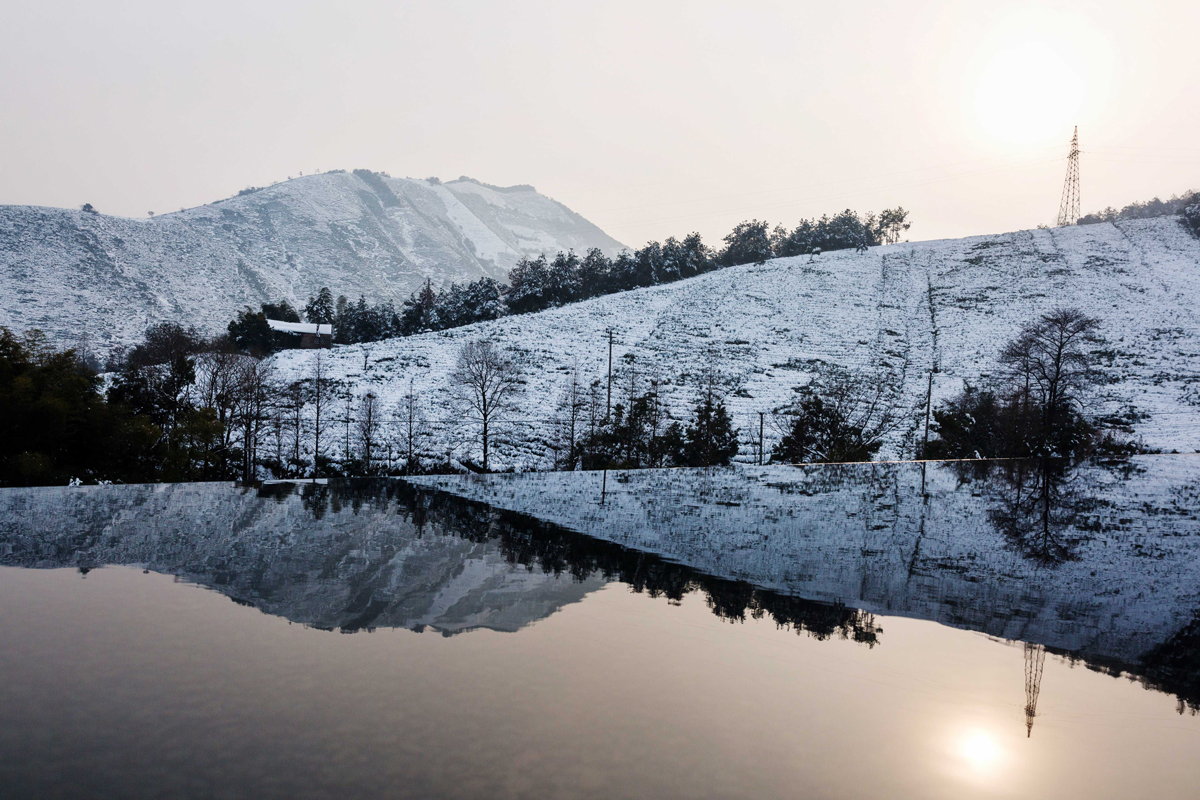
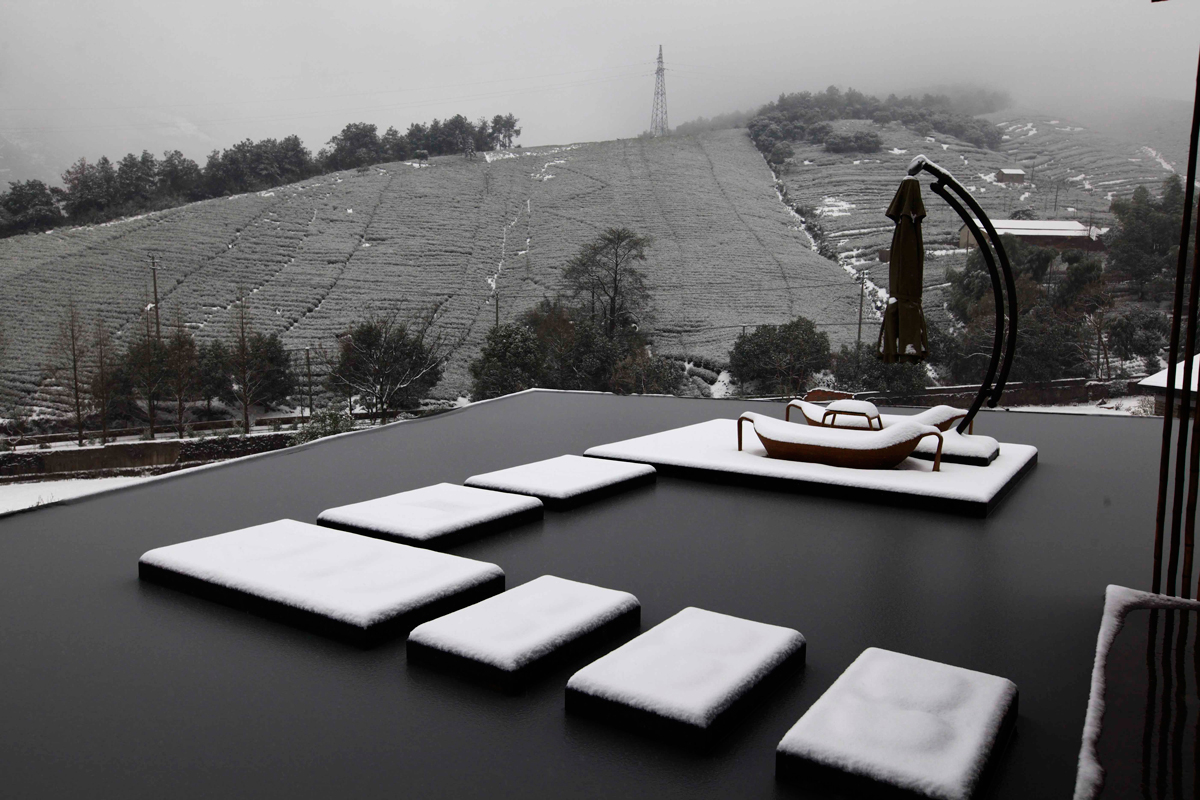
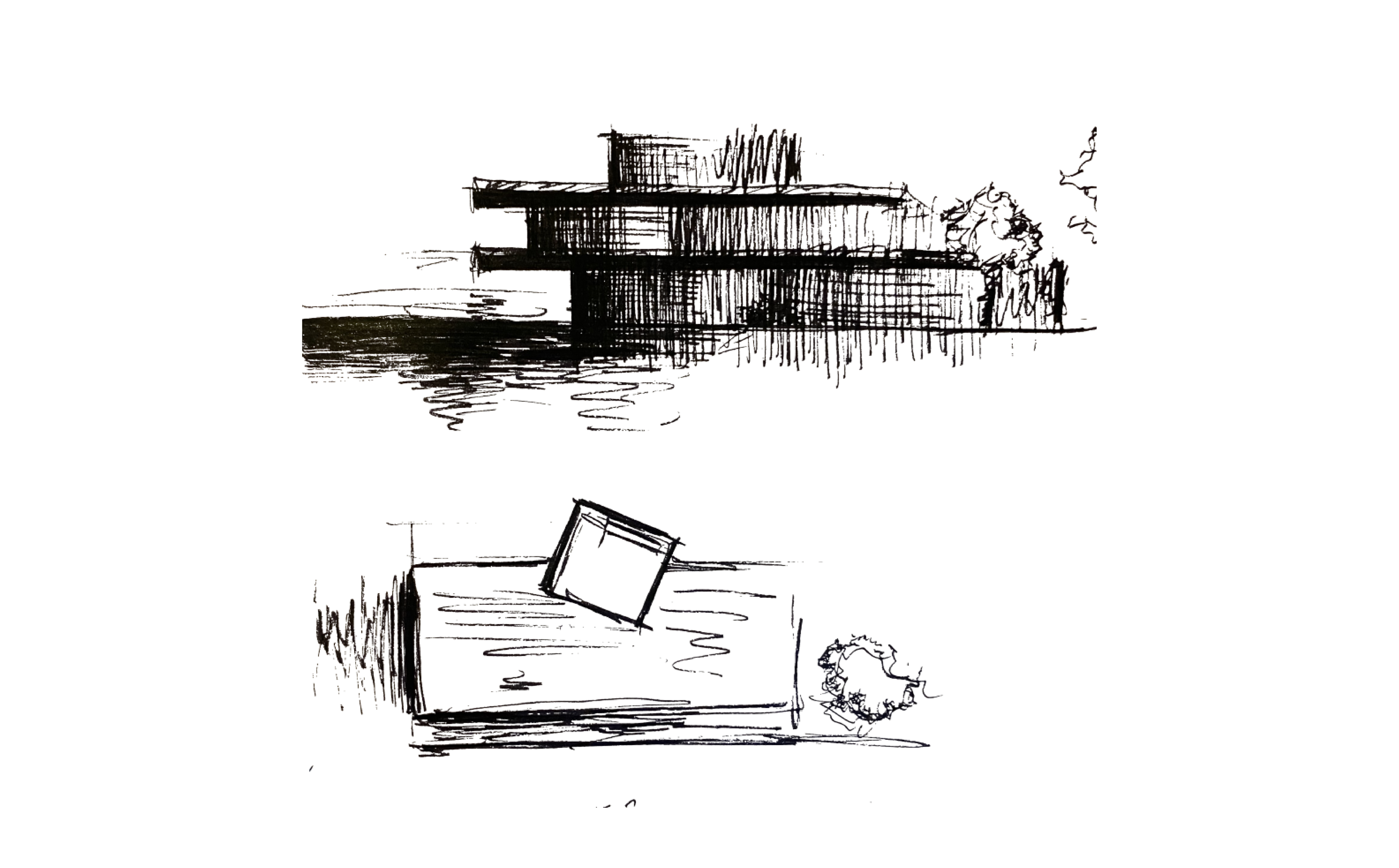
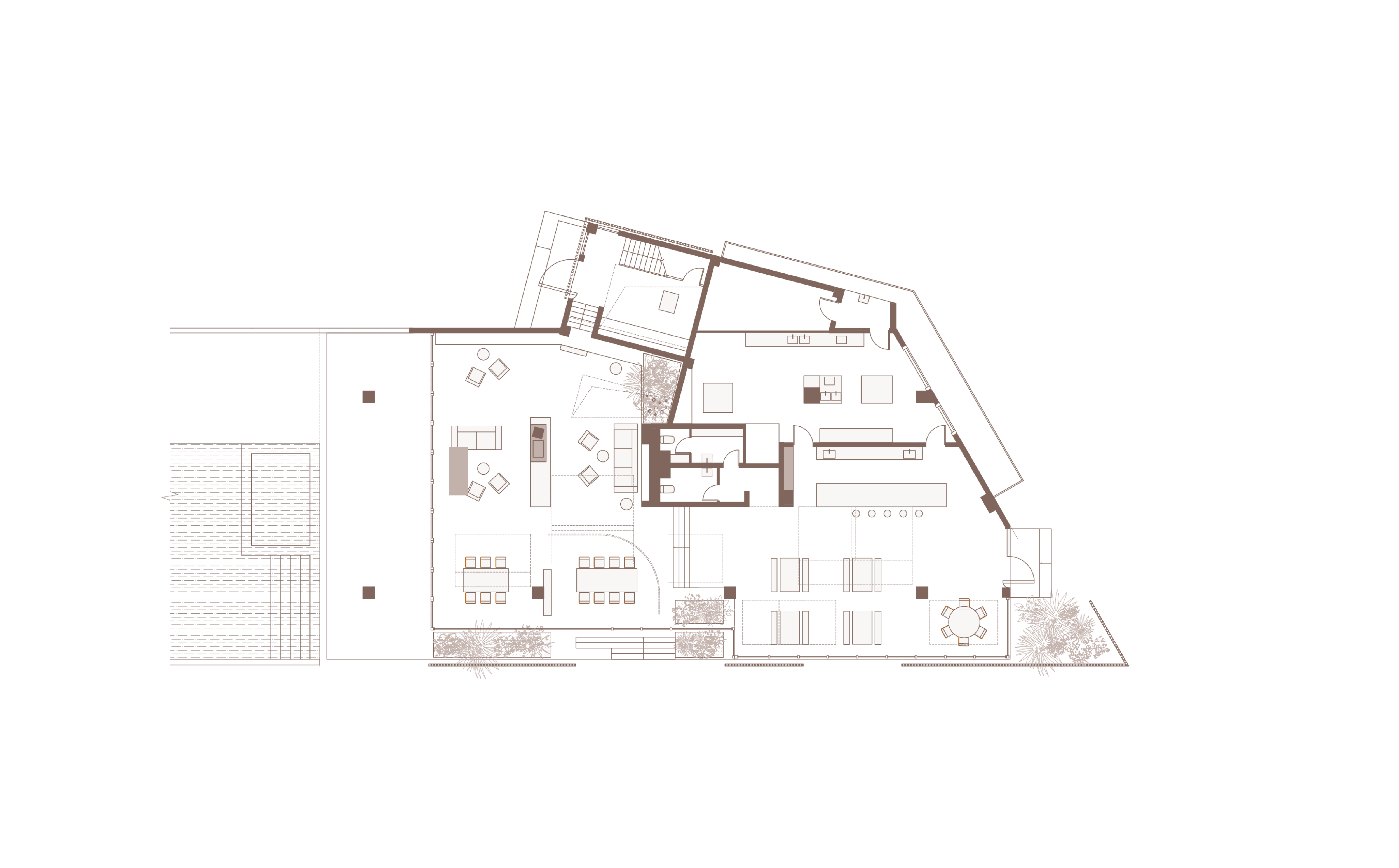
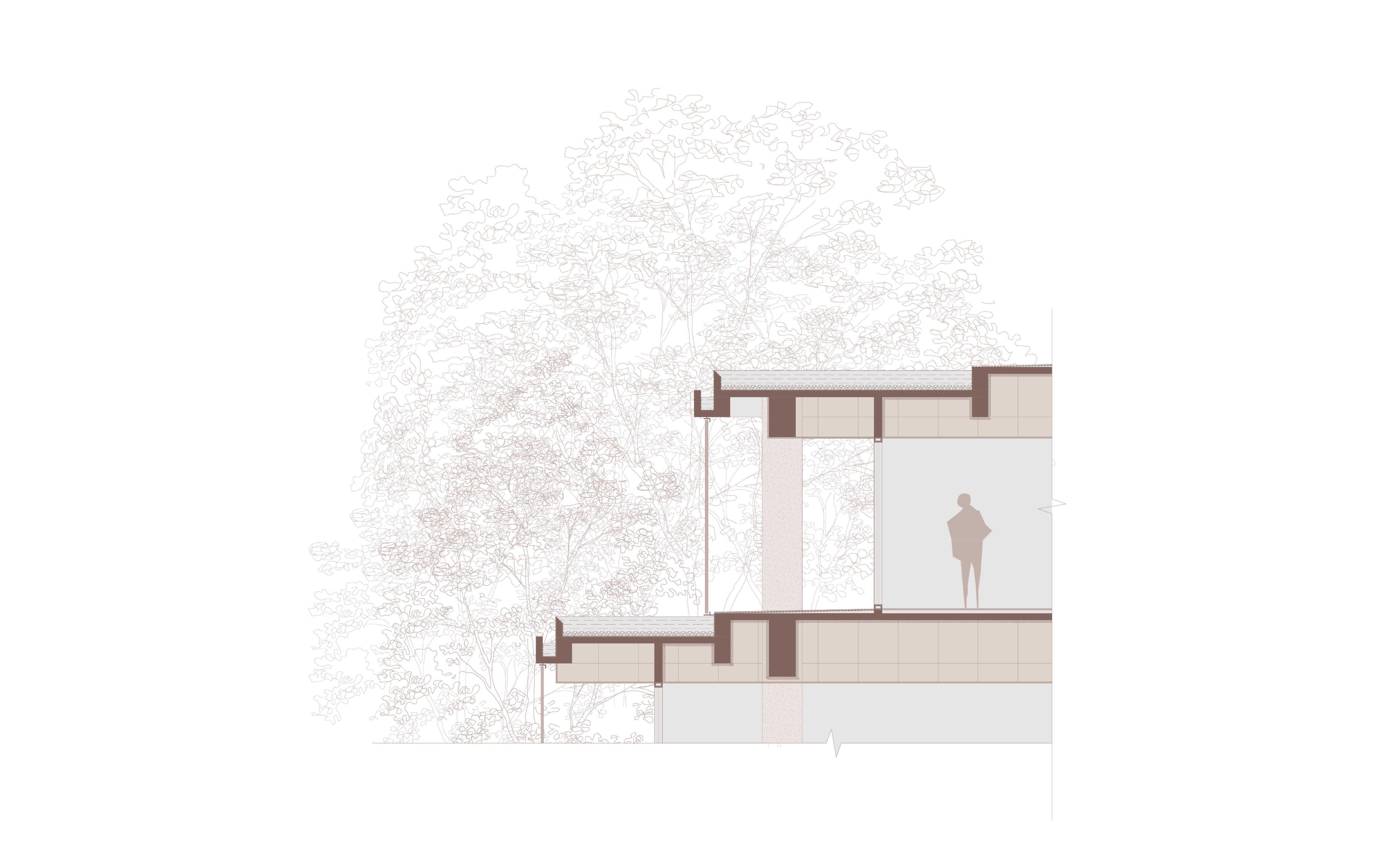
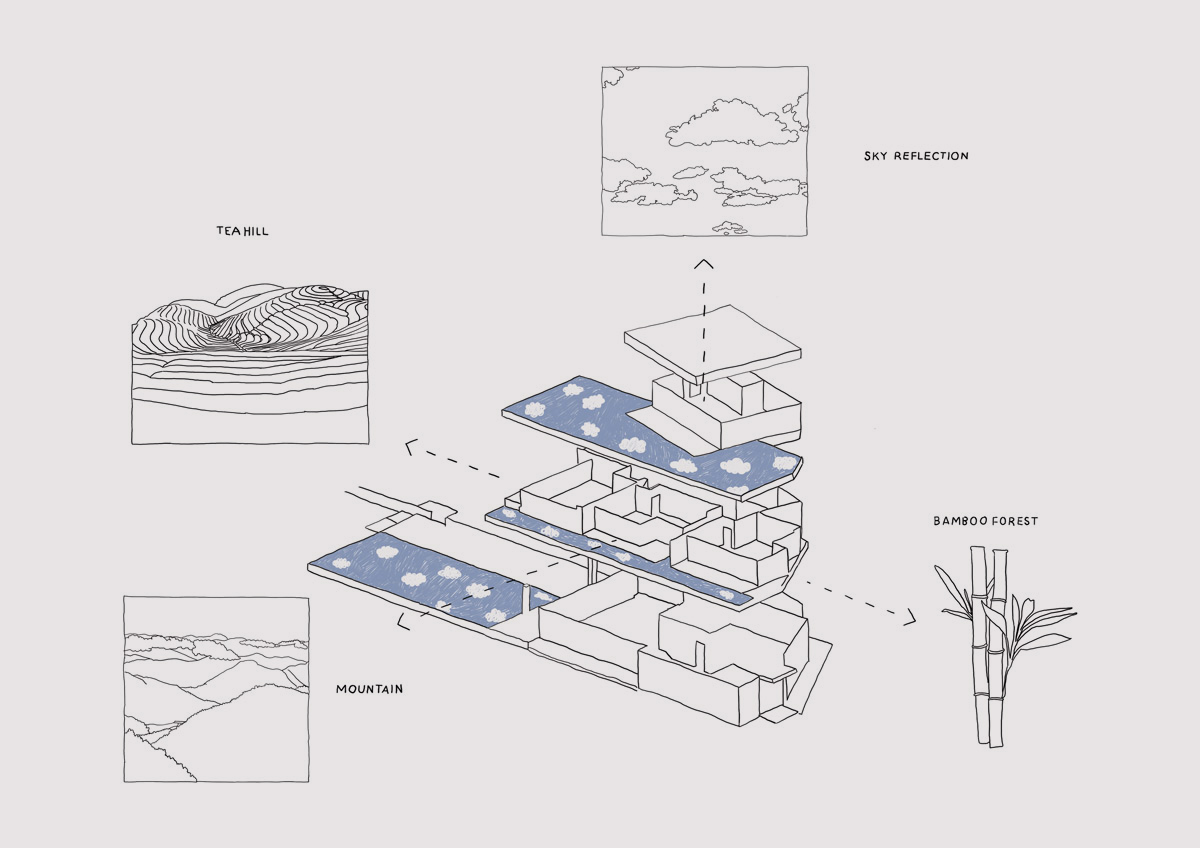
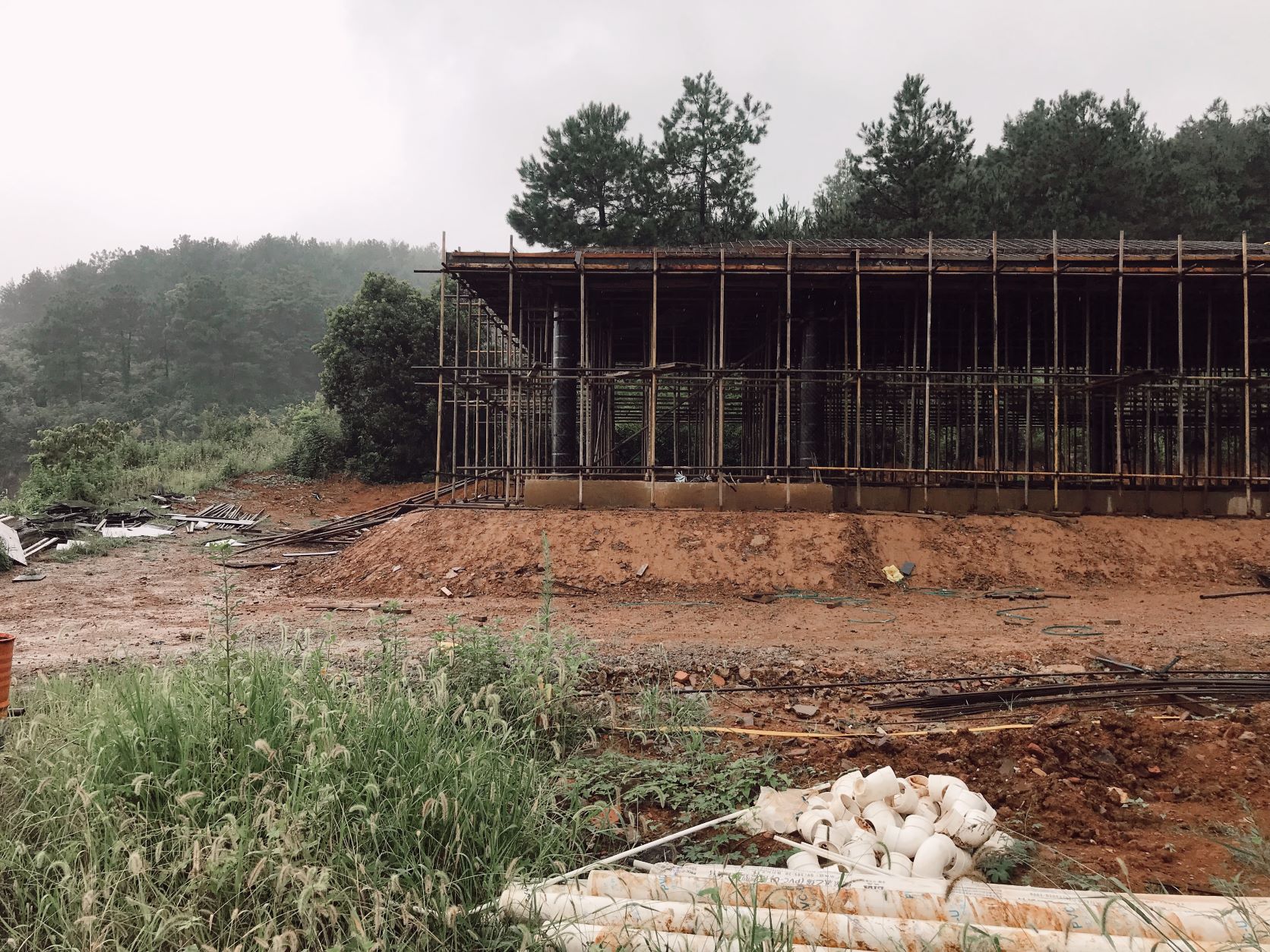
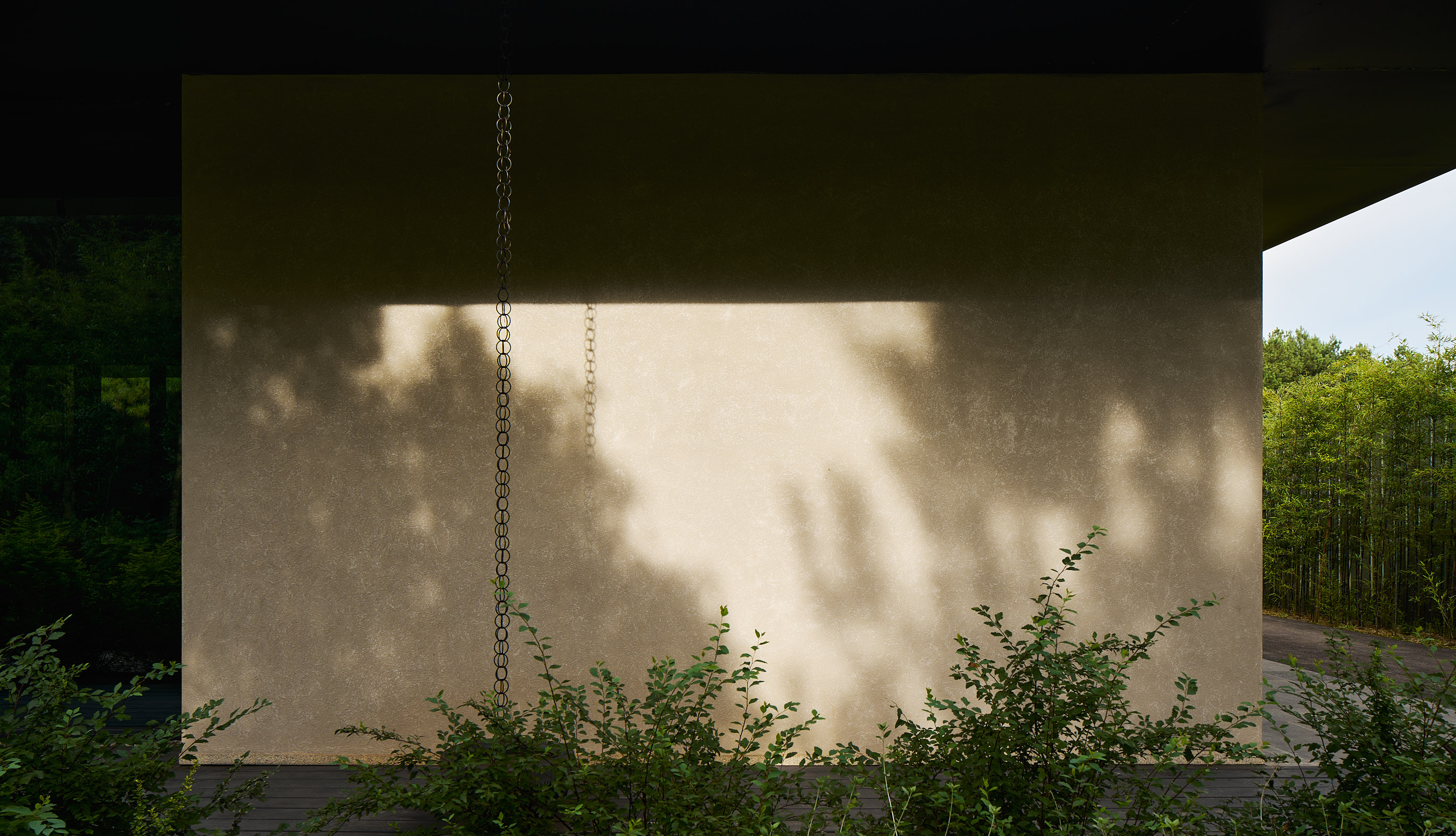
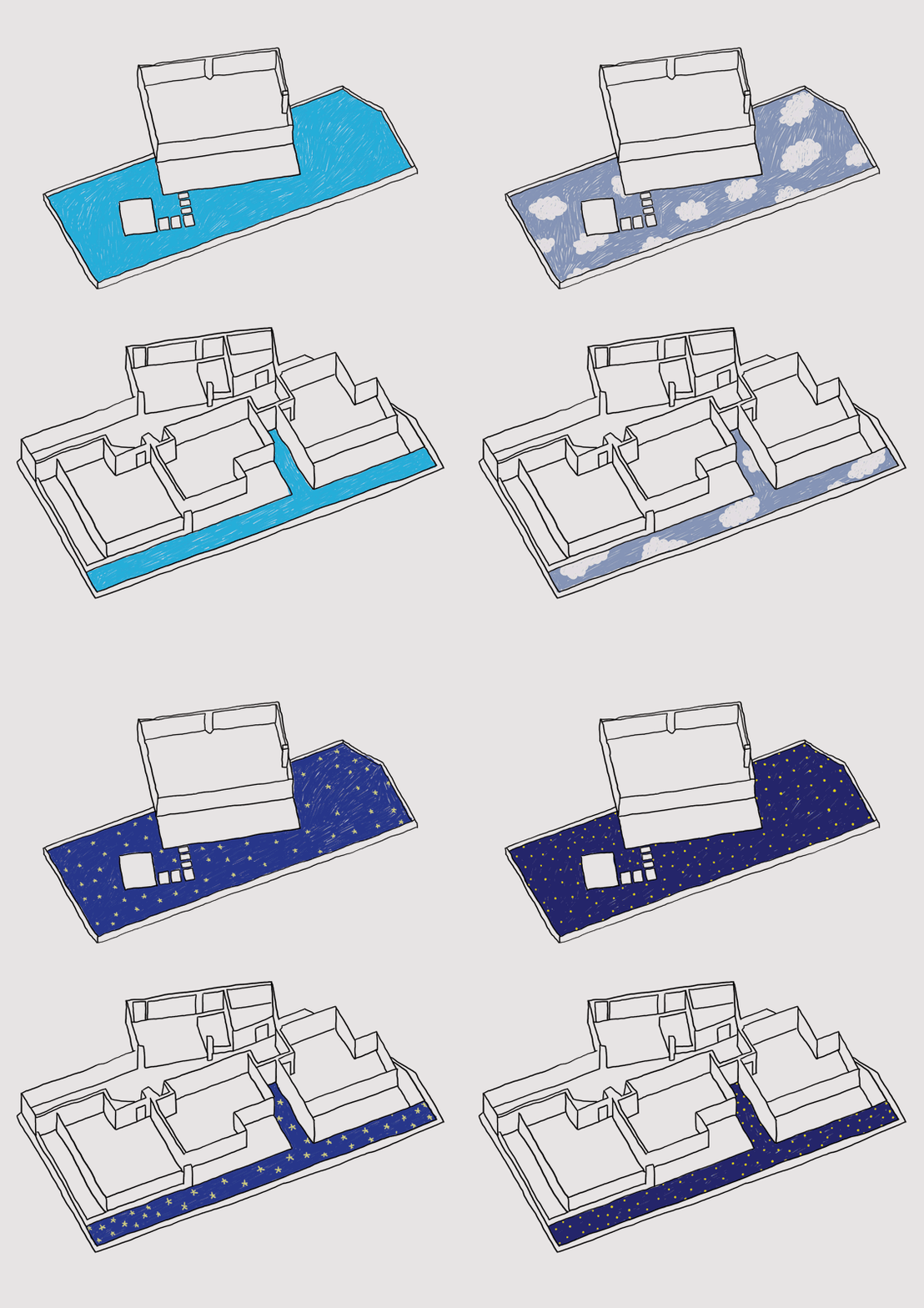
The surrounding landscape of the project site is rich and unique:; however, after a first contact with the site, the studio team felt something was missing: a lack of water presence. Water itself, and especially a very calm water surface, generates immediately a sense of relax. The studio decided that this element would be the core of the hotel, a connection between the rooms that articulates the structure of the entire building. For that purpose, the roof of each floor was turned into an infinity water feature. By bringing natural elements into the architectural spaces, the design fosters a connection between the building and the outside. “Find myself in nature” becomes, then, a reality when experiencing the different rooms.
Four narratives are unfold in Studio8’s design, and become the themes of the rooms. Each room has been designed as an individual space, with its own story focused on elements that one can find within the surroundings. Each of these elements awake a different sense, or provoke a sensorial phenomenon.
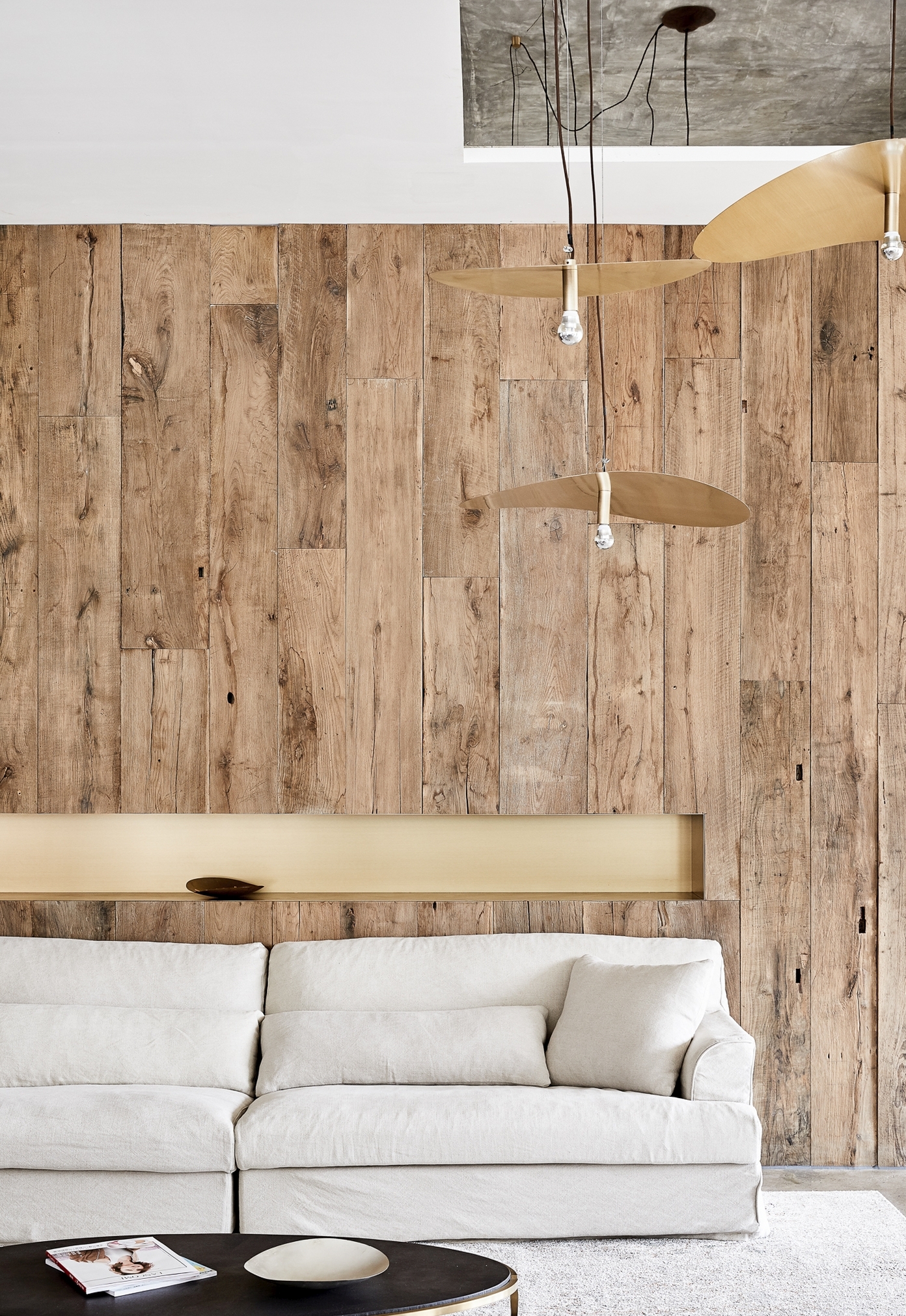
1. Tea – This room faces the white tea harvest; the materials and color palette of the interior design echoes the tea theme.
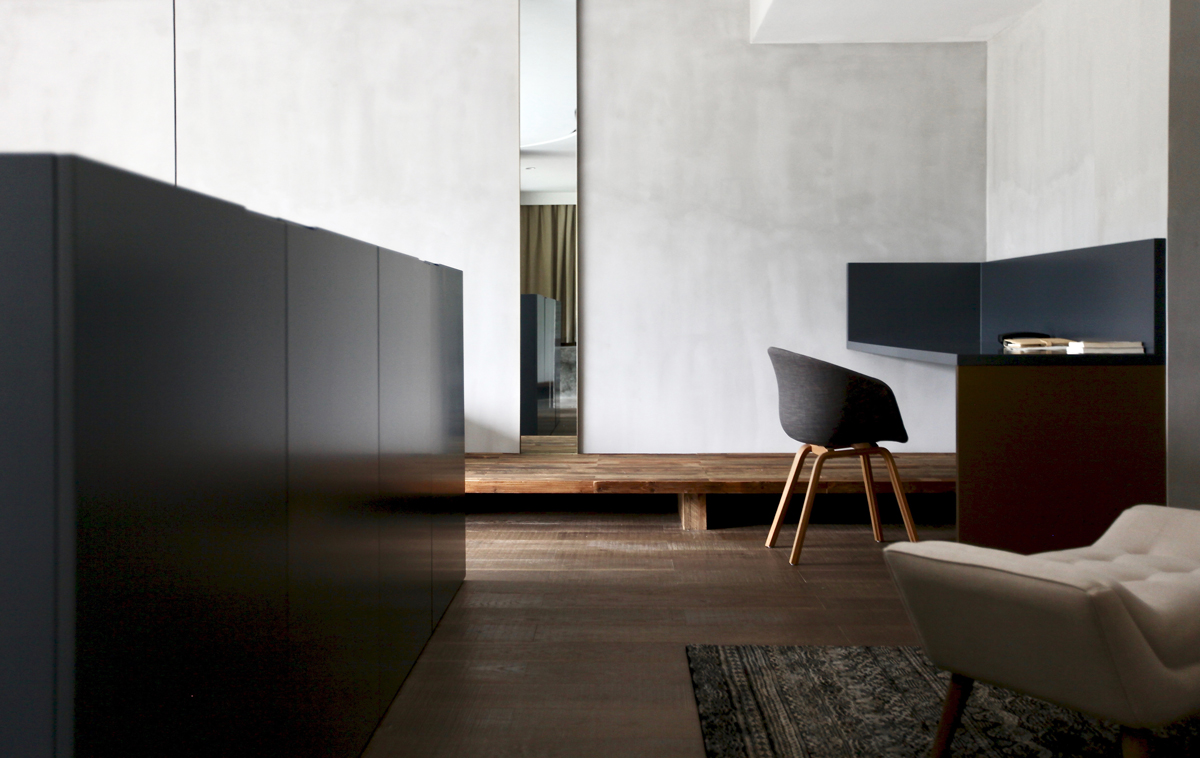
2. Mountain – The room faces the mountain on the south, and the materials are natural stone and the color palette is dark grey. The water feature is designed to reflect the distant mountains.
3. Bamboo – The room faces the bamboo forest in the east, and its interior has a rice pink color palette and several objects made of bamboo wood.
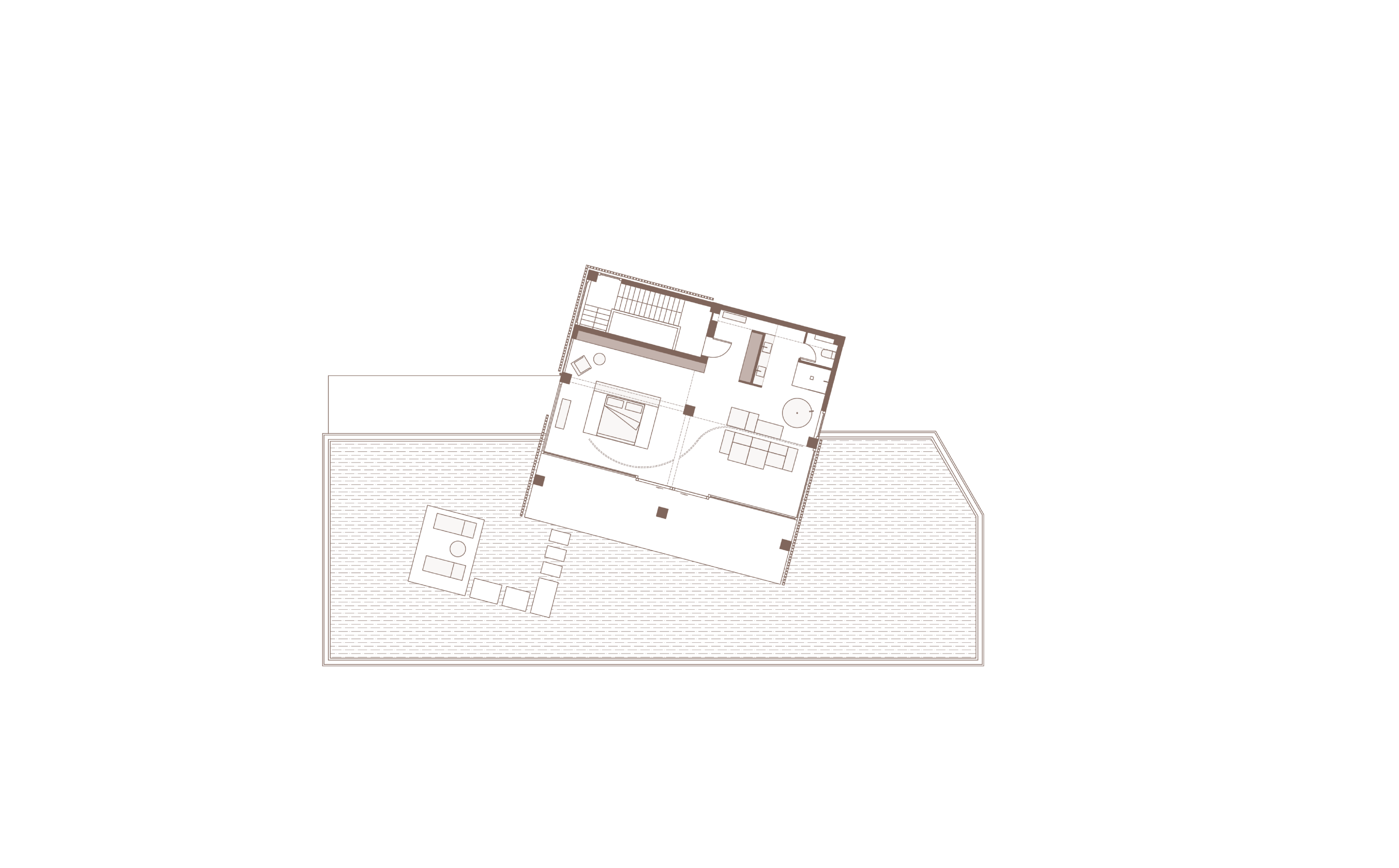
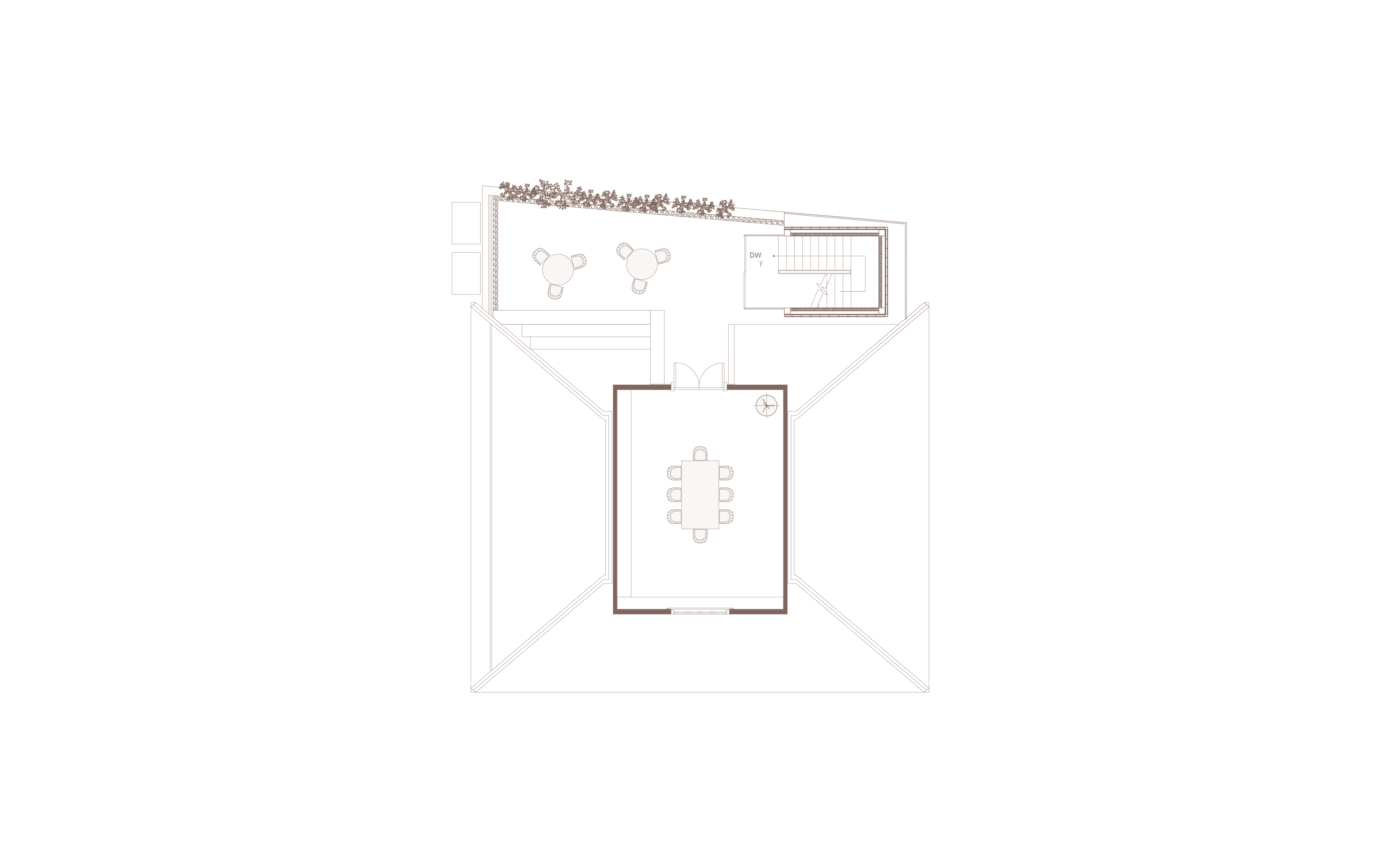
4. Sky – The room is located on the third floor, which is also the top of the building. It is almost immersed by a boundless water feature, turning the room into a floating island. The studio designers challenged themselves to explore the poetic boundaries of the project’s concept. The third floor, then, was conceived as a platform able to behave like a mirror, and reflect almost the entire surroundings and the sky.

莫干山Anadu度假酒店
水与境之间:在自然中找到自我
Anadu位于浙江湖州的莫干山脉北麓,坡地院落占地30000㎡,东瞰琛碛村,南眺凤凰山、大岗山,西临白茶山坡,北有竹林环绕。
「八荒设计」担任Anadu酒店的品牌视觉识别系统建立,以及建筑和室内设计。Anadu希望为住客提供一个身处自然的宁静度假体验。因此,保持当地的人文和自然氛围成为整个项目非常重要的关注点,从建筑材料到设计元素,甚至食材,都最大程度地充分利用当地资源。于是在建筑与空间的设计中,Anadu被融入到周边的自然元素之中。「八荒设计」最先提出的设计概念:“跟自然相处,跟自我对话”,渐渐也演变成了品牌的核心Slogan—“在自然中找到自我”。
项目基地周边自然景观丰富别致:西面有葱绿且机理独特的白茶坡、北面有连绵叠嶂的远山,东面有茂密深幽随风摇曳的竹林。但「八荒设计」注意到,基地周边缺少了“水”的元素。水,尤其是一池平静的水面,能让人瞬间心情静怡。Anadu想要给住客“一个能够让人发呆一天不想出门的房间”。除了自然风景,如果能给人带来亲水的空间体验,将制造出另一个象限的“境”。水同茶、水同山、水同竹的交合,不但拉近了人与水的距离,同时也建立了建筑空间与自然元素的连接,除了欣赏风景,更创造了心境,才真正能让人能“在自然中找到自我”。

设计初始,「八荒设计」并没有从建筑本身的形态出发,因为他们认为空间的使用者与自然的关系才才是设计的关键。建筑的三层楼均有无边亲水台:一楼的泳池、二楼南面阳台的无边水景、三楼整层屋面的无边水景,每一层都有独特的景致,一层比一层更令人意外

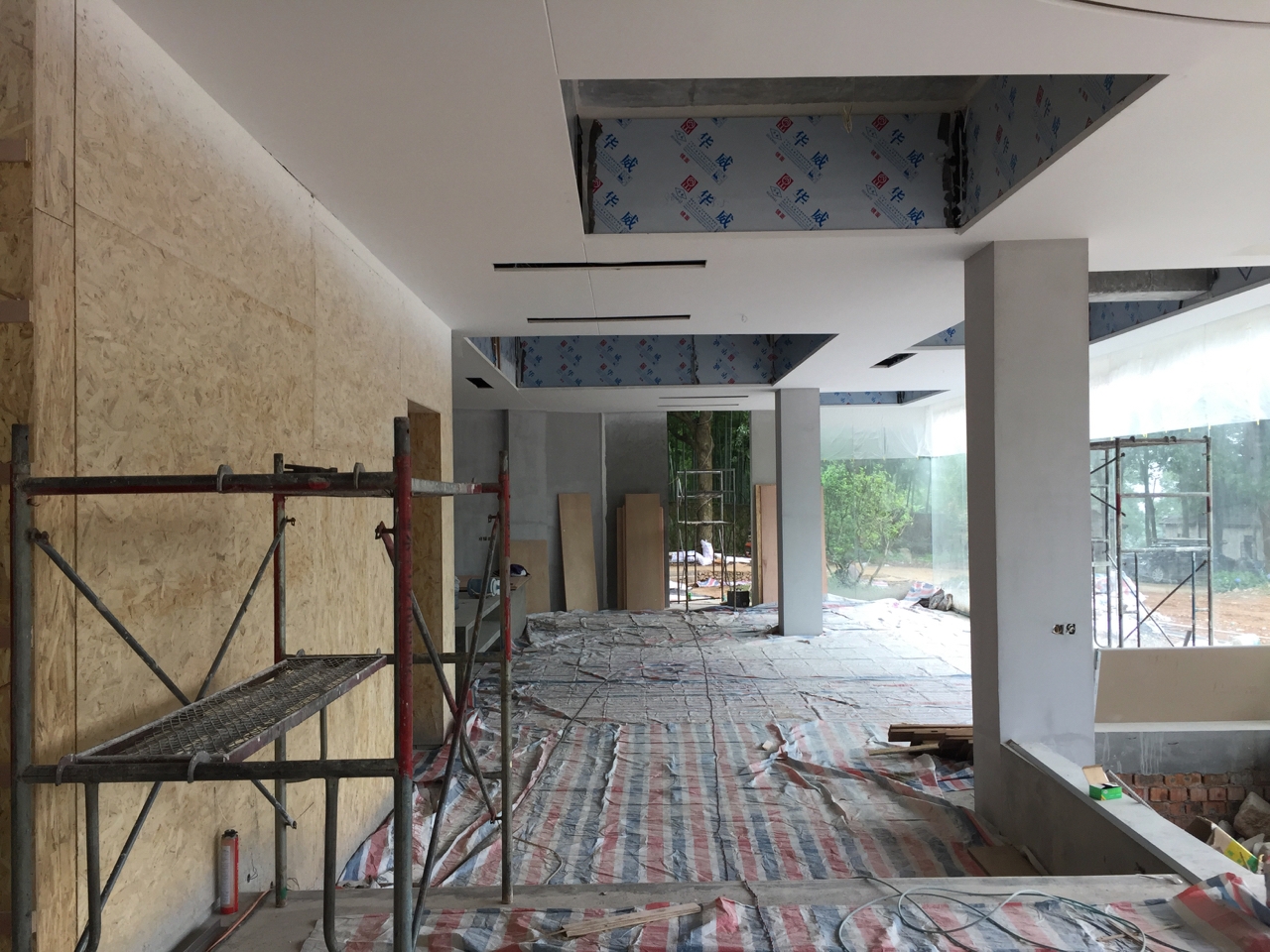
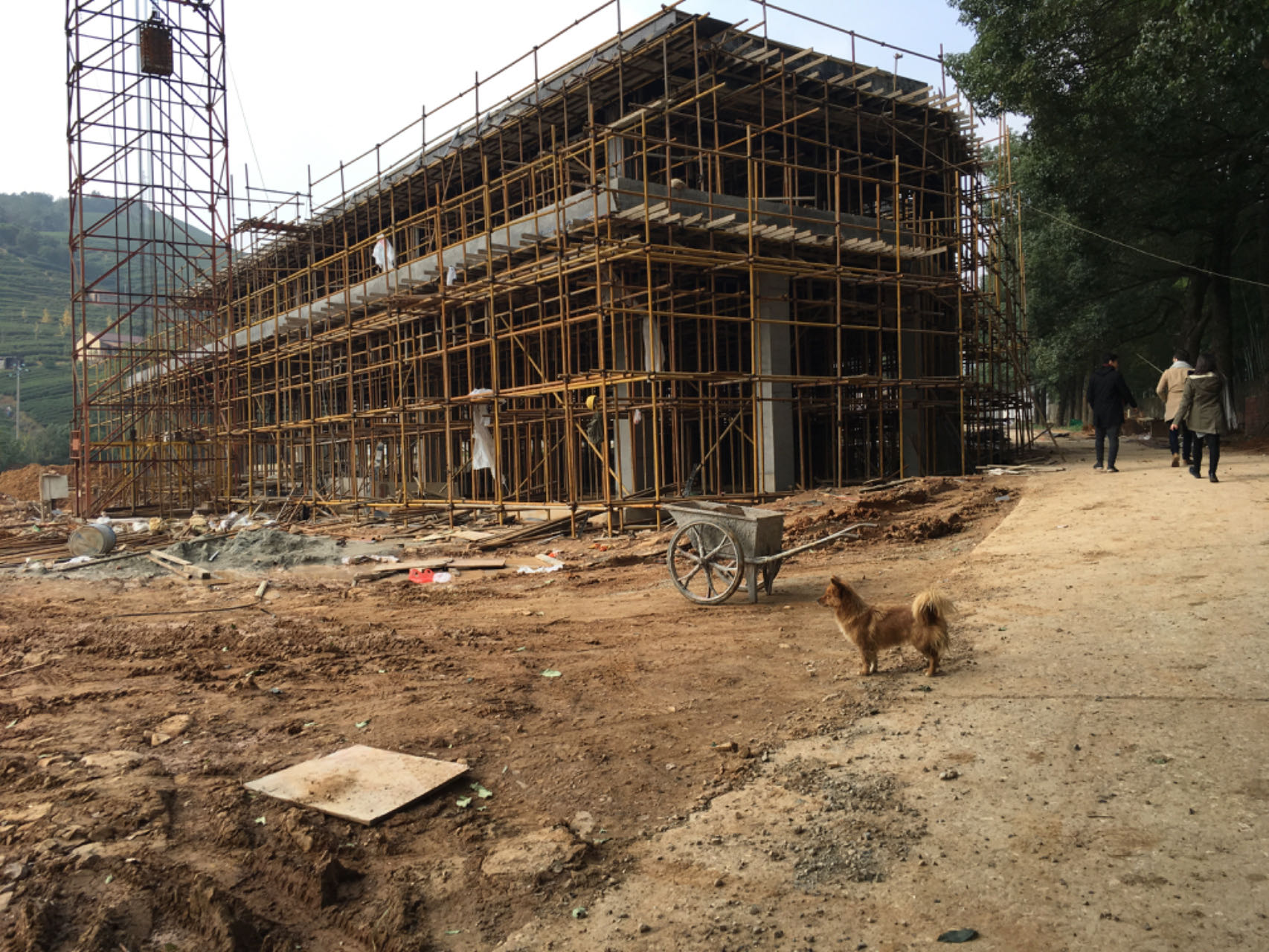
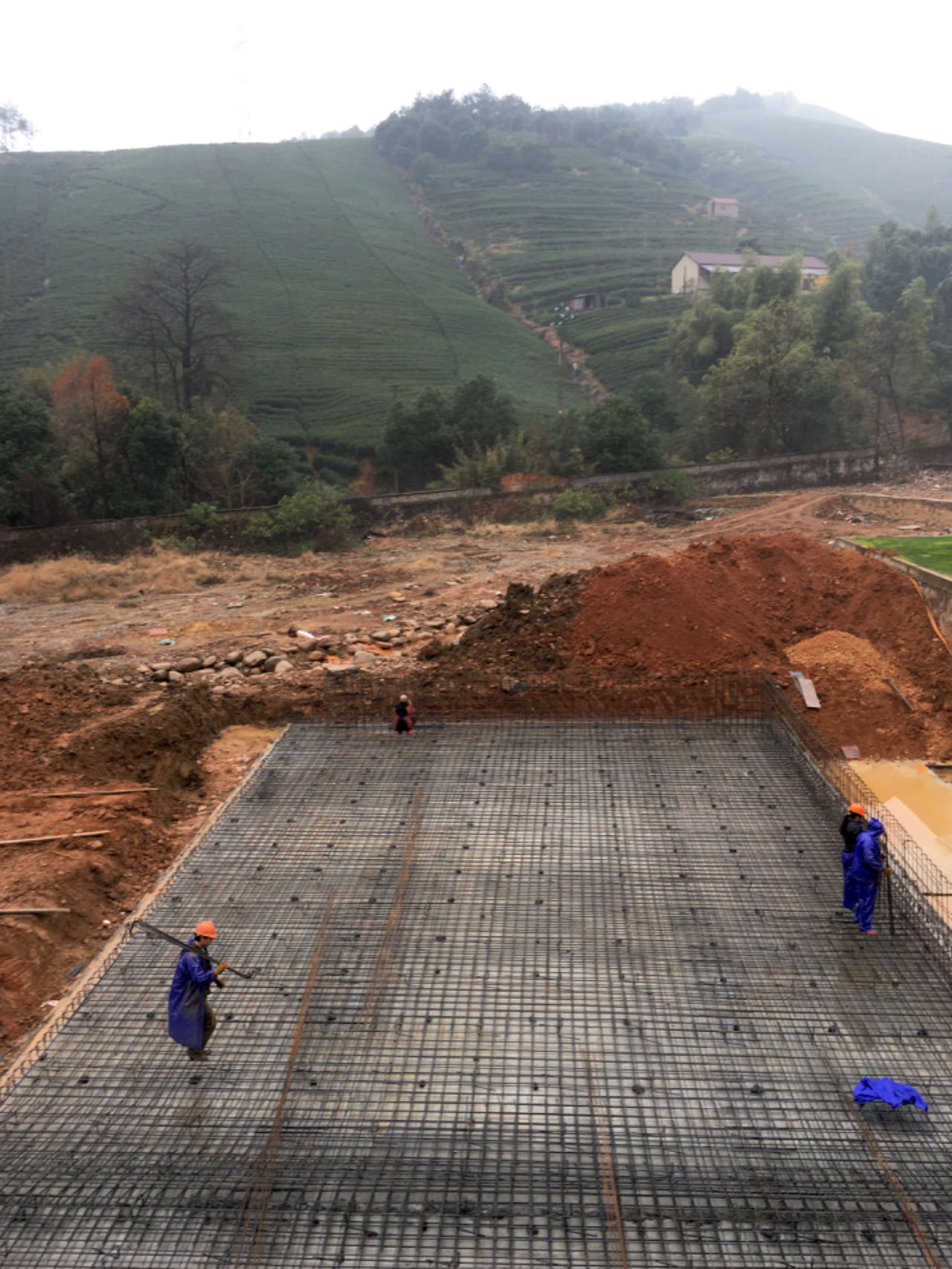
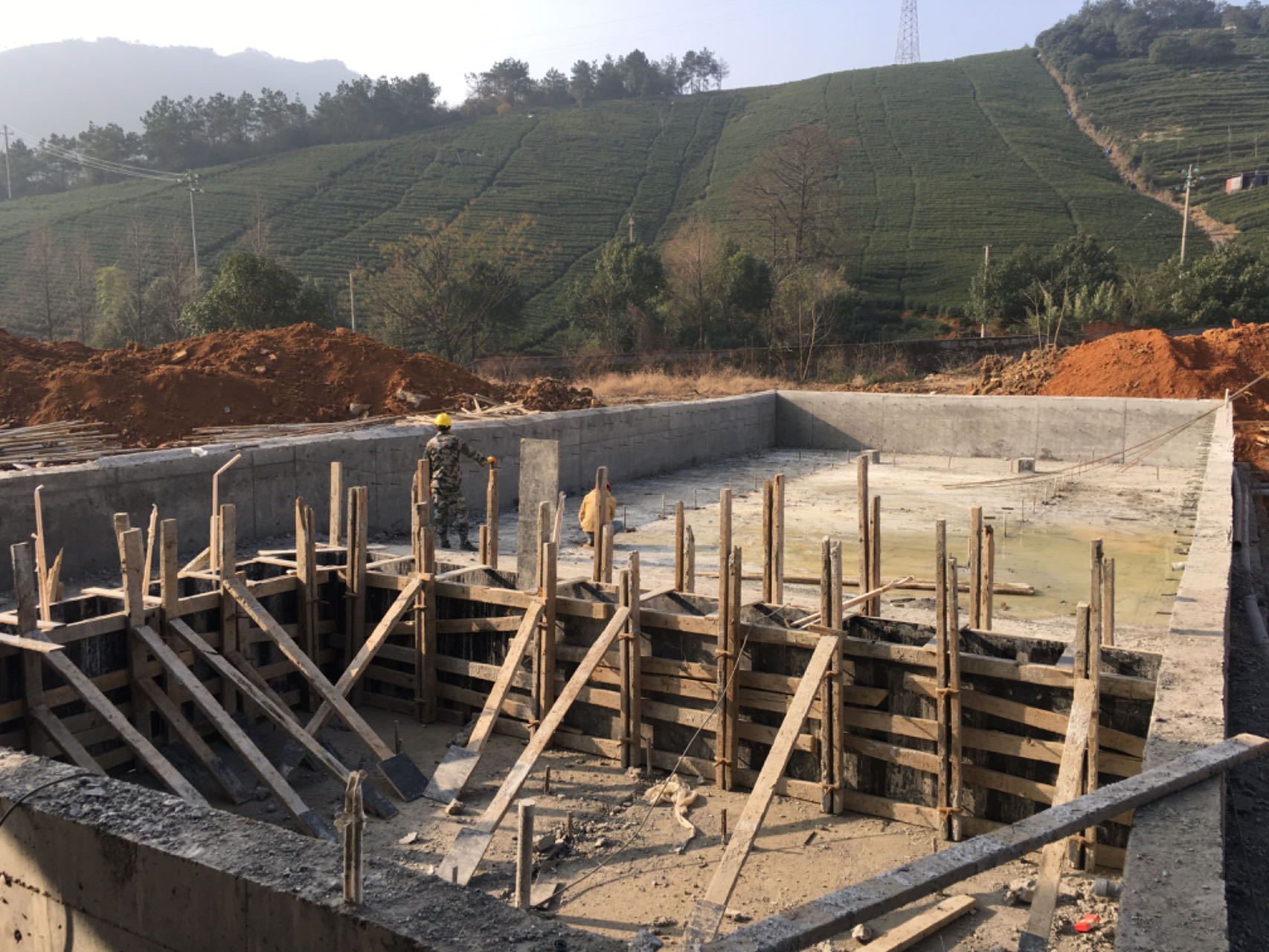
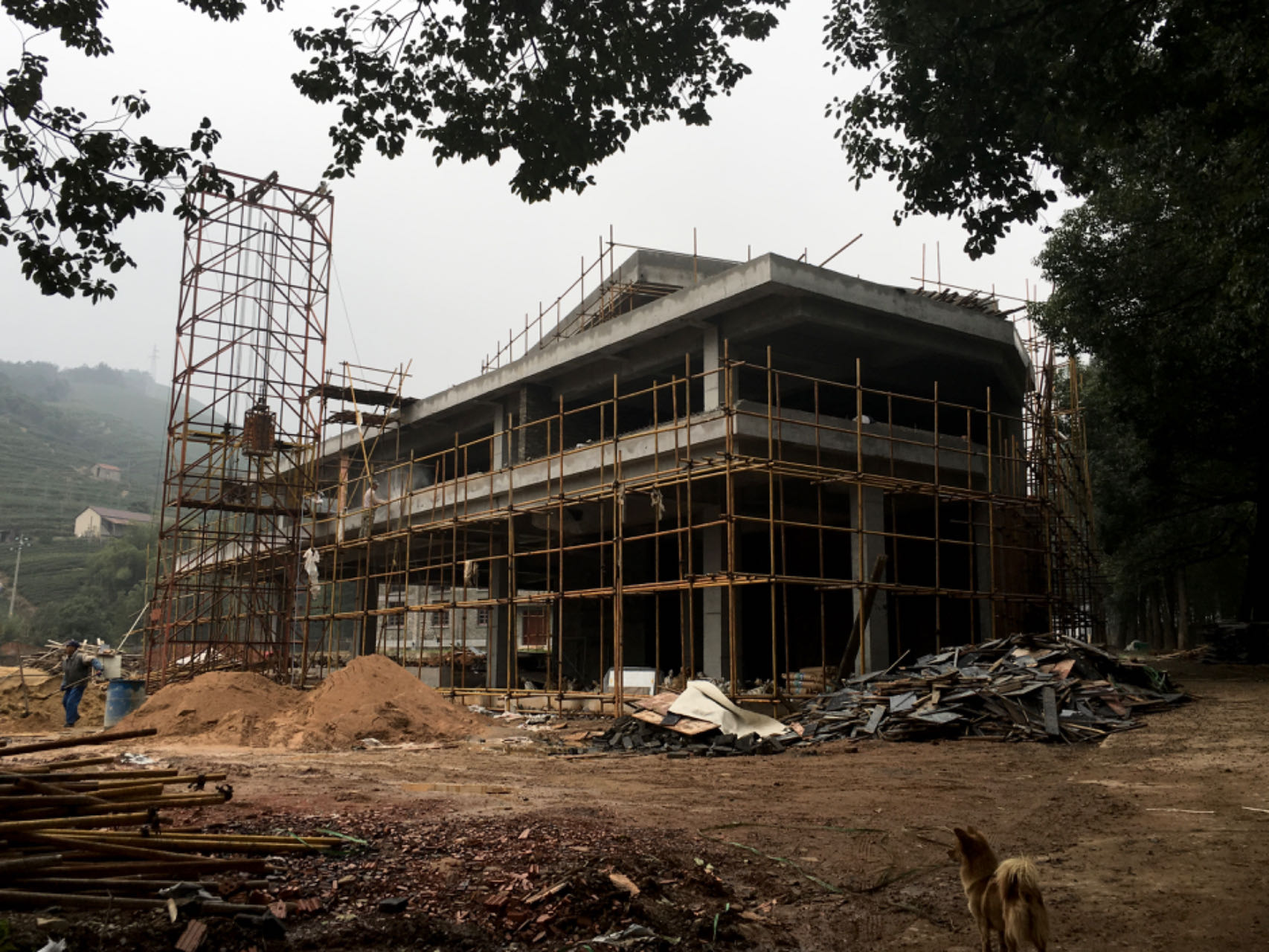
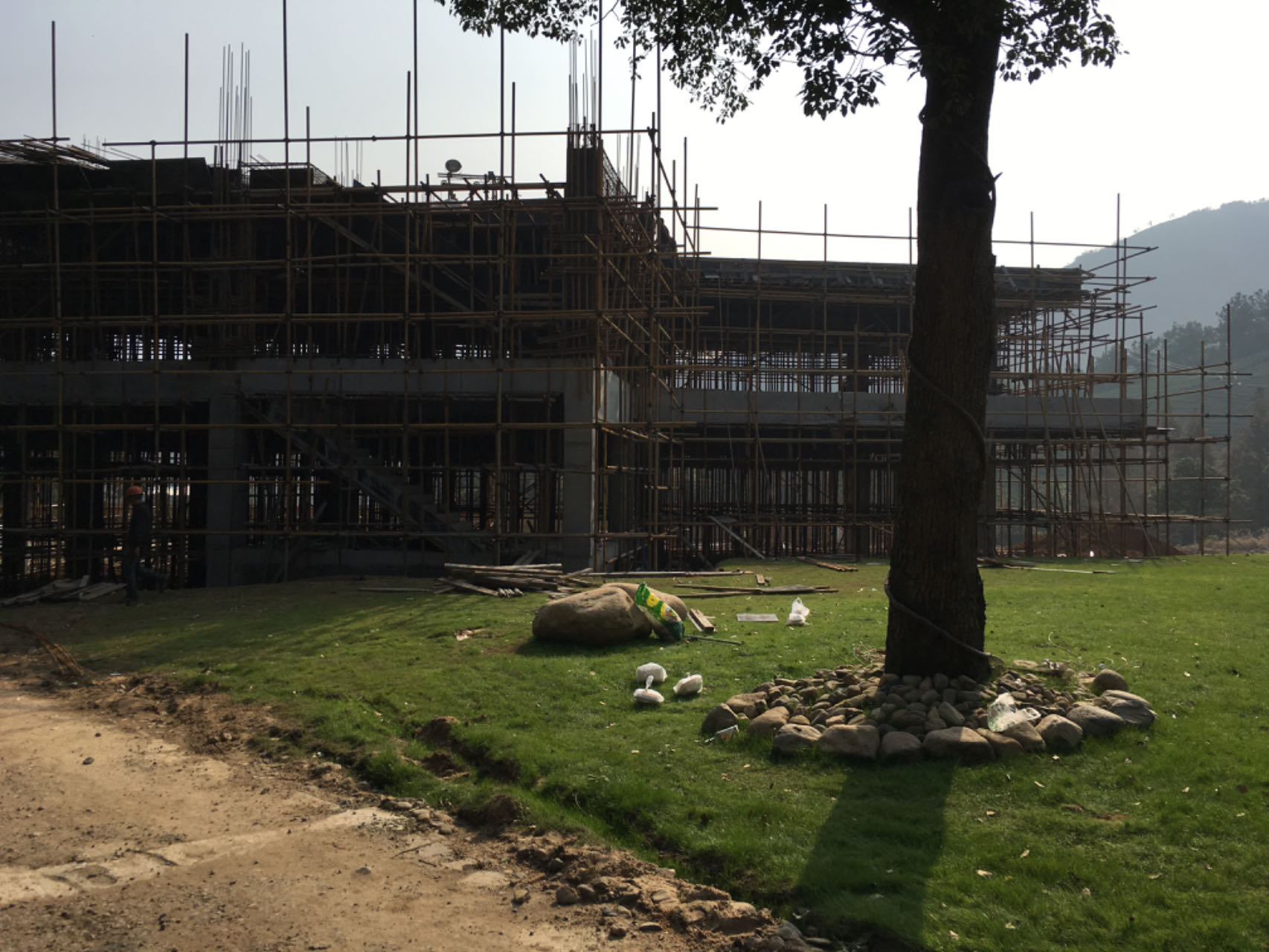
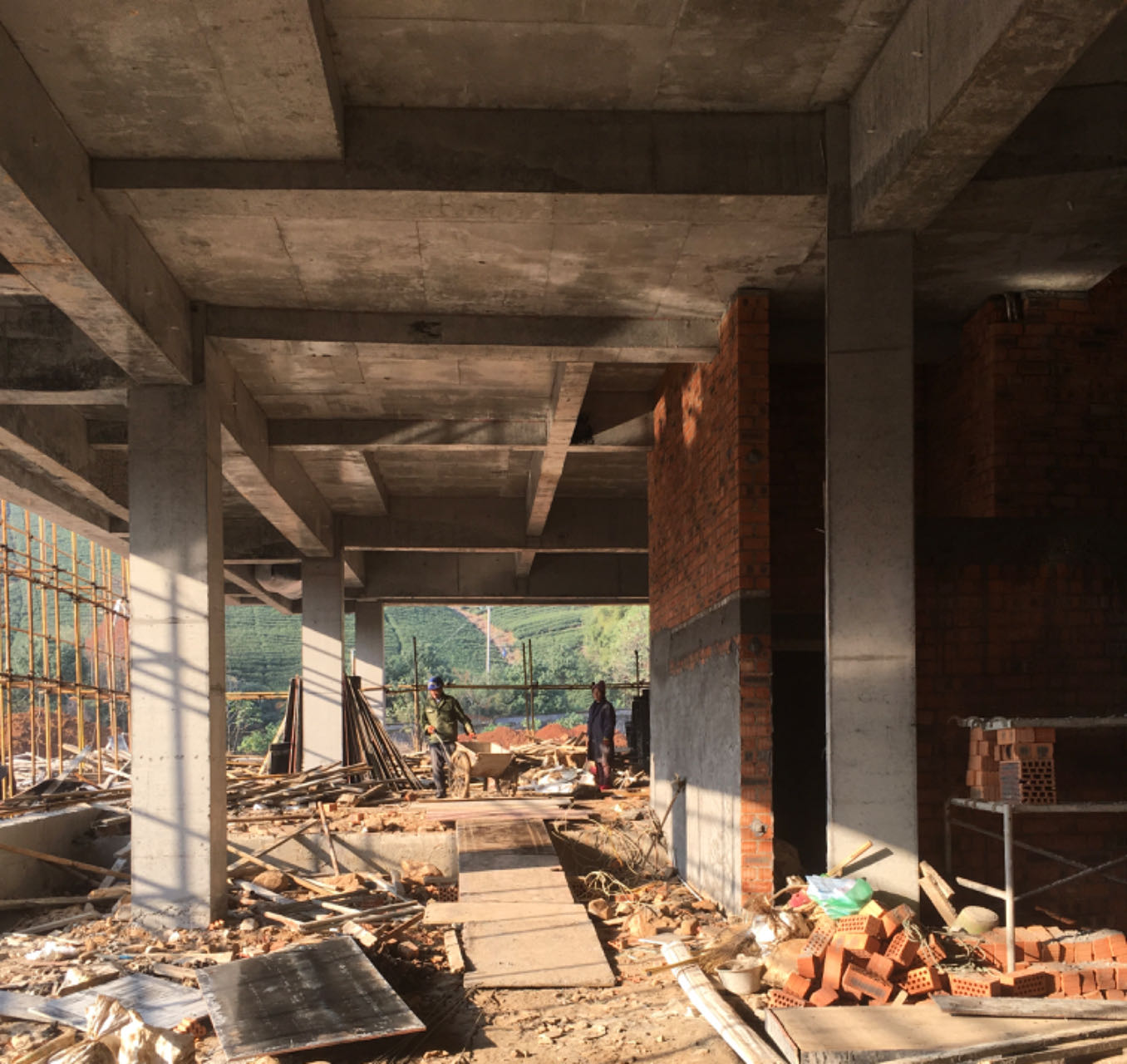
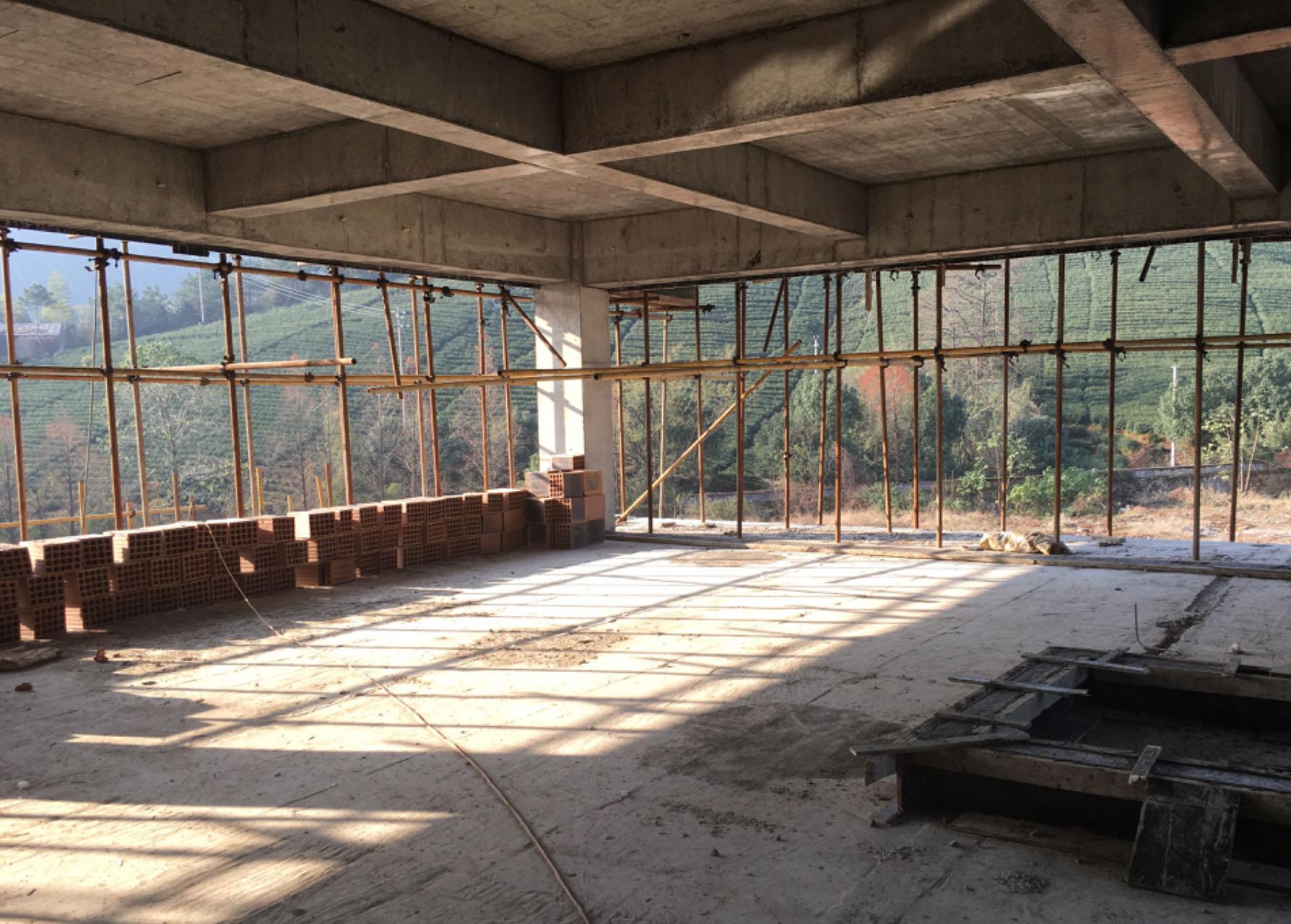
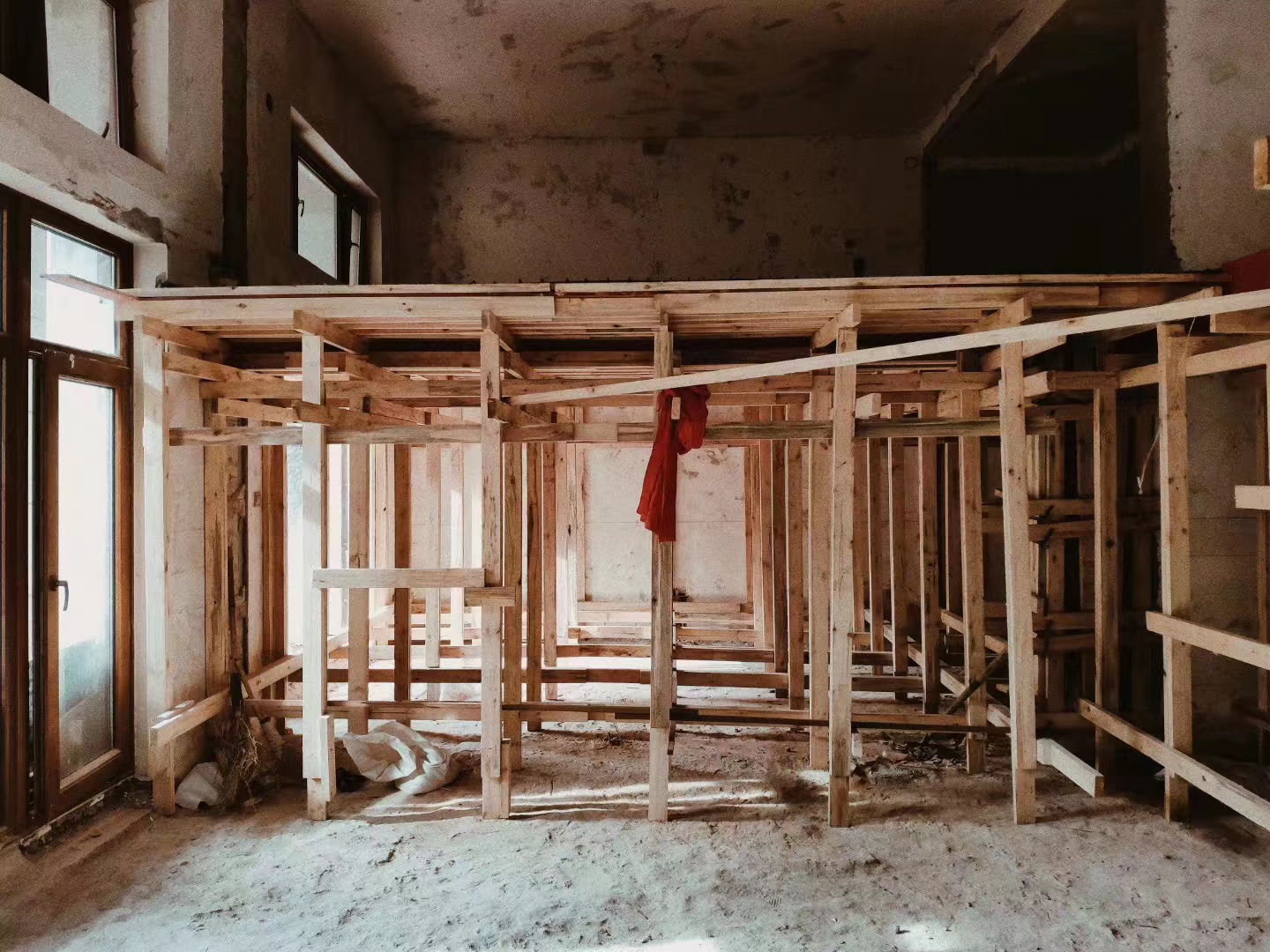
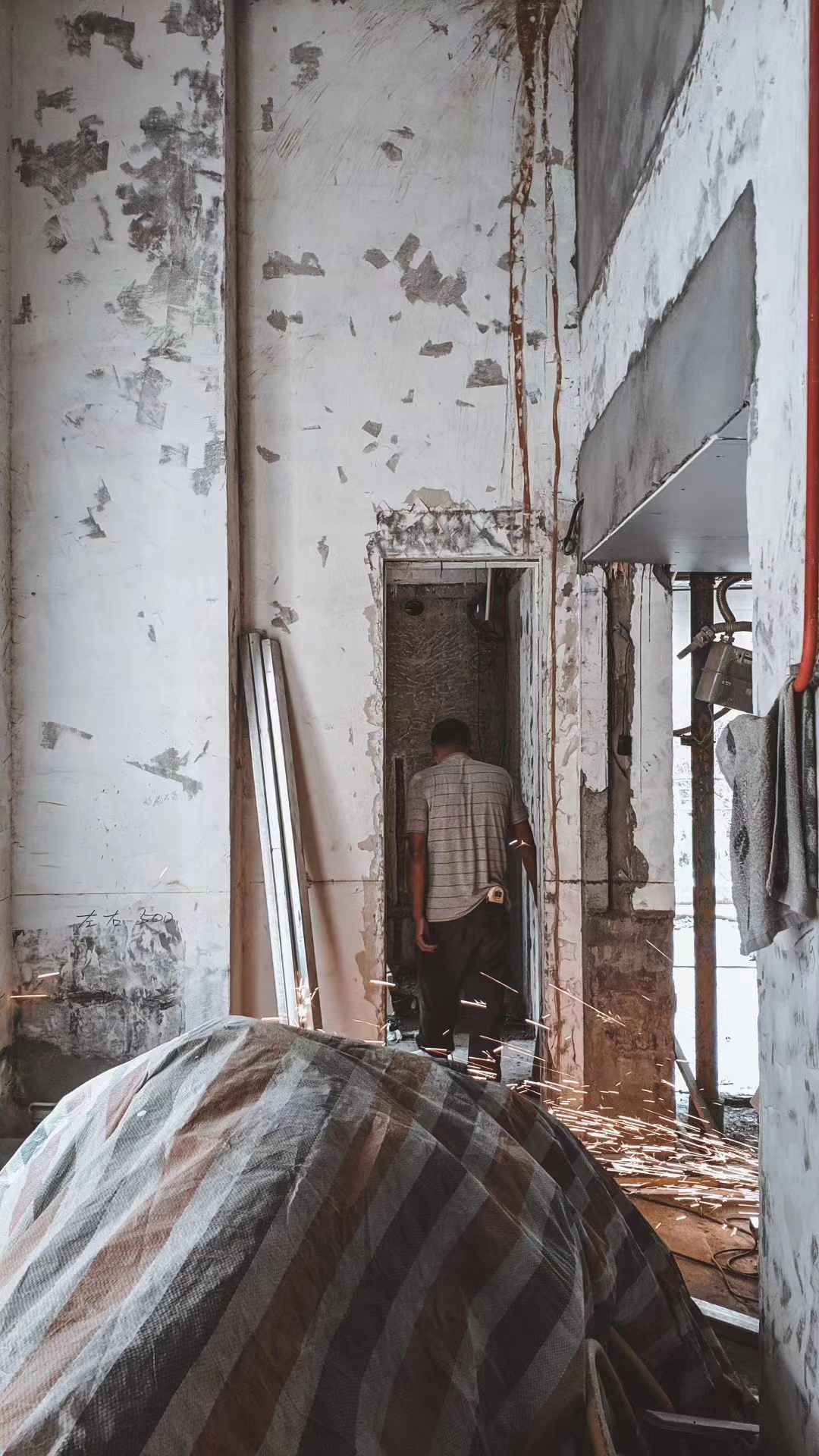
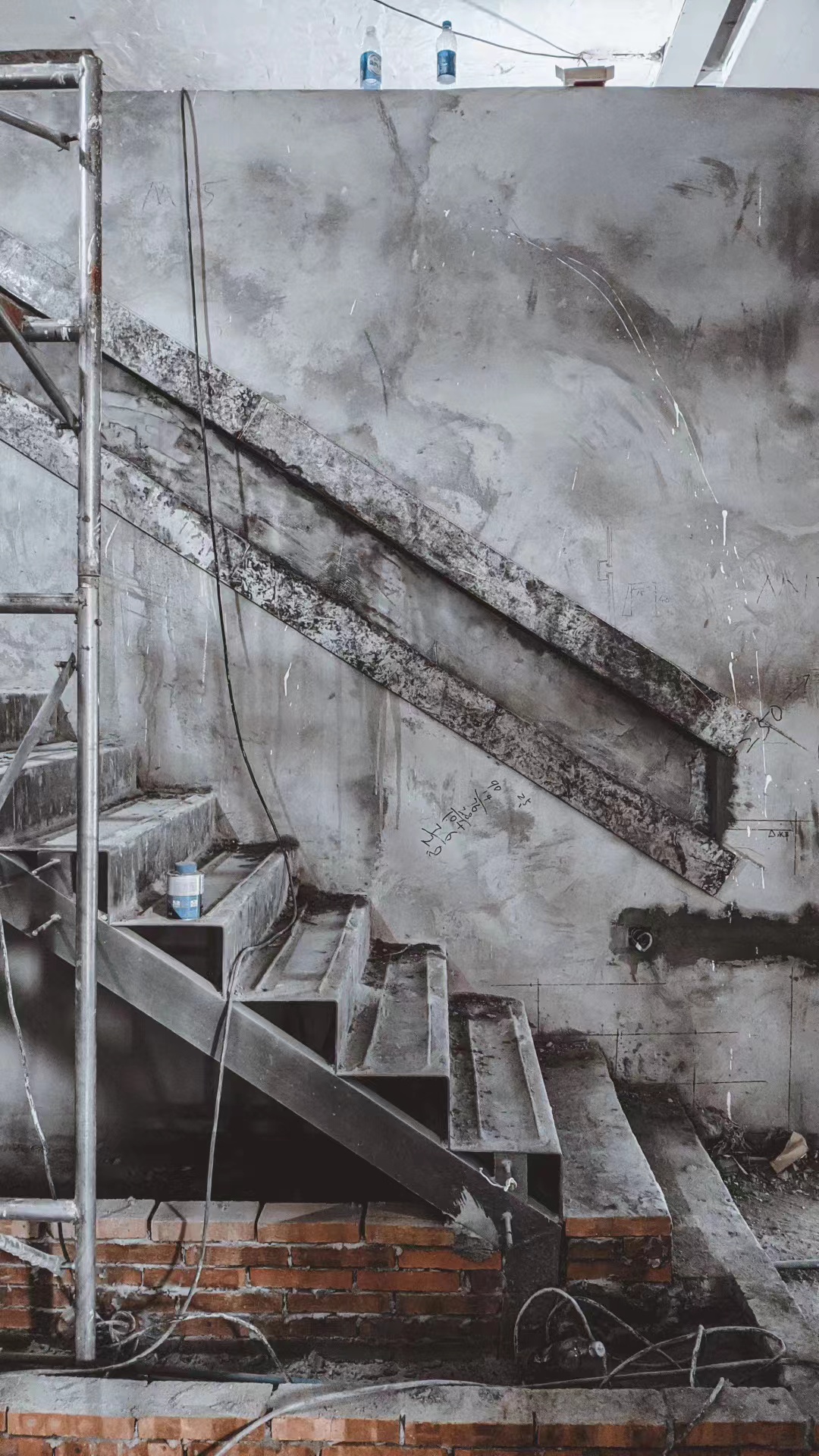
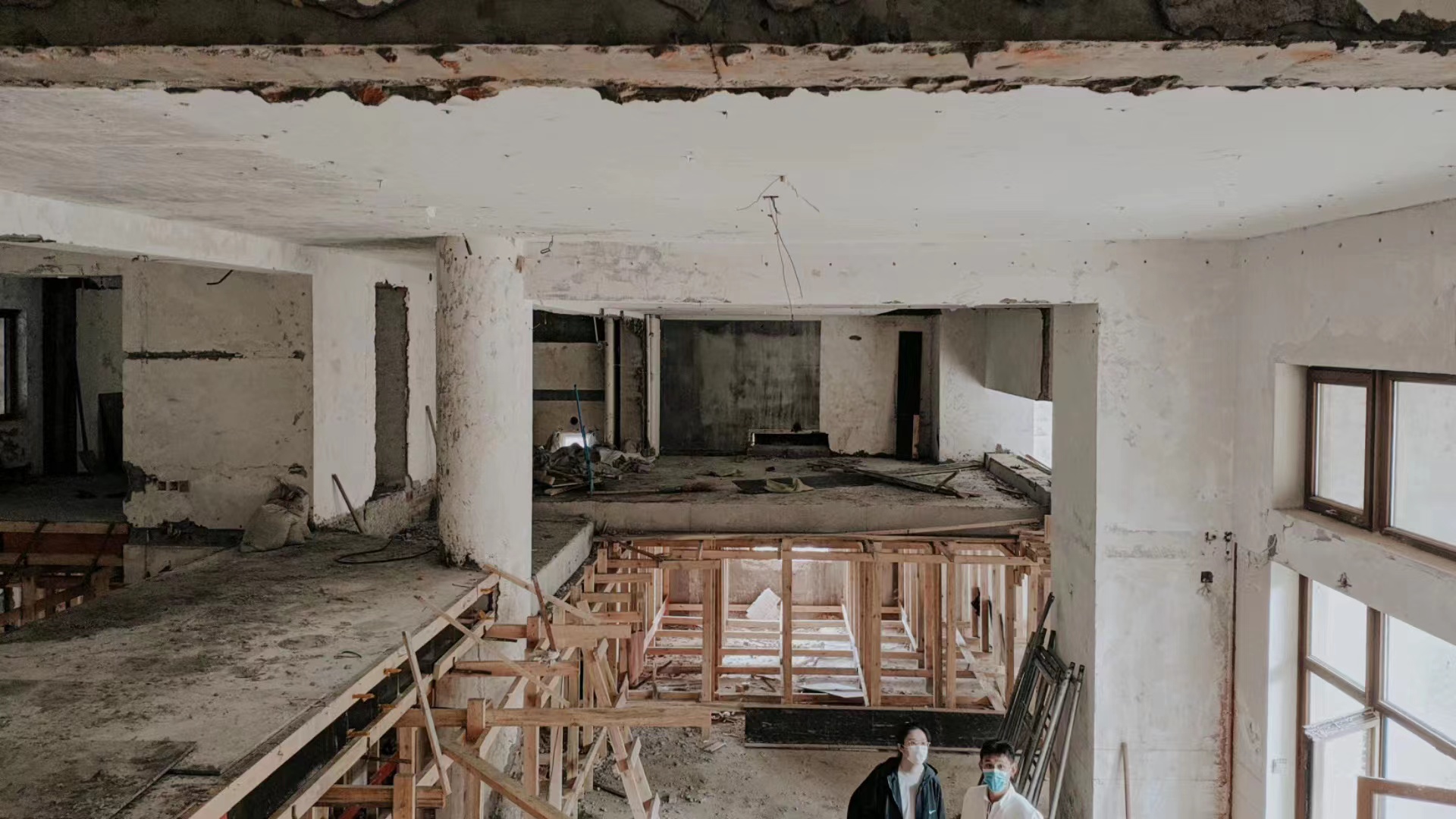
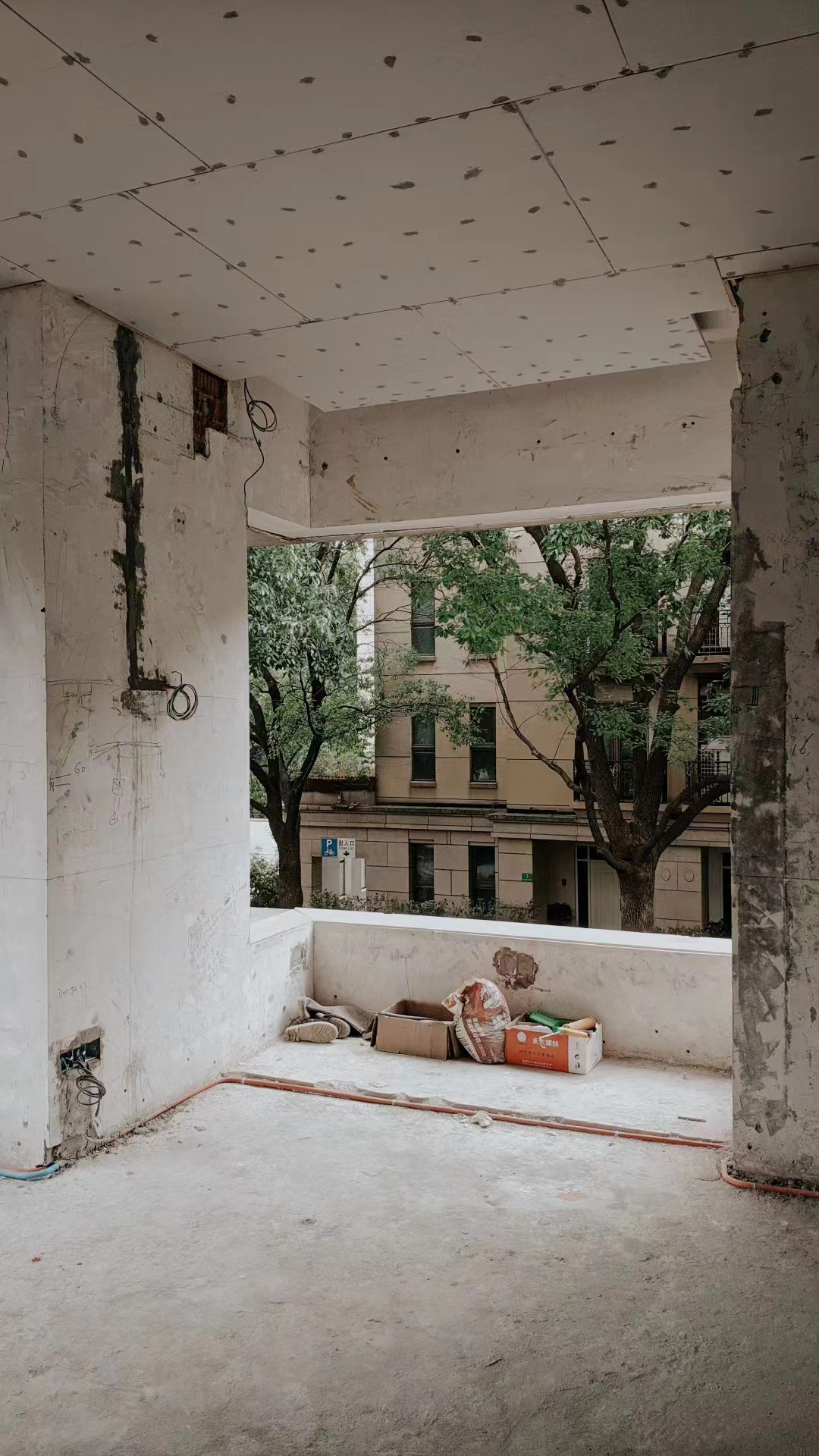
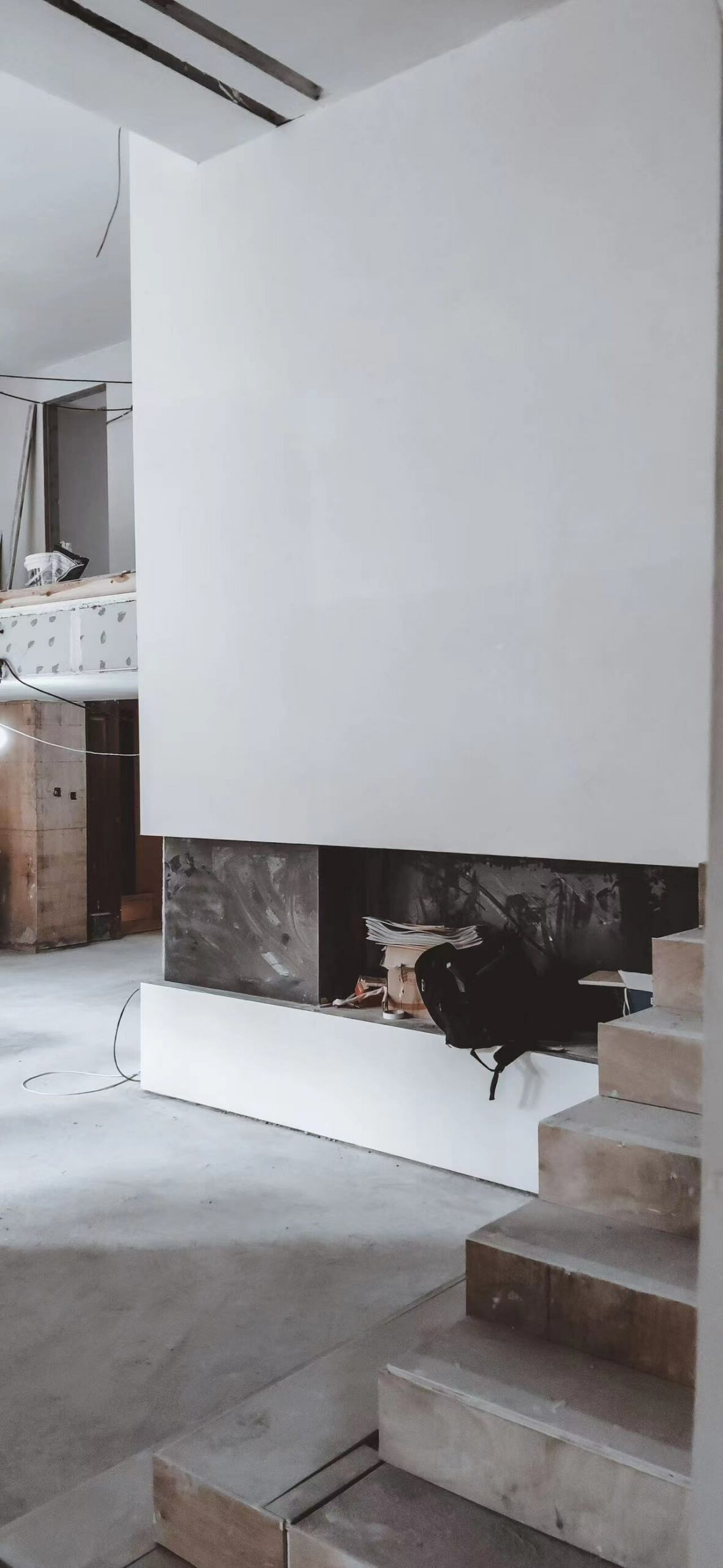
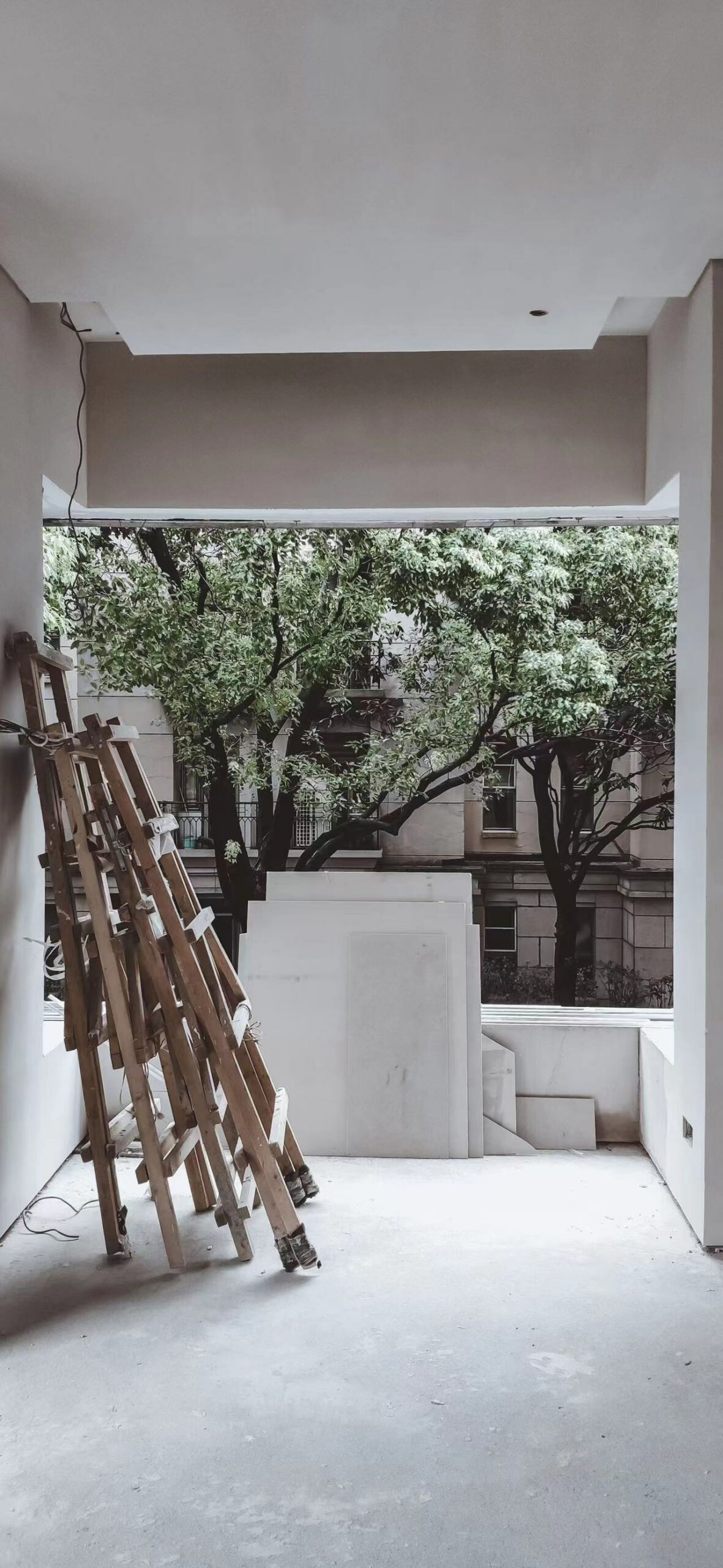
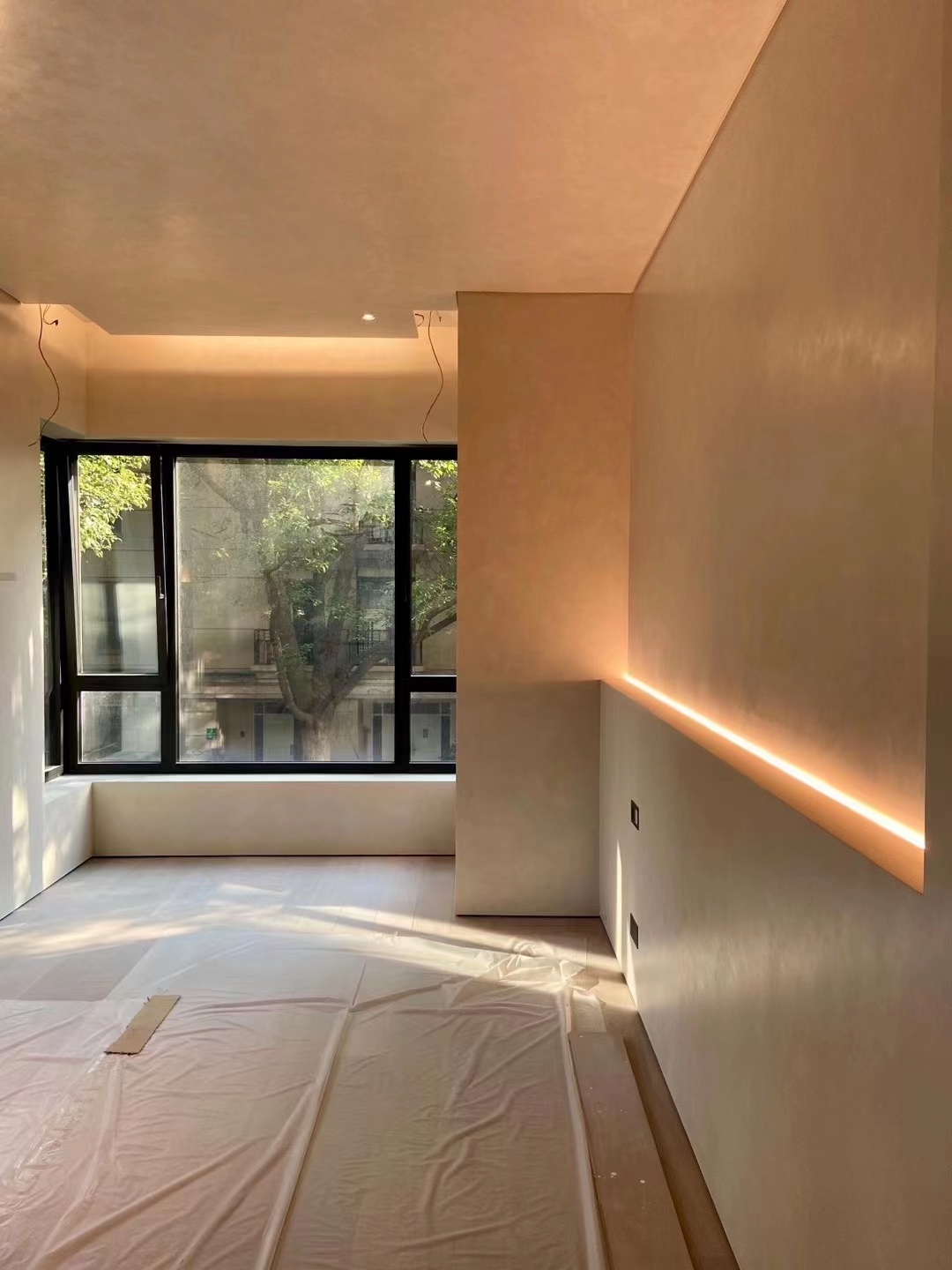
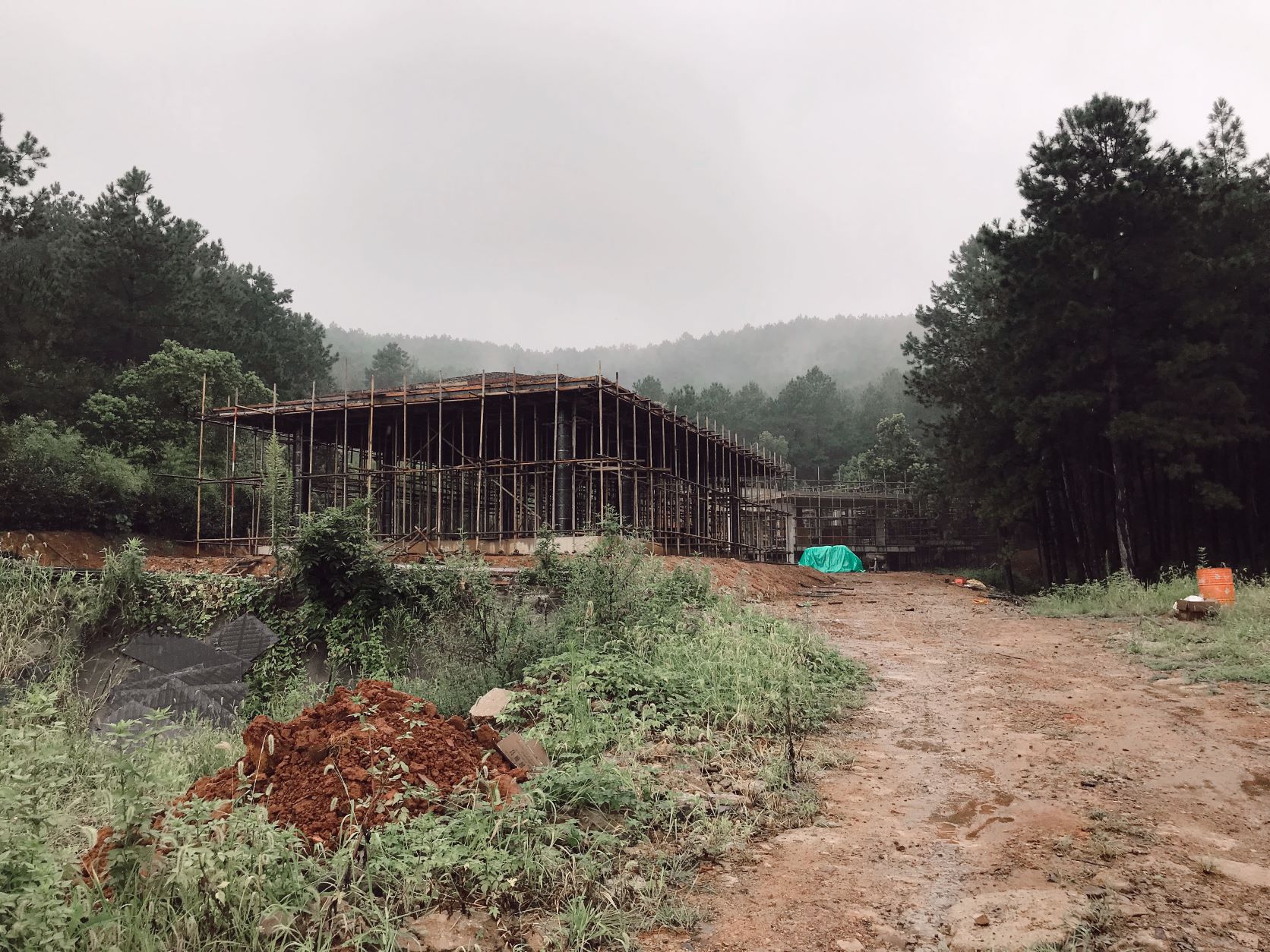
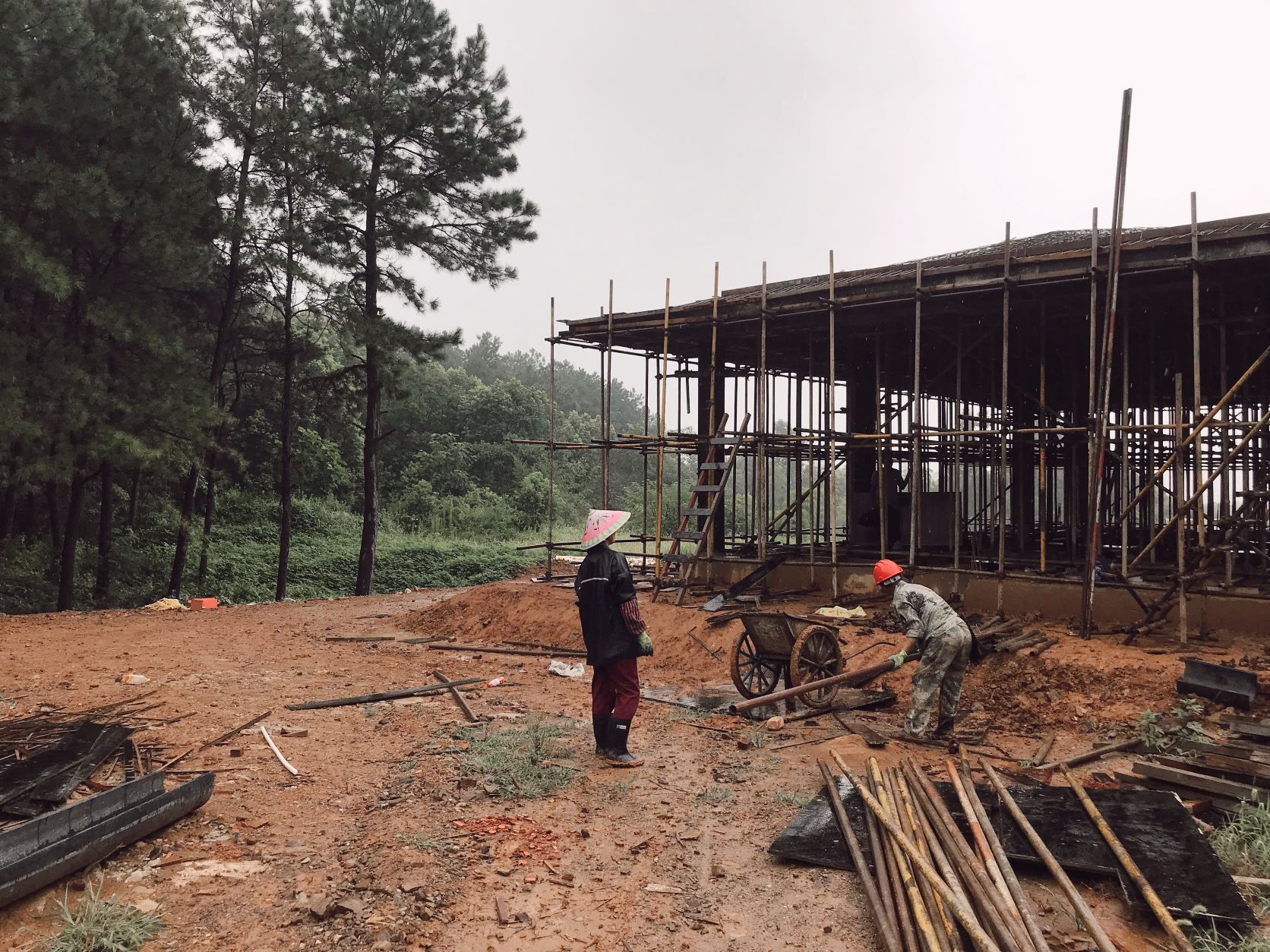
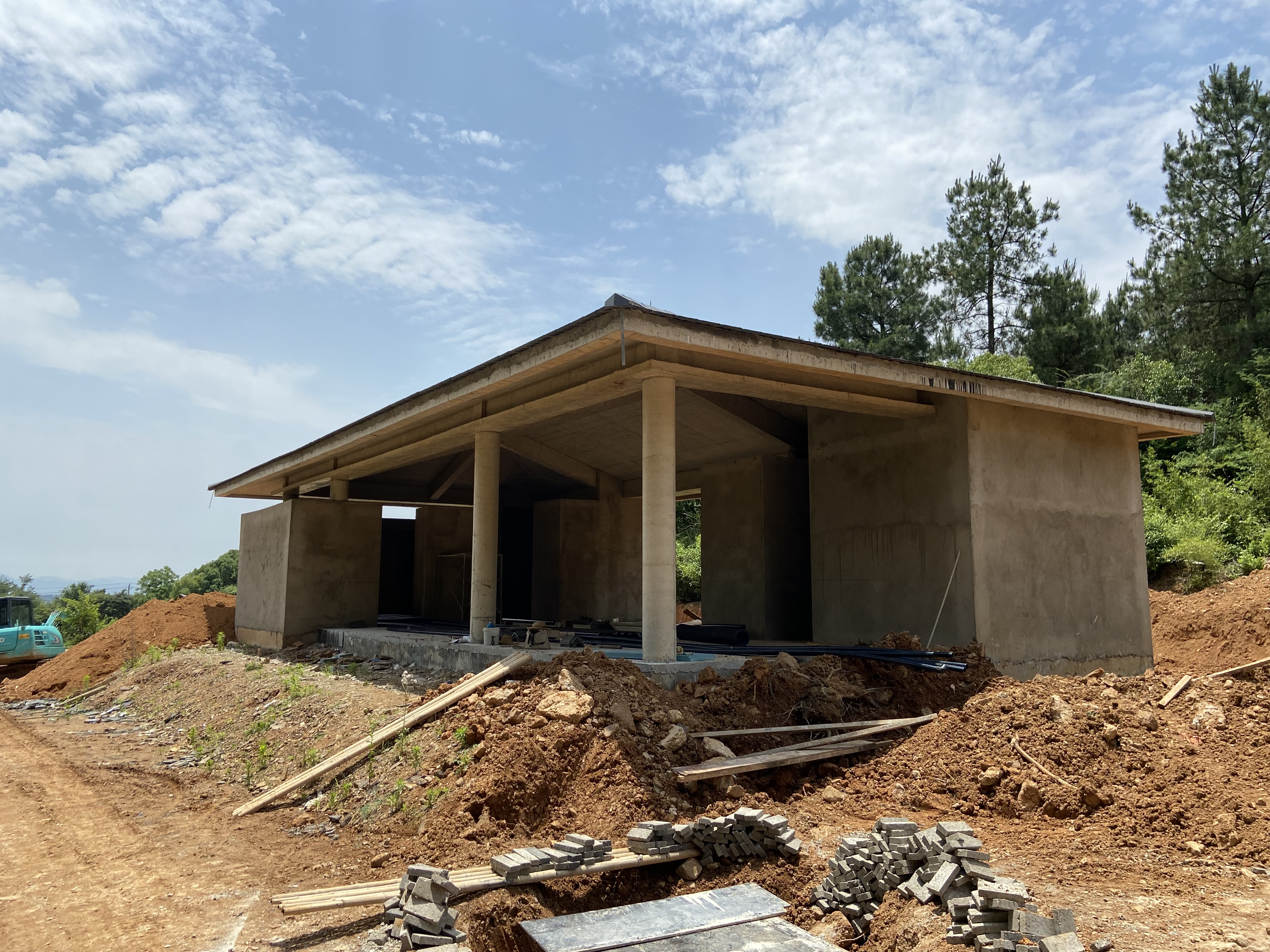
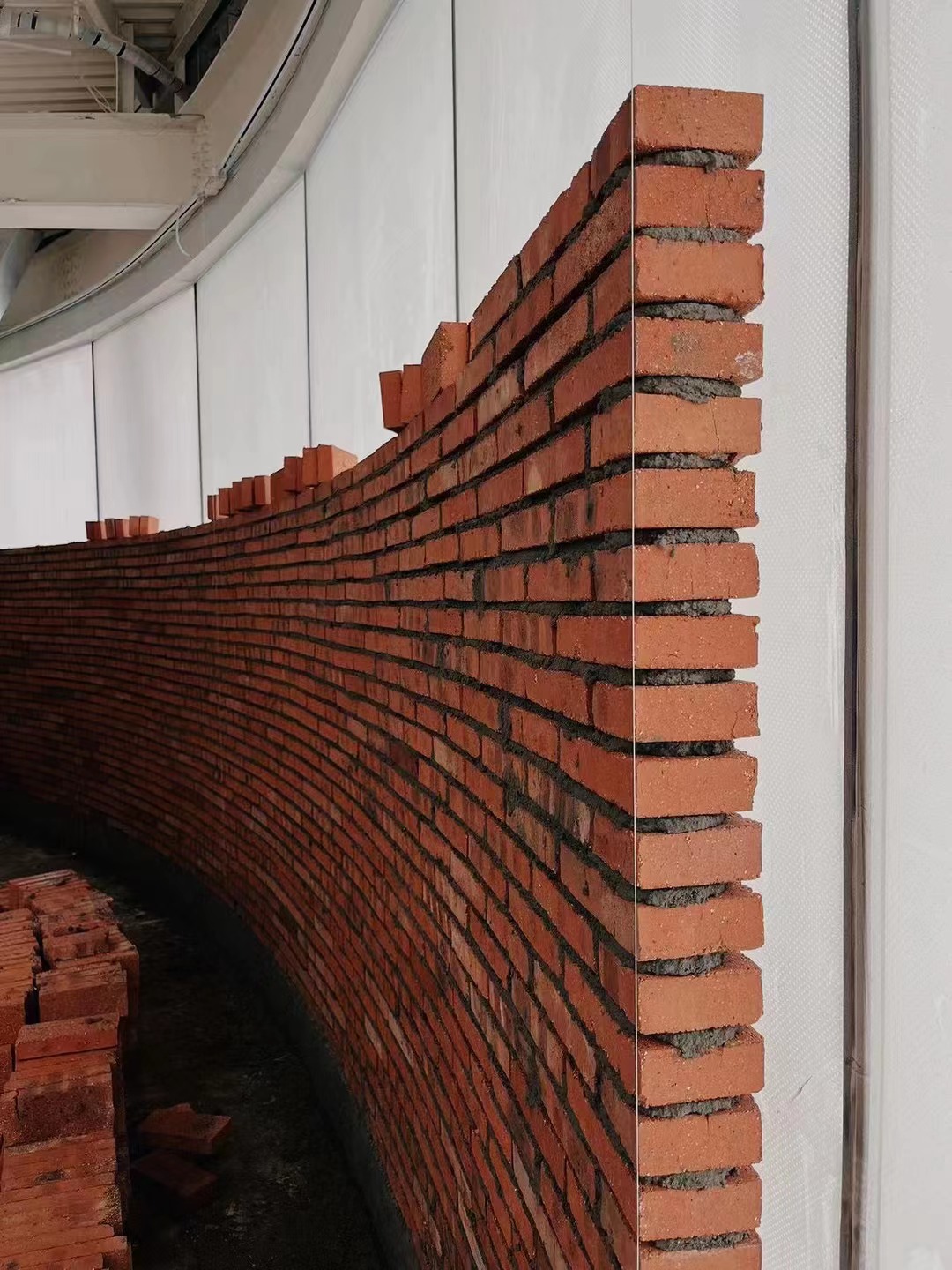
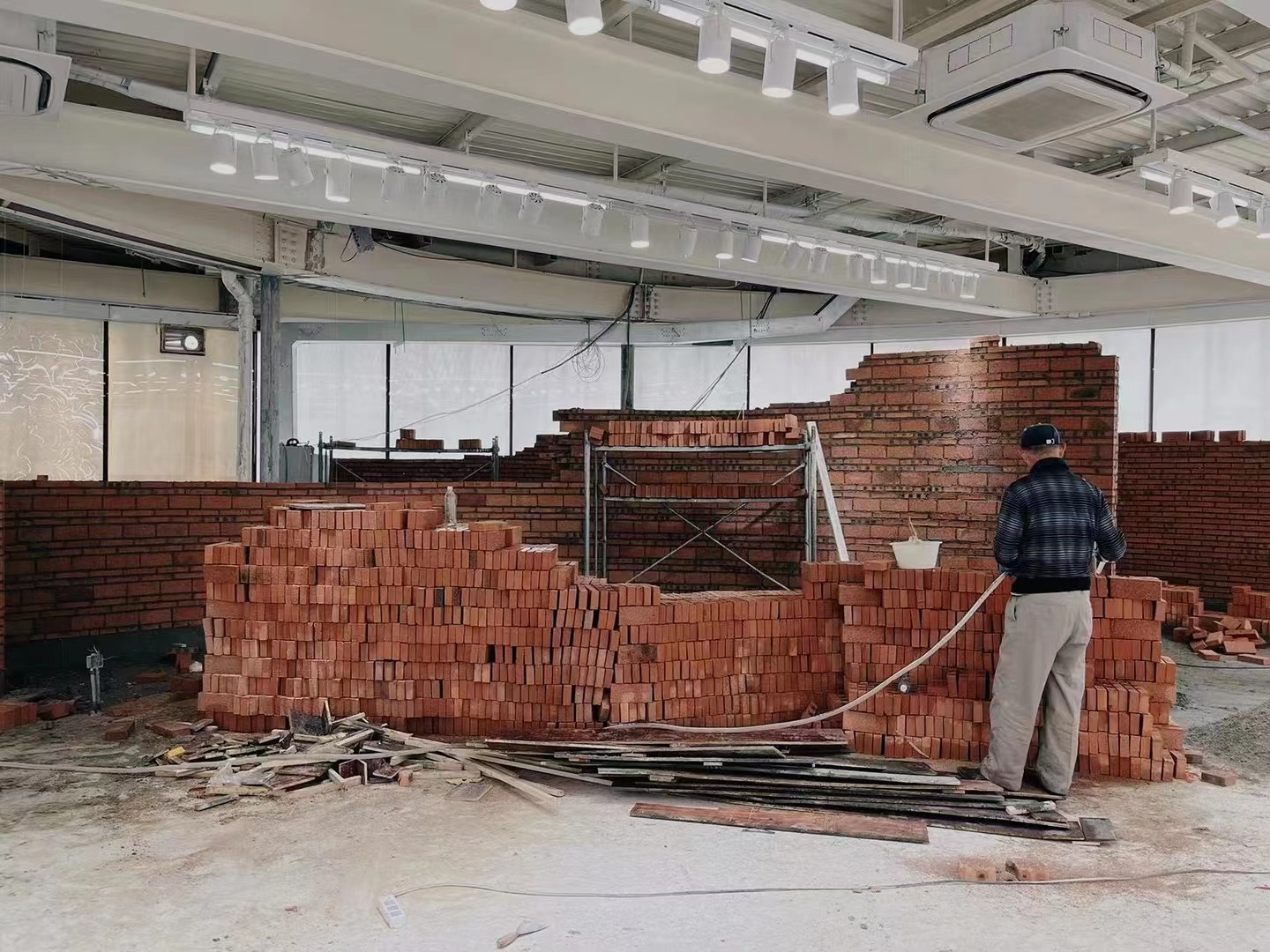
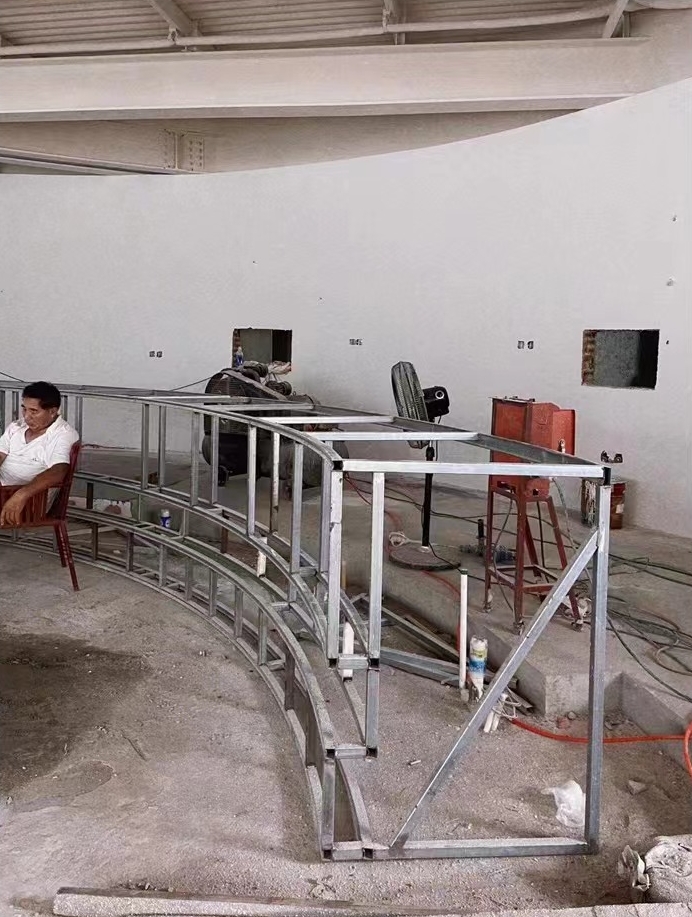
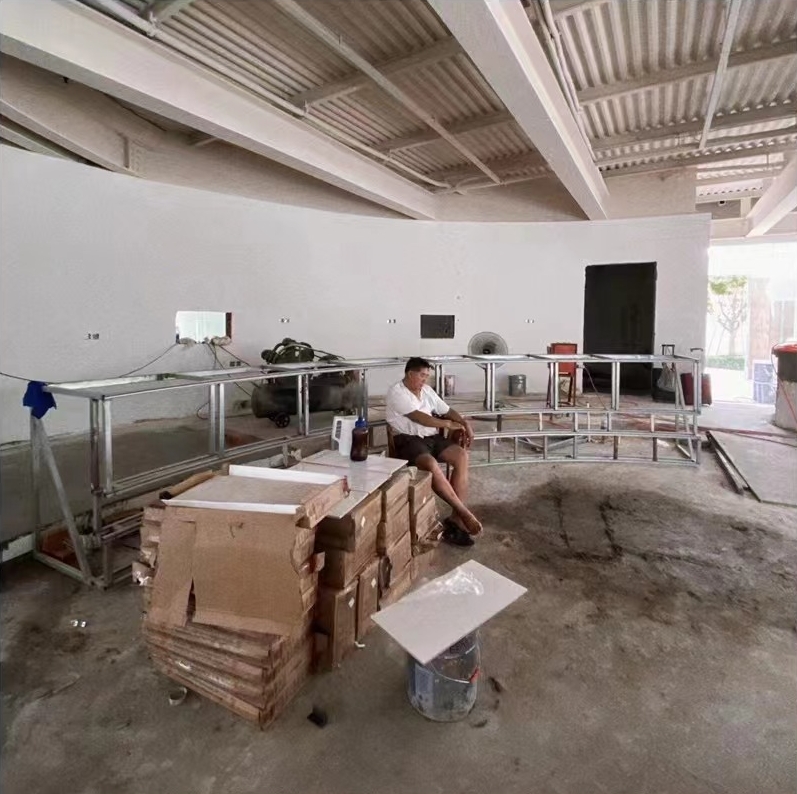
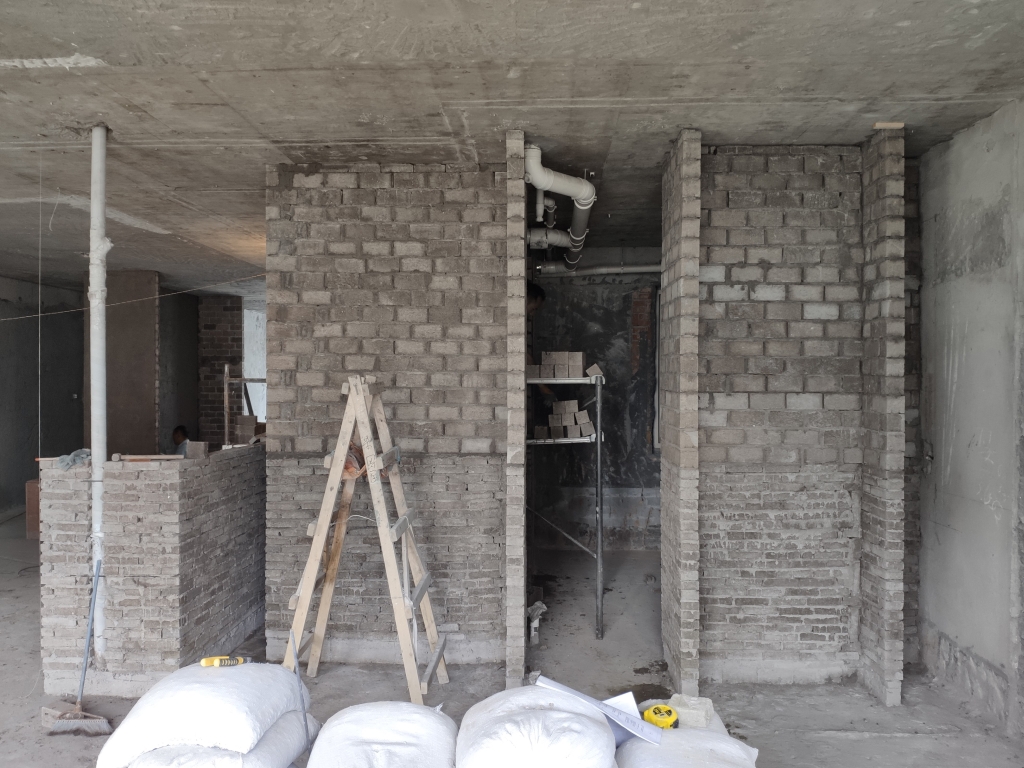
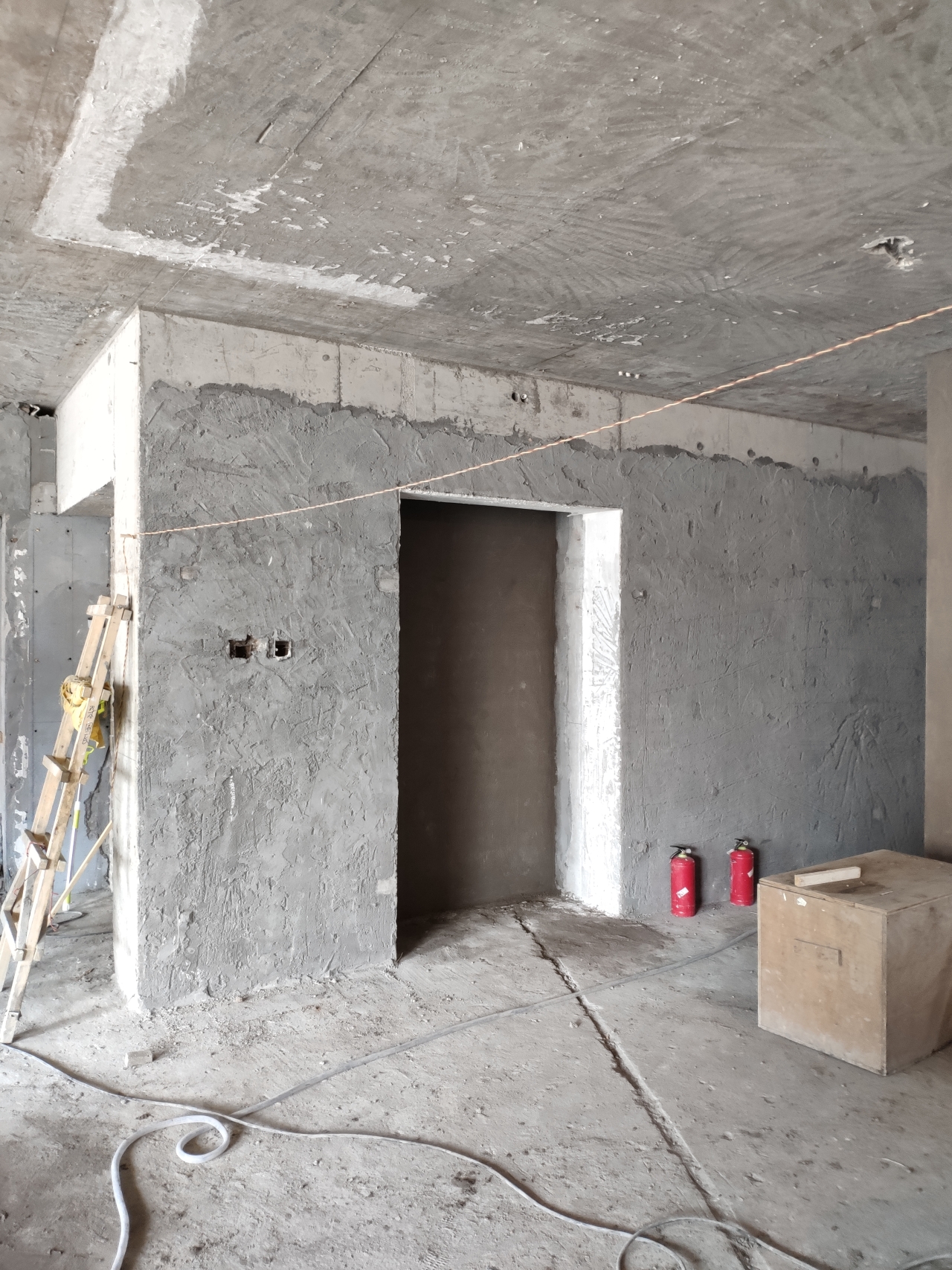
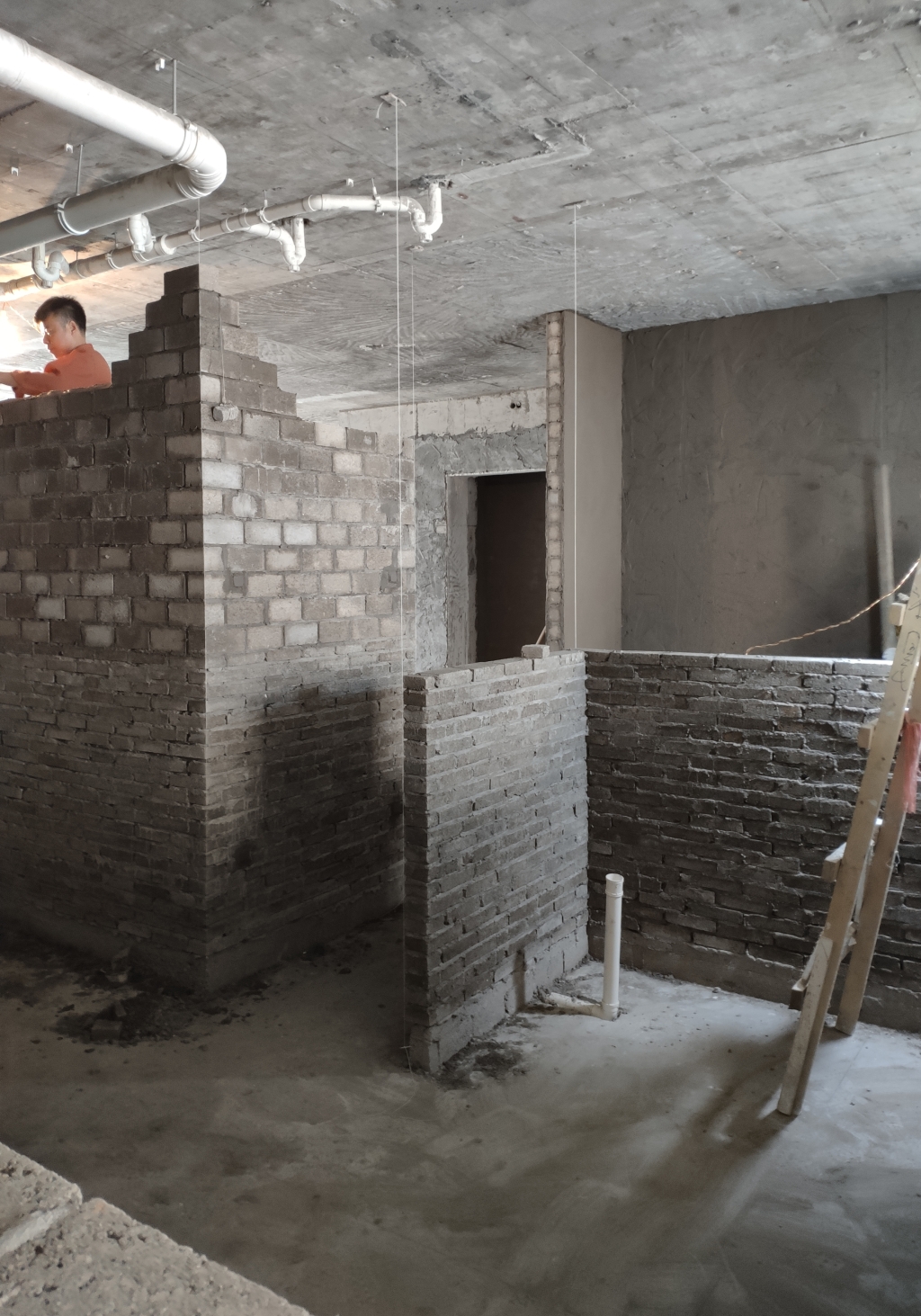
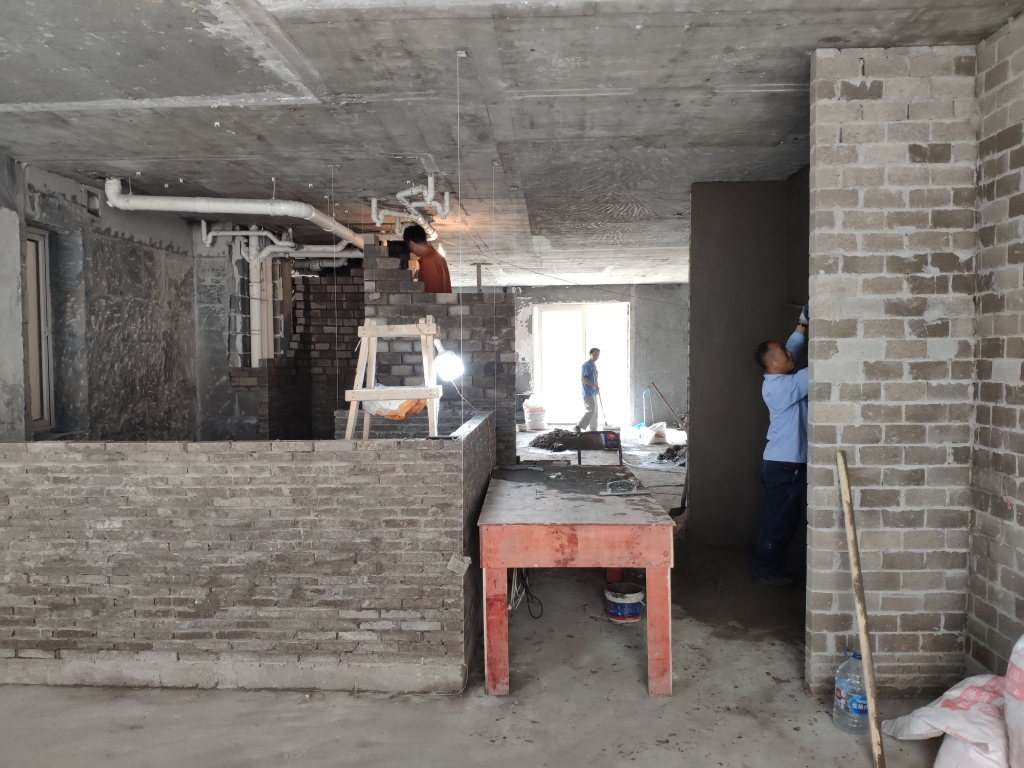
CONSTRUCTION 施工过程

ANADU RESORT 阿那度度假村

GUD RESTAURANT&BAR 古冬餐厅

01_1F bar 一楼鸡尾酒吧 04
01_1F bar 一楼鸡尾酒吧 08
02_1F VIP entrance VIP室入口
03_1F stair case一楼楼梯
05_2F restaurant二楼用餐区 03
05_2F restaurant二楼用餐区 04
05_2F restaurant二楼用餐区 07
detail stairs
08_2F stairs二楼楼梯 02
07_2F balcony二楼阳台01
09_3F terrace三楼露台 03
detail niche 01
detail niche 02
detail restroom 01
detail restroom 02
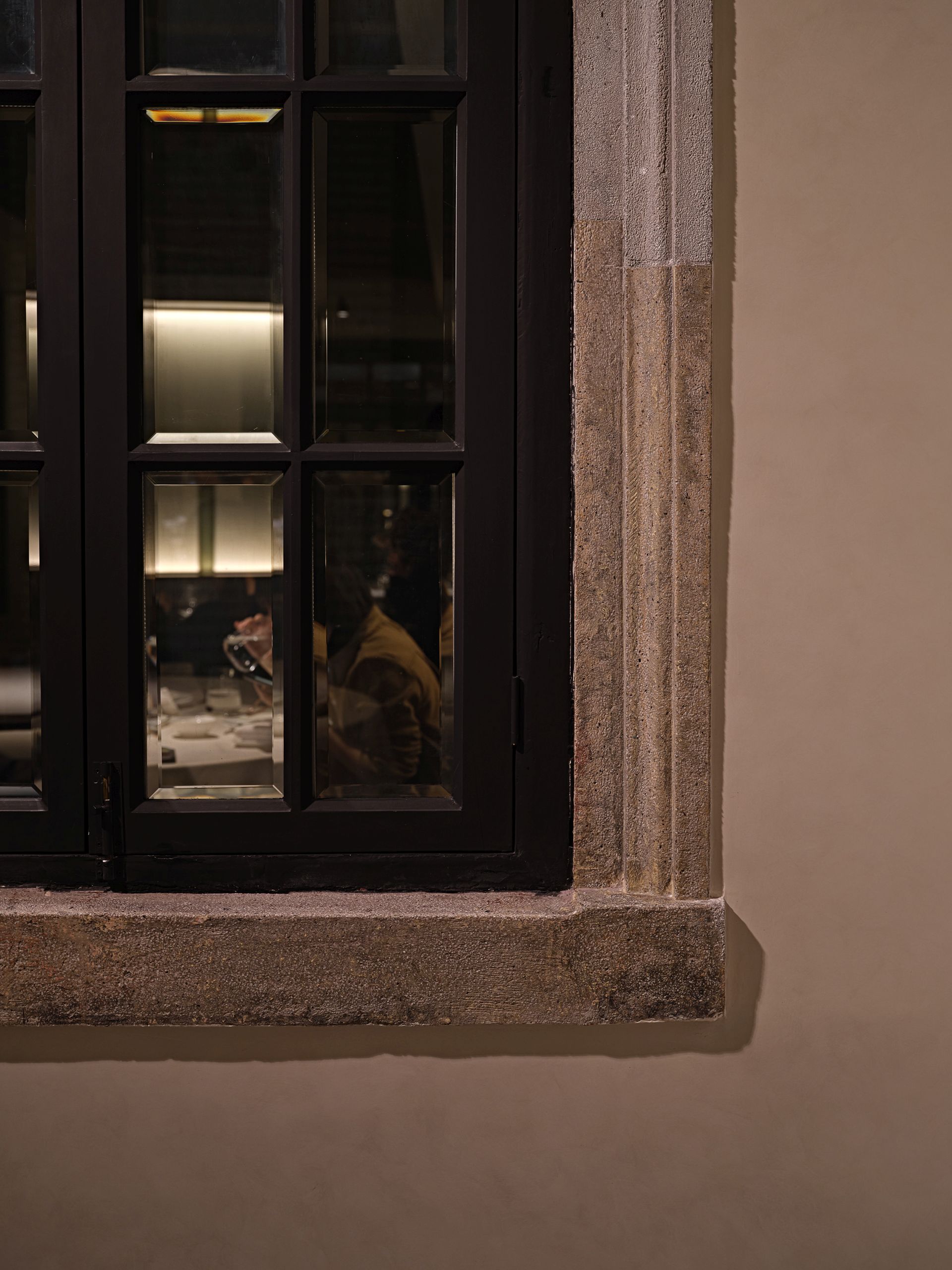
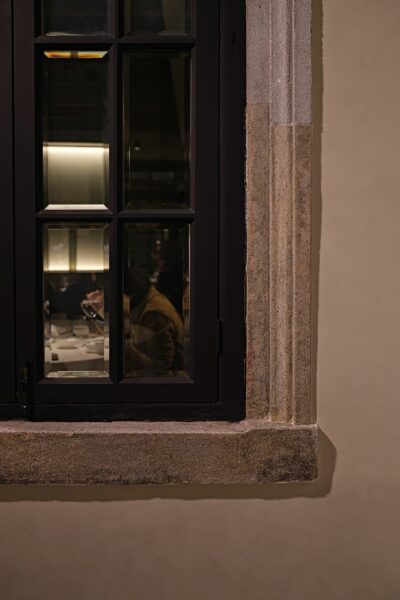
06_2F stone window frame detail二楼石窗框细节

LOCATION 地址  |  HANGZHOU 杭州
CATEGORY 类型  |  F&B 餐饮

HISTORIC BUILDING RENOVATION 历史建筑改造
INTERIOR 室内设计
FEE 软装设计
VISUAL IDENTITY 视觉识别设计

AREA 495 m²

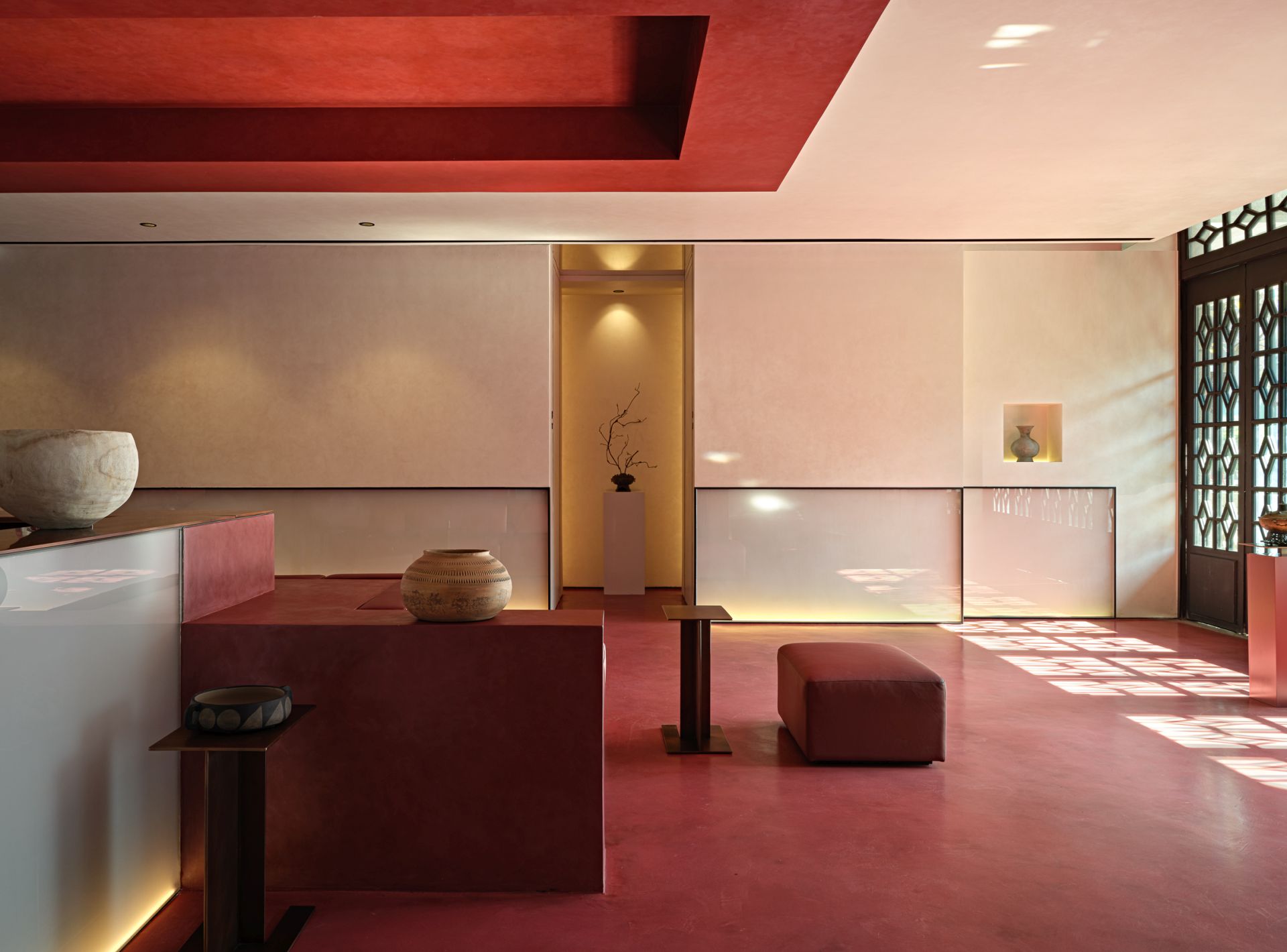
Gud is a museum-like restaurant and cocktail bar located in a 1930s heritage building. The culinary peculiarity of hotpot is transformed into a physical canvas to highlight the continuous interaction between food and space.

古冬坐落于一栋三十年代的历史建筑内,是一家以火锅博物馆为主题的餐厅及鸡尾酒吧。火锅的饮食文化与烹饪方式被抽象地与建筑紧密结合,营造空间与味觉之间连续的互动。

READ MORE 更多

HOTPOT “MUSEUM” IN HISTORIC VILLA
— STUDIO8 designs GUD Restaurant & Cocktail Bar in Hangzhou

Located in a heritage building from the 1930s in the central area of Hangzhou, GUD is a restaurant and cocktail bar specializing in hotpot cuisine and craft cocktails. STUDIO8 was commissioned to design the architecture re-use, interior and visual identity for the project.

Unfortunately, as happens with many buildings in China throughout modern history, the villa was almost “eaten up” by the city from 1939 to 2020, with only one complete façade left facing the street. The interior was also renovated, extended and changed several times, from residential to multiple commercial uses.

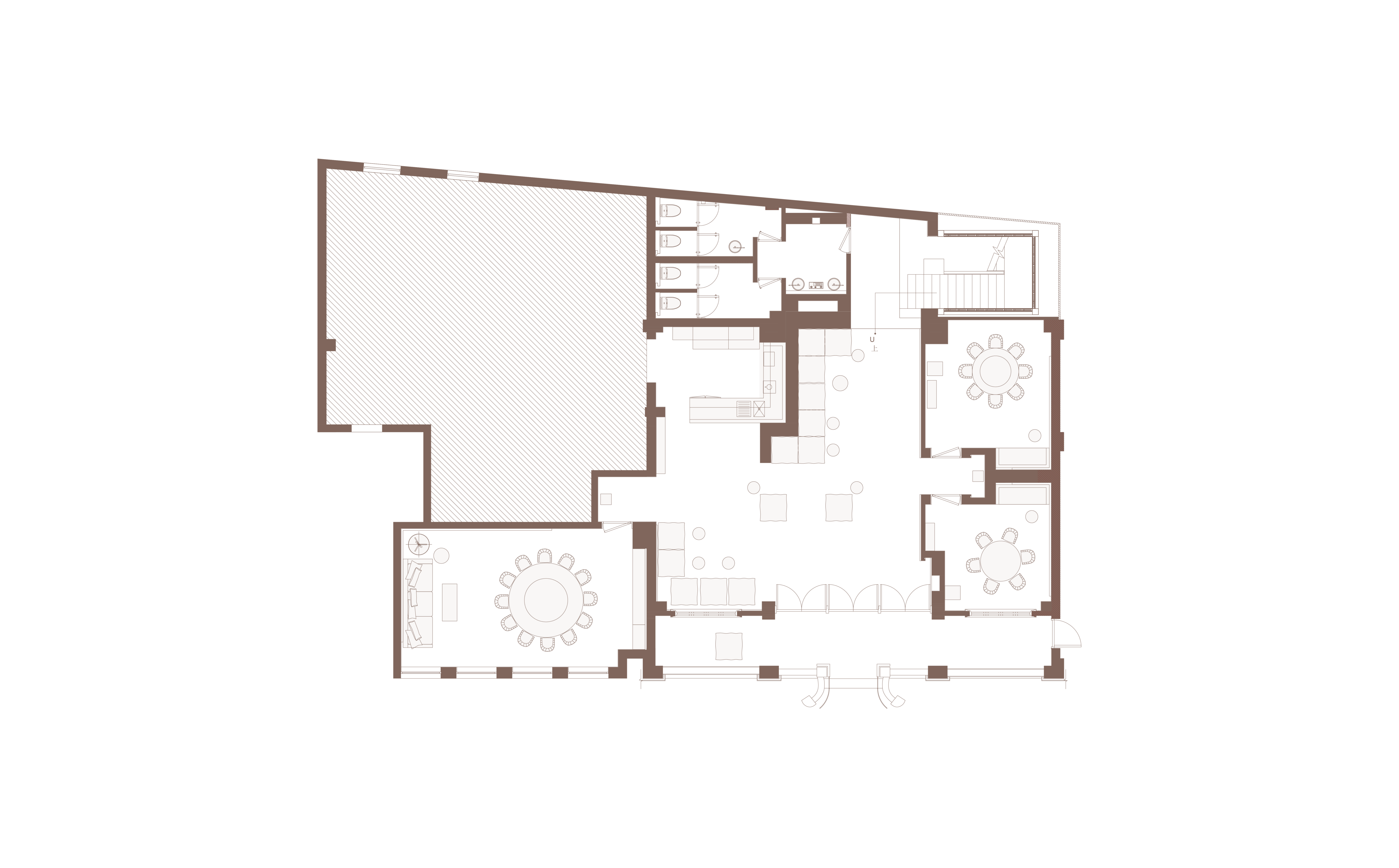
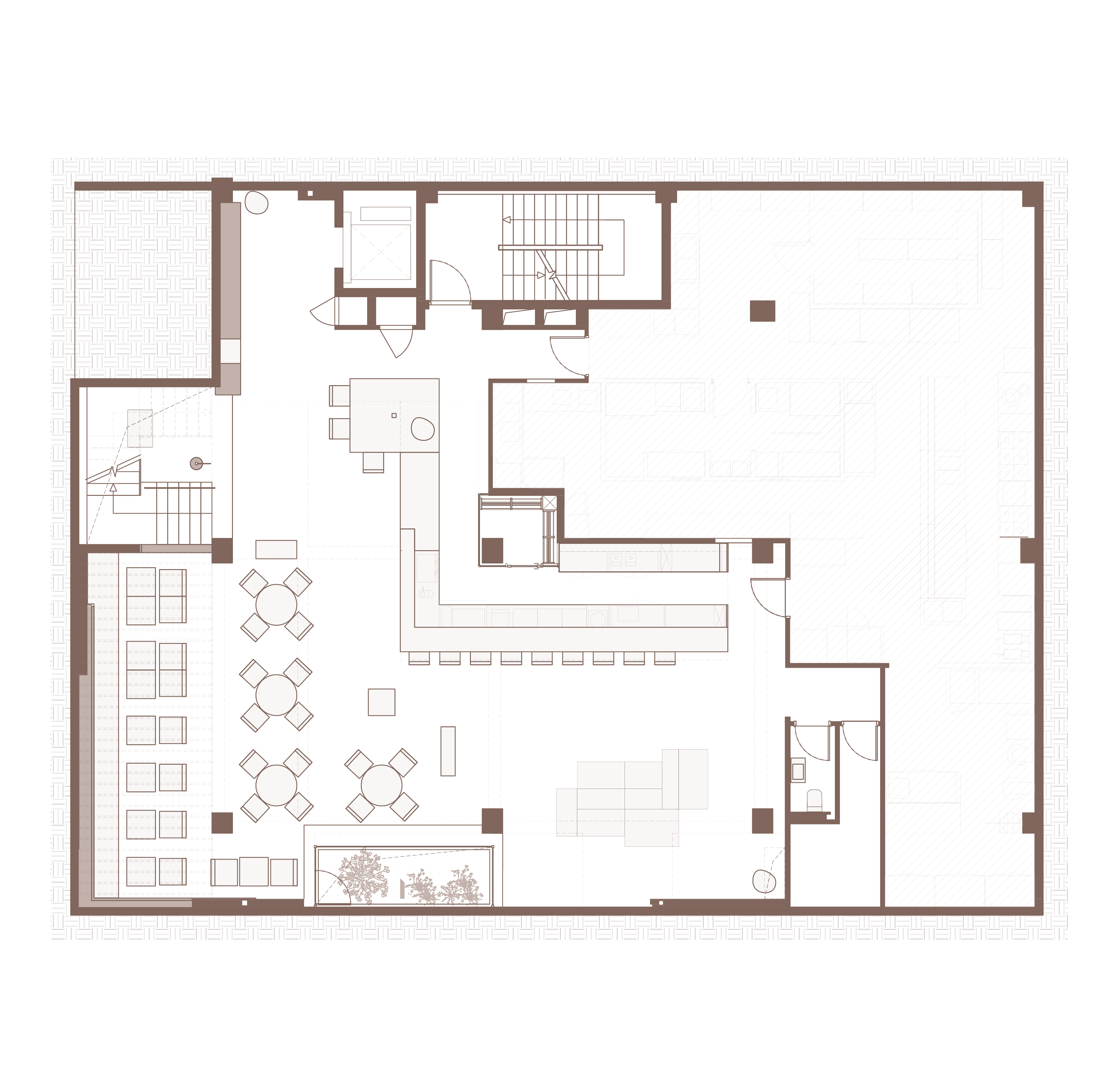
The site includes the villa originally built in 1939, its extension in the north and the ground floor space from the building next door to the west. The architects were given the site to turn into a hotpot restaurant. STUDIO8 believes the best way to preserve a historic building is to make it functional to meet today’s needs, giving a new life to it. The three-story villa was a residential building without any restroom or large kitchen. The re-use of it demanded a delicate and respectful renovation. Therefore, service and utility spaces such as kitchen, restroom and a vertical connection for public use were arranged into the extension and the building next door, leaving the villa for pure culinary experience.

Referencing the richness of the site’s heritage and the culinary peculiarity, the concept was strongly inspired by the food culture and atmosphere and takes a more abstract approach. To STUDIO8, it was extremely important to create, and consequently experience, a physical canvas created to highlight the continuous interaction between food and space.

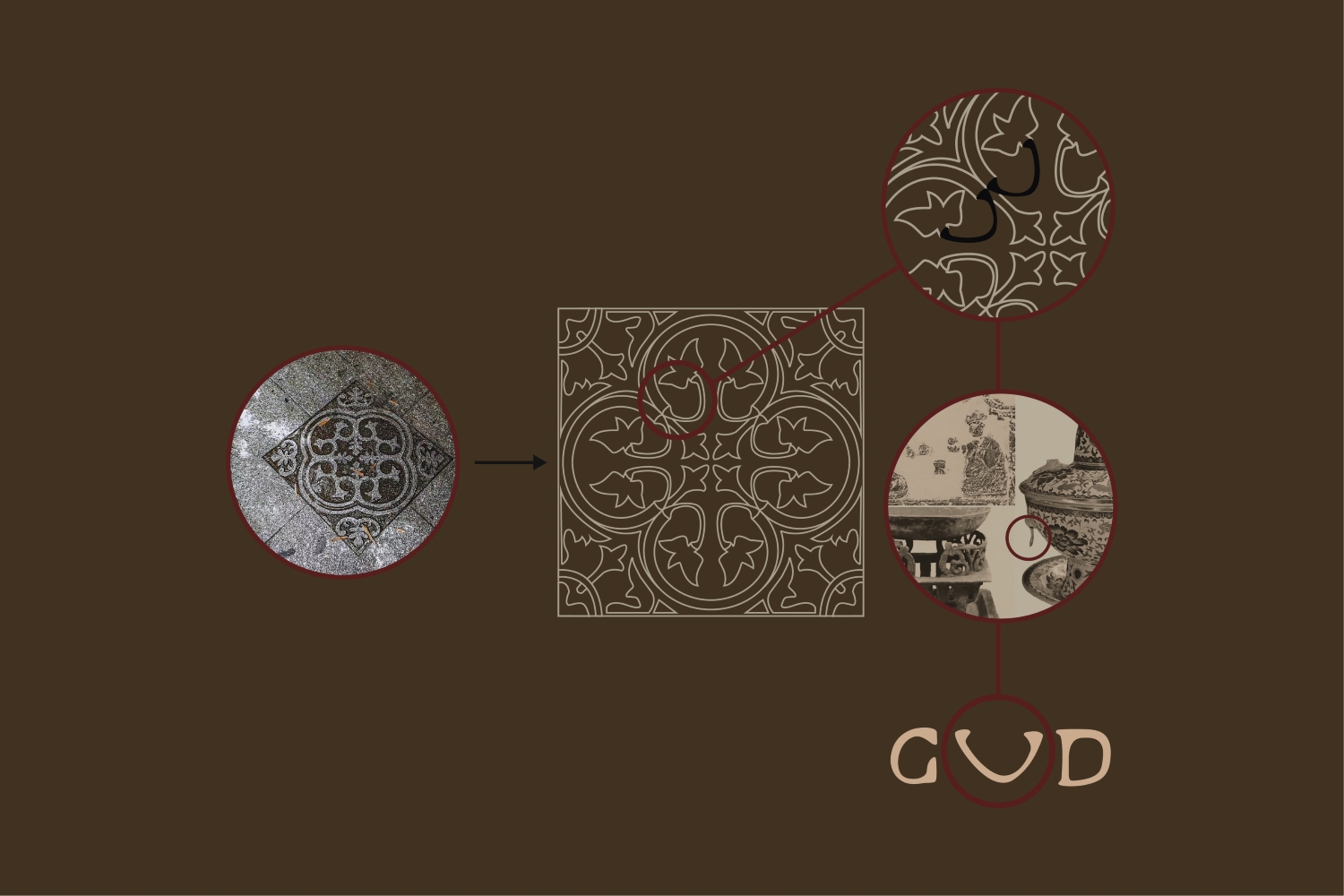
Rather than showing specific local or historical characters of various hotpots from all over China, after studying the core of food culture thoroughly, the architects decided to transform hotpot’s cooking principle into a unique museum-like experience in on different levels. They named the restaurant “GUD” after the historical name for hotpot in 220 AD – “GuDong pot”, like the sound of boiling soup. The logo design was inspired by the shape of copper pots used in that period as well.

In Chinese culture, eating hotpot is a special and important moment where people gather, mostly a group of friends or family, to share food and joy. With heat (from fire or electric stove), the ingredients are deconstructed by the energy and then reconstructed in liquid (water or soup), thus being elevated, together with the time spent among people, to another level of flavor. As the three key elements in hotpot, heat (fire), medium (water) and elevation of flavor (steam) were respectively correlated to each floor as in function, materiality, textures and light.

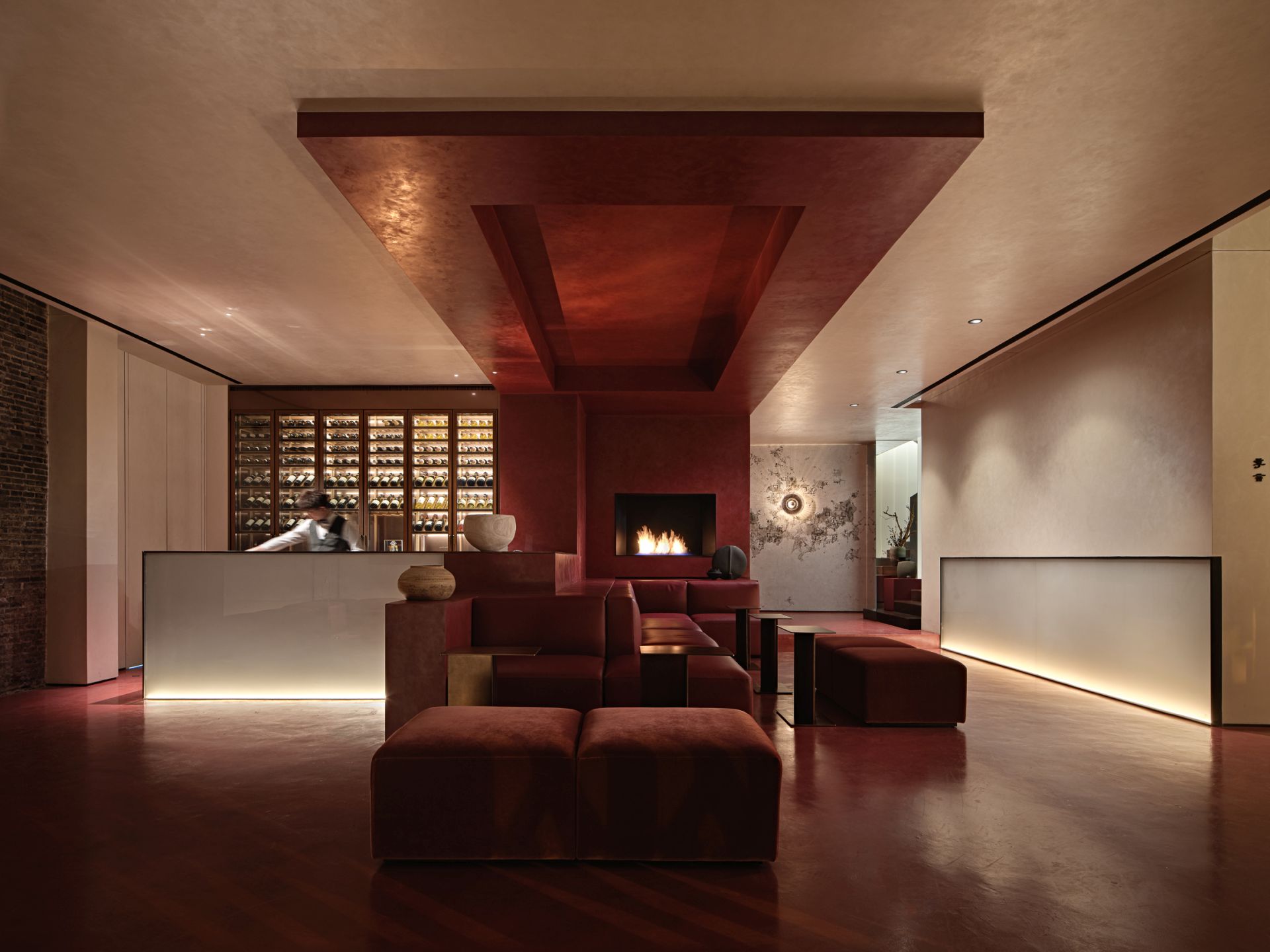
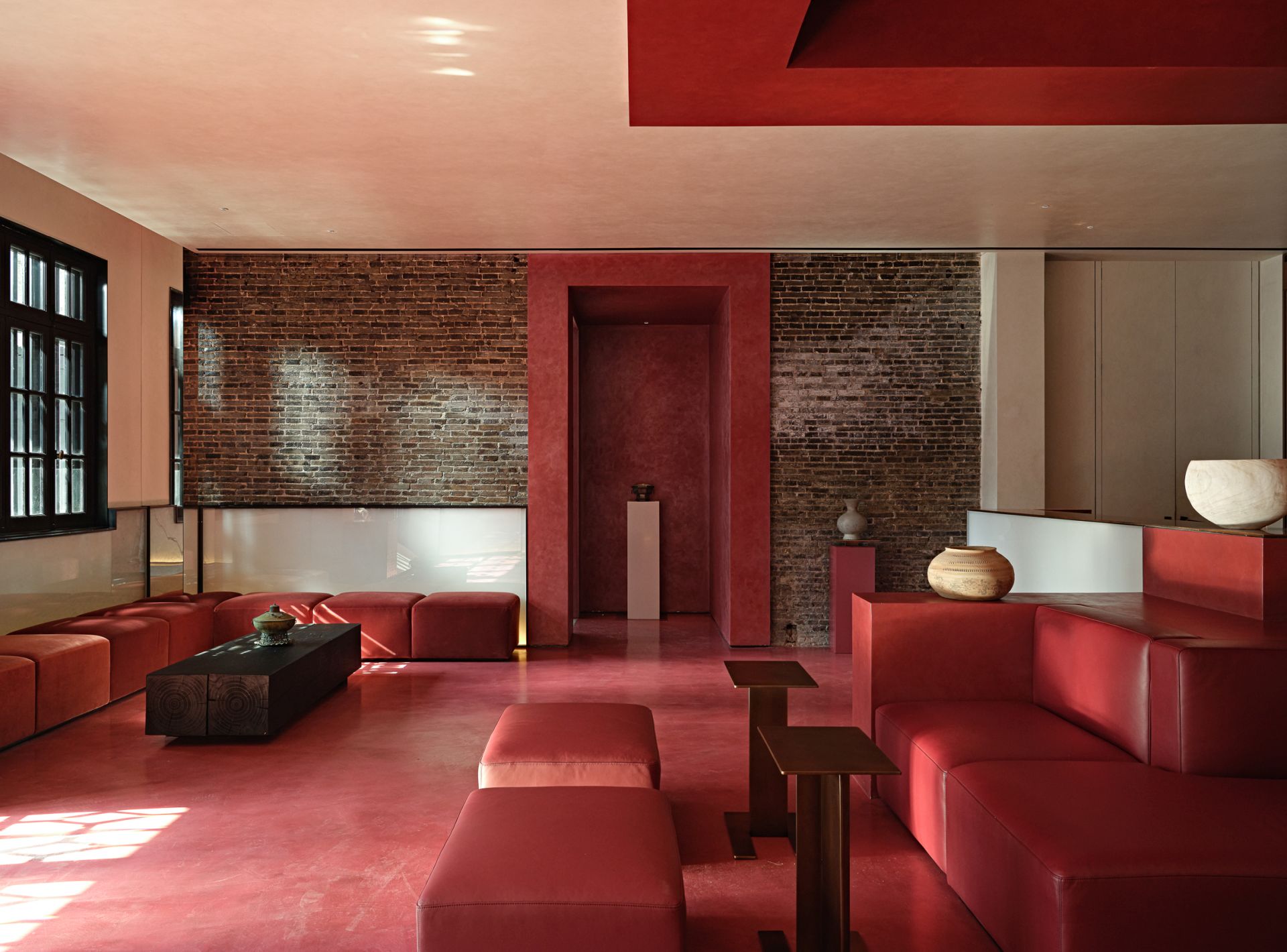
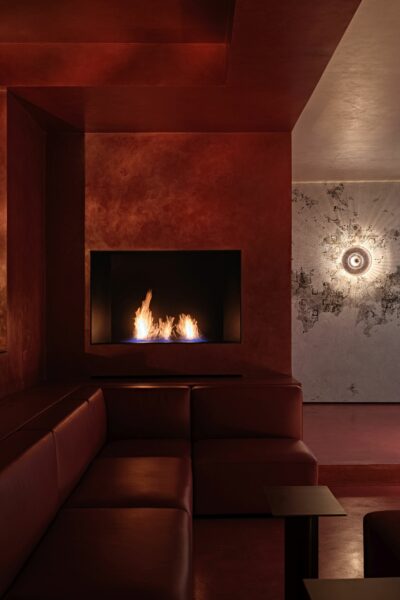
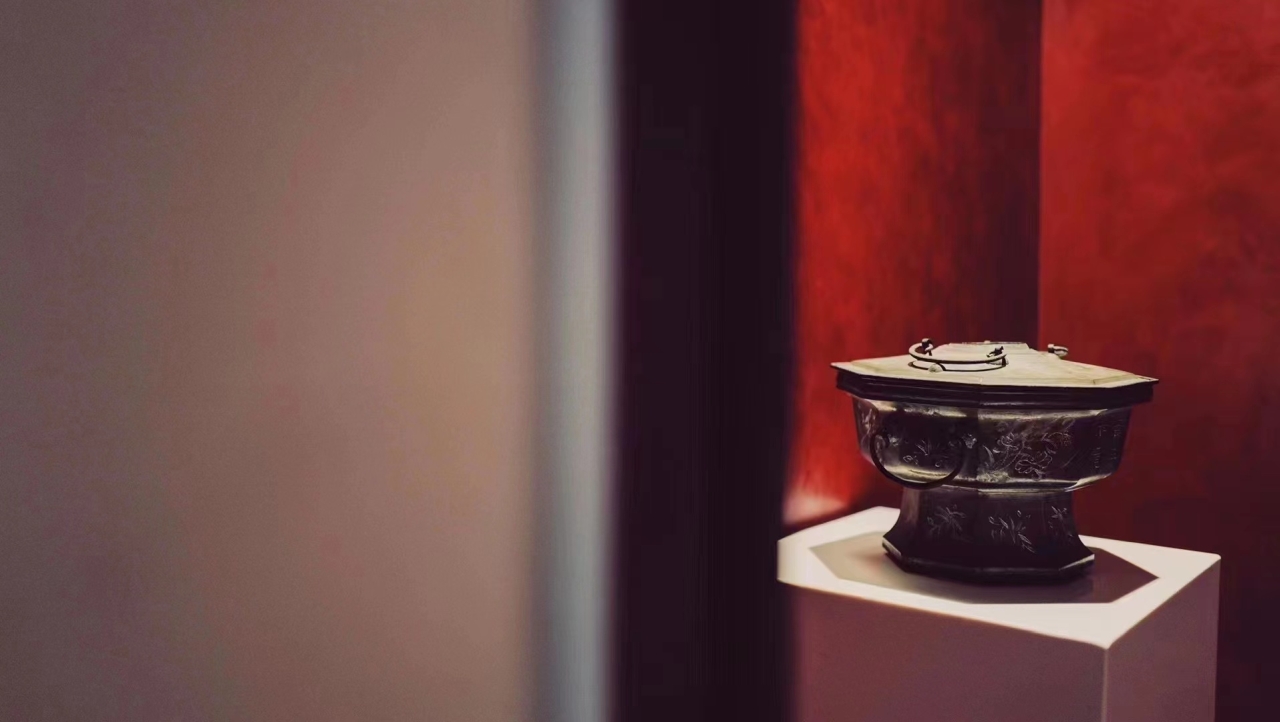
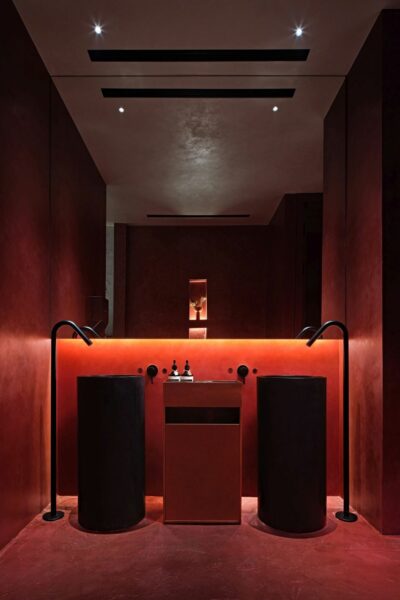
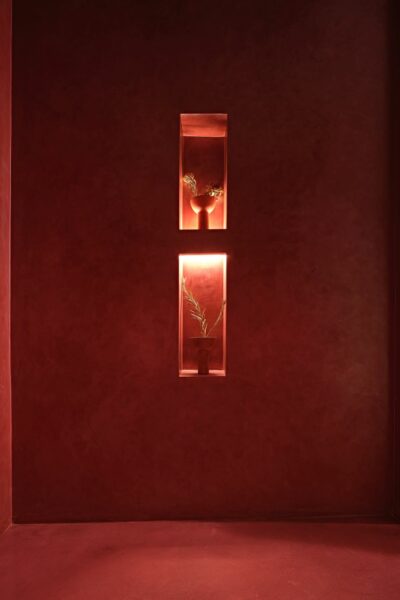
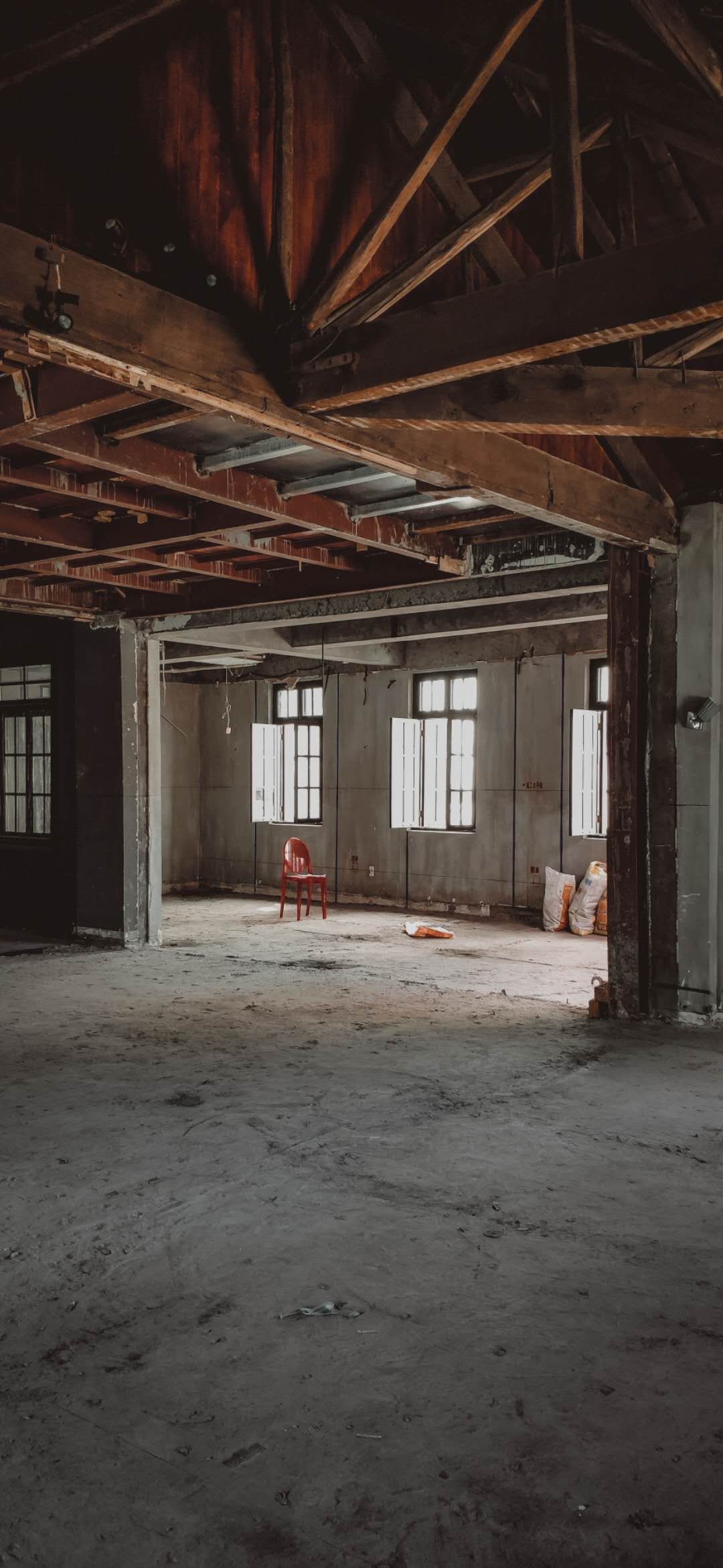
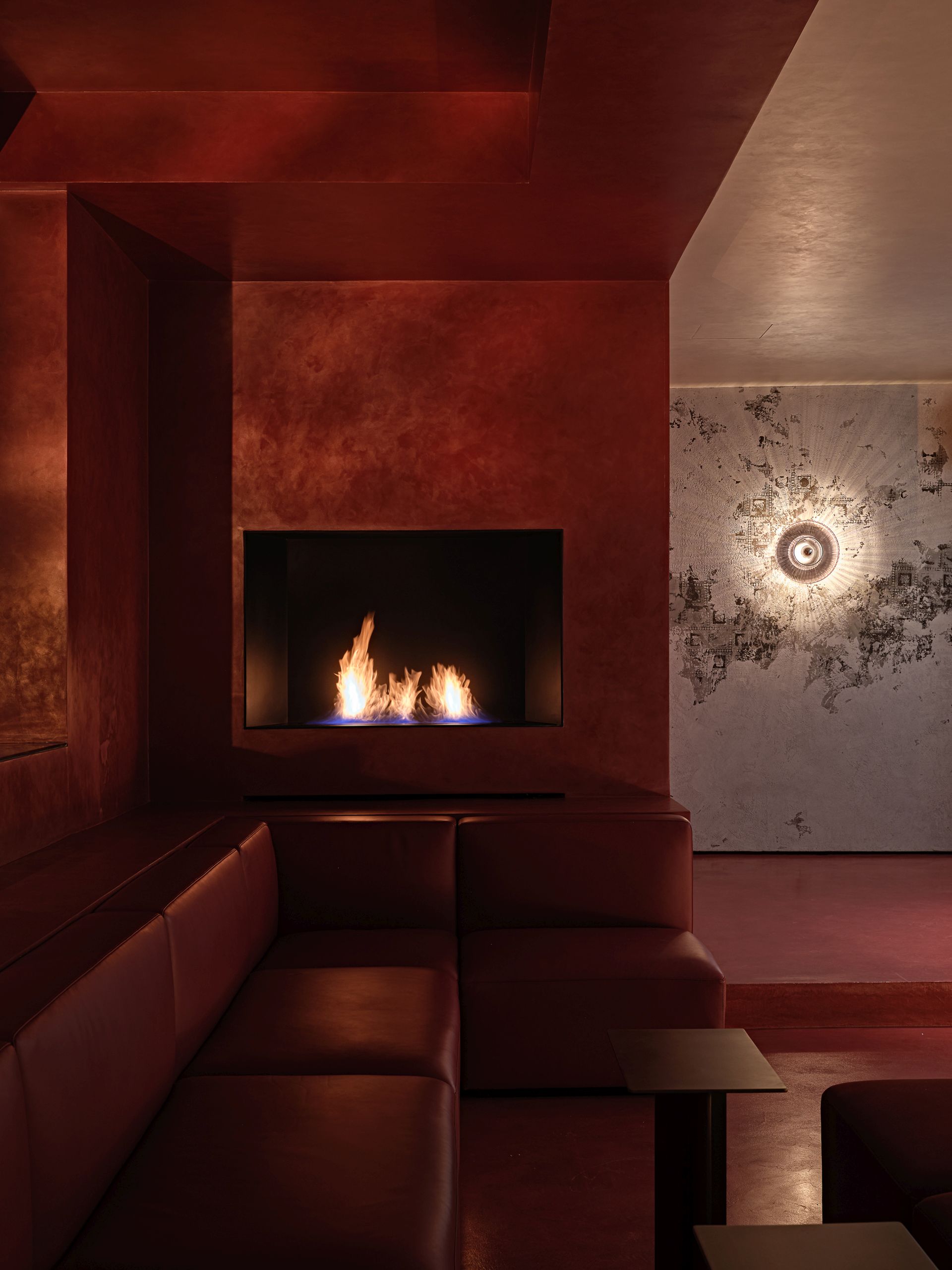
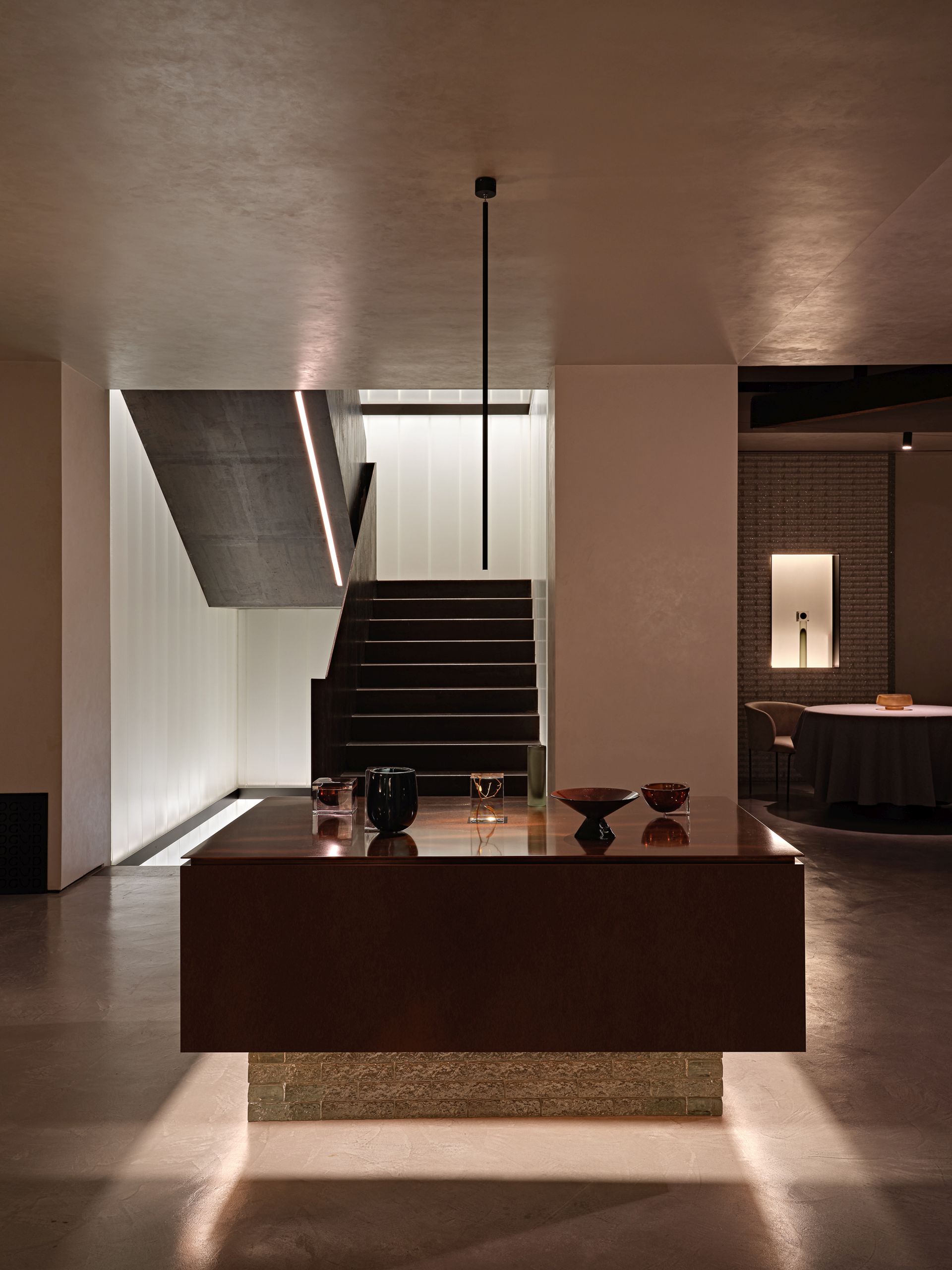
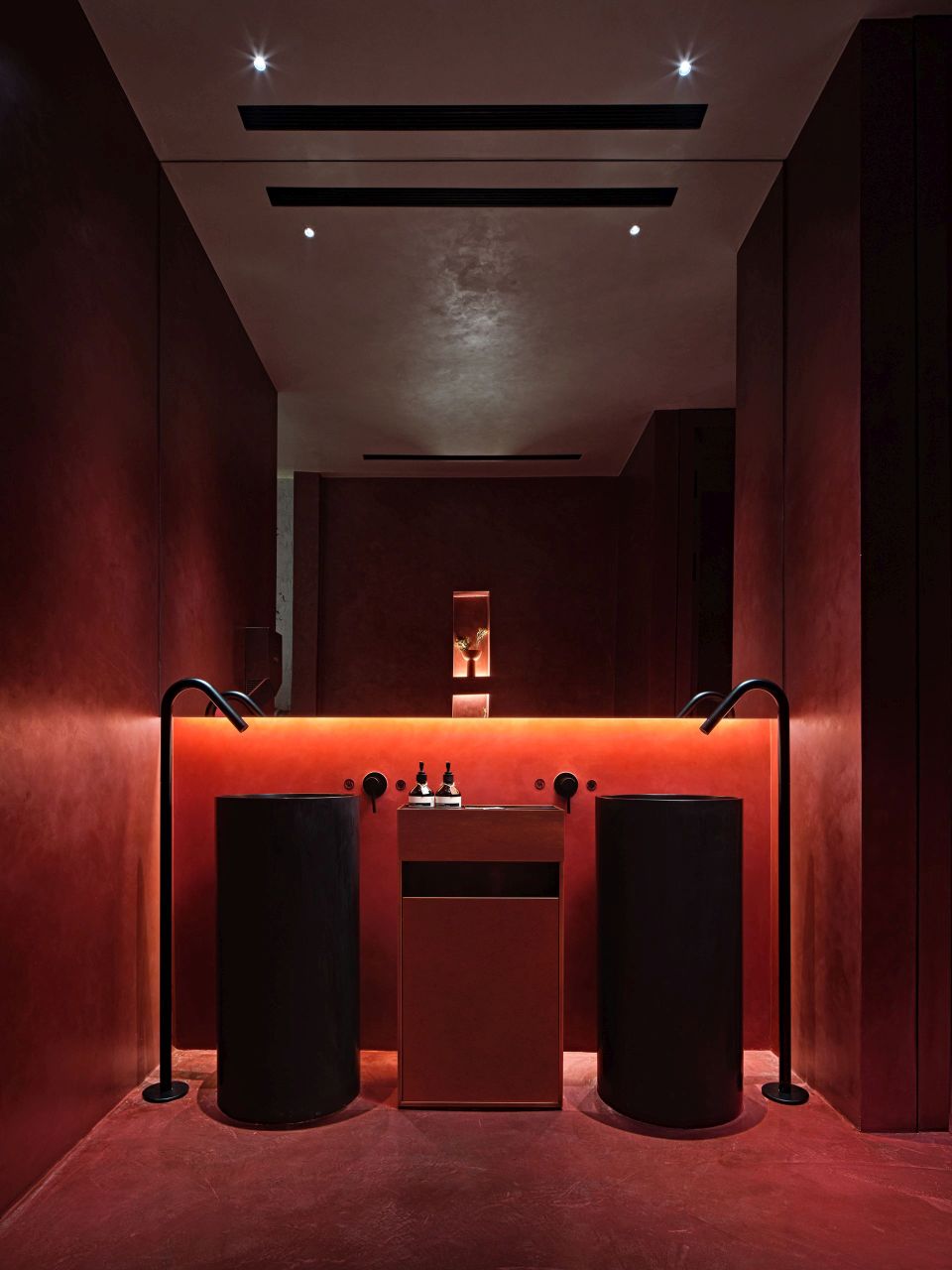
As the first element, heat – the energy that boils the liquid – is a fundamental design factor to the first floor, where human interactions were planned out accordingly. The aim was to create a warmer and more welcoming space at the beginning of the hotpot experience, where people and friends can meet first, have a cocktail and wait for everyone to arrive. Therefore, the first floor is designed as a cocktail bar to act as an energy generator and set the mood. Red floor, fireplace extended towards the ceiling, bottom-lit boiserie, rising sculptural columns that display antique hotpots, and scattered red velvet sofas were designed to give a dynamic and energetic ambience. Metaphorically being deconstructed by “fire”, these elements create a more vivid and warm interaction amongst people. Part of the original brick wall façade was kept and exhibited in the bar to recall the building’s past. A recessed mirrored ceiling at the side of the wall and the doorway towards VIP rooms expands the space and takes the experience to the next level.

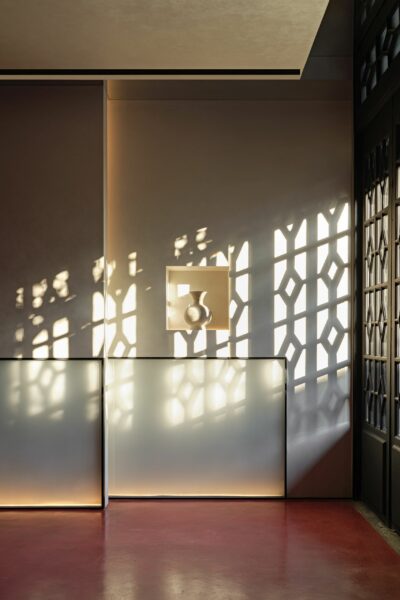
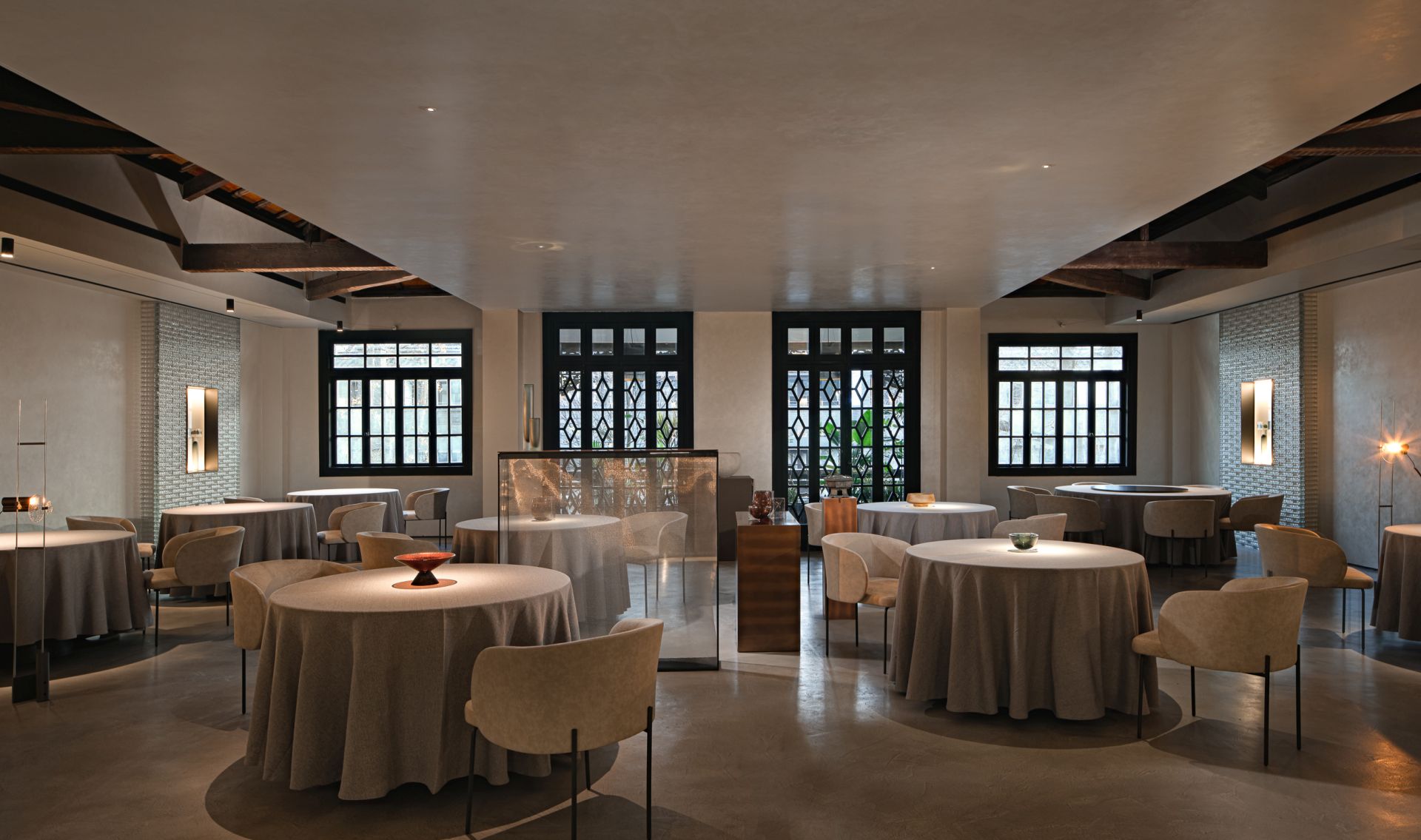
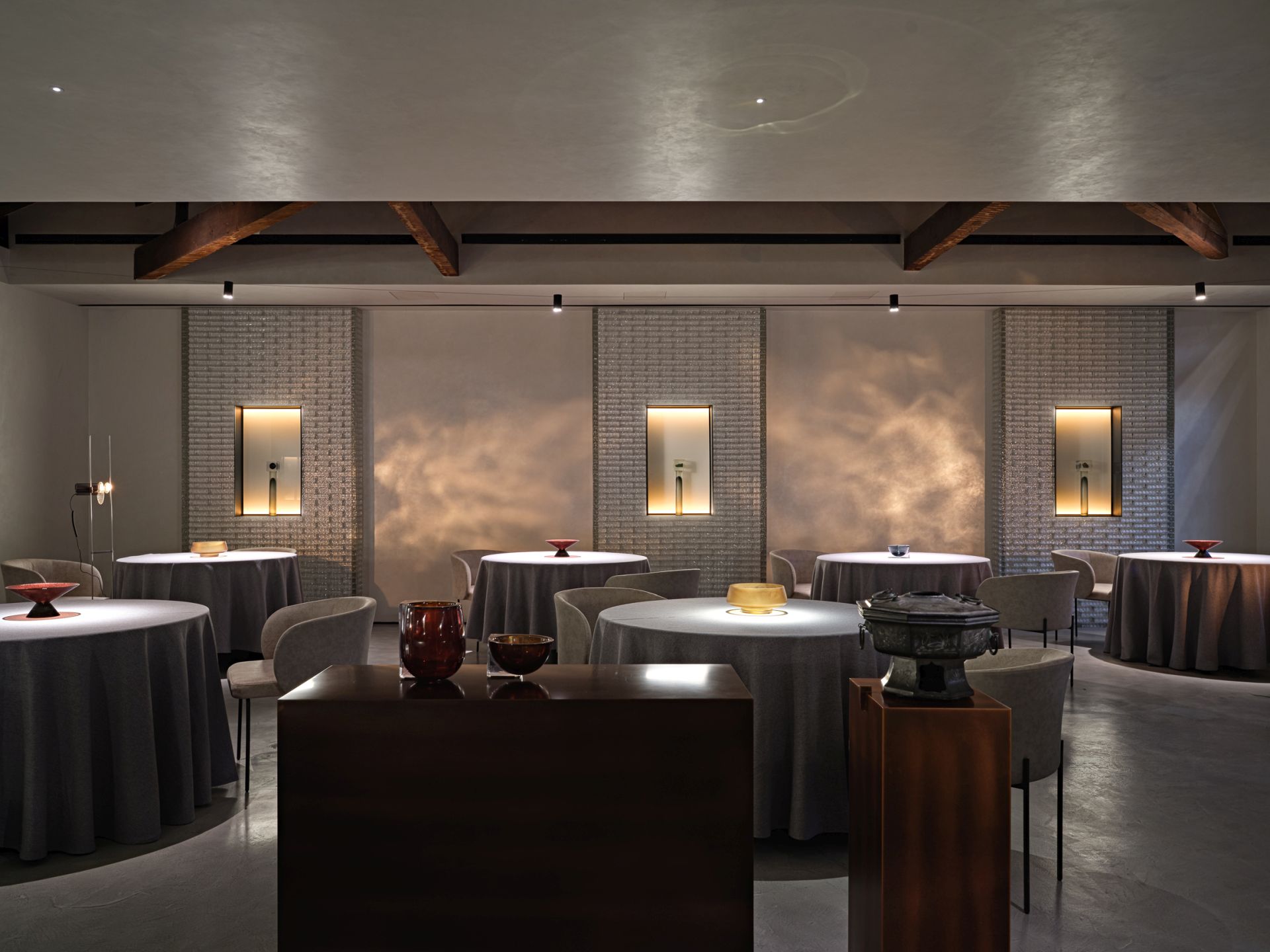
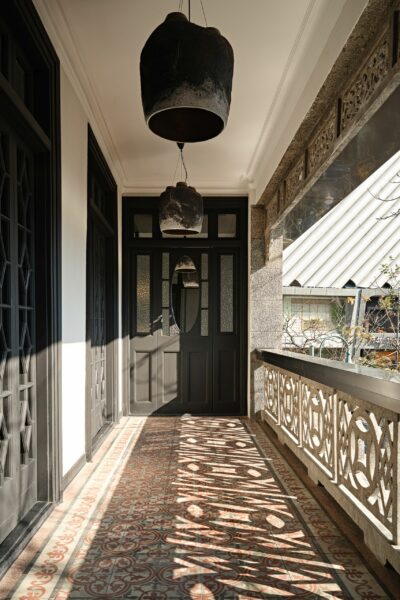
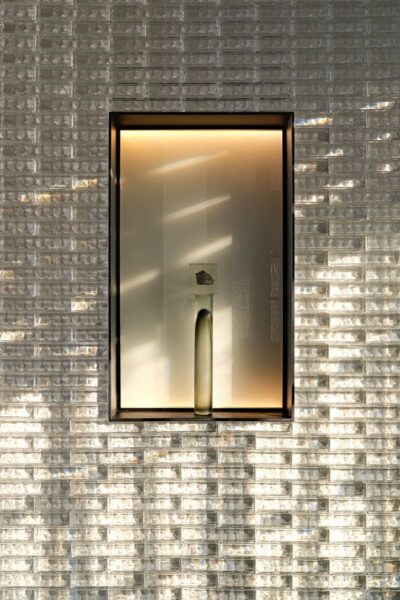
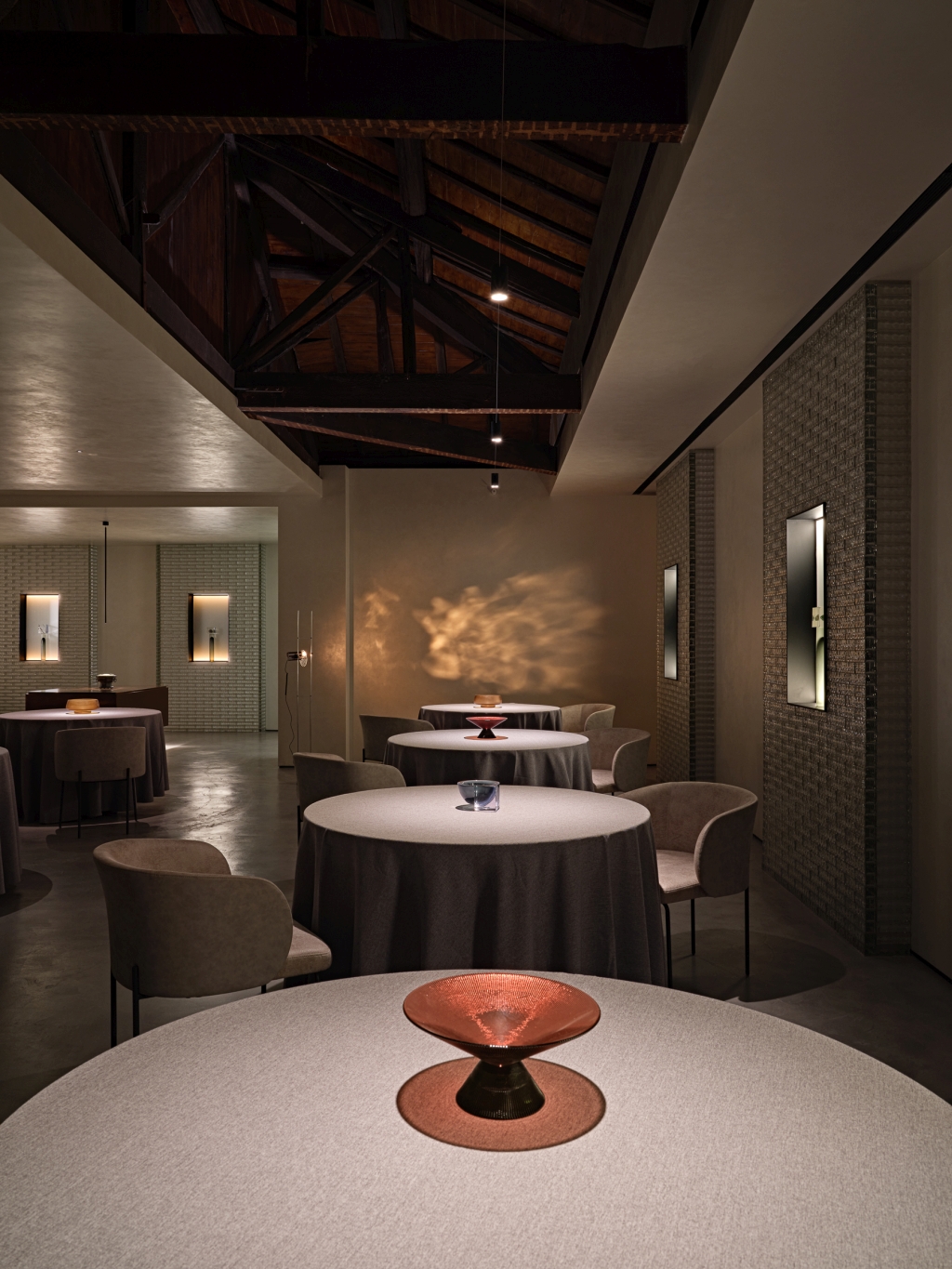
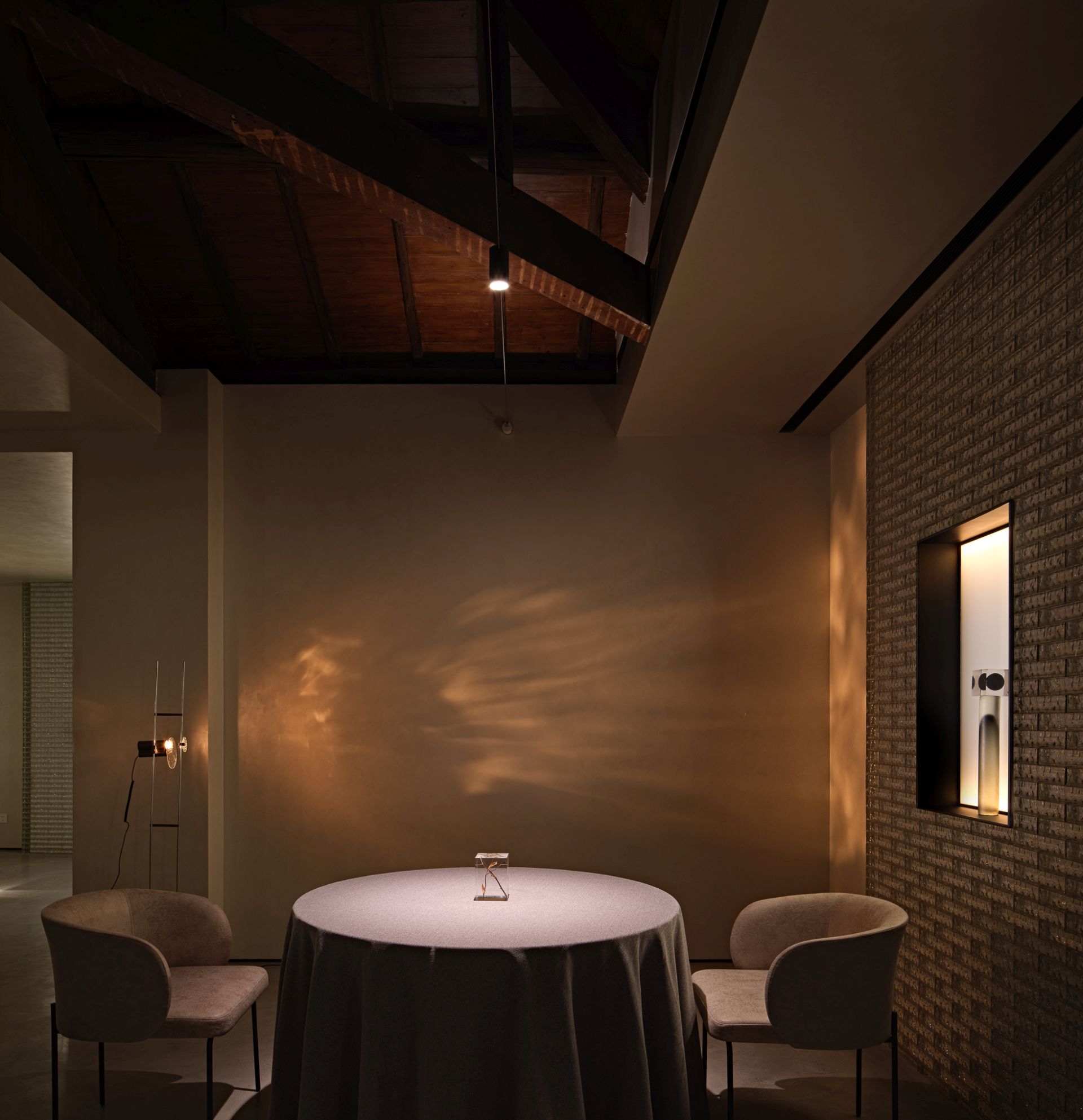
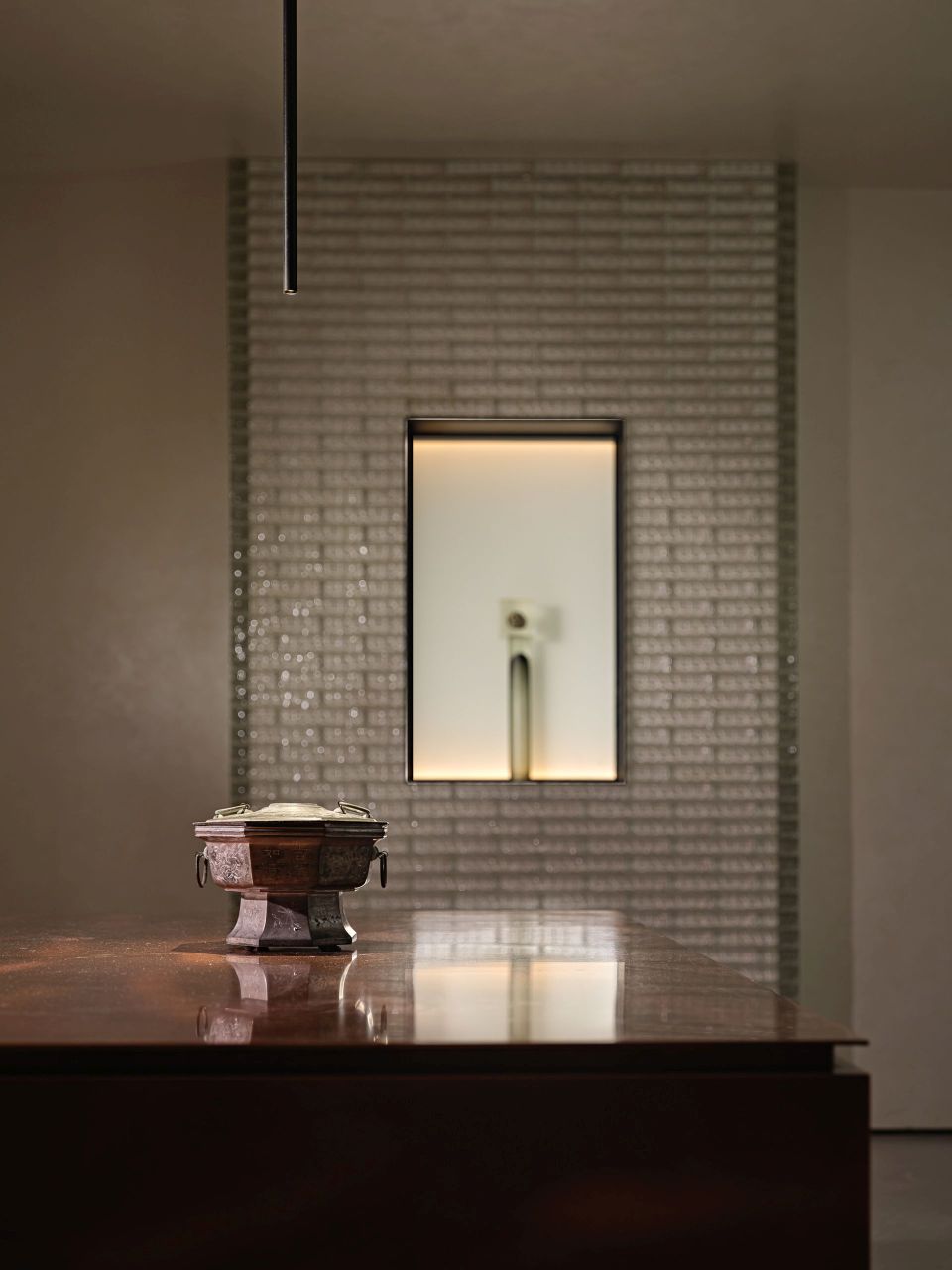
After passing through the heated cocktail bar, comes the second element, water – the medium that reunites all elements. Family and friends are seated together in groups around the round tables at on the second floor for the food experience, a process that the architects relate to water reconstructing the atoms of the ingredients. The second floor is surrounded by glass brick niches, reusing the depth of old windows on the original façade blocked by neighboring buildings. Resin blocks with different cores are displayed as an abstract hint of recomposed flavor. On this floor, an old wall with a stone window frame was preserved and used as a partition between tables. The wooden roof structure and balcony were also carefully protected and highlighted.

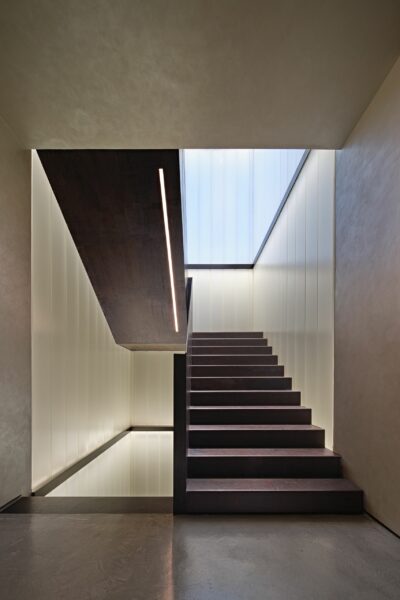
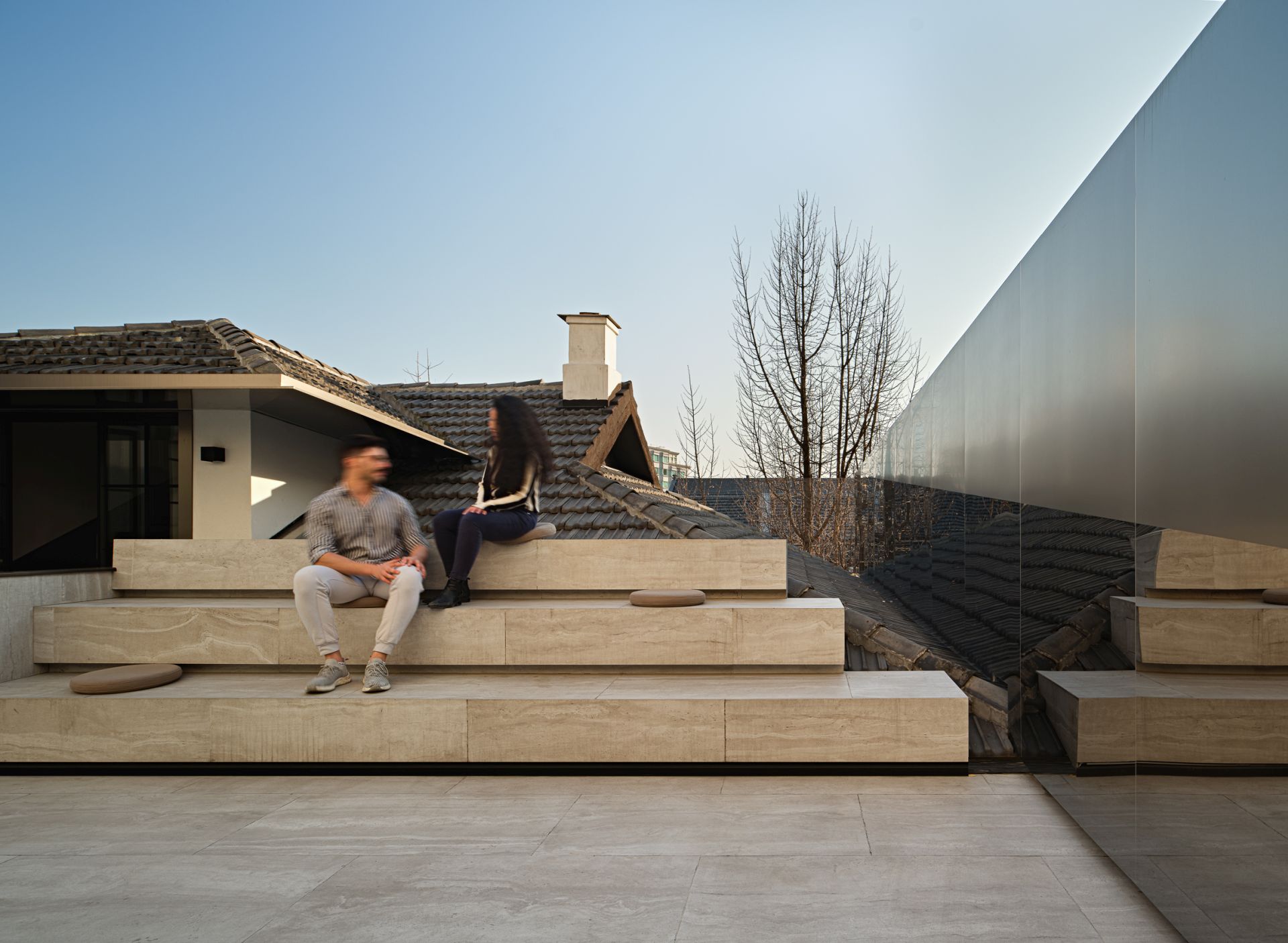
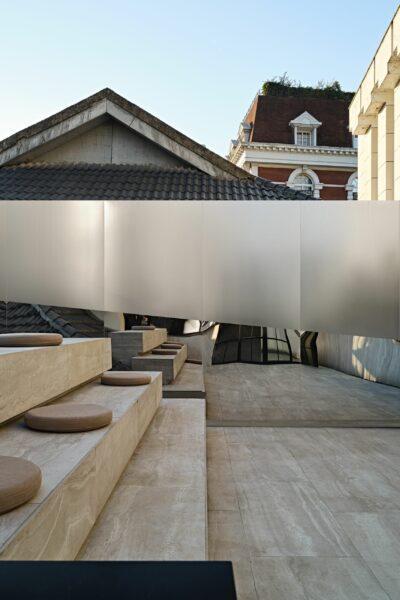
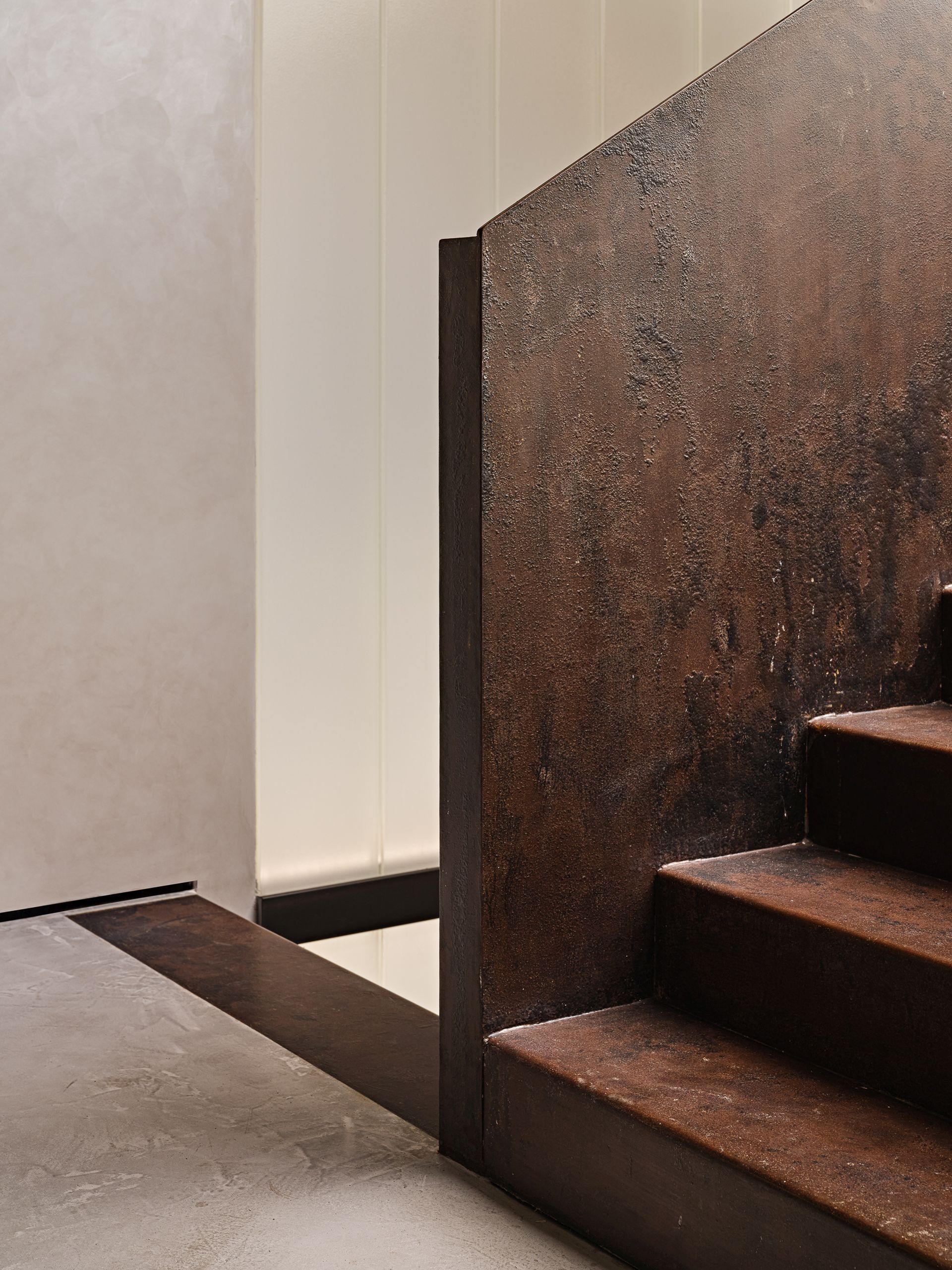
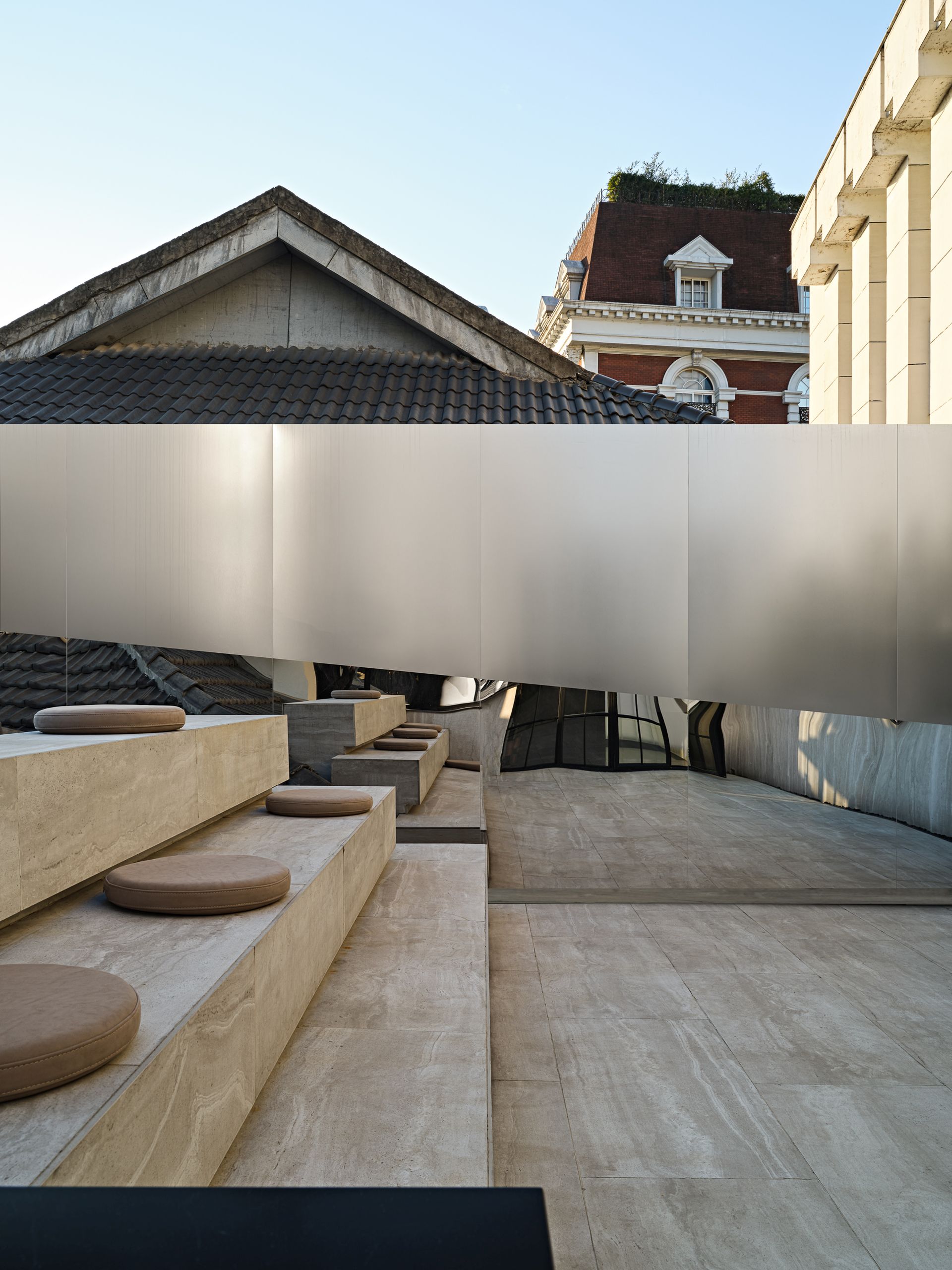
The old wooden stairs of the villa were very narrow, steep and badly damaged, couldn’t serve the current F&B function. For better circulation, the architects relocated the vertical connection of the building to the patio space of the existing building extension. To enhance the experience, the new staircase is covered with double glazed U-shaped glass partitions along all floors with a lighting system to represent the continuous energy flow transition, at the end of which is the terrace space and a more exclusive private VIP room. Here, the customers are reconnected with the city and able to look at it from the different heights and angles, corresponding to the last element – steam – elevation of taste. The simply designed interior shows off the geometric shape of the attic, while benches on the roof allow customers to have a more exclusive interaction with the city.

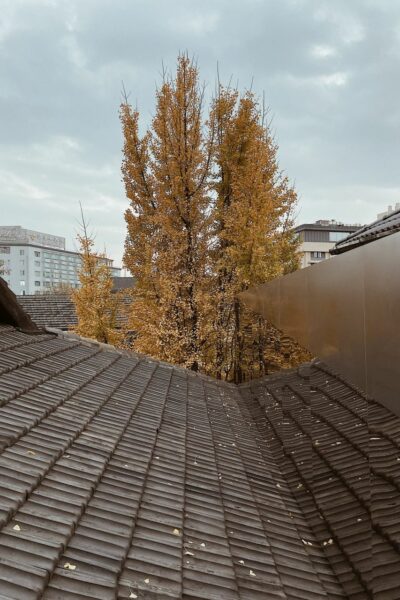
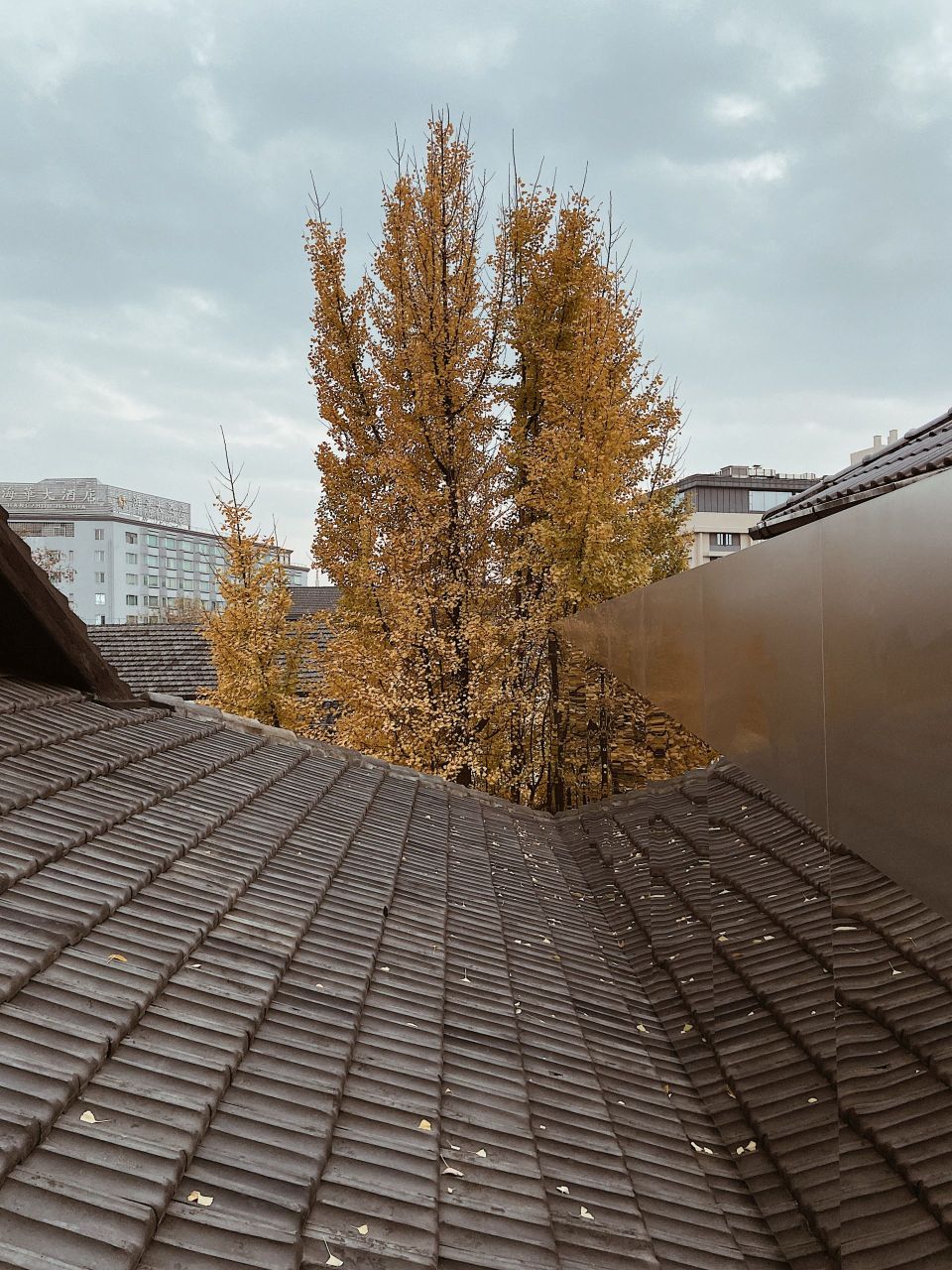
The architects also carefully designed a few other visual features. The stainless canopy on each floor to highlights the beauty of the preserved façade while hiding the gutters. The curved copper board at the entrance serves as a wayfinding sign without changing the original parapet. The stainless steel board on the terrace covers the outdoor equipment and adjacent buildings, creating contrast and solitude, while adding a contemporary touch.

Over the past few years, STUDIO8 has been working on various restoration projects such as Cloud Hotel, Charcohol Restaurant & Cocktail bar, Himalaya Yueyang (under construction) and Former residence of Xu Chongzhi (under construction). As a multidisciplinary architecture studio with mixed Chinese and European culture, STUDIO8’s has been creating story-telling spacial experiences under the principle of designing for the present and respecting history and local culture.

历史建筑中的火锅“博物馆”
——八荒设计杭州火锅餐厅旗舰店

GUD餐厅位于杭州市中心的一栋建于上世纪30年代历史建筑内,是一家专注于火锅美食和鸡尾酒的餐厅。八荒设计受委托担任该项目建筑改建、室内和视觉识别系统的设计。

就像中国的许多老建筑一样,很不幸,从1939年至其被交到建筑师手里,这座别墅几乎已经被城市“吞噬”,只有一个完整的立面面向街道。内部也被进行了多次翻新、扩建和改变,从住宅到各种不同的商业用途,室内原貌已经无从辨认。

交给八荒需要改造成火锅餐厅的场地包括:建于1939年的别墅原址、其北侧扩建部分,和西侧相邻建筑的底层空间。八荒设计向来认为,对历史建筑的最佳保护方式是使其满足当今的功能需求,赋予其新的生命。曾经的这栋别墅是一栋住宅,当时并没有公共卫生间和工业厨房这些功能。对这栋历史建筑的修缮和再利用需要非常细腻和小心,为了保护和尊重原建筑,厨房、洗手间,以及可供公众使用的相对宽敞的楼梯等服务性空间,都被安排在了原建筑之外的扩建区域和相邻建筑内,从而将这栋三十年代的历史建筑空间保留为纯粹的美食体验空间。

该项目的空间设计理念很大程度上受到了建筑历史的特殊性和火锅这一极具中国特色的烹饪文化的启发,通过抽象的方法描绘饮食文化和氛围之间的关系。对八荒来说,一个餐饮项目的空间最重要的就是应该成为美食体验的“画布”,旨在突出食物和空间之间的持续互动。

在深入研究火锅烹饪历史和饮食文化之后,八荒决定摒弃火锅丰富多样的地域或传统色彩,将其核心烹饪原理与建筑更紧密的结合,并转变为多层次的博物馆式体验。他们将餐厅命名为“GUD-古冬”,源自火锅自东汉时期因投料入沸水时发出的“咕咚”声而得名的古称“古董羹”,logo也由当时使用的铜锅形状及建筑的原始地砖片断变化结合而成。

在中国文化中,火锅是非常特殊的主食,而吃火锅的过程则是非常重要的时刻,朋友或家人聚集在一起分享食物和欢乐。通过来自火或电炉热量,食物分子被能量溶解,然后在液体(水或汤)中重新融合;最终,美味连同人与人之间所度过的时间一起,被提升到另一个欢乐的层次。作为火锅的三个关键元素,热量(火)、介质(水)和风味提升(蒸汽)被分别从功能、材质、机理和光线这四个方面与每个楼层连接,也就是之前所提到的,用抽象的方式阐述火锅饮食文化的博物馆式体验。

作为第一个元素,热量——使液体沸腾的能量,是一楼的基本设计元素,这一点也体现在了功能和人的互动上。火锅的饮食文化是需要大家到齐一起开始的,因此作为火锅体验之旅的开始,别墅的一楼被设计成一个鸡尾酒吧,创造了一个更热闹、温暖和吸引人的空间,先到达餐厅的人们可以自由在酒吧落座,点上一杯鸡尾酒,等待每个人的到来。如同能量的加热器,点燃气氛。红色的地板、延伸至天花板的壁炉、底部发光的玻璃护墙板、从地面升起的展示古董火锅的红色立柱,和灵动摆放的红色天鹅绒沙发,旨在营造出充满活力和沸腾氛围,隐喻被“火”的能量所“煮沸”的生动和温暖,以及人与人之间的互动。原建筑立面的部分原始砖墙被保留并展示在酒吧区内,以唤起对建筑的记忆。内凹镜面天花板在墙壁的一侧和通往贵宾室的入口,将空间向二楼水的主题拉升。

通过热闹的鸡尾酒吧,来到象征第二个元素——水的二楼用餐空间。就像水作为媒介,溶解并重构食材的分子,家人和朋友围坐在圆桌旁,享受美食和共同度过美好时光。二楼四周的玻璃砖壁龛利用了被相邻建筑遮挡的原始建筑窗户的深度,壁龛中展示了被树脂块包裹的原石,抽象地象征了食物分子在液体中被融合重组的形态。这层楼同样保留了原建筑扩建后被归为室内空间的带有石窗框的旧墙,作为用餐空间之间的隔断,木屋顶结构和沿街阳台也被小心修缮后保留和展露出来。

原别墅的旧木楼梯非常狭窄陡峭,且已损坏严重,无法满足当下的餐饮功能。因此建筑师决定将建筑新垂直交通安排在建筑北侧原扩建空间的天井内。为了提升体验,新楼梯的所有楼层都覆盖双层U型玻璃,结合照明,使空间光影过渡流畅。楼梯尽头通往露台和阁楼,阁楼用于更私密的贵宾聚会。在这里,顾客与城市重新建立联系,能够从不同的高度和角度看待它,对标作为最后一个元素的蒸汽和品味的提升。室内设计用纯白反光的艺术涂料展示了阁楼天花的几何形状,屋顶上的长凳让客户与城市有更独特的互动。

除此之外,建筑师还做了一些其他的视觉引导装置,例如每层的不锈钢雨篷在隐藏了排水沟、电线的同时结合了照明功能,保存和突出了原始建筑立面装饰元素的美感;入口处弯曲的铜板作为品牌导视标志,但不接触或破坏原始护栏;露台上半镜面半拉丝的不锈钢板,遮挡了室外设备和相邻建筑,旨在为建筑带来清新的对比和小环境,增添一些精致的现代感。

八荒设计近年来参与和完成了诸多(历史)建筑改造项目,如云顶堡精品酒店建筑改造、巧客餐厅与鸡尾酒吧建筑改造、岳阳喜马拉雅改造(在建)和许崇智旧居改造(在建)等。作为一个有着深厚中国和欧洲文化融合的建筑设计事务所,八荒一直秉承尊重历史和在地文化、立足及服务于当下的设计理念,为大家创造一个又一个有故事的空间体验。

BEFORE AND AFTER 改造前和改造后

CONSTRUCTION 施工过程

GUD RESTAURANT&BAR 古冬餐厅

PRIVATE VILLA 私人别墅

LOCATION 地址  | ZHEJIANG 浙江
CATEGORY 类型  |  HOSPITALITY 酒店度假村

ARCHITECTURE 建筑
INTERIOR 室内设计
FEE 软装设计

AREA 300 m²

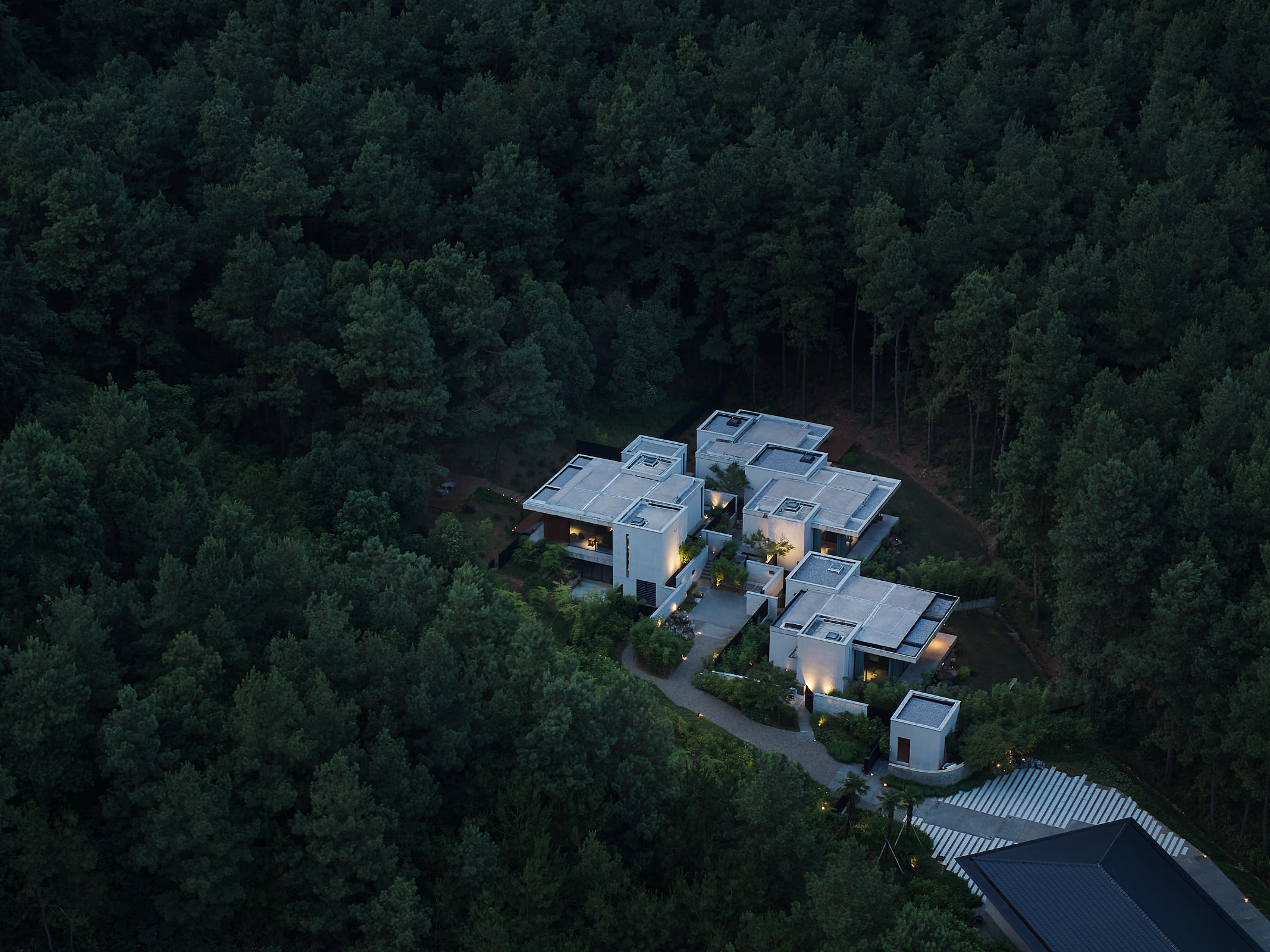
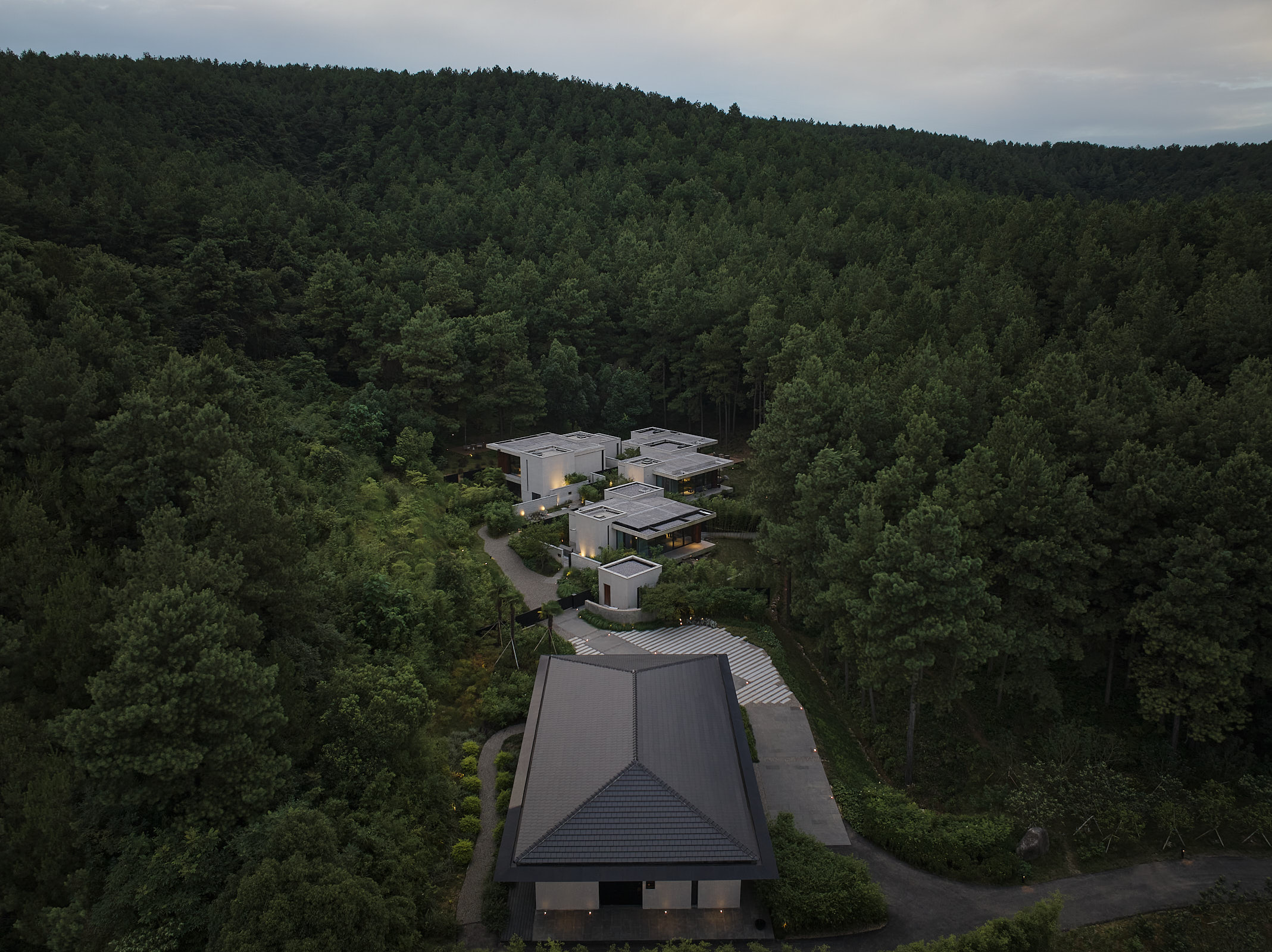
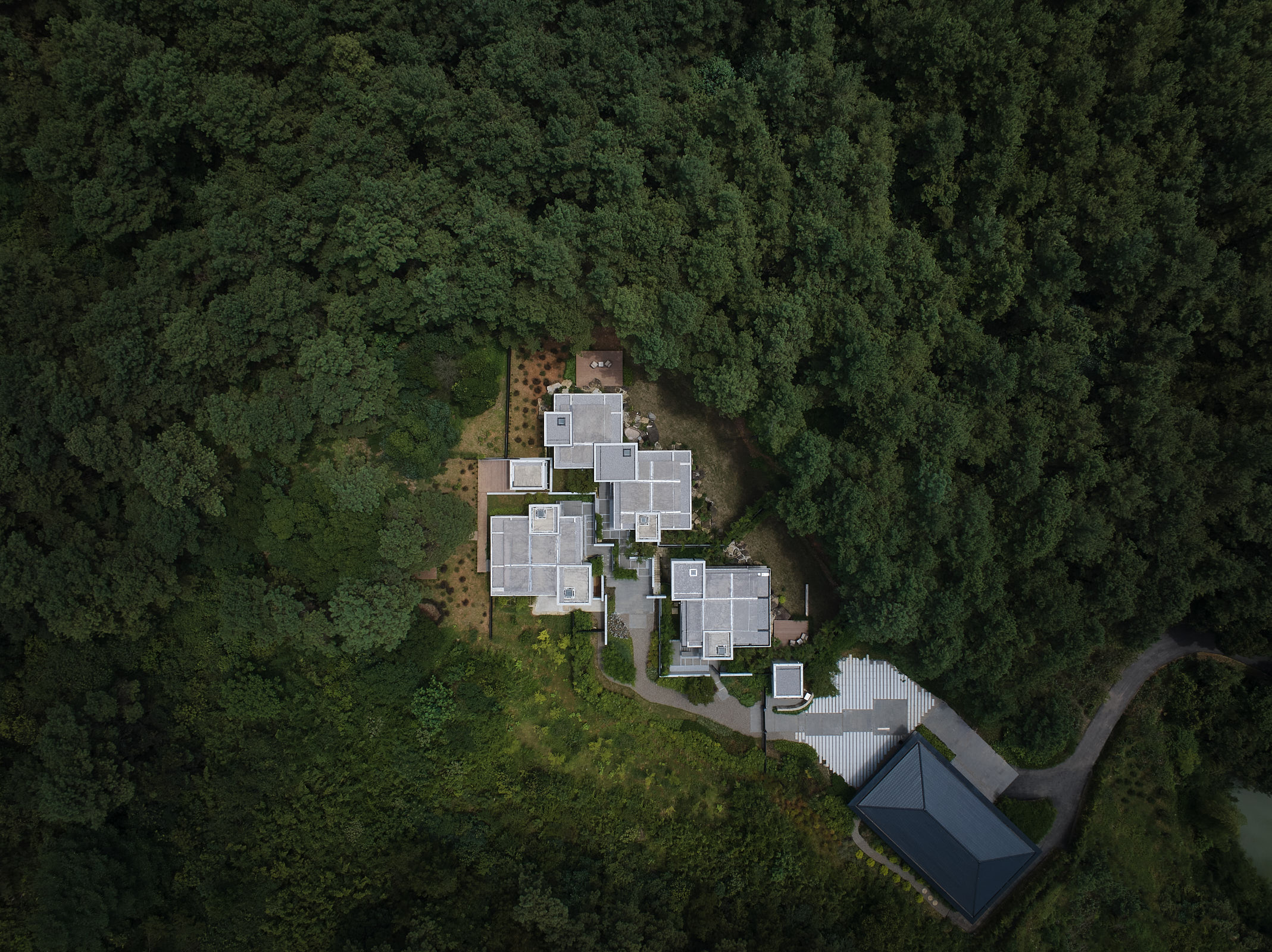
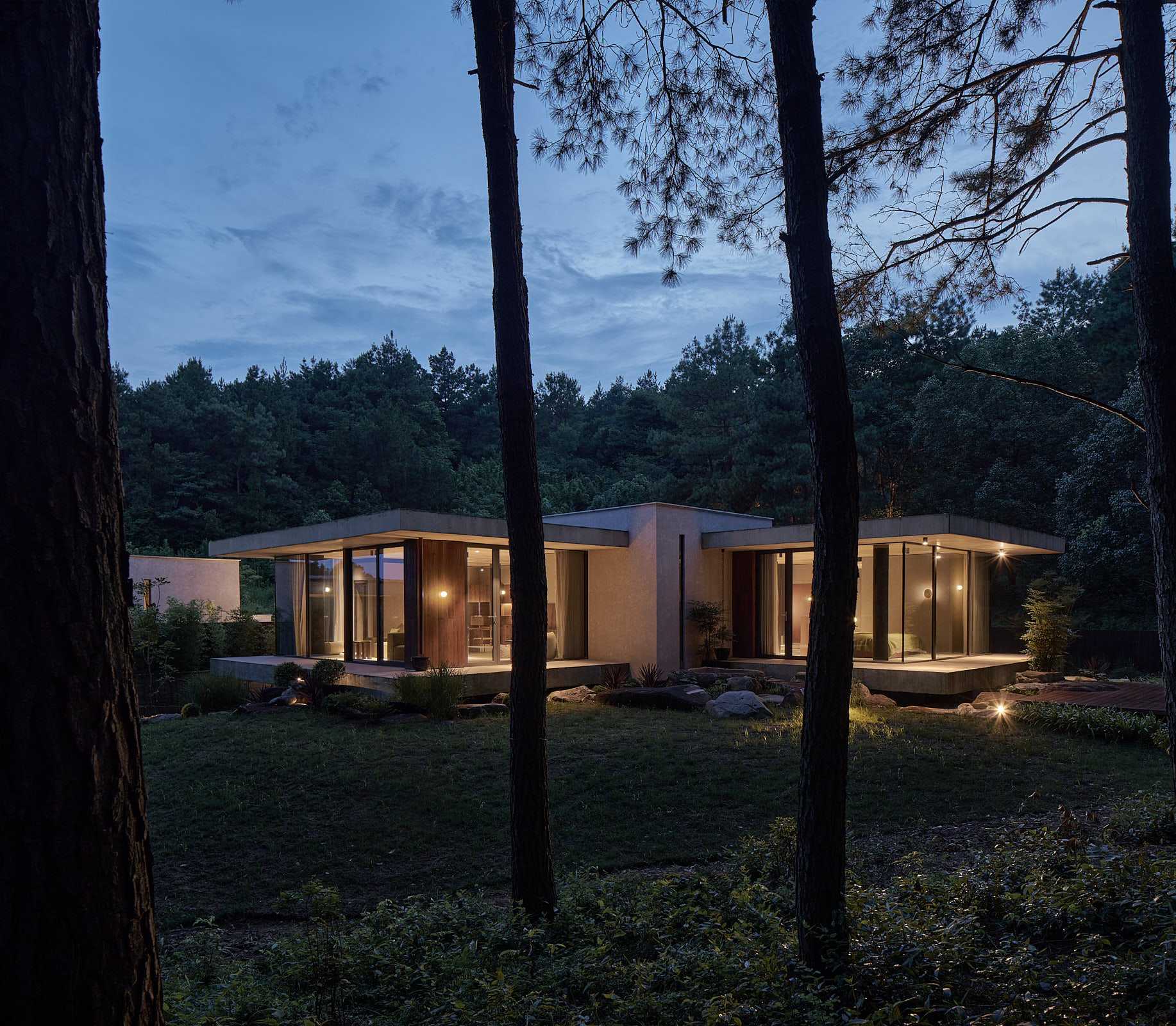
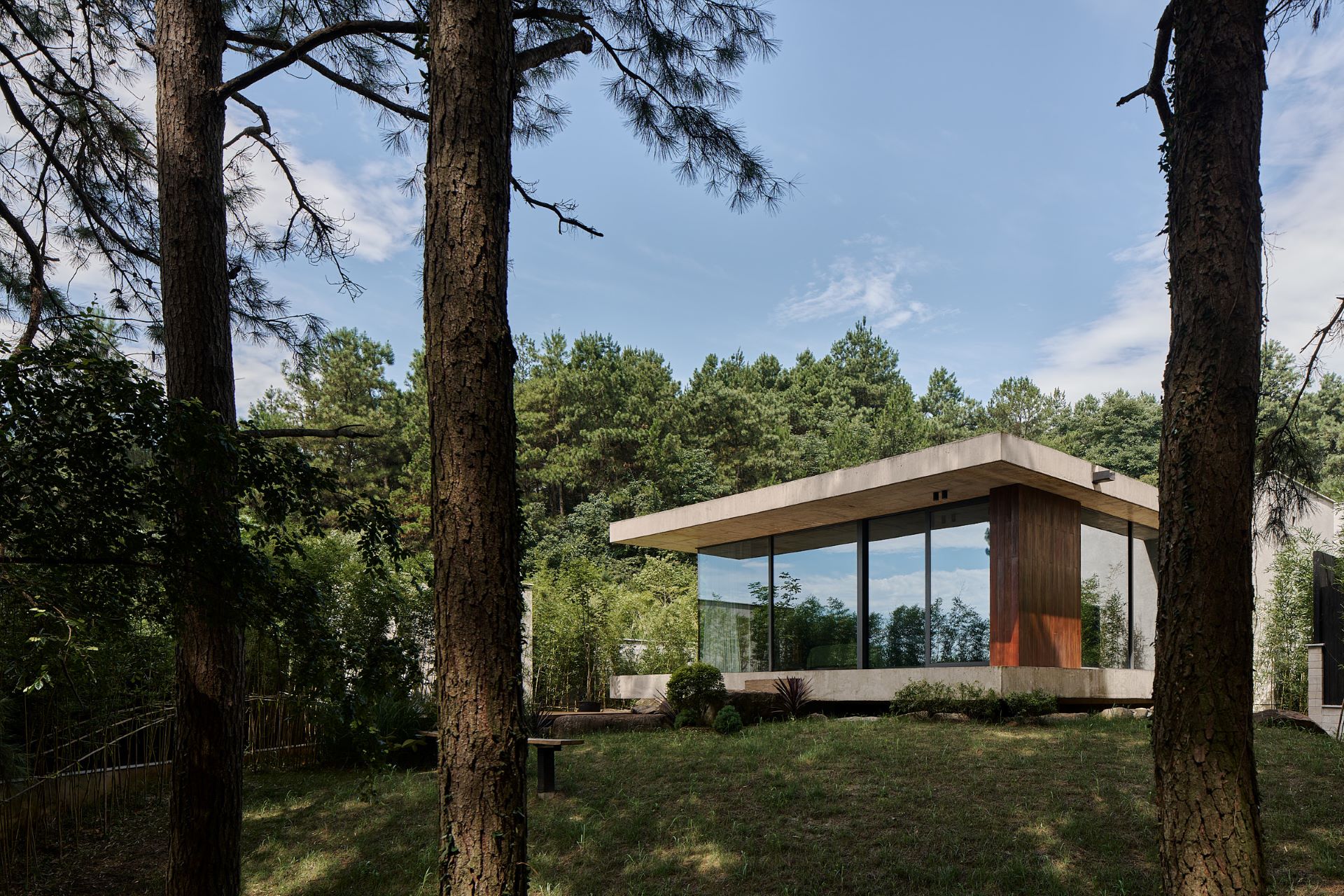
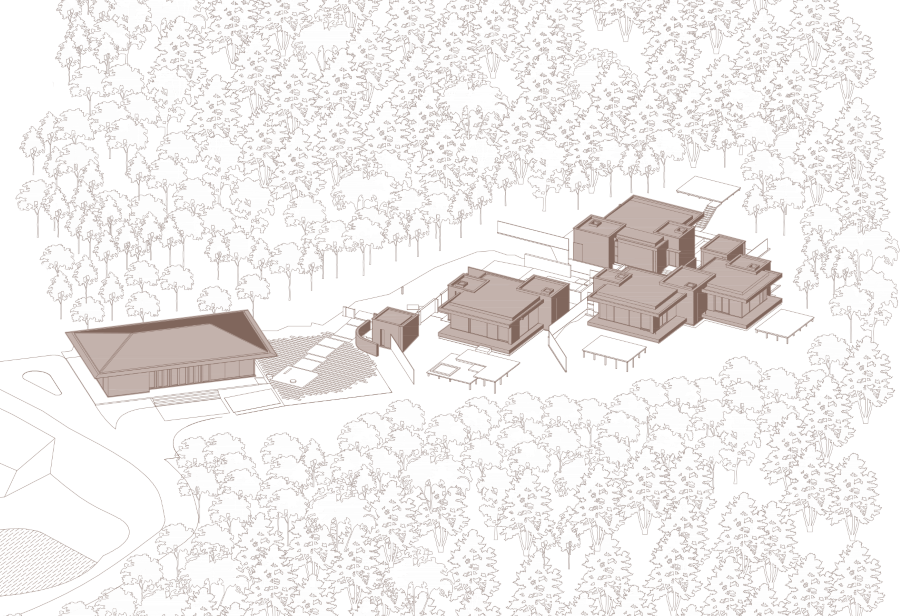
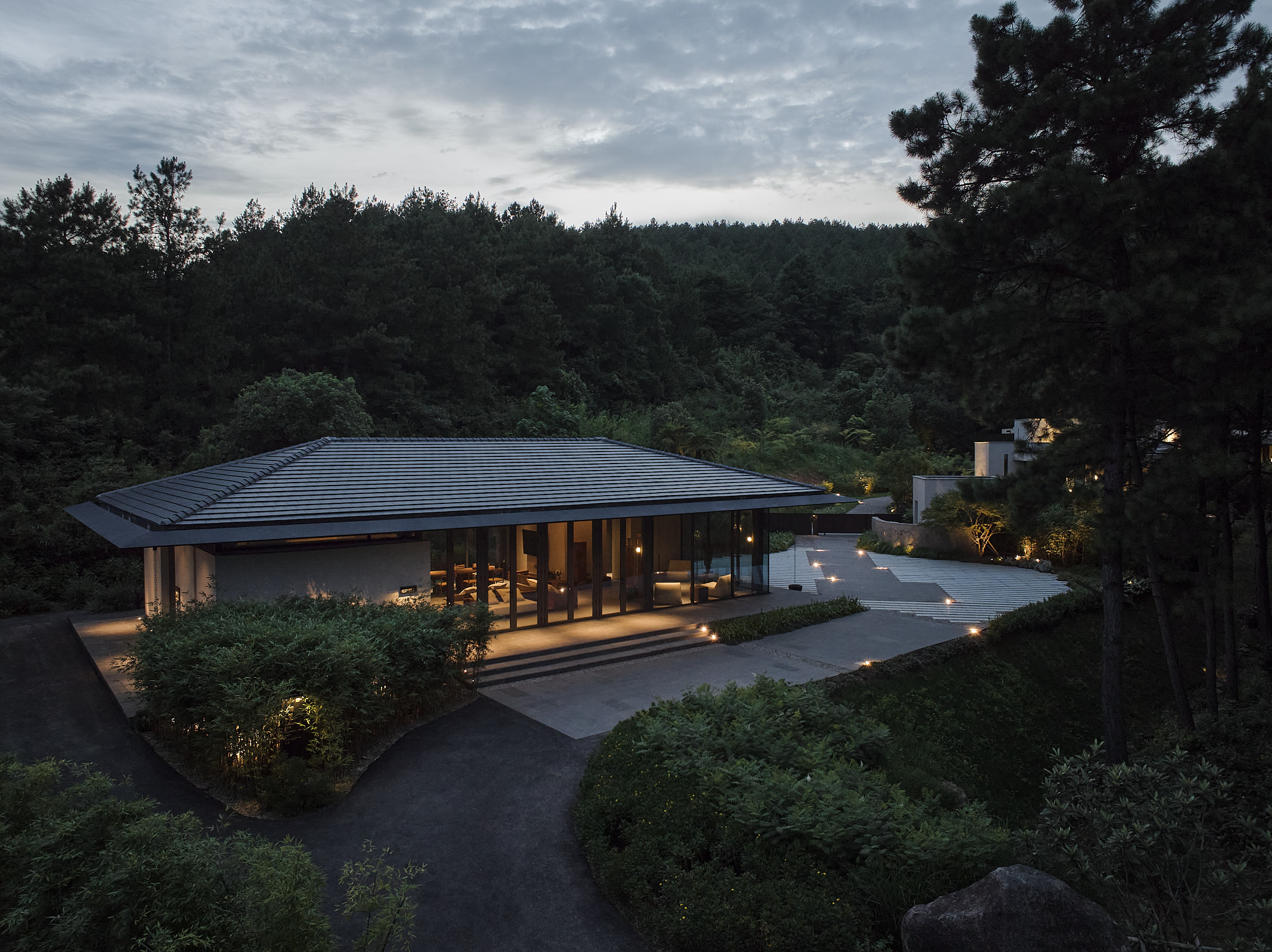
Pine villa is nestled in a secluded valley in Zhejiang, embraced by surrounding pine forests and backed by the natural screen of Pingfeng Mountain. This boutique estate consists of a wine and cigar bar alongside three panoramic guest suites. Pine Villa is the second luxury retreat we’ve designed for Anadu, continuing the philosophy of the first Anadu Resort: “Find yourself in nature.” Our goal, from planning to architectural design, is to highlight the unique beauty of the valley’s pine forests, harmonizing with the natural landscape to create an ultimate retreat experience exclusive to Pine Valley. The buildings are carefully placed along the contours of the valley, with each structure oriented differently to maximize the unique views. Guests are invited to immerse themselves in the serene valley breeze as they begin their journey of tranquility.

松境度假庄园坐落于浙江一处全围合的小山谷之中,背靠屏风山,周围松林环抱,是一座由一栋红酒室和仅三栋全景客房组成的微型精品庄园。松境是我们为Anadu设计的第二家高端隐世度假村,沿用第一家Anadu度假庄园(Anadu Resort)“在自然中找到自我”(Find yourself in nature)的座右铭,无论从规划还是建筑设计的角度,我们都希望发挥这座山谷独特的松林景色,回应场地自然印记,打造更极致的独属松境隐居体验。于是建筑群顺应山谷肌理依势而建,每栋建筑布局朝向因景而异,与地形连接各不相同,并都拥有独特的景观视野,人们可以在谷地清风中开启沉浸式度假之旅。
READ MORE 更多

The journey begins at the estate’s entrance, where a bamboo-textured concrete and charred black wood “L”-shaped gate seamlessly blends into the landscape, like open arms—on one side embracing the valley’s greenery, on the other welcoming guests. As visitors drive along the pine-lined road, they arrive at a building with a four-sided sloped roof, the wine and cigar bar, which also serves as the reception center, offering afternoon tea, wine, and cigar tastings

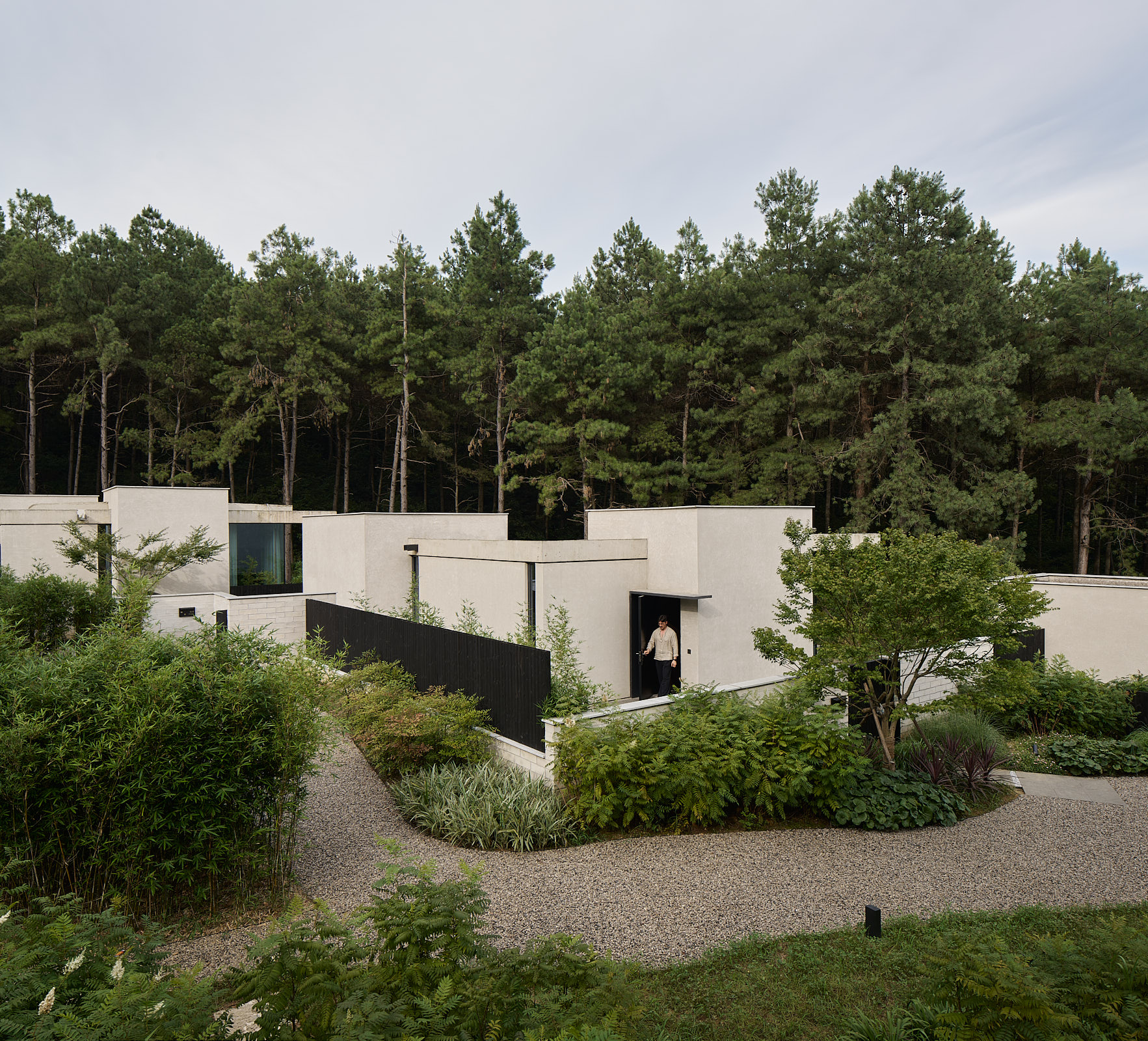
A curved bamboo-textured wall leads guests from the wine house to the guest area, where the hard ground transitions into soft gravel paths, evoking a vacation atmosphere. At the path’s end, a small plaza provides a moment of pause before entering the guest area, enhancing the sense of seclusion. The three minimal standalone structures sit quietly in the valley, surrounded by the forest. Facing staggered walls that obscure the rear of the space, guests are invited to imagine what lies beyond.

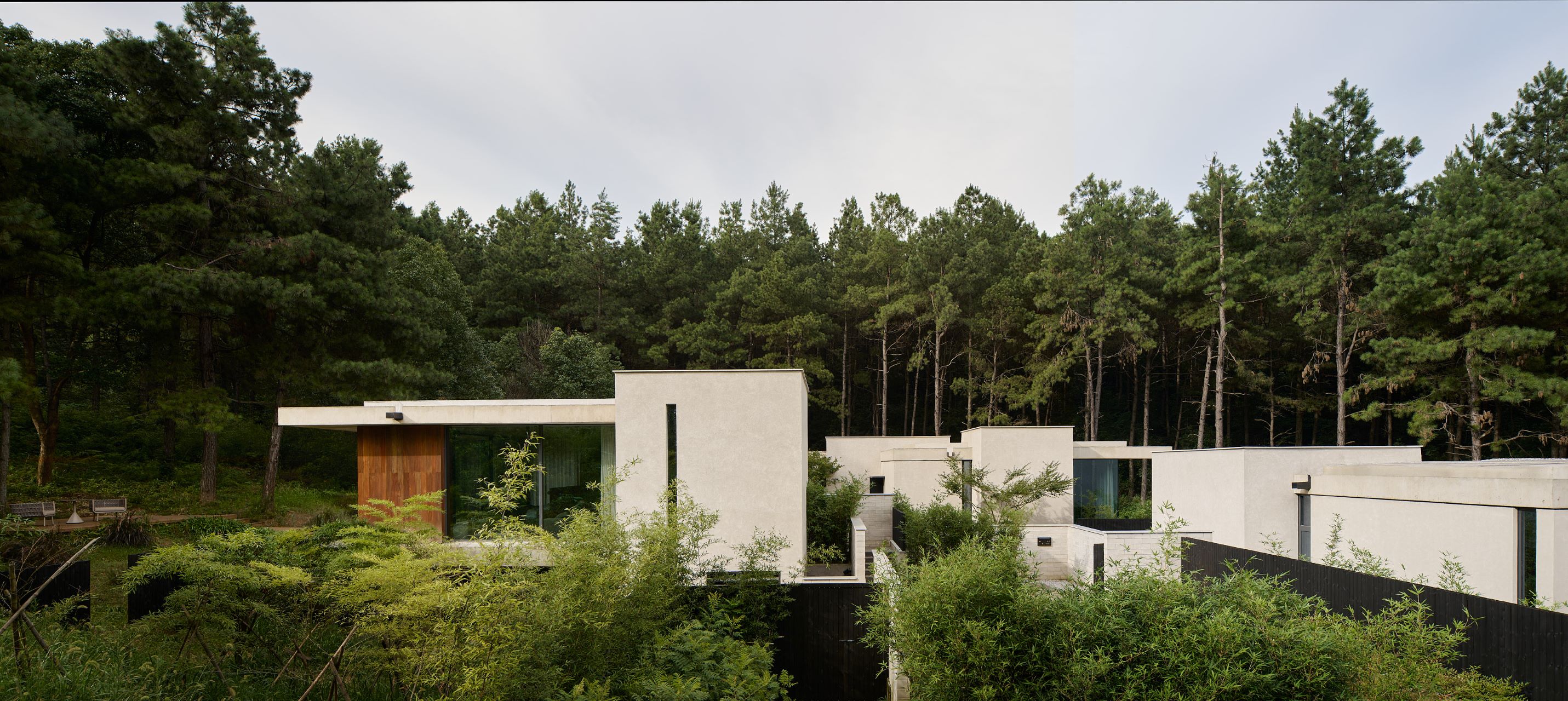
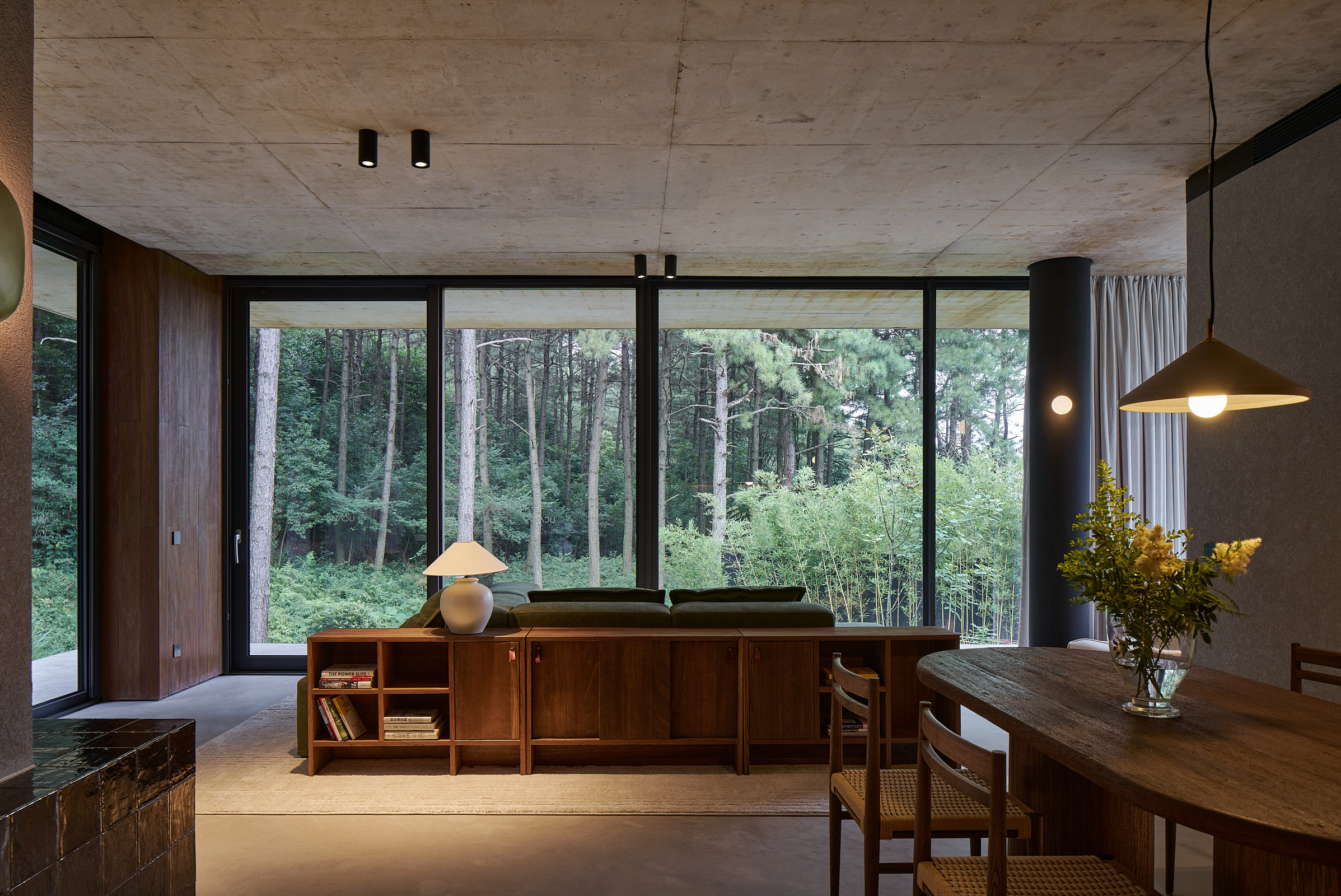
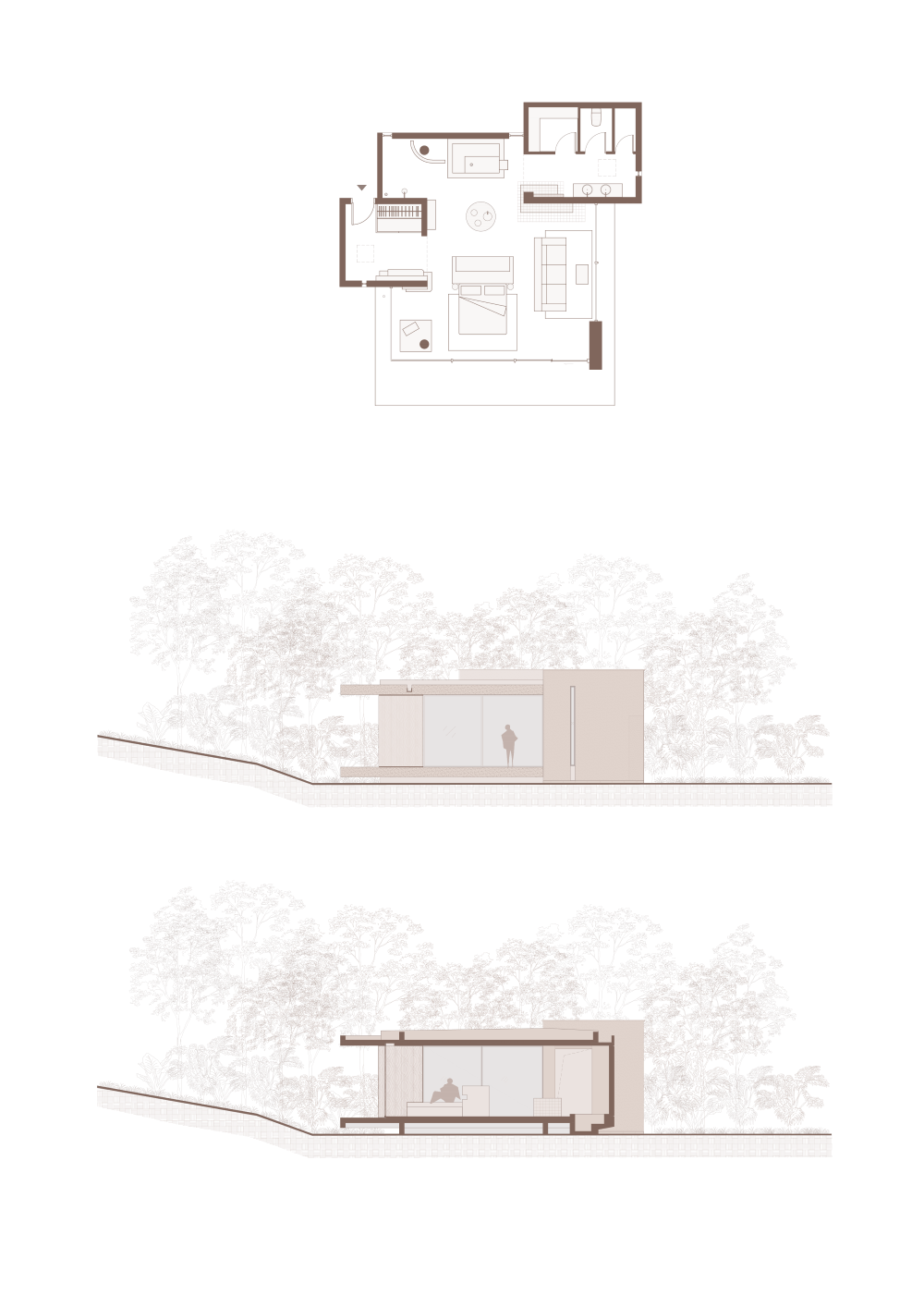
As guests walk through the courtyard and winding paths, they experience a series of mysterious moments before reaching the guest rooms. Upon entering, the view dramatically opens up—two concrete slabs face the valley with no obstructions. The interior flows seamlessly with 270-degree panoramic views, offering a fully immersive experience. The rooms are embraced by nature on three sides, each framing its own unique view.
To keep the structure minimal, the buildings are cast from exposed concrete with integrated beams and embedded piping, ensuring no visible ceiling beams, lighting fixtures, or suspended structures. The clean concrete slabs unify the space. The floor slab floats above the valley, respecting and connecting with the terrain, while appearing to hover above it. Between the two concrete slabs, only the serene pine valley is in sight.

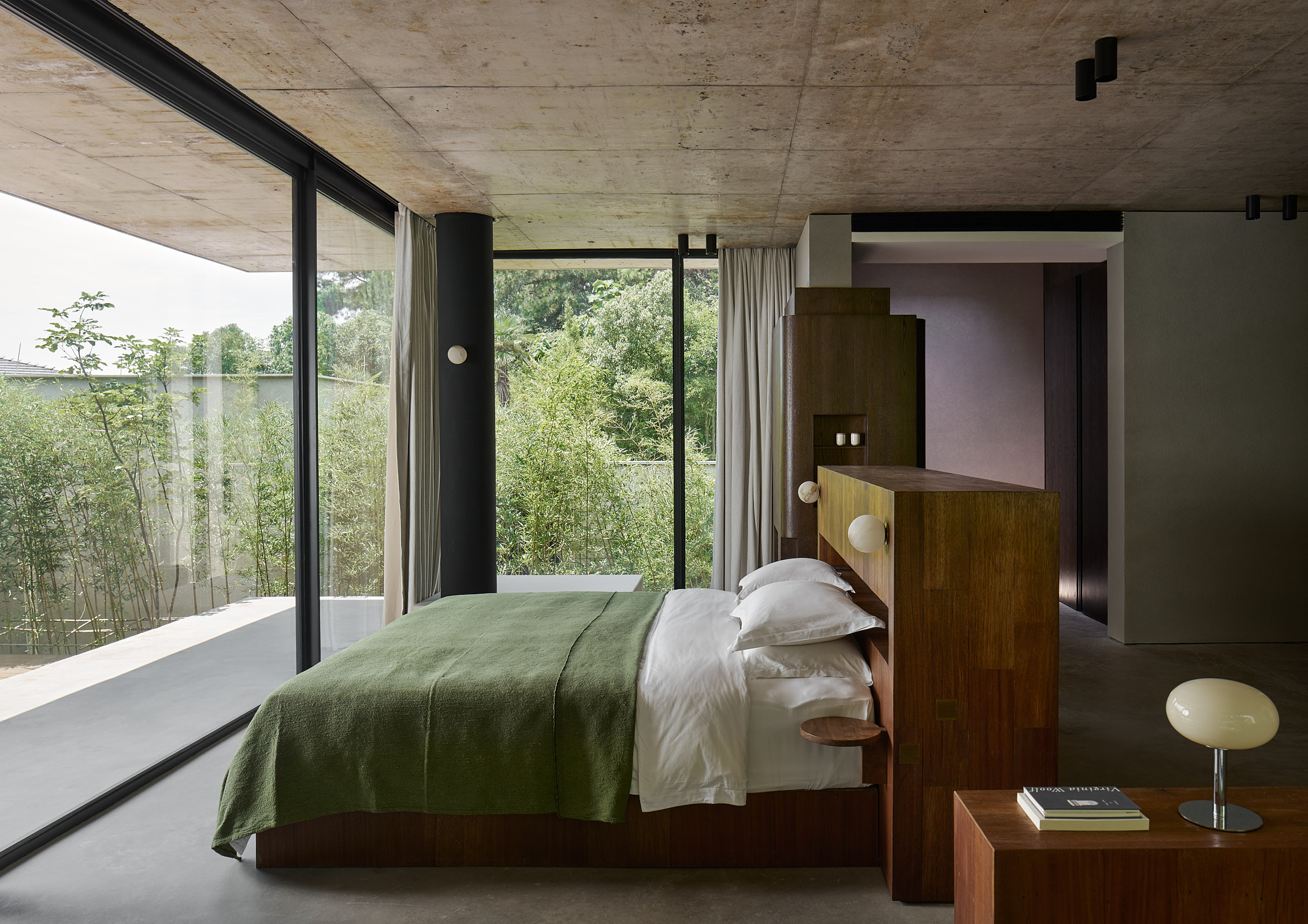
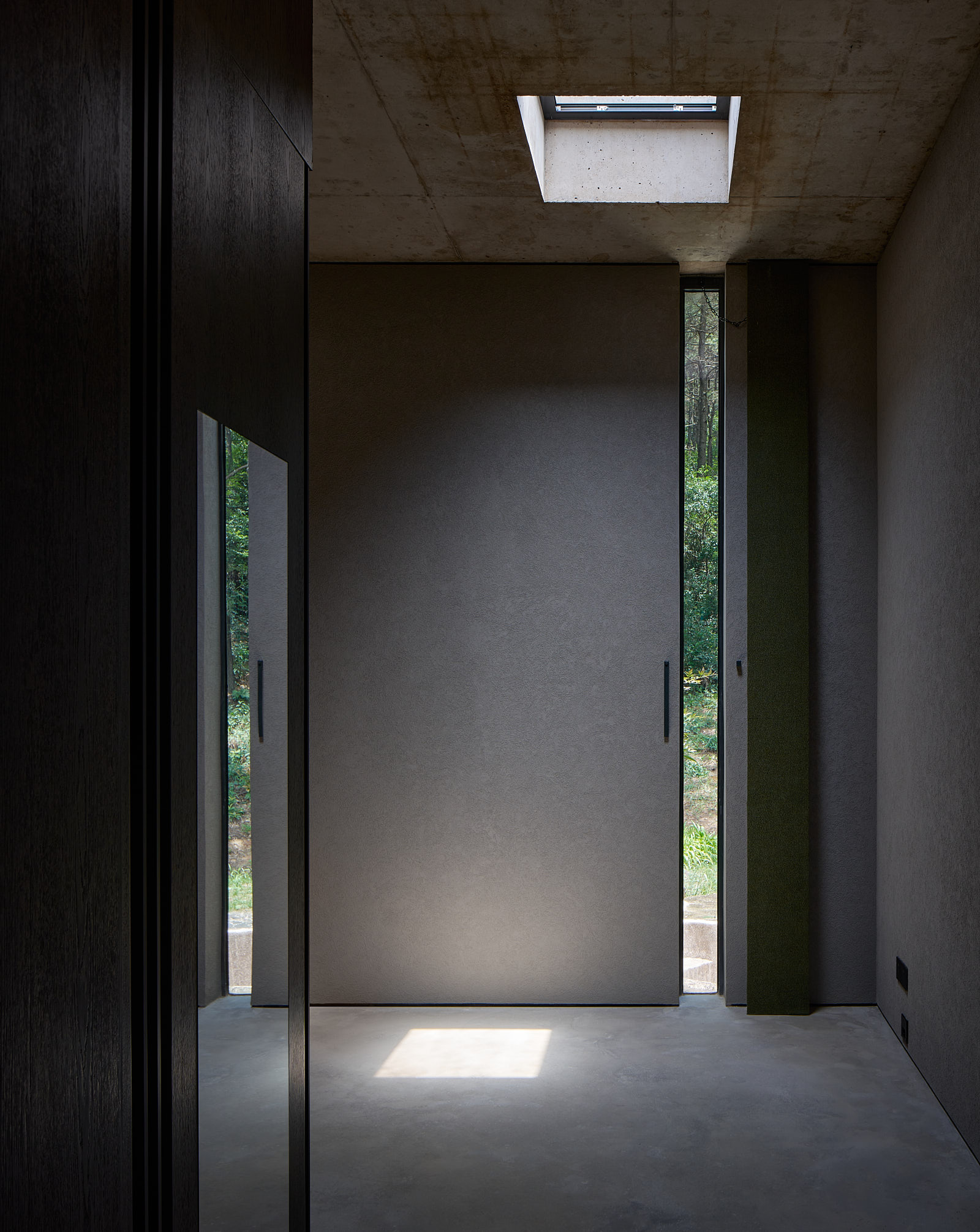
From the architecture to the interior, we emphasize the beauty of the “bone structure”—the essence of space derived from careful consideration of the site’s topography, density, and scale. Skylights and strategically placed windows allow light to flow naturally through the space, reducing reliance on decorative materials and instead highlighting timeless quality. The seamless, flat floors further enhance the sense of unity, allowing for smooth circulation throughout, with indoor and outdoor spaces blending organically with nature.

The sunken bathtubs in the bathrooms are also integrated into the concrete floor during the construction process, creating a seamless, sculptural feature. The interior space is divided into distinct functional areas—living room, kitchen, bedroom, and bathroom—yet they flow into one another without strict boundaries. Multifunctional furniture wraps around corners, connecting different spaces and allowing them to blend seamlessly.

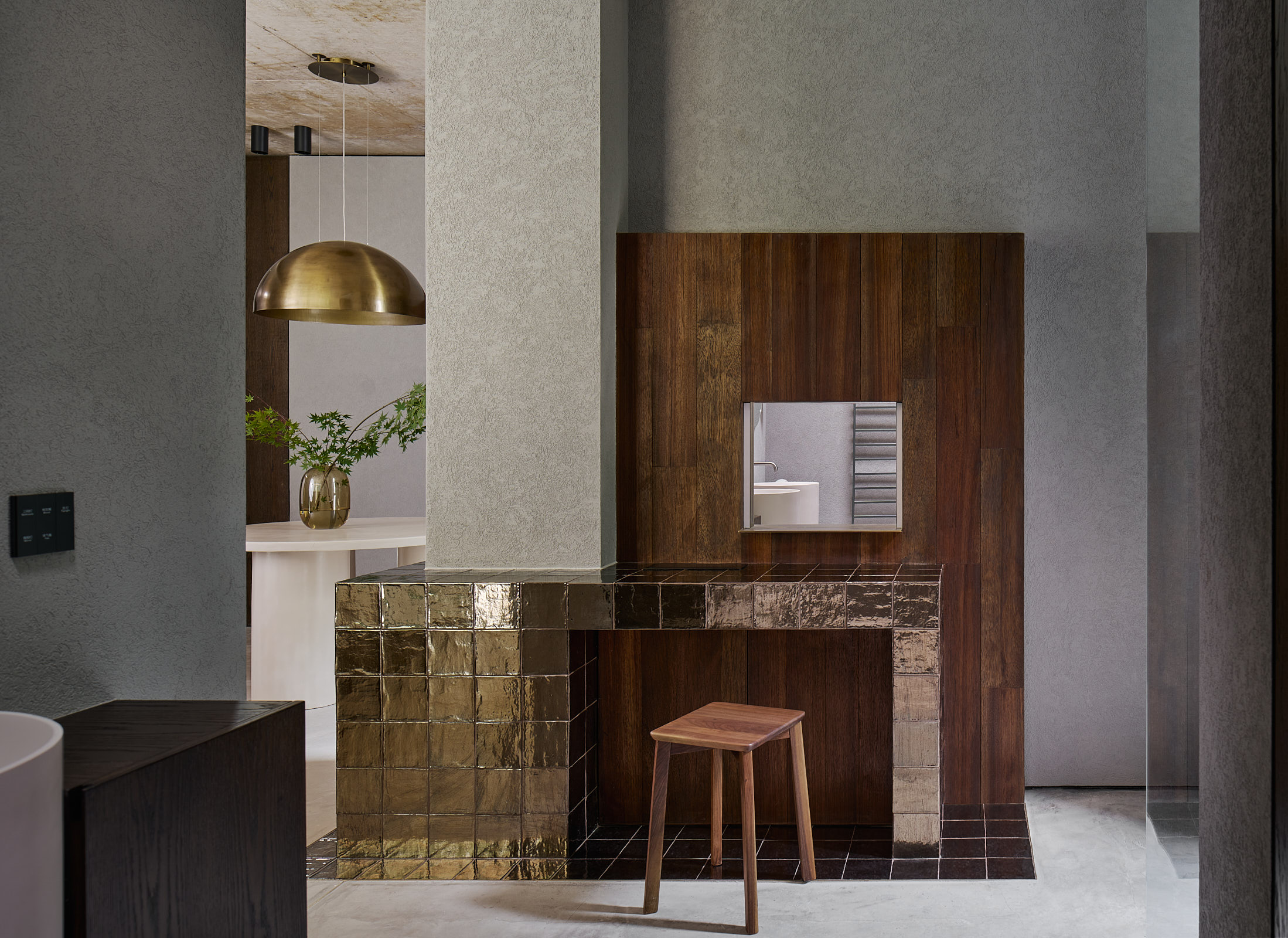
In the bathrooms, the design language of “wrapping” continues, with handmade brick walls extending from the floor to form built-in storage, transforming into a vanity on the other side. This continuity adds both interest and functionality to the minimalist space. Walnut furniture complements the natural scenery outside the windows, immersing guests in the tranquil experience of the retreat. The lighting design, layered across different functional areas, further enhances the cozy, serene atmosphere—from recessed downlights to wall sconces, pendant lights above dining tables, and sculptural lamps on counters.

Stepping through the glass doors, guests enter their private pine-forest courtyard. The outdoor floating platforms, made of wood, invite them to explore deeper into the valley. Each guest suite is separated by low walls and vegetation, ensuring privacy and exclusive outdoor spaces for each guest. The landscape design softens the boundaries between the estate and the surrounding valley, with local plants chosen to blend harmoniously with the natural environment. Delicate lights, like fireflies, dot the trees and pathways, enhancing the understated sense of seclusion.

From the enclosed privacy of the buildings to the open, flowing spaces and the seamless connection with nature, we crafted an experience of surprise and delight. The design flows effortlessly from architecture to interiors, with no unnecessary details or embellishments. By carefully considering the “bone structure” of the space, we laid a solid foundation for a high-quality, lasting retreat. Ultimately, Anadu Pine Valley offers a boundless experience of seclusion, where both architecture and the human spirit retreat into the embrace of the natural landscape.

旅程起点从庄园入口处已悄然开始酝酿静谧的氛围,竹肌理的混凝土和黑色炭化木“L”形大门,低调地融入景观,像是敞开的双臂,一边拥入一片山谷绿植,一边怀抱迎接来客。行车驶入庄园,沿着松林夹道的山路来到一栋四面坡屋顶建筑前,泊车落客,这里便是庄园的红酒雪茄吧,也作为会客中心同时承载着客房接待、下午茶、红酒和雪茄品鉴等功能。
穿过红酒室,一面竹编纹理的弧形围墙将人们引人客房区。落脚也从硬质的地面变成细软的沙石地,边缘不规则的度假感在细软的沙石行径中不断变化,路尽头设计了一方小小的广场作为入户前的驻足停留空间,进一步营造出隐秘感。三栋极简独立的建筑单体悄然坐落于山谷深处,环绕在广场周围,抬头可以望到建筑后面高大的自然松林,但还无法触碰。面对错落墙体的“阻挡”,为后面的空间留足想象。

通过院门和曲折的小径,在体验了一系列神秘的仪式感之后,当真正穿过入口封闭的“体量”进入客房,视野豁然开朗,上下两块楼板面向山谷全然打开,室内空间因为270度的景观面变得流动而通透,旅程的欣喜达到顶峰。每间客房都被自然三面环抱,拥有独特的框景。为了消隐结构,让空间最大化,建筑结构采用素混凝土一体浇筑,同时采用上翻梁并预埋管线,室内无悬梁、吊顶造型或灯线,整块的素混凝土顶板保证了空间的整体性。与建筑顶板相呼应的底板距离地面一定距离,与山谷地形自然脱开,仿佛漂浮在自然的地面上,最大程度尊重地形,又与之联系。两块混凝土楼板之间无多余立柱,只有一片山谷松境印入眼帘。局部用木头包裹,承载着部分结构和管道作用,同时也为硬朗素雅的空间增添温暖柔性的元素。

客房入口恰到好处的天窗开洞与立面开窗,让封闭的空间体量有了光的流动和自然的照见。无高差的平铺地面使得起居动线流畅,同时室内外的空间互相渗透、延展,与自然联结。此外浴室的下沉式泡池也是提前规划,整体浇筑与地面连成一体。室内空间虽然划分为客厅、厨房、卧室和卫浴等多个区域,但彼此之间没有明确界限,布局有机自然,转角的多功能家具“包裹”墙角,存在于不同区域,连接和服务于不同空间,也使空间之间过渡自然并相互融合。

在卫生间的转角处,再次使用了“包裹”的设计语言,从地面到墙面,手工砖砌筑的置物矮墙,在墙的另一侧变成了化妆台,为空间的跨越转换,也为朴素的空间增添亮点和趣味。家具选用沉稳的胡桃木,与窗外的景色相互映衬,让人更沉浸于自然居住的体验中。另外,灯光布局配合不同功能区,除了筒灯,从墙上的壁灯、餐桌上的吊灯,到台面的造型灯,用不同层次的光效烘托着温馨静谧的气氛。

打玻璃门进入独属的松林后院,屋檐下的灰空间与自然相融,每间客房都有独一无二的户外悬浮景观平台,可进一步深入山谷自然,依据地形,设置了或连接或脱离的木休闲平台。客房之间以植物和矮墙分隔,保证每户的独立性,能各自独享私域度假空间。景观设计柔化了庄园与山谷景观的边界,在植物种类的选择上,也挑选了山谷中的在地植物,有机地融入所处的自然环境。灯光犹如萤火虫,星星点点般点缀于树丛中,或在地面低矮处照亮路径,烘托低调的隐居氛围。

整个庄园由体及面,从体块包裹的私密性,到空间的开敞流动,再到与自然的连通互动,通过面体交错打造惊喜愉悦的空间体验。一座山谷,三份独属松境的隐居体验,不论是与朋友小聚还是独自度假,松林平静的力量与建筑方正的体量,相互映衬,建筑亦归隐于山林,静谧而出世。

我们八荒设计重视建筑和室内的整体设计,我们相信当建筑的结构、密度与尺度——“骨相“已经推敲到最佳的时候,室内空间的品质将不再过分依赖于装饰性材质,而显现出其真正经久的品质。

WINE HOUSE + PRIVATE VILLA low

PRIVATE VILLA 私人别墅

UR DUPLEX APARTMENT 复式公寓

DSCF7924-编辑
DSCF7943

LOCATION 地址  |  SHANGHAI 上海
CATEGORY 类型  |  RESIDENTIAL  住宅

STRUCTURE DESIGN 室内结构设计
INTERIOR 室内设计
FFE 软装设计

AREA 420 m²

Duplex apartment for a close-knit family providing maximum visual and spatial connections between spaces with timeless contemporary tastes.

巧妙的二层结构设计,为复式公寓的主人家庭提供最大的视线和空间连接,以及简约当代的生活环境。

READ MORE 更多

UR Duplex Apartment in Shanghai by STUDIO8
— “ALWAYS HAVING YOU IN SIGHT” APARTMENT connected by one “bridge” and two staircases

How to describe and preserve time when you are with your loving ones? When you are at home, you might want to have some “me” time as well as have all your family members in sight.

Shanghai-based architecture design studio STUDIO8 has completed a 420-square-metre duplex apartment for a young couple with two kids. The couple wants a spatial and clean space where they can have their own space for different activities and at the same time be able to spend quality time with family and friends. Converting the owners’ way of living into timeless space design is a key focus in residential design for STUDIO8. “The owners of a home shall always be the soul of the place and our key inspiration,” said the architect.

The apartment is located on a quiet street in the center of Shanghai along which grows French platanus and magnolia trees over ten-meter-height. The tree crowns are just at the height of the balcony window, which make the apartment an urban retreat for the family. The project involved transforming a 4.6-meter height space into a duplex apartment creating connections between various rooms and updating it to a better match with the clients’ contemporary tastes.

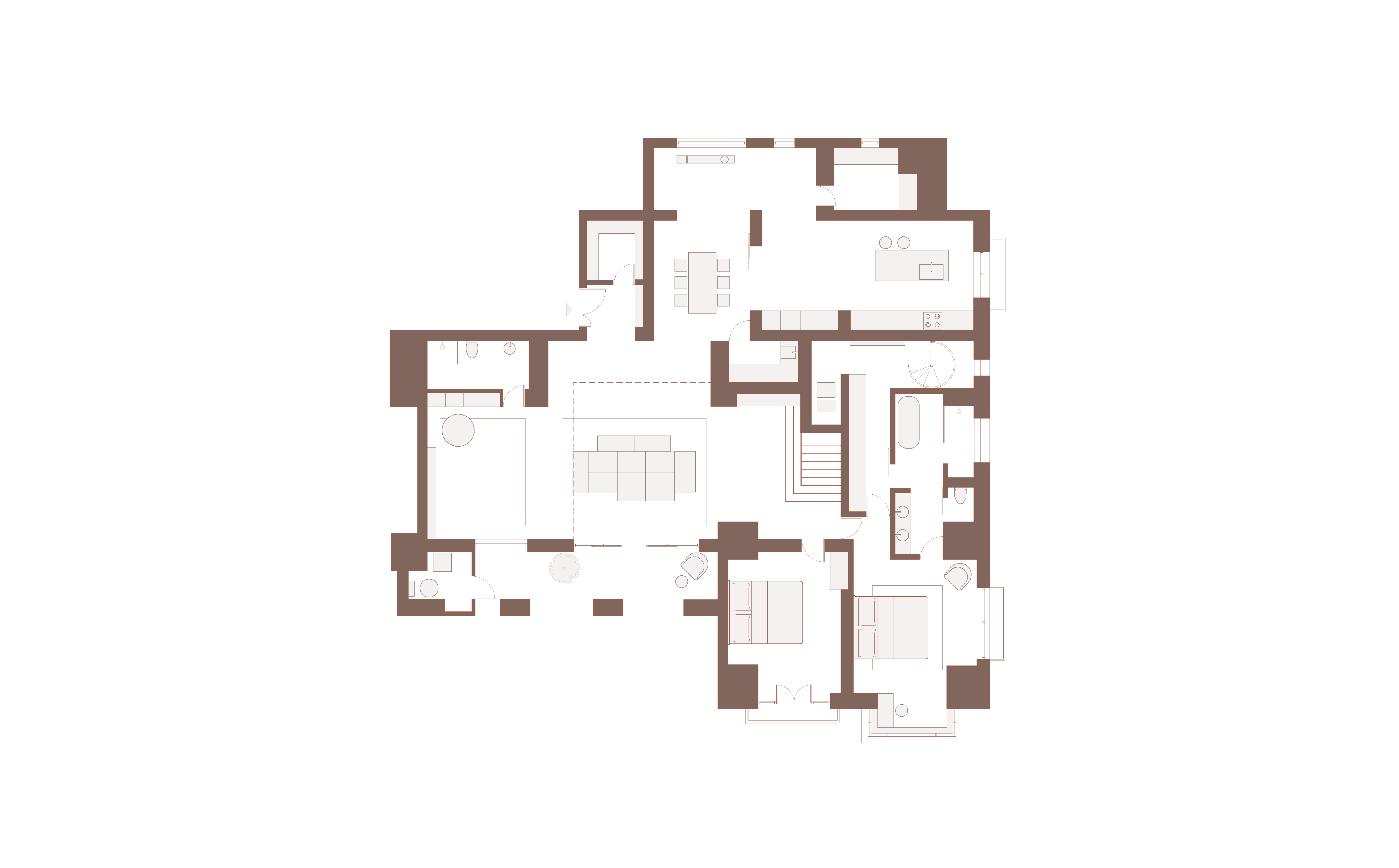
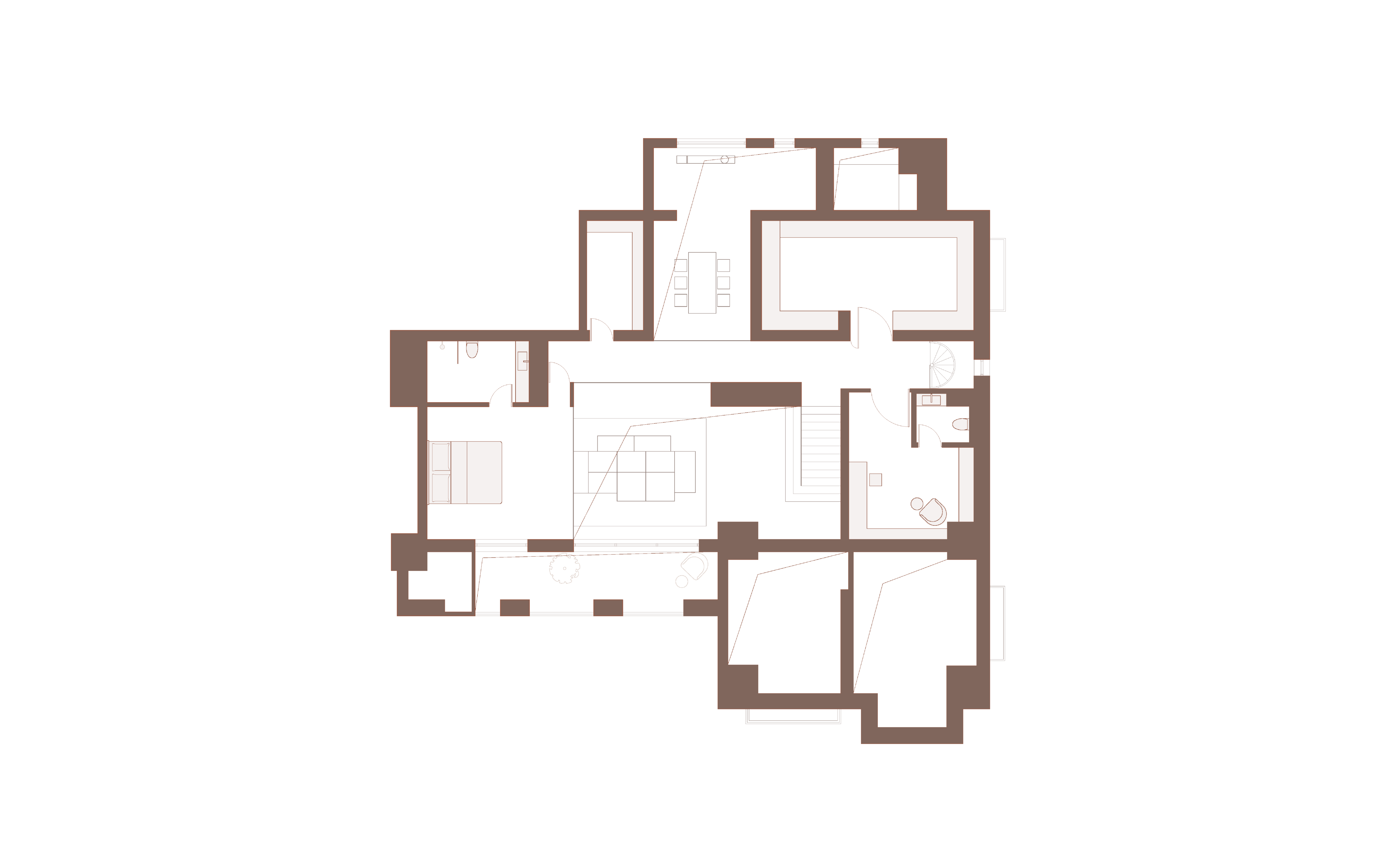
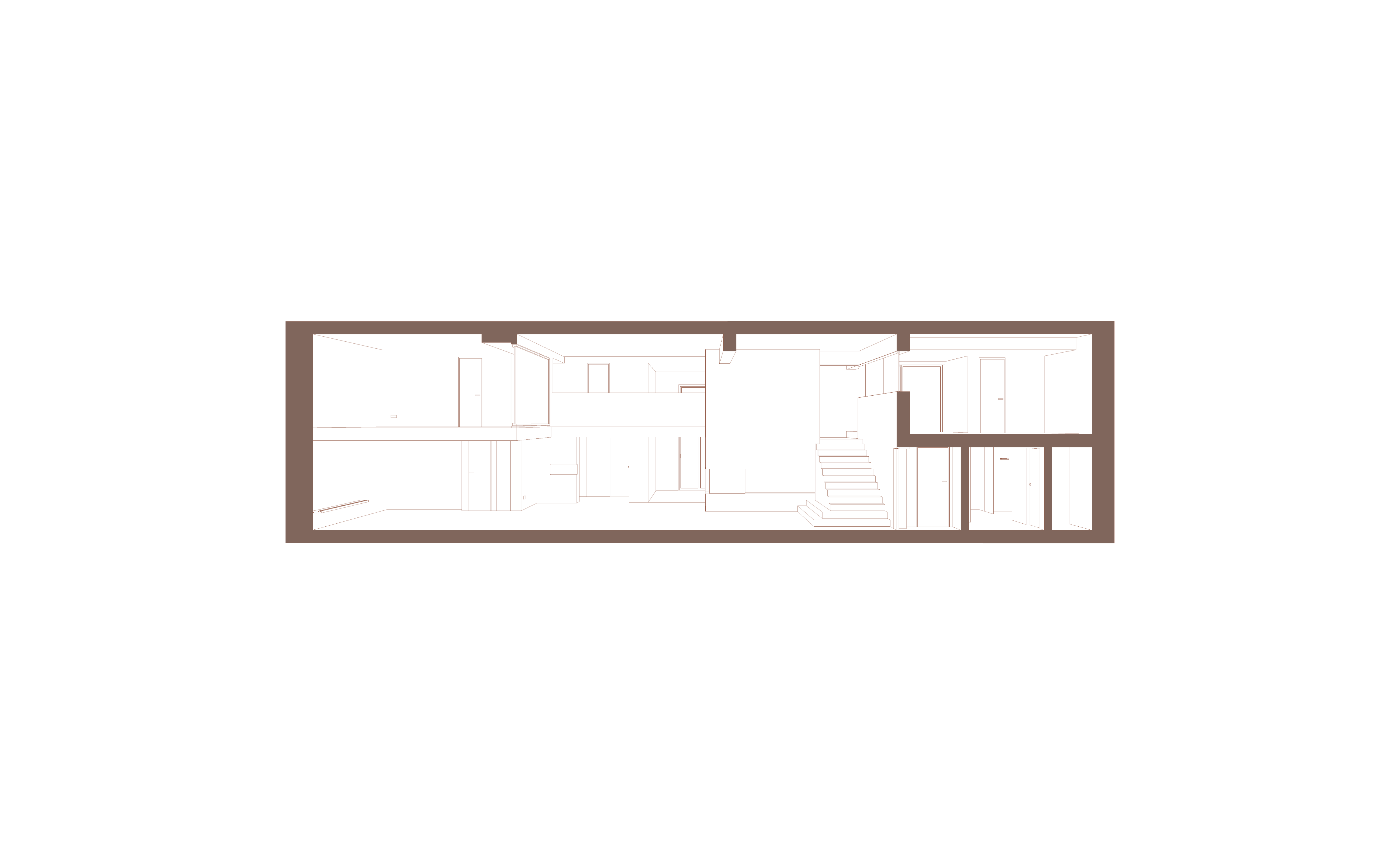
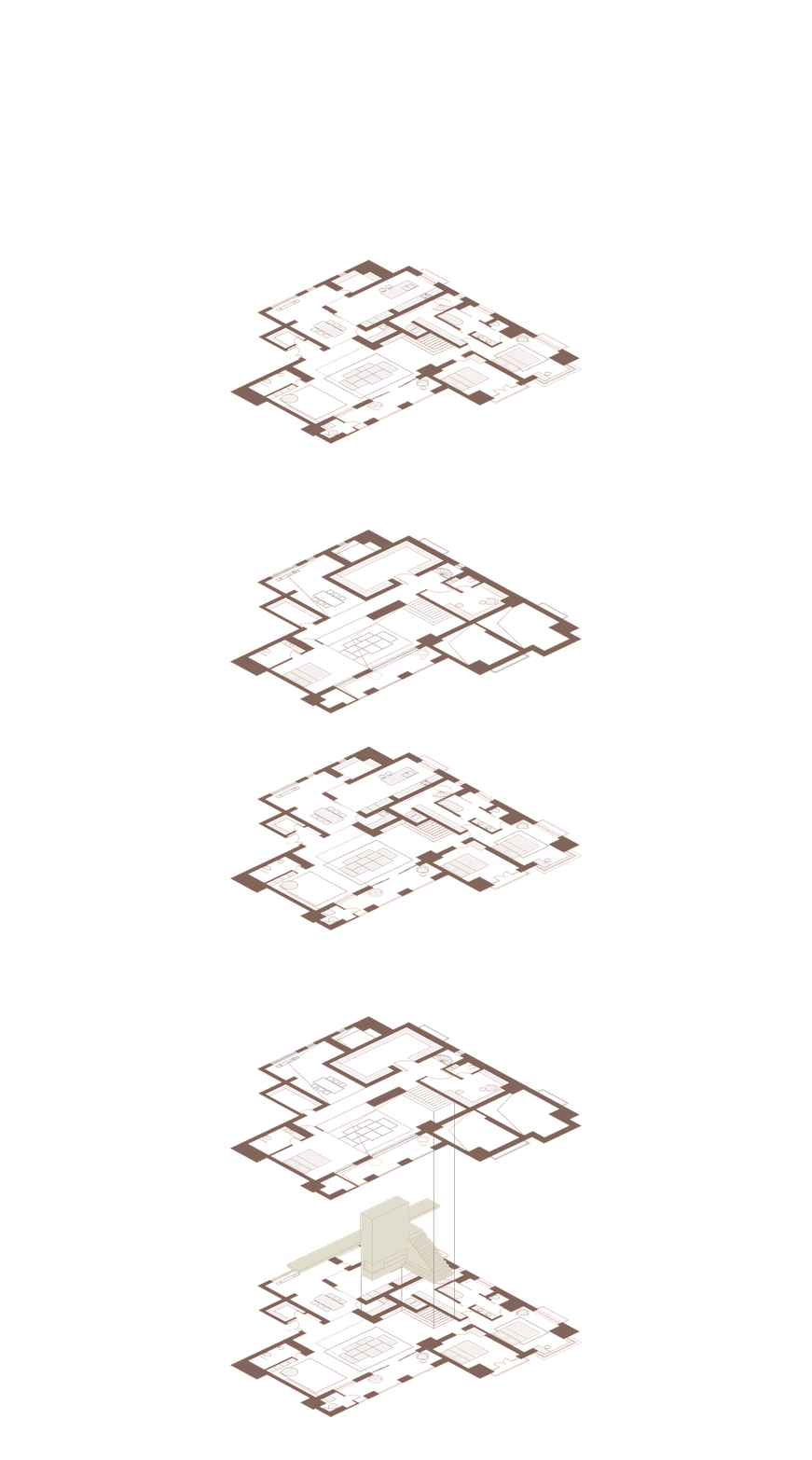
The owner told the architects that they don’t need too many rooms. After listening to the family’s needs and description of their daily life, the architects have decided to make the space as open as possible creating most chance of sight connections between areas. Taking advantage of the height of the apartment, a sculptural volume formed by a passage, a straight staircase and a fireplace is inserted into the junction of living room, dining room and kitchen, joining as well as dividing the public and private functions of the house. In order to make the mezzanine more solid and stable, STUDIO8 has decided to use reinforced concrete as structure, which makes it crucial to study the opens of each space and position the beams strategically hidden without affecting the ceiling height for both floors.

The passage of central volume starts from the entrance, passing through the dining room and living room at its both sides, horizontally connecting the kid’s room, storage room, couples’ walk-in closet and husband’s study room on the upper floor, while the straight staircase and the fireplace, as the feature of the double height living space creates the vertical connection. From the family room downstairs to the study room upstairs, from the veranda to the living room, from the passage upstairs to the fireplace corner downstairs, the family can have sight connection with each other from every corner of the open area. A second more private metal staircase is also from the master bedroom to their walk-in closet.

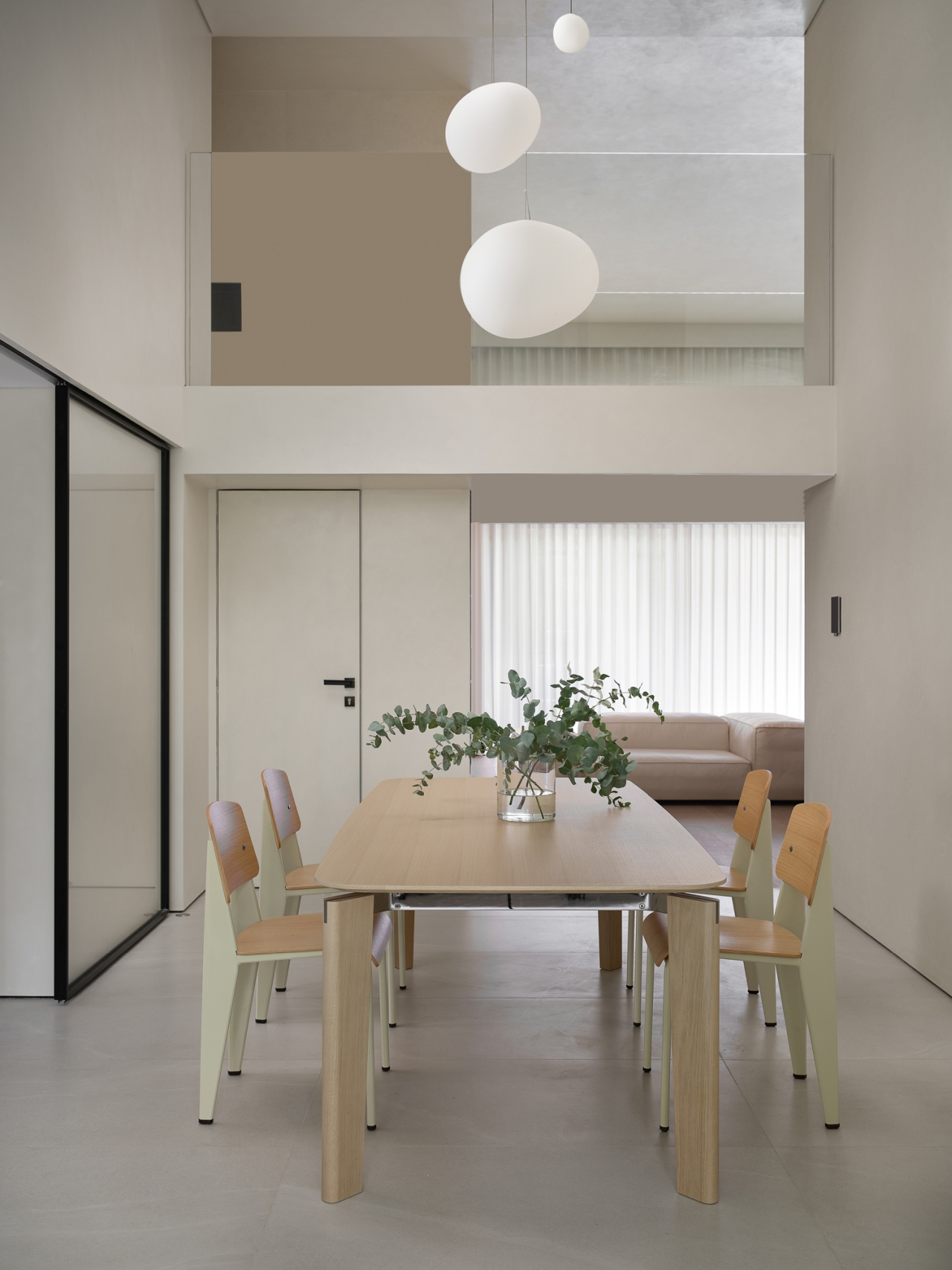
Special lighting features are designed to complement the humble material choices. Lava stone and stucco of marble powder provide the space a timeless homogeneous shade with subtle reflection on surfaces of different textures. A dynamic modular sofa island is placed in the center of the living room to connect all areas around, where the kids can climb from one side to the other. The family room next to it, being comparatively the lowest space, is opening towards the double height staircase with continues light oak floor and low furniture setting that make the space cozy and spatial. Beside the dining table with irregular pebble-shaped frosted glass pendants hanging over is the veranda and the warm grey monochromatic kitchen. The kitchen is under the walk-in closet that limited its ceiling height. But thanks to the connection with the dining room and the sight of the street trees from the veranda windows, it feels just like a breath between the two areas.

“We really enjoy the time STUDIO8 has planned for us in different corners and the fact that we can always have each other in sight”, said the owner. And that’s exactly STUDIO8’s aim for this duplex apartment.


上海梧桐树下的复式公寓
——八荒设计“视线连接”复式住宅

当与家人在一起时,如何描述时间?如何保存时间?你或许既希望能够给自我一些空间,同时又能够让家人都时常存在在你的视线中。

八荒设计完成了一套上海420平米复式公寓。公寓的主人是一对年轻夫妇和他们的两个孩子,他们希望他们的家是一个有空间感、简介,有满足不同功能的私人空间,同时也能够与家人朋友共度品质时光的地方。如何将主人的生活方式诠释于空间向来是八荒设计在住宅设计中的最大关注。八荒设计的建筑师说:“一个家的主人应该是空间的灵魂,是我们设计中的唯一重要灵感”。

公寓位于上海市中心一条种满法国梧桐和玉兰树的幽静街道。超过十米的梧桐与玉兰树冠刚好遮挡住了阳台的窗户,为家庭带来一份都市纷扰中的宁静。项目涉及到将一个四米六高的空间改造为一套空间灵动连接、风格当代简约的复式公寓。

公寓的主人说他们不需要太多的房间,他们每天都有很多时间在一起相处。在倾听了主人的需求和生活状态后,八荒的建筑师决定突出房子的开放性和空间感,最大程度的提供空间与空间之间视线连通的可能。利用四米六的特殊层高,一个由通道、楼梯和壁炉构成的有雕塑感的构筑物被巧妙的插入空间中客厅、厨房和餐厅的交界处,有机地分割同时连接了公寓的私人和公共功能空间。为了使二层空间给人更加稳定、扎实的感觉,八荒设计选择了使用钢筋混凝土来构筑公寓的复式结构,这就使得如何有策略地利用空间开敞方向、和隐藏相对笨重的二层结构的梁显得至关重要,才能使四点六米的层高不会因为局部插入了二层结构而显得压抑。

位于公寓中间的通道从家的入口开始,横向的连接了位于二层的孩子房间、储藏室、夫妻的衣帽间和男主人的书房。从通道上可以看见两侧的餐厅和客厅,空间被分隔开同时又完全连通。挑空客厅中心的楼梯和壁炉纵向连接着复式公寓的两层空间同时也是客厅的视觉中心。从楼下的家庭室到楼上的书房,从连接餐厅和厨房的早餐日光室到客厅的阳台,从二层的通道到一层客厅的壁炉边,开放空间的各个角落都功能明确但又可以视线相连。同时增加了一部螺旋式的钢楼梯,连接主卧与楼上的衣帽间,保证主人使用的私密性。

特殊的设计旨在与简约的材料选择形成对比。 火山石和大理石粉灰泥为空间提供了均匀色调以及经久的美感,光线在不同纹理的表面上形成微妙的反射。 一组动感的模块化沙发中岛被放置在客厅的中央,连接周围的各个区域,孩子们在上面可以从一侧爬到另一侧。 客厅旁边的家庭房是相对最低的空间,但这里向挑空空间敞开,配合连续的浅色橡木地板和低矮的家具布置,使空间显得温馨而宽敞。 悬挂一组不规则鹅卵石状磨砂玻璃吊灯的餐桌旁,是日光室和暖灰色的单色厨房。 厨房位于步入式衣橱下方,天花高度受到限制。 但位于高天花的餐厅和日光室的行道树影间,感觉就像两个区域之间的一次呼吸,全然没有压抑之感。

“我们真的很享受八荒设计为我们安排在家里不同角落的时光,而且这里的每一刻时光我们都能关注到彼此”公寓的主人说道。 这也正是八荒设计这套复式公寓的想要达成的效果。

BEFORE AND AFTER 改造前和改造后

CONSTRUCTION 施工过程

WINE HOUSE 红酒会所

LOCATION 地址  | ZHEJIANG 浙江
CATEGORY 类型  |  HOSPITALITY 酒店度假村

ARCHITECTURE 建筑
INTERIOR 室内设计
FEE 软装设计

Originally, an abandoned old house stood where the wine house now sits. To
preserve the memory and historical mark of the site, the new building echoes the gabled roof of the old structure, but we redesigned it into a four-sloped roof to create a harmonious, tranquil scale from every angle. The main entrance is on the southwest side, where the massing gradually opens up from exterior to interior. The building is divided into two parts: the cigar lounge on the left, enclosed and connected to the roof, and the reception area on the right, where the roof floats above the mass, allowing natural light to filter in. The double-edged shadow line details on the roof’s eaves serve both functional and aesthetic purposes, helping with dripping water and softening the roofline’s sharp tension.

红酒室的原址上本来有一栋年久失修的废弃老屋,为了保留场地印记,建筑形态回应了老建筑的坡顶肌理,但我们将原先的双坡屋顶改为四面坡顶,使从每个方向到达时,屋顶的尺度一致,更亲和、静怡。建筑主入口位于西南侧,从体到面,空间逐渐展开,从入口落客步入室内,建筑体块由一个整体分割成雪茄室和接待区两个体量。位于左侧的雪茄室体块封闭,与屋顶相连;而右侧的接待空间则与屋顶脱开,轻盈的坡屋顶悬浮于接待区的体块之上,光线逐渐引入。坡屋顶的金属屋檐边缘做了双层的阴影细节,既兼顾了滴水的功能,又从一定程度从视觉效果上减弱了尖锐的张力。

CONSTRUCTION 施工过程

WINE HOUSE 红酒会所

LOAM CAFE’ 瓷屋咖啡

DSCF0615
DSCF0738-编辑
DSCF0917

LOCATION 地址  |  SHANGHAI 上海
CATEGORY 类型  | F&B 餐饮

INTERIOR 室内设计
FEE 软装设计

AREA 258 m²

Walking To The Green Maple – LOAM cafe&bar
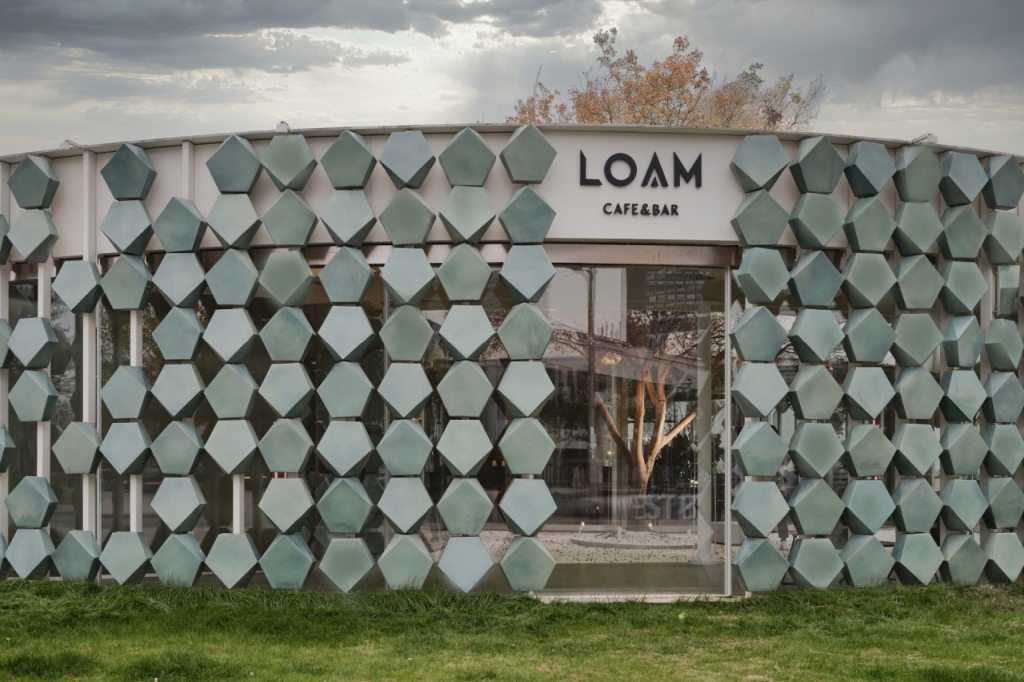

We recently completed the interior and facade renovation of LOAM cafe&bar on the West Bund of Shanghai. In one of the largest art clusters in Asia, this spiral-shaped porcelain house with a distinctive facade stands out like an island in an urban oasis. We created an unconventional leisure experience for LOAM’s customers, allowing them to experience a piece of nature within a confined space in the city, and to feel like they can connect with nature during their stay in the space.

青枫树下的LOAM瓷屋咖啡
溶解在草坪上的透明“小岛”:我们完成了上海西岸LOAM瓷屋咖啡的室内及立面改造设计。在这片亚洲最大规模的艺术集聚区之一,这座有着鲜明外立面的圆形瓷屋仿佛城市绿洲中的一座小岛。我们为LOAM顾客创造了一个非常规的休憩体验,让他们在有限的空间中感受自然,回归自然,成为自然的一部分。

READ MORE 更多

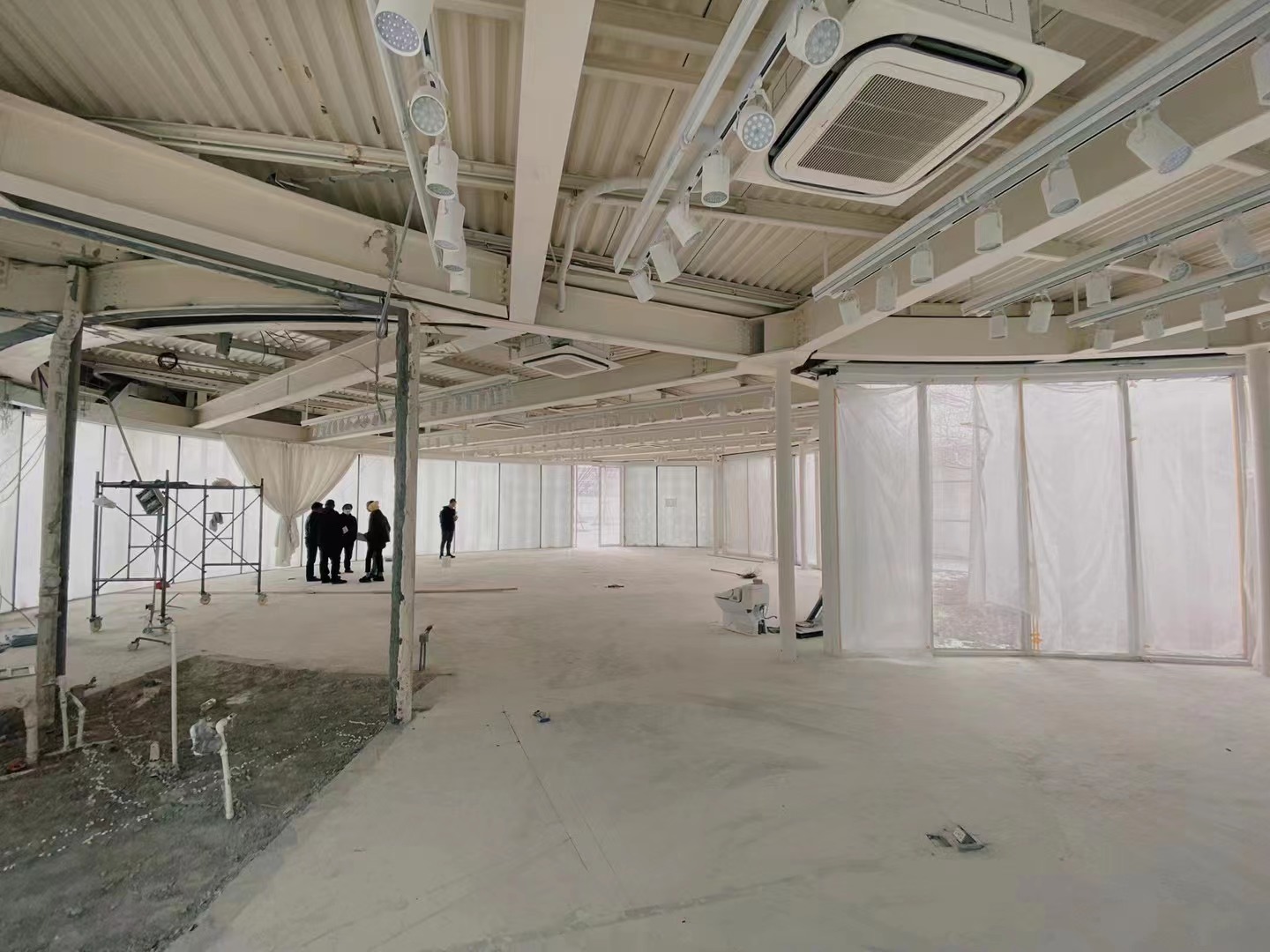
When we started on this project, we faced two challenges: the change in the building’s function and the incomplete facade of the original building. The design task we received was to transform the originally enclosed art exhibition space into a coffee shop and bar, allowing the space to easily change functions and scenes at different times and during special events. However, a big question was how to separate the interior and exterior facades of a (semi) transparent building? Our solution was to redesign the exterior, interior, and landscape of the building as a whole.

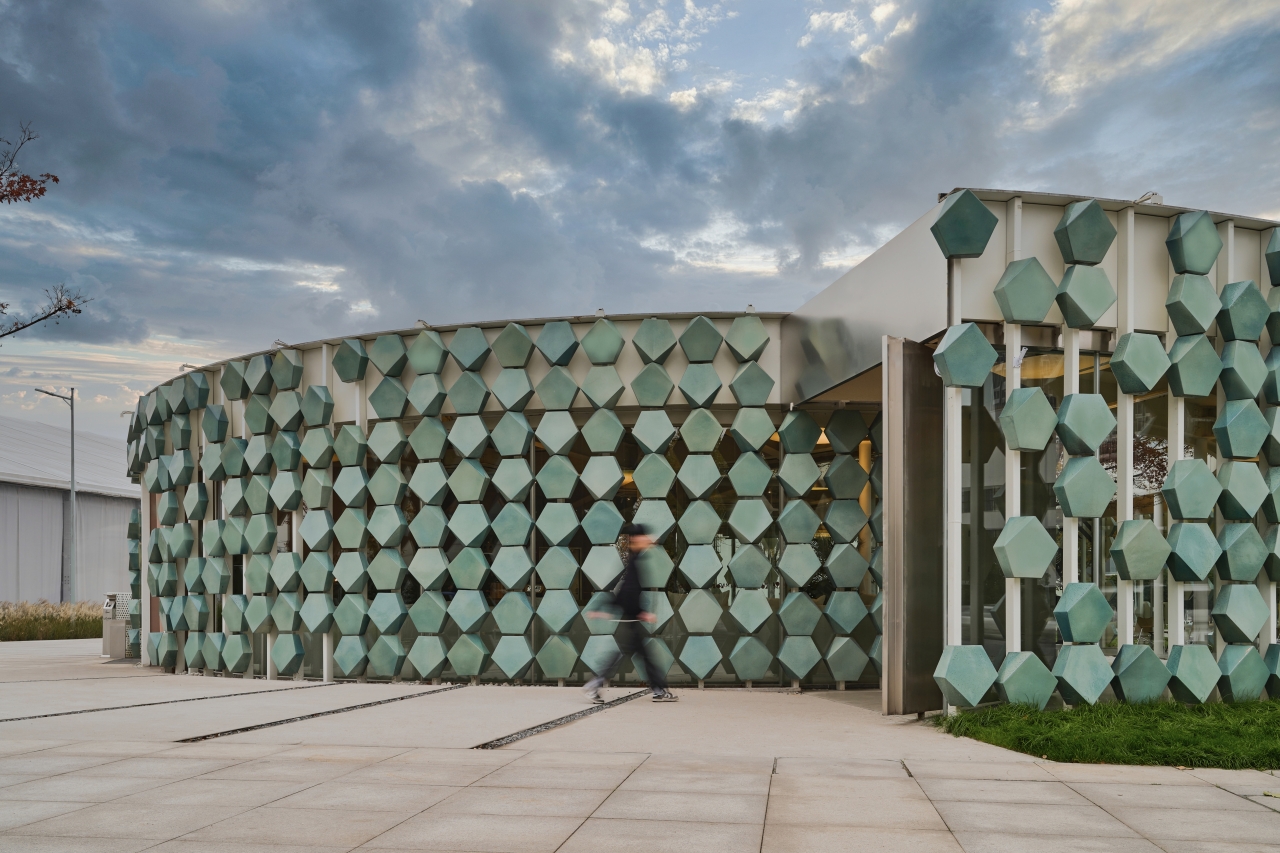
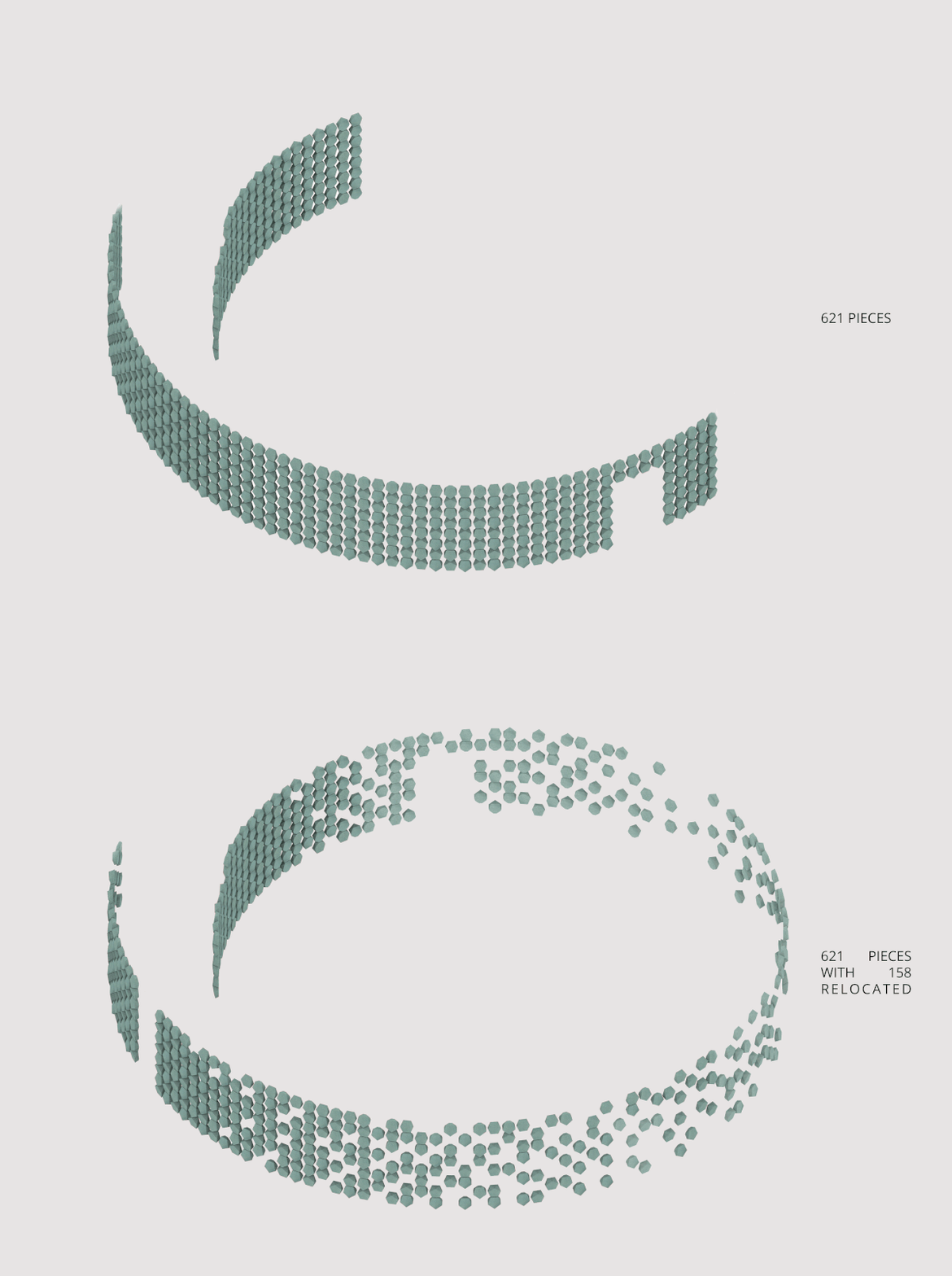
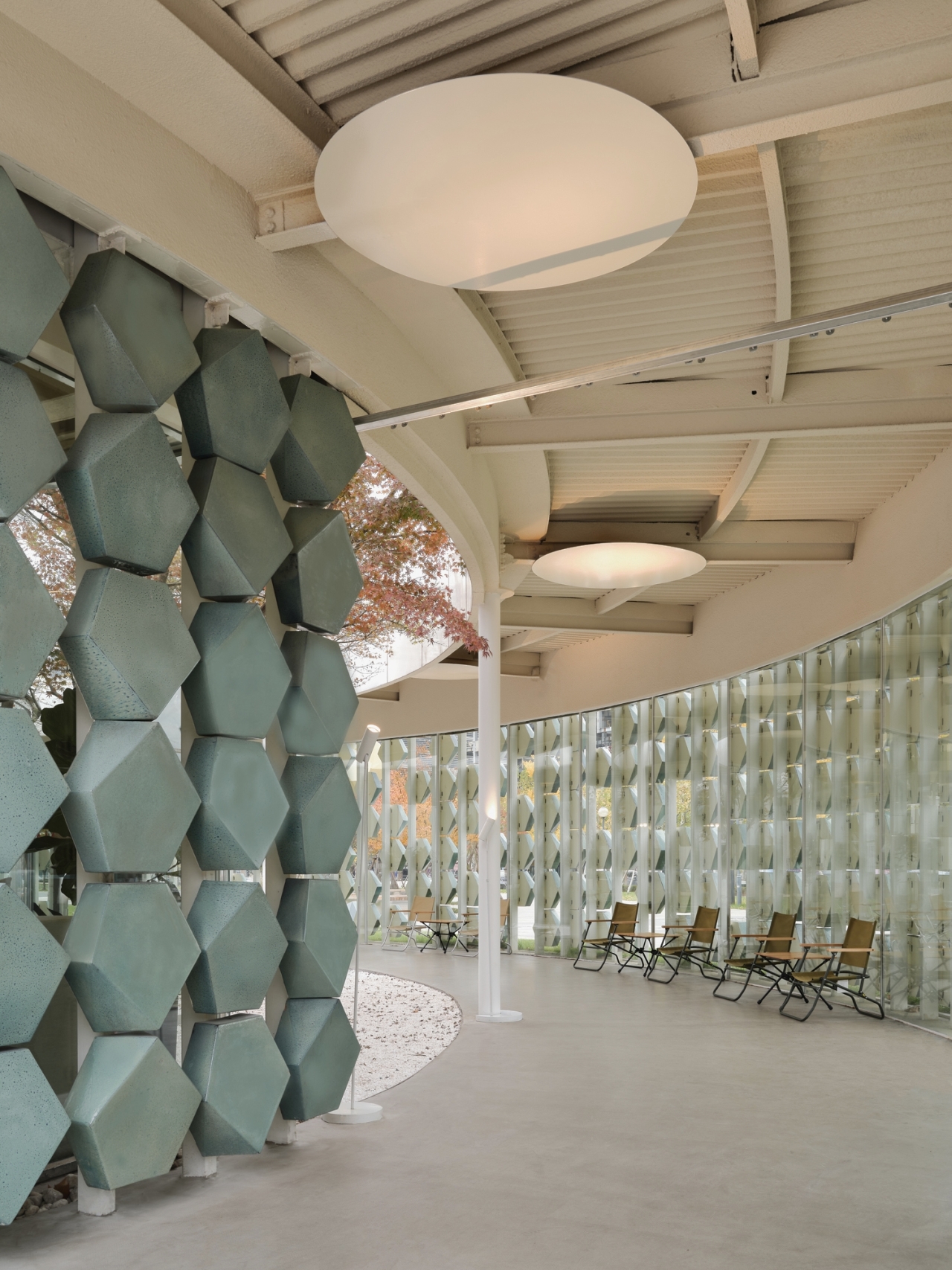
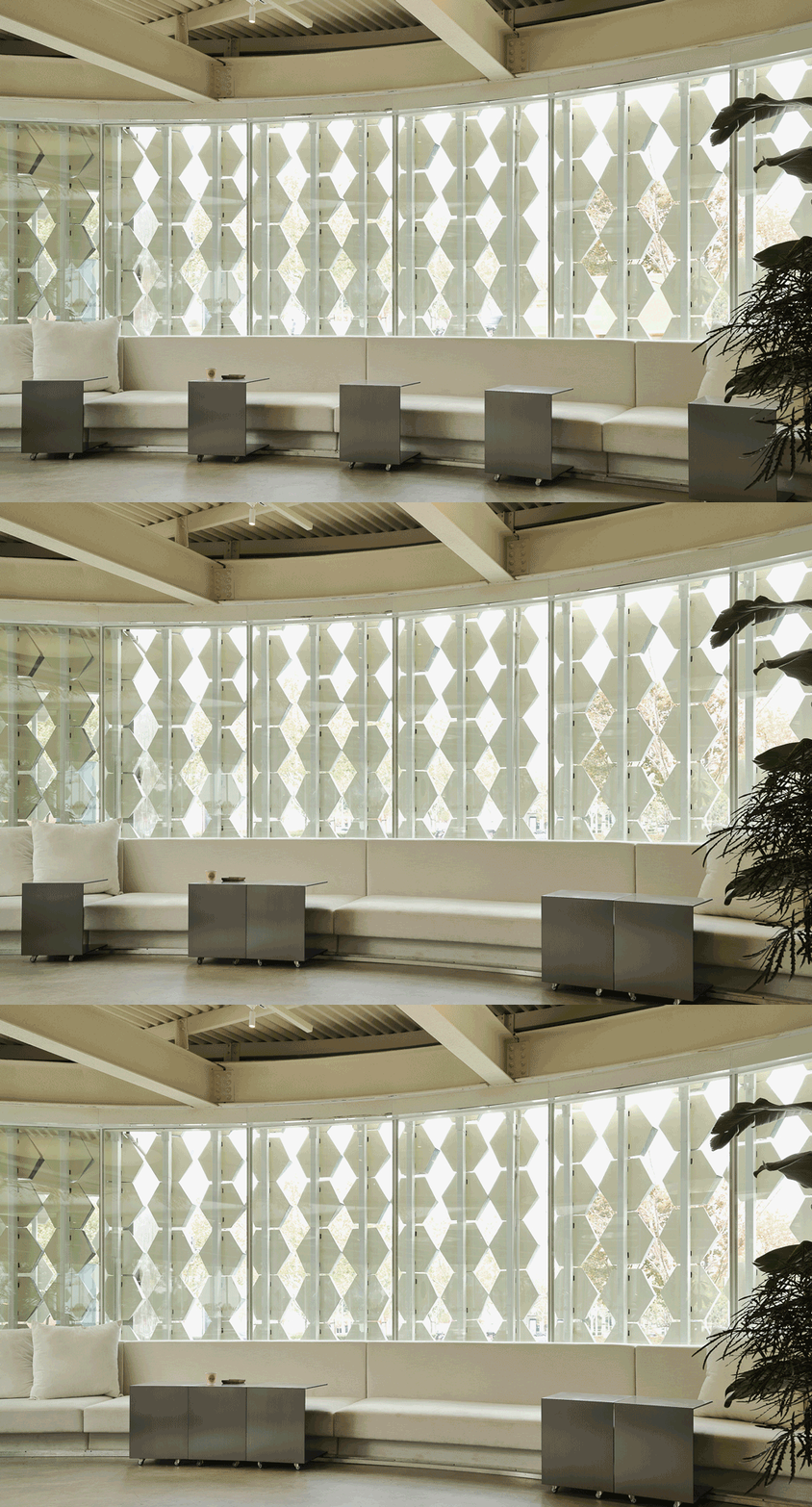
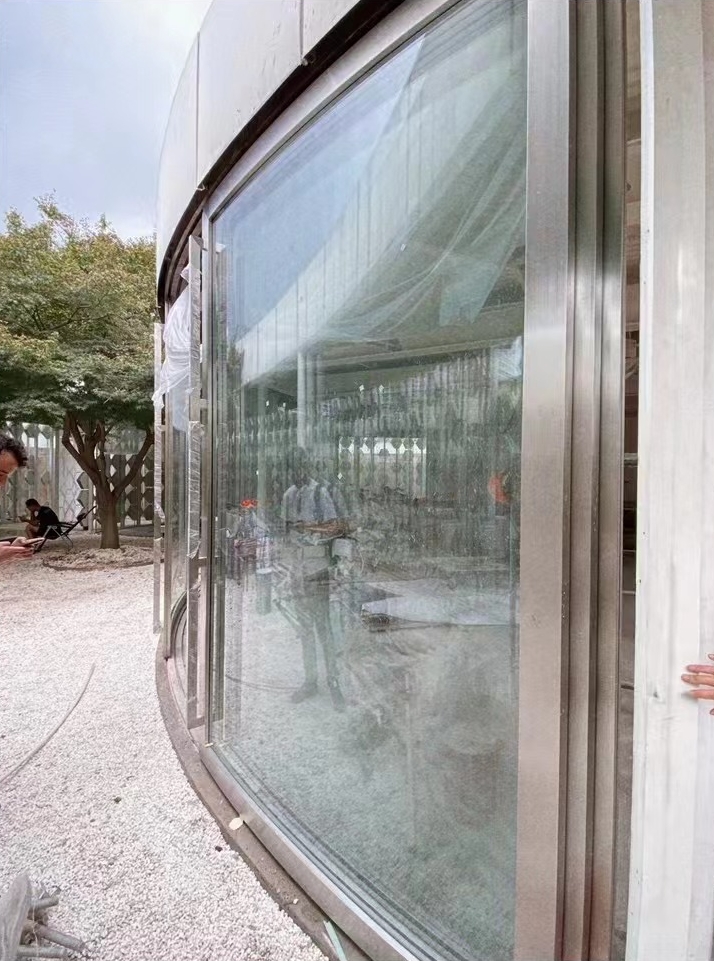
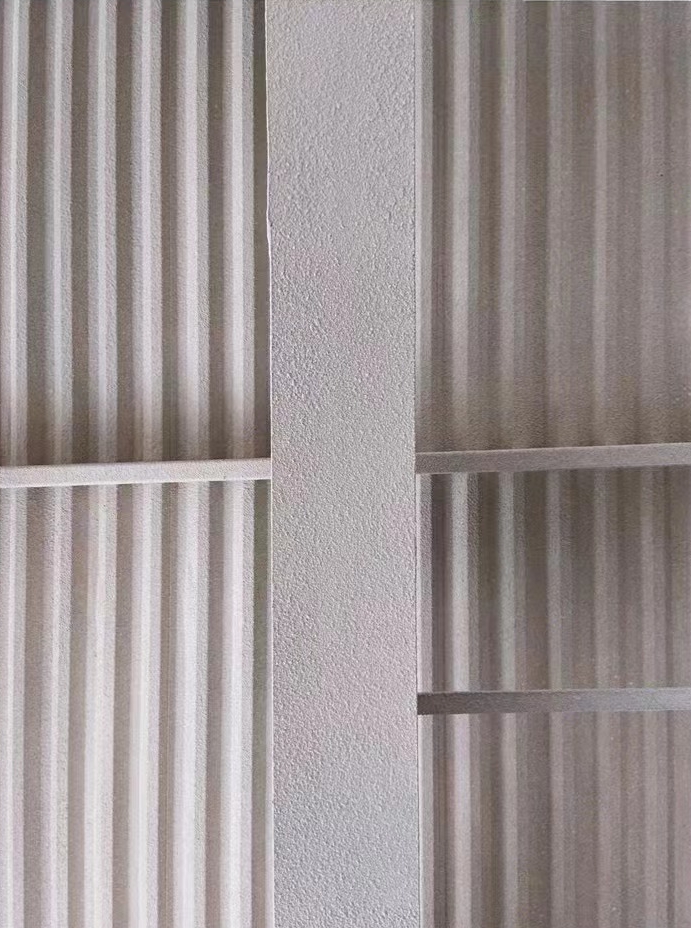
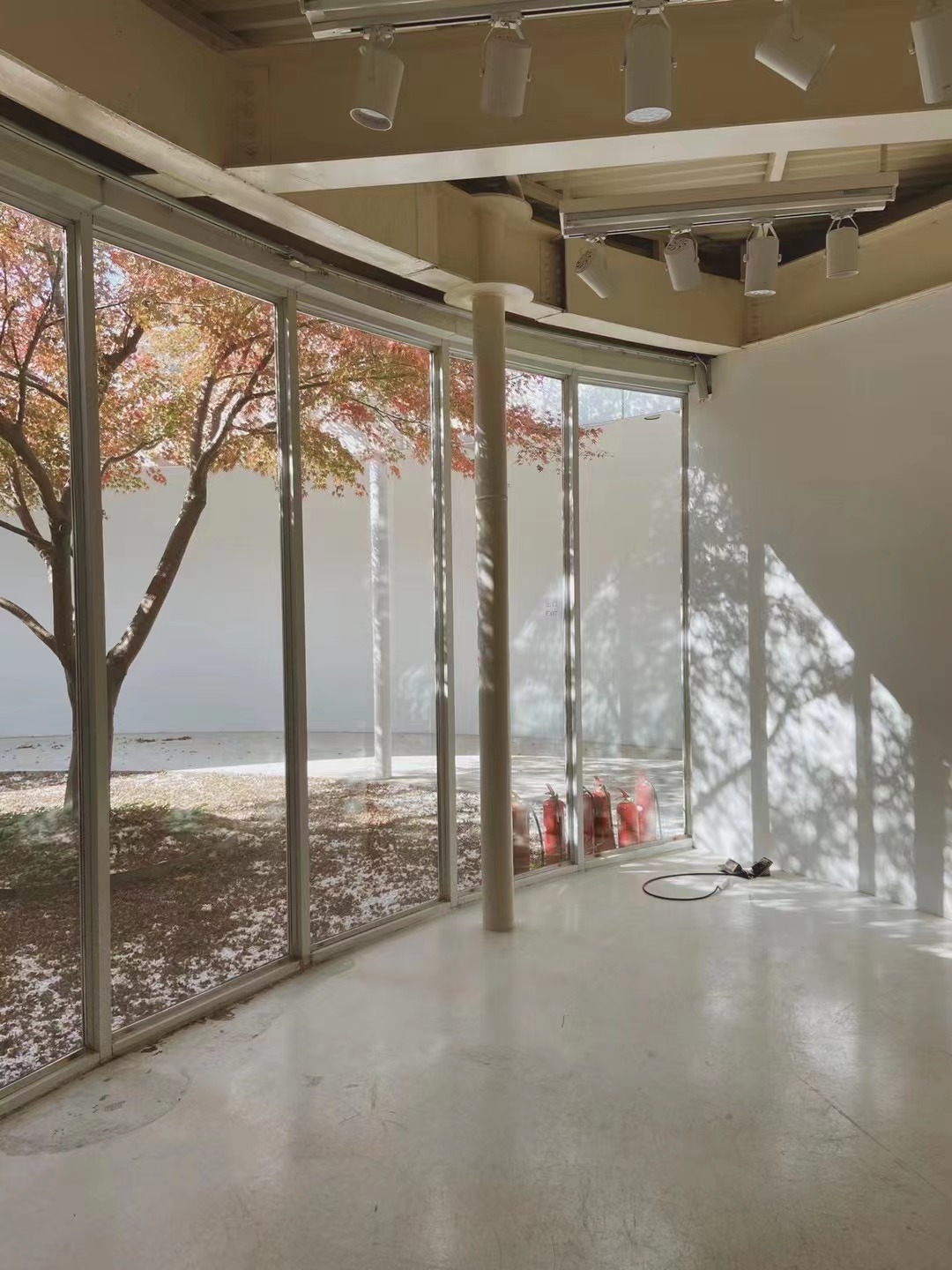
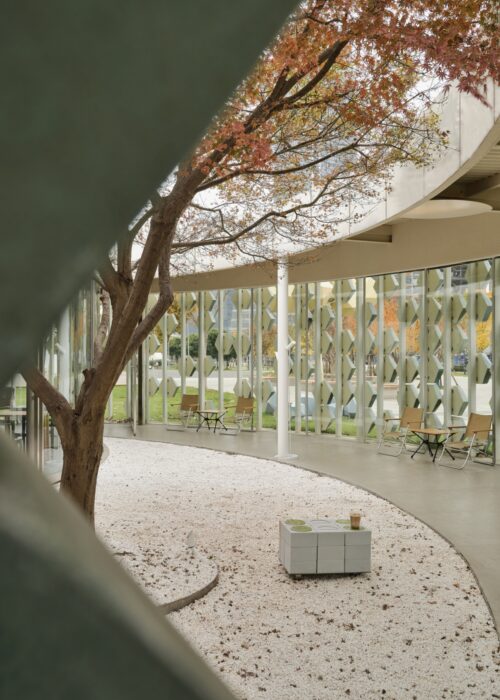
A talented design team designed the original building as an independent, full circle spiral structure with hundreds of green ceramic tiles covering the facade. However, due to various reasons, only half of the original facade had the porcelain blocks, which cannot fully present the original concept. We hoped to complete the facade in a manner consistent with the vision of the original design. After careful analysis of the interior and exterior spaces, the designers decided not to add additional elements, but only to redistribute the porcelain blocks of the existing facade to re-plan the facade order. Starting from the entrance, they gradually reduced the density of the ceramic tile layout, creating a gradient effect, while in turn also respected the original architect’s vision. The porcelain tiles cast playful shadows under the changing sunlight, adding natural elements into the space.

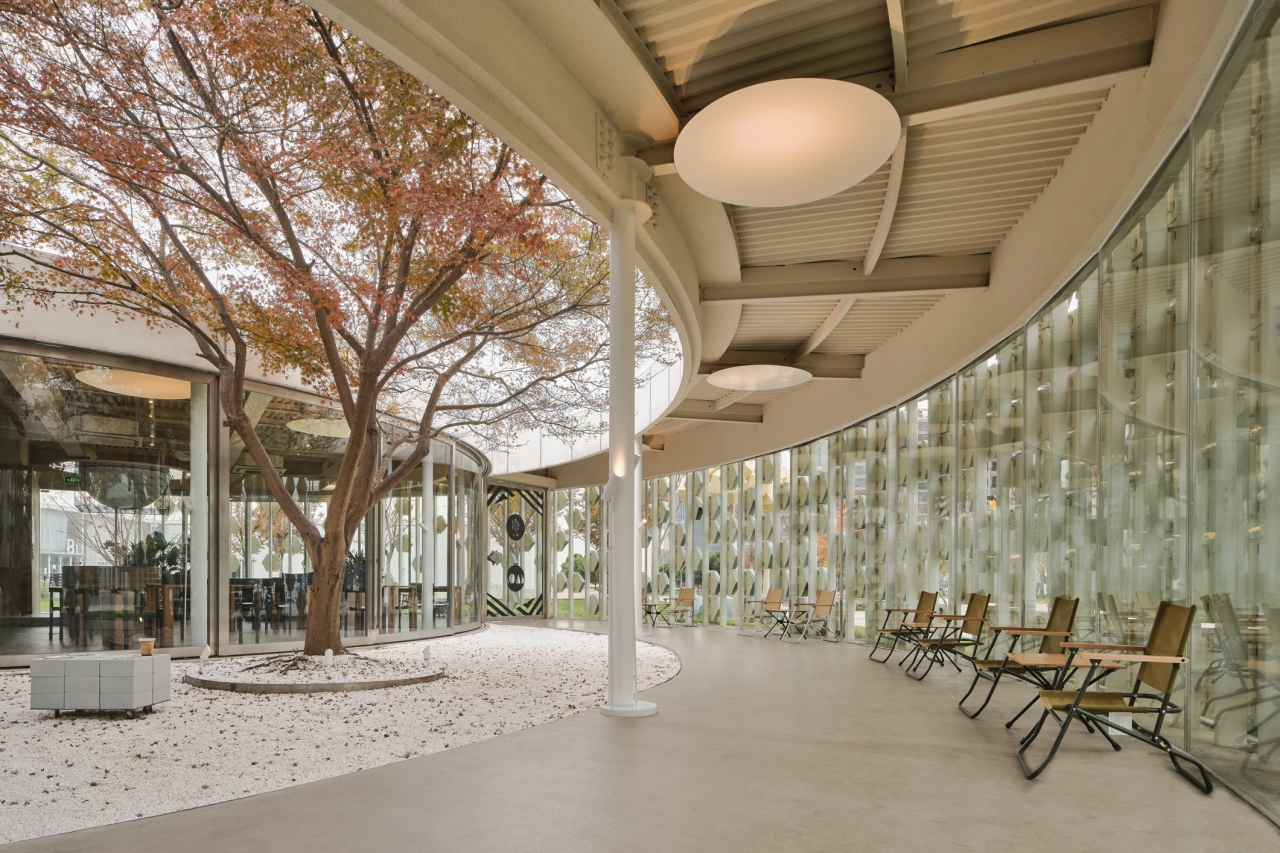
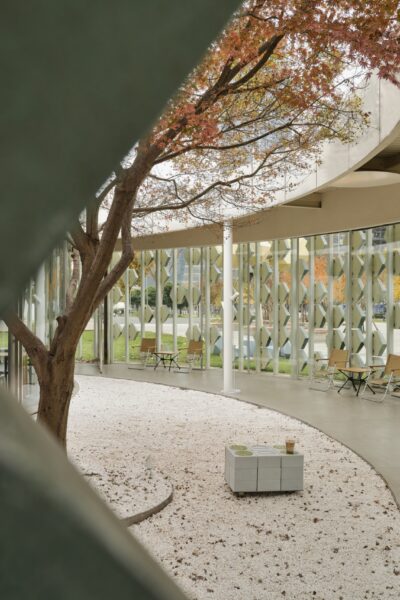
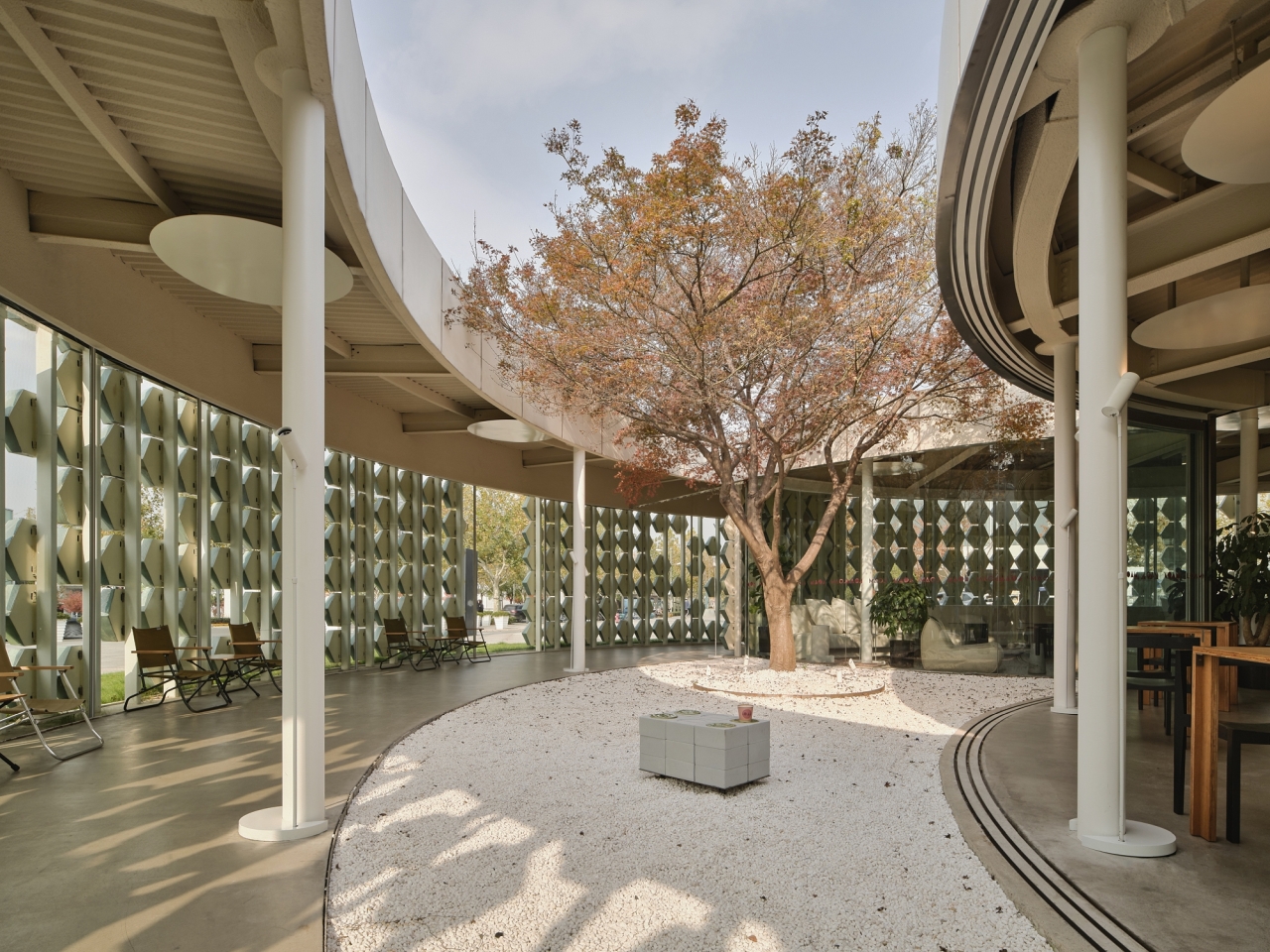
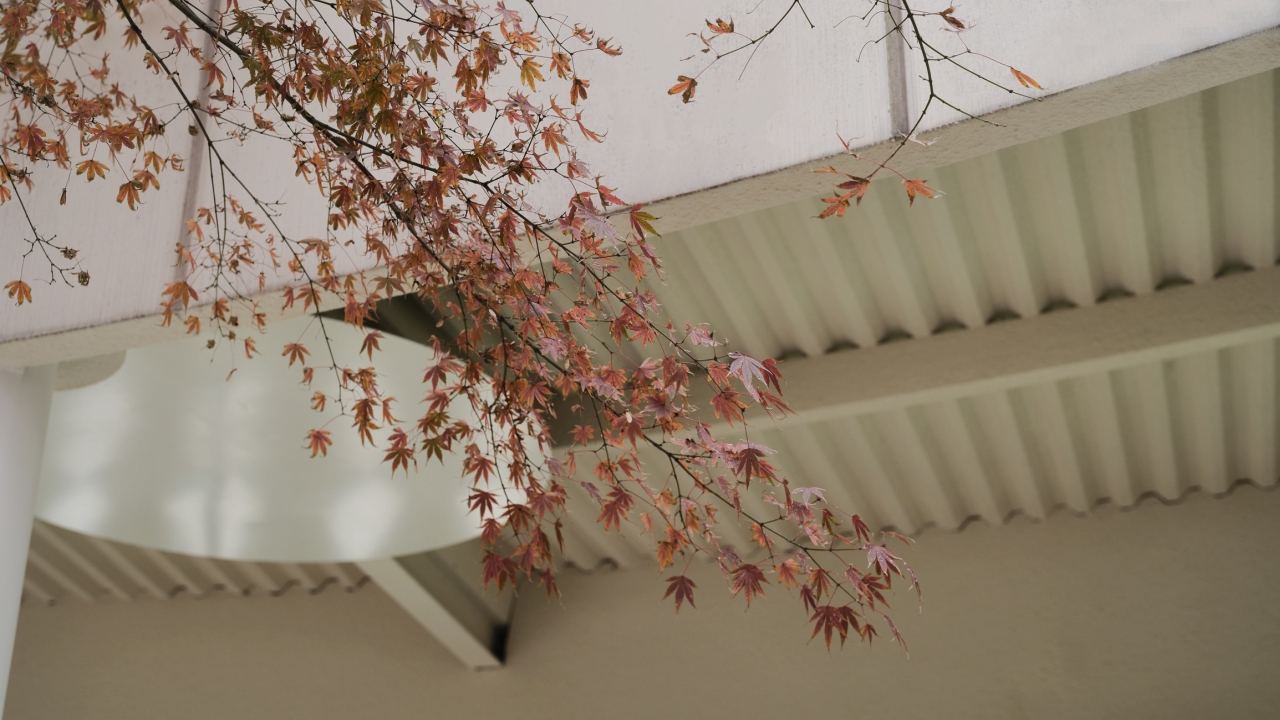
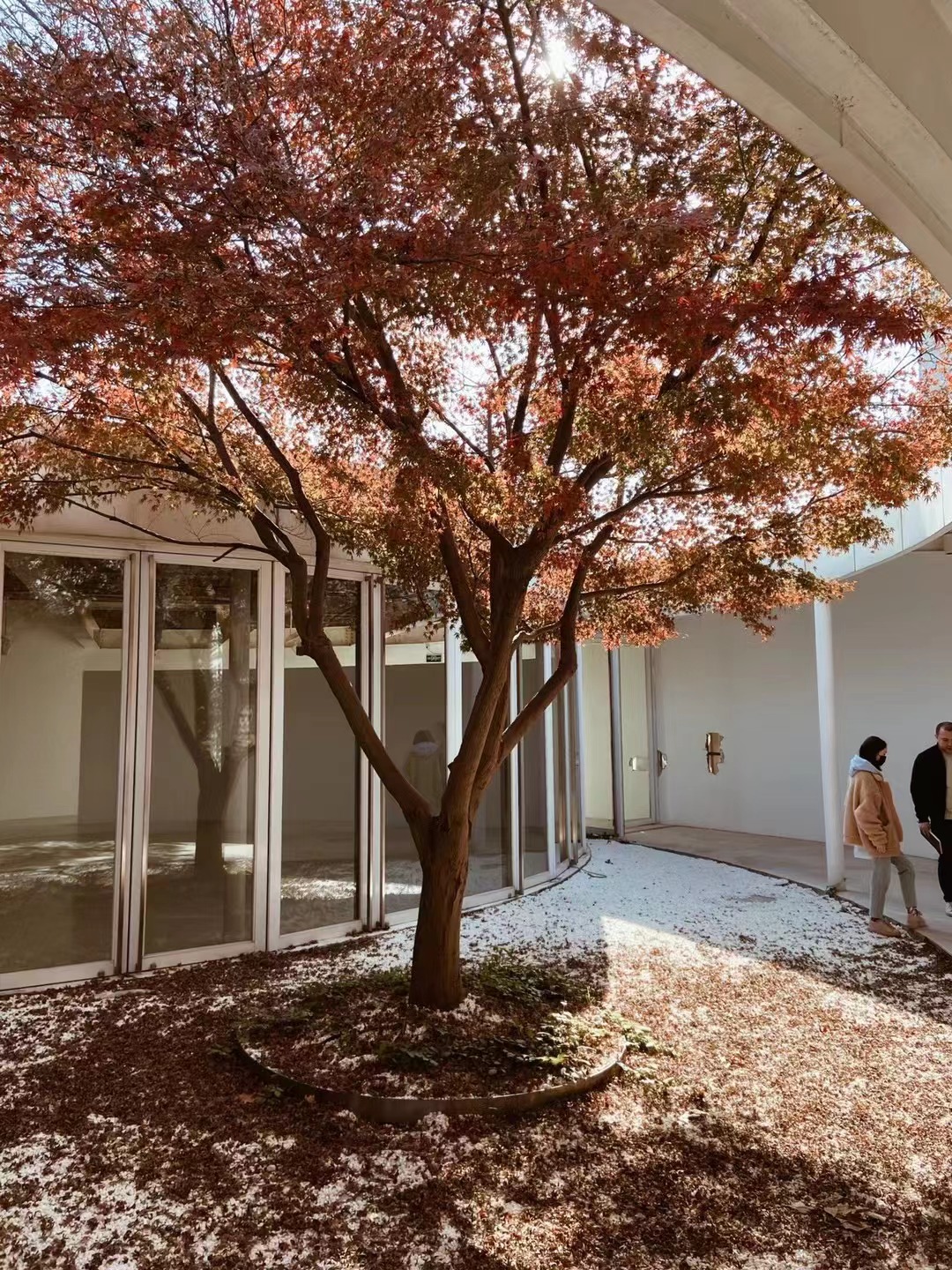
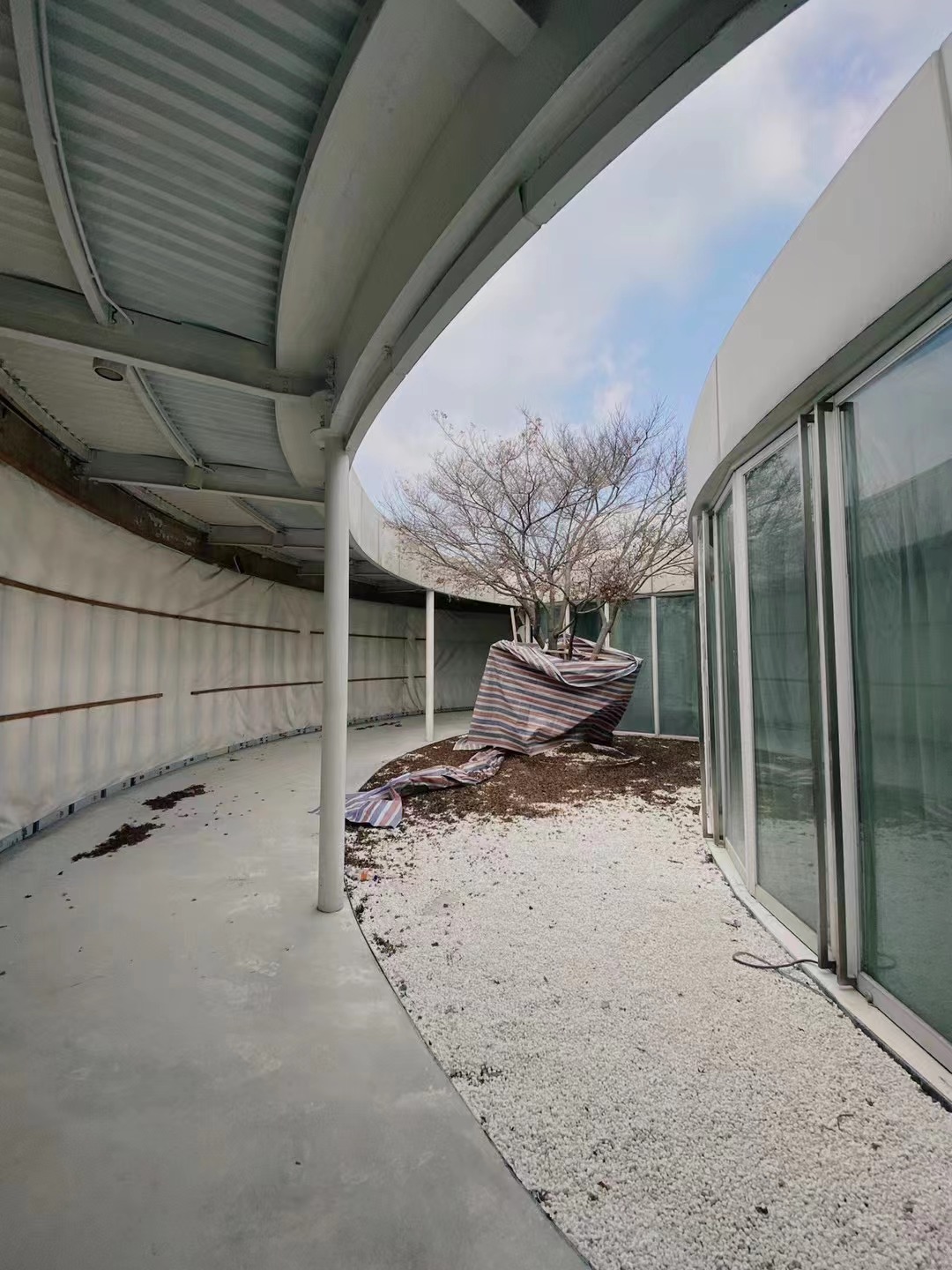
A green maple tree in the middle of the site initially inspired the design. We intended the process of entering LOAM to be like a “journey” around a tree – a gathering point where people can chat and have picnics. The designers wanted to first create a deceleration point that encouraged people to stay and enjoy the space, and in turn establish a connection with the surrounding environment. To achieve this, they added a lawn around the building to connect the porcelain structure to the surroundings, and opened a visual elevation passageway that faces the street corner outside and the maple tree inside, connecting the interior and exterior to obtain a clear view; the facade also intertwines with the texture of the lawn around the outside of the building, integrating the porcelain house into the urban green space.

The “journey” begins with the large pivot door of the main entrance; when closed, it subtly reflects the porcelain pieces, creating the illusion of a continuous complete facade. Coming to the semi-outdoor area, customers face the green maple. A path surrounds the courtyard covered with white gravel, where people can take a rest. This space opens up the boundary between inside and outside. The moving light and shadows bring out the beauty of the smooth curves in the design, while blurring the indoor and outdoor spaces even further.

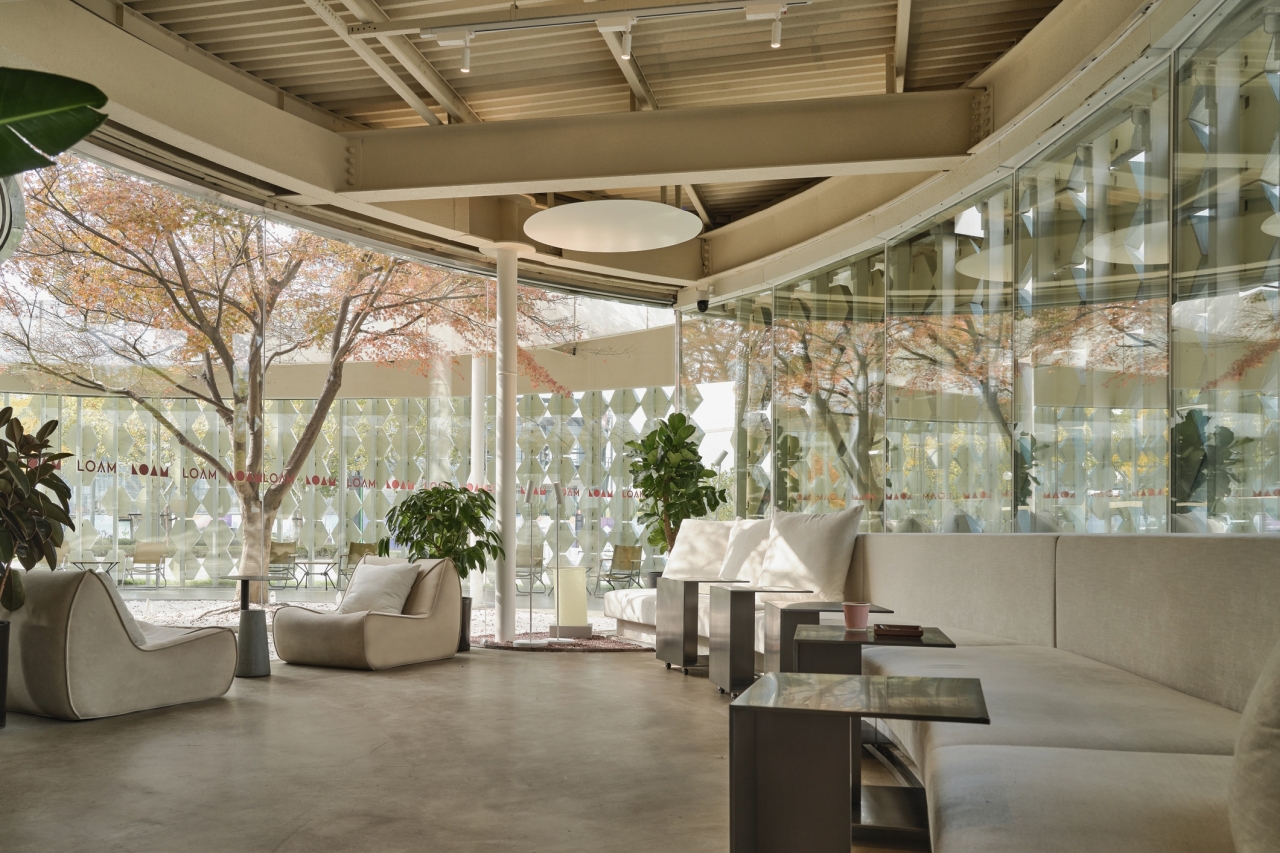
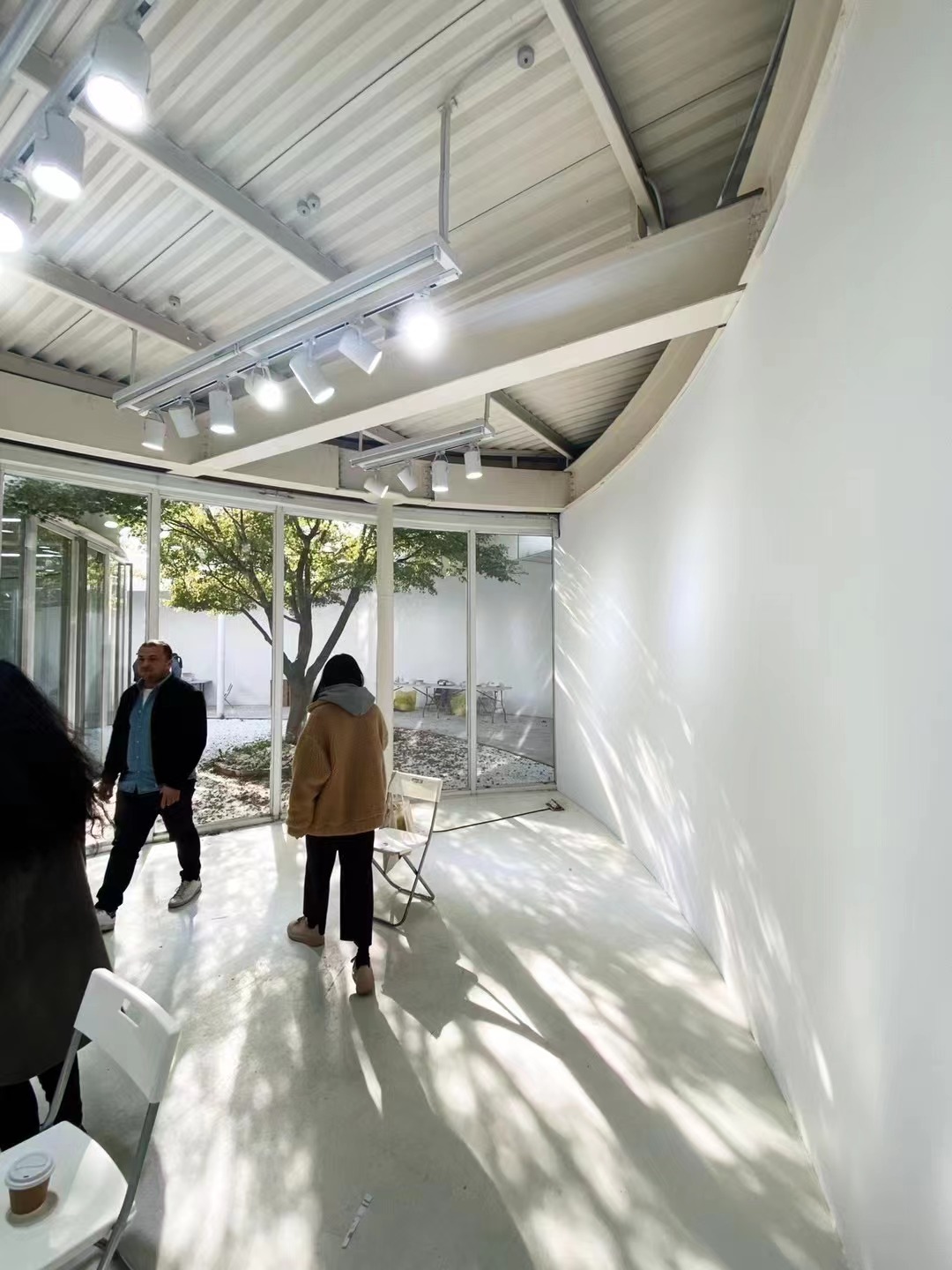
Through the glass doors that lead to the interior space, the customers are introduced to a different atmosphere, from casual seating along the sliding doors, to a set of round sofas, the space continues into a more intimate area with very deep seat sofas and comfortable armchairs – all facing the courtyard, completing this “journey” to the tree. The setting of seats is in line with the design language in each space, from fast to slow, from open to private. At the same time, it is linked with the facade. As the porcelains on the facade gradually disperse, the light levels also change respectively, accommodating different customers’ needs for resting, gathering or solitude.

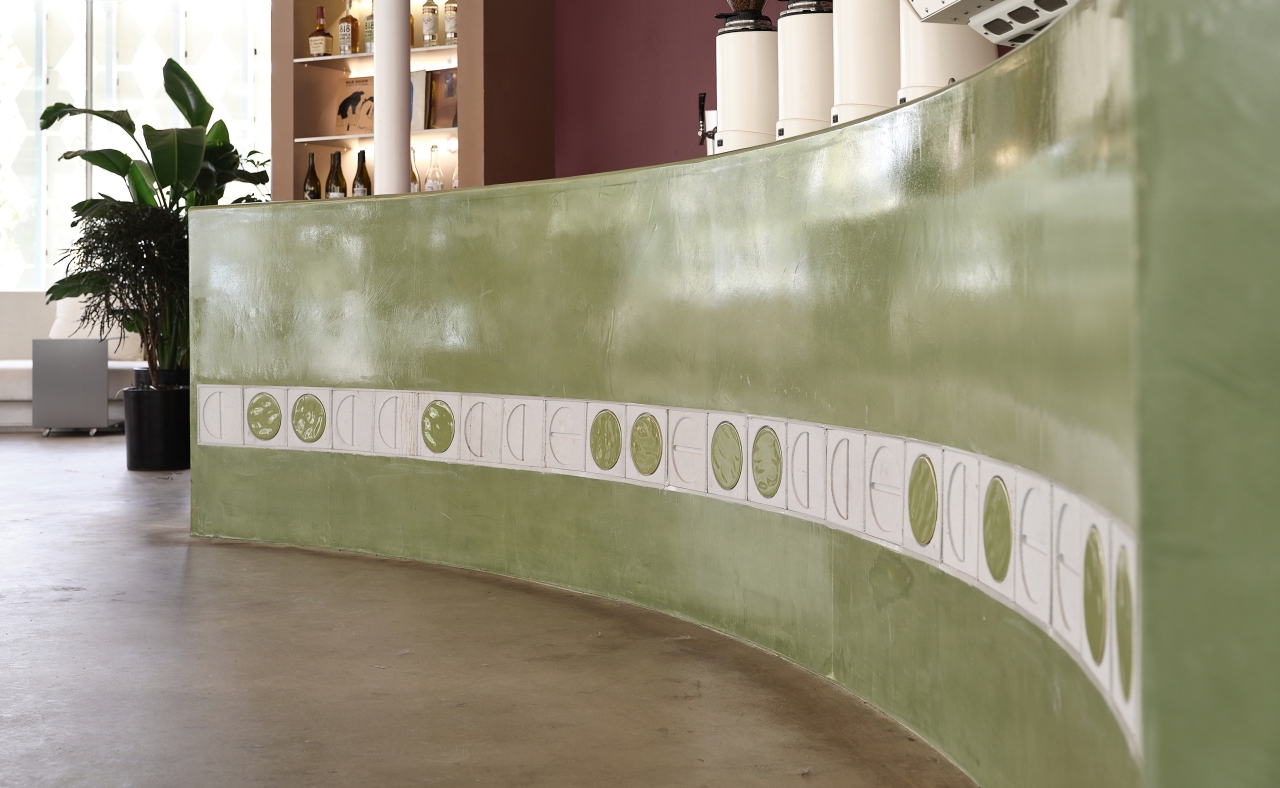
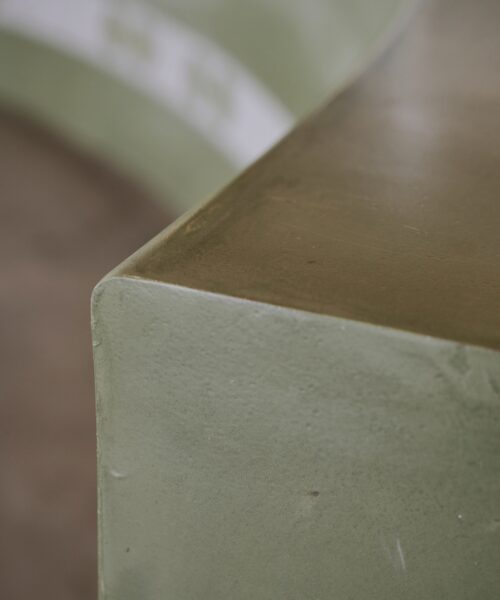
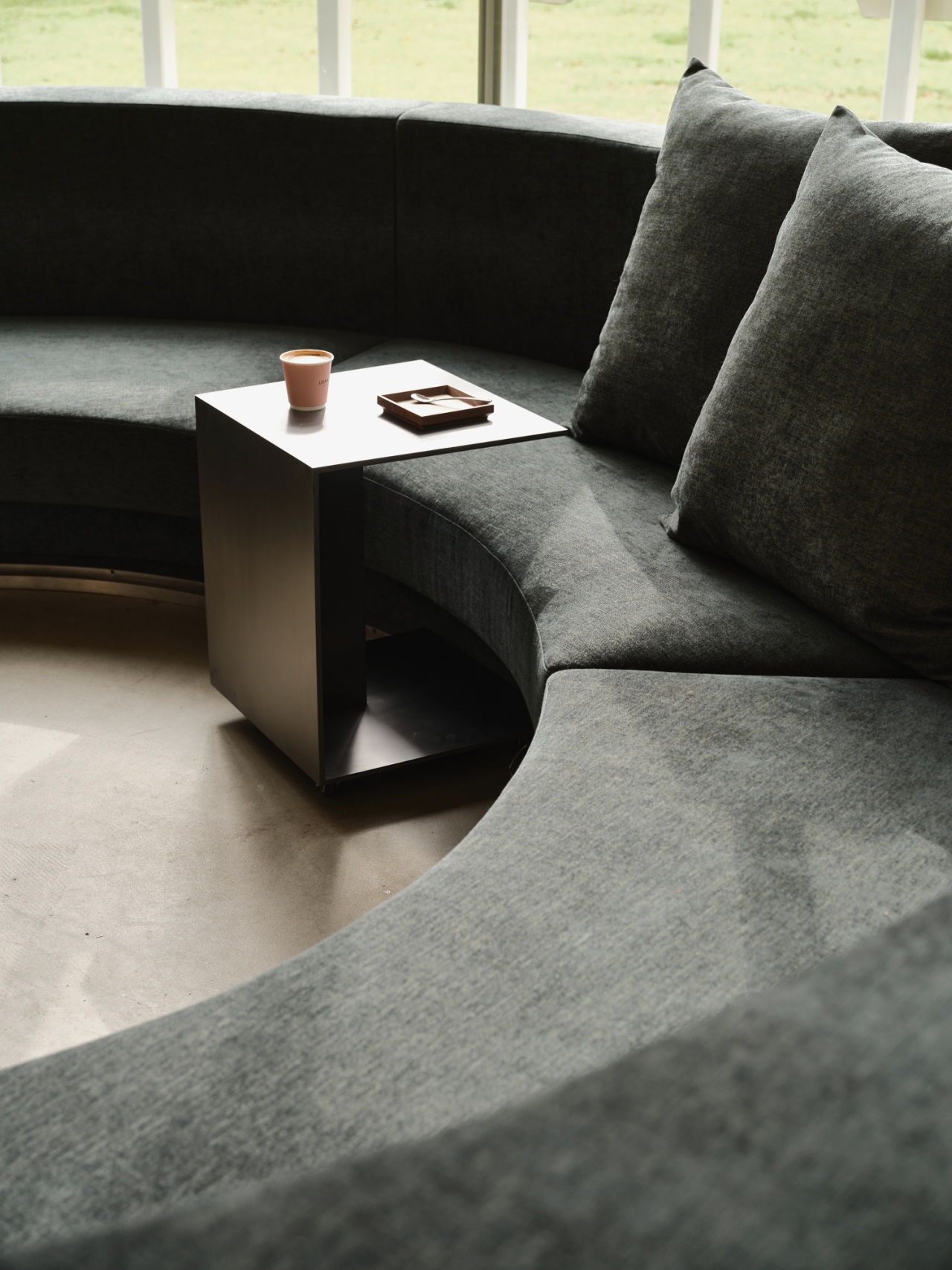
The underlying logic of this design is that people and space communicate in an interactive and open manner. Following this, we created an immersive experience of “walking under the tree” through multiple narratives such as facades, interior spaces, colors, materials, lighting, and furniture. The ceiling does not have any excessive decoration, maximizing the vertical space. Instead of using a large number of ceiling lights, a common practice in interior design, the designers constructed a diffuse light system that can point to the ceiling directly: they developed a set of discs with a special surface treatment that create a uniform and soft diffuse aperture when directed towards the ceiling, highlighting several key areas throughout the site. Customized steel side tables are connected by a special rail system on the bottom, allowing them to be adjustable. This, coupled with a glass sliding door that opens completely, breaks through the physical boundaries and thoroughly connects the people and the space. Constructed of specially made glazed concrete, a custom-made bar counter shares the same smooth curves with the architecture itself and reflects the texture of the natural “porcelain”. In particular, several custom circular tiles are added to echo the material of the exterior facade, emphasizing the indoor and outdoor connection.

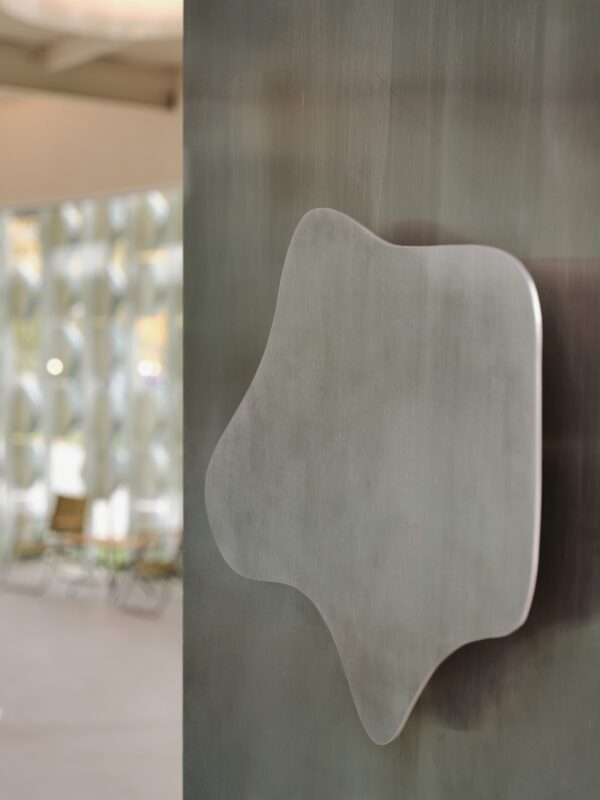
Another design detail of note is the door handle for the gate. It is based on the shape of melted porcelain blocks, introducing another dimension of material forms into the space. The originally closed exhibition hall is now dissolved into the urban green space, and is open to the public on various fronts. In terms of furniture, STUDIO8 customized a wooden table with a mortise and tenon structure and a movable table made of recycled foam ceramic materials, intentionally selecting a more environmentally friendly and innovative form of “porcelain”.

Throughout the renovation of the “porcelain house”, STUDIO8 broke away from the ordinary design approach by taking advantage of the site’s existing features and integrating people’s experience into the spatial journey. The result is a re-interpretation and transformation of LOAM that sparks new ideas in the cultural oasis of West Bund Shanghai.

我们接受这个项目时,面临了两个挑战:建筑功能的变化和原建筑立面的不完整。八荒接到的设计任务是将原来封闭的艺术展览空间改为咖啡厅兼酒吧功能,让空间在不同时段和举办特殊活动时,轻松完成功能和场景的转化。但是,如何将一栋(半)透明建筑的室内与外立面分开呢?八荒决定对建筑的外立面、室内、景观做整体再设计。

最初的建筑由一个才华横溢的团队设计,是一个独立的全周螺旋形建筑,立面覆盖着数百片绿色陶瓷片。然而,由于种种原因,原立面只有一半有瓷块,无法按照最初的构想完整呈现。八荒希望以与建筑最初愿景一致的方式完成立面。在仔细分析室内外空间后,最终决定不增加任何元素,仅靠重新分配现有立面的瓷块,来重新规划立面秩序。以入口为起点,渐渐减少瓷片排布的密度,创建一种渐变的效果,同时也最大程度上尊重原建筑师的愿景。瓷块能让每一个走近建筑的顾客感受到光影的游戏。

设计最初灵感源自场地中间的一棵青枫,进入建筑的过程犹如一场围绕树的“旅程”,在树下写意、野餐、集会。最初,八荒想要创造一个“减速点”,鼓励人们停留欣赏,从而建立与周围环境的连接。为此,设计师在瓷屋的周围增加了一片草地,仿佛瓷屋溶解成了一片绿洲,然后在立面上打开一条视觉通道,对外面向街角、对内朝向枫树,以此连接室内与室外,获得清晰的视野;同时也与建筑外侧的草坪肌理交错,以开放的姿态融入在城市绿地中。

“旅程”从主入口的大枢轴门开始。轴门关闭时,能巧妙映射出瓷块,形成连续完整立面的错觉。来到半室外区域,面向青枫,一条小路围绕覆盖着白色砾石的庭院,顾客可以在此小憩。半开放的空间打通了内与外的边界,空间弧线流畅,光影交织时,内外空间的边界也渐渐模糊。

穿过通向内部空间的玻璃门,来到一个截然不同的氛围中。从沿着滑动门的休闲座椅,到一组圆弧形沙发,深入空间后是一个更为私密的区域,配有宽坐深的沙发和舒适的扶手椅,所有座椅都面向庭院,完整了这次通往树的“旅程”。座椅的设置与空间语言相契合,从快到慢,由开放至私密,同时与外立面联动,随着立面瓷块密度的排布渐疏,光线的透入度也逐渐变化,满足不同客群对小憩、聚会、独处的不同体验需求。

人与空间皆以交融和开放的互动模式交流,这也是本次设计的基础逻辑。八荒的设计师们遵循这一点,从外立面、室内空间、色彩、材质、照明、家具等多重维度叙事,旨在创造一个沉浸式体验“漫步大树下”之旅。天花部分没有过多装饰,最大限度垂直拉伸空间;同时,摒弃了一般室内场景使用大量顶灯的做法,专门构建了一个可以指向天花板的漫射光系统:设计团队开发了一组具有特殊表面处理的圆盘,当地板灯光指向天花时,可以形成一个均匀柔和的漫射光圈,从而突出整个场地里的几个重点区域。除此,沙发边的定制不锈钢边桌都由一个特殊的底部轨道系统连接,可随时根据使用场景位置变化,配合可以敞开的玻璃滑动门,彻底打通物理界限,连接空间和人。定制酒吧柜台与建筑有着同样流畅弧度,由特制的釉面混凝土建造,重现天然“瓷”的纹理。设计师特别添加了定制圆形瓷砖,使其与外立面的材质呼应,让室内与室外共同呼吸。

另外值得一提的是大门把手。八荒以融化的瓷块形状作为原型,将材质不同维度的形态渗入空间的细节设计,借此诠释原先闭合的展馆功能如今被城市绿地溶解打开,从多角度向公众开放。家具方面,设计师匠心定制了榫卯结构的木桌和再生发泡瓷材料堆砌成的可移动小桌,用各类新型材料演绎“瓷”更环保、创新的形态。

八荒此次跳脱寻常的空间体验,以空间自身的流动性和导向性完成场景转化,人与空间共为一体, 重新诠释了这座“瓷屋”,也为西岸这片文化绿洲带来些许新意。

CONSTRUCTION 施工过程

LOAM CAFE’ 瓷屋咖啡

DSCF0615
DSCF0738-编辑
DSCF0917

SHY TABLE RESTAURANT 馐西餐厅

LOCATION 地址  |  HANGZHOU 杭州
CATEGORY 类型  |  F&B 餐饮

INTERIOR 室内设计
FEE 软装设计
VISUAL IDENTITY 视觉识别设计

AREA 750 m²

Introverted Space and Selective Expression | ‘shy table’ restaurant

READ MORE 更多

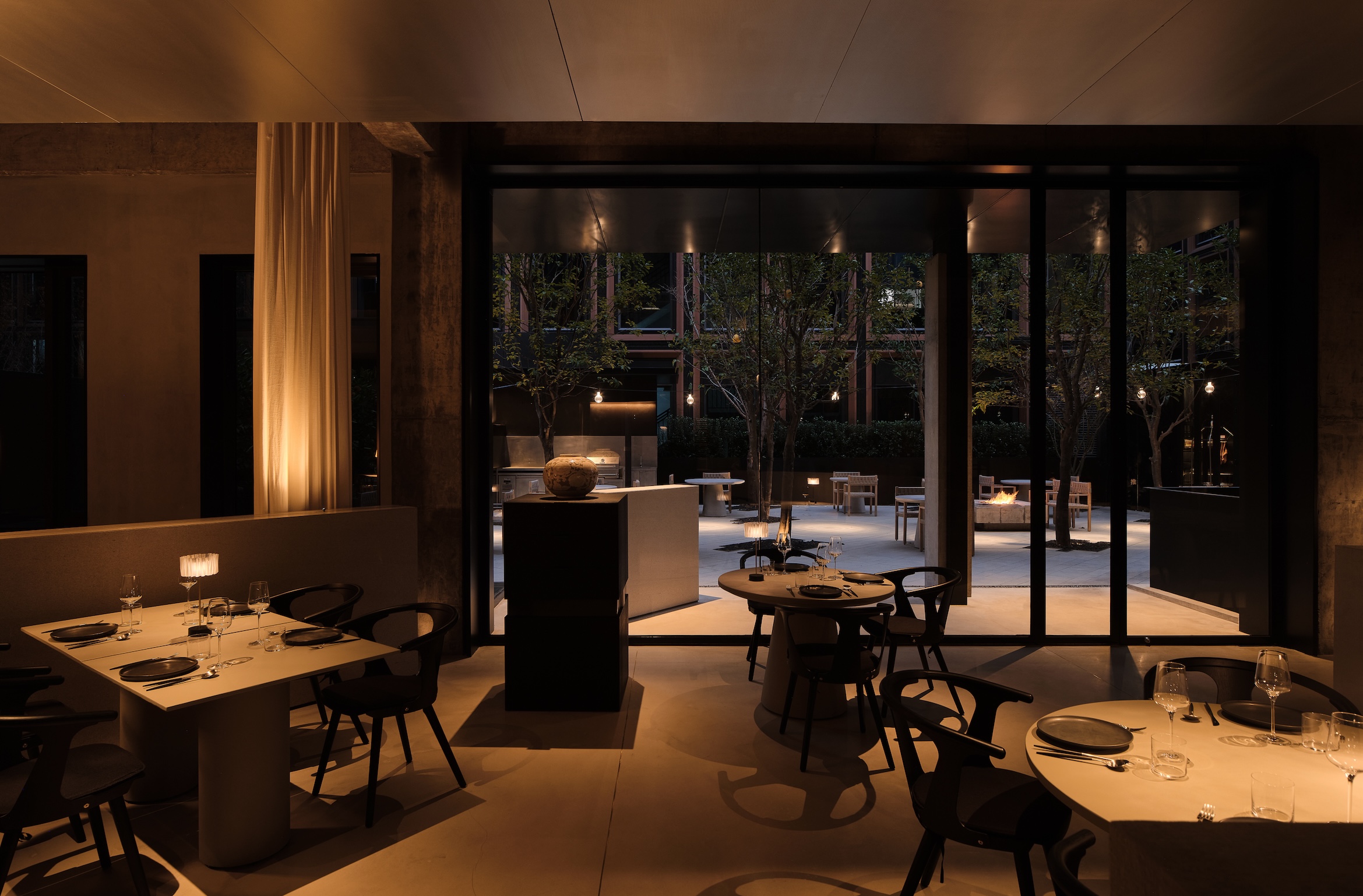
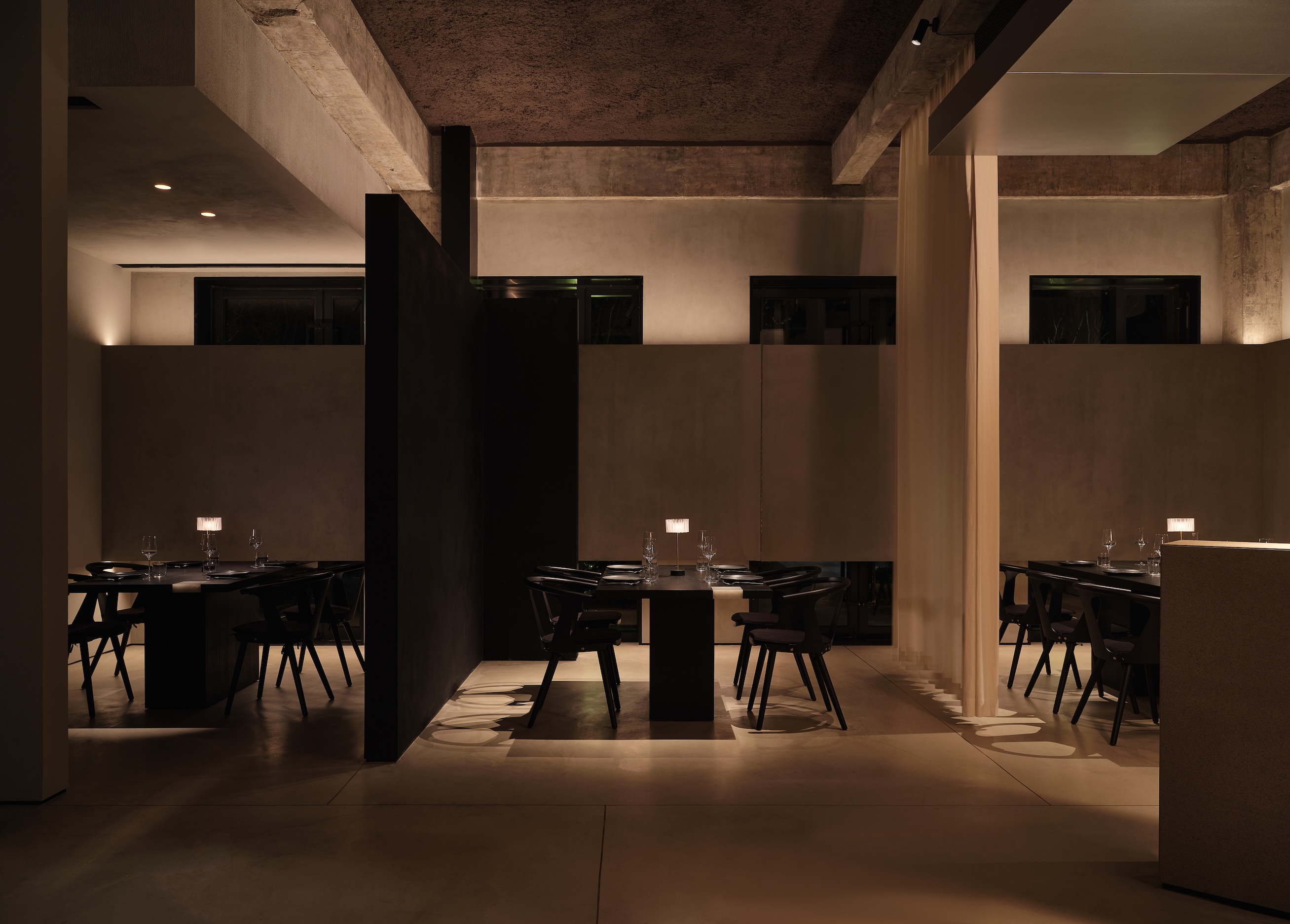
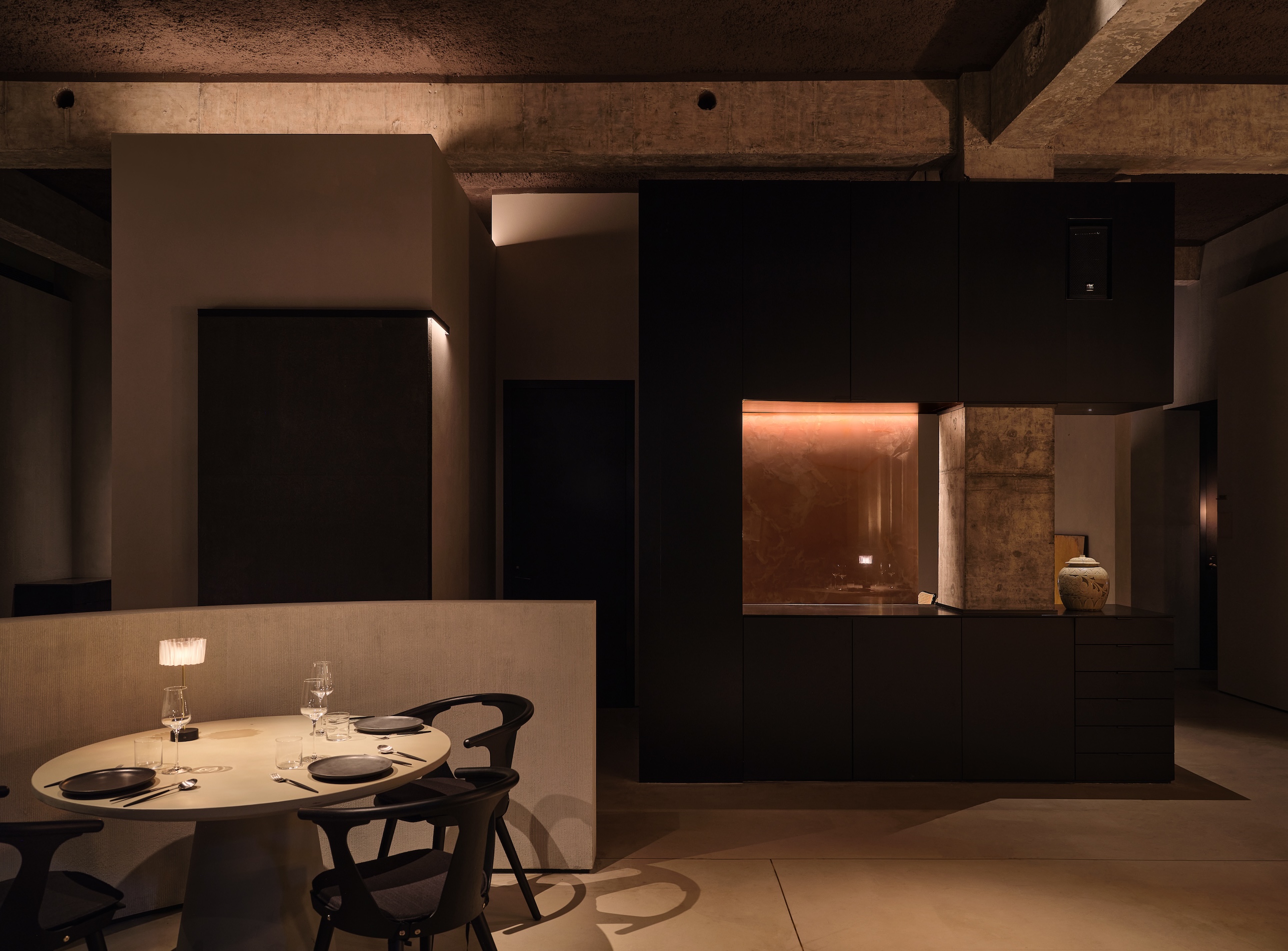
Located in the Rising Center near the Xixi National Wetland Park in Hangzhou, “馐(Gourmet)·shy table” is a innovation western restaurant based on continental cuisine and its cooking integrates with local ingredients. The selection of the brand name “shy” conveys characteristics of introversion, truth, low profile and quietude, just like the personality of the owner. The relationship between people and food in Western cuisine is the subject-object relationship. People taste the ingredients rationally after “dissecting” the food with cutlery. Space design introduces this dietary philosophy and analyzes the relationship between human and space with a rational attitude.

Following the functional layout and considering the interpretation and translation of the brand culture, we redesigned the column grid and circulation originally used as an office space and selectively enclosed a semi-private and semi-open dining area with skill and ease. We used floor-to-ceiling drapes as partitions in some areas, creating an echo with the undecorated columns. We designed an arc and a slanted low wall to break the usual layout of the hall space, re-establishing the spatial order. The symbol is derived from the western tableware. The slanted line is like the cutting of a knife, while the arc is like the curve a person makes when dipping into the sauce. These two walls add a set of diagonal axes to the originally horizontal and vertical column grid space, and the diagonal axes run from the interior to the exterior, with the paving following the axial layout.

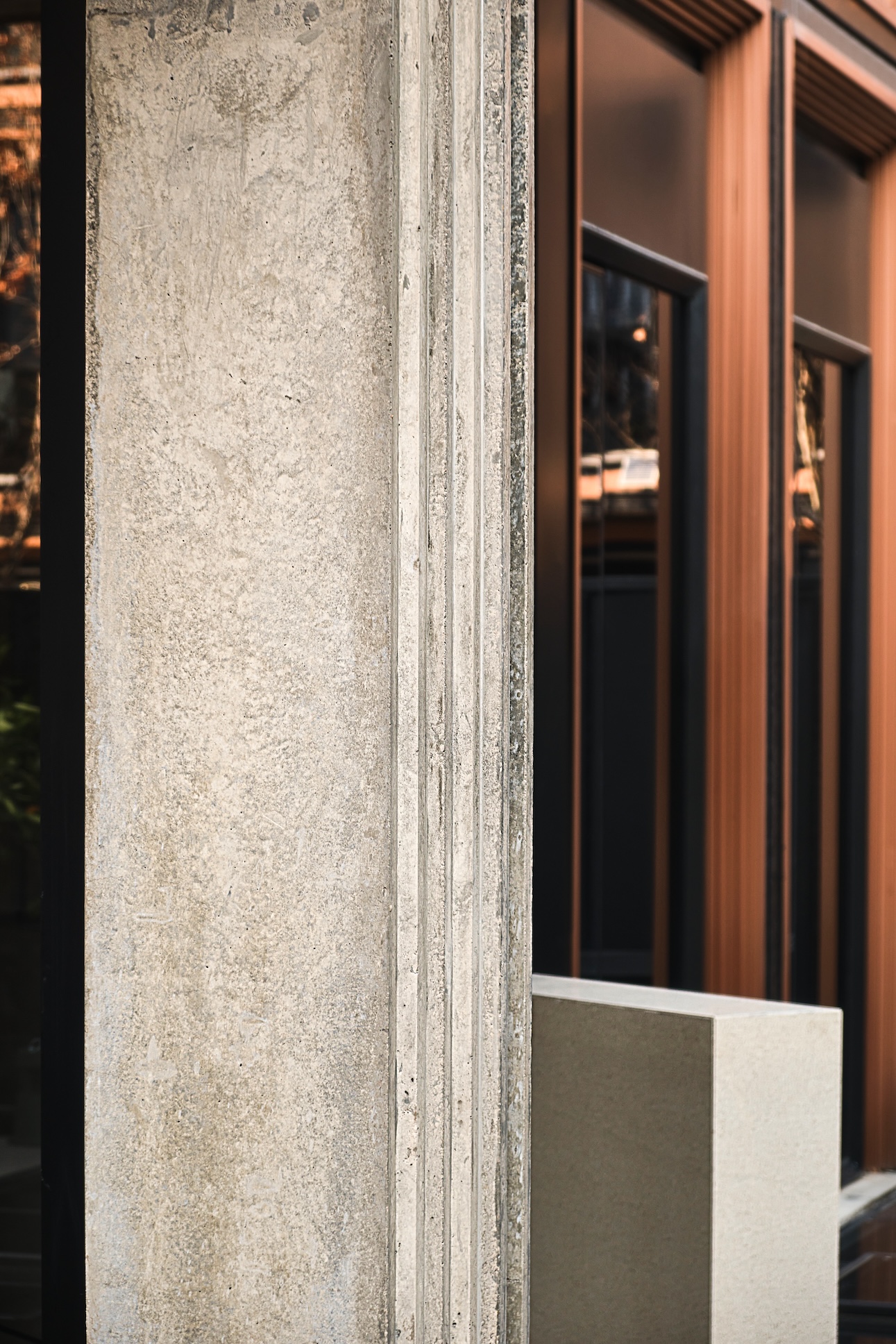
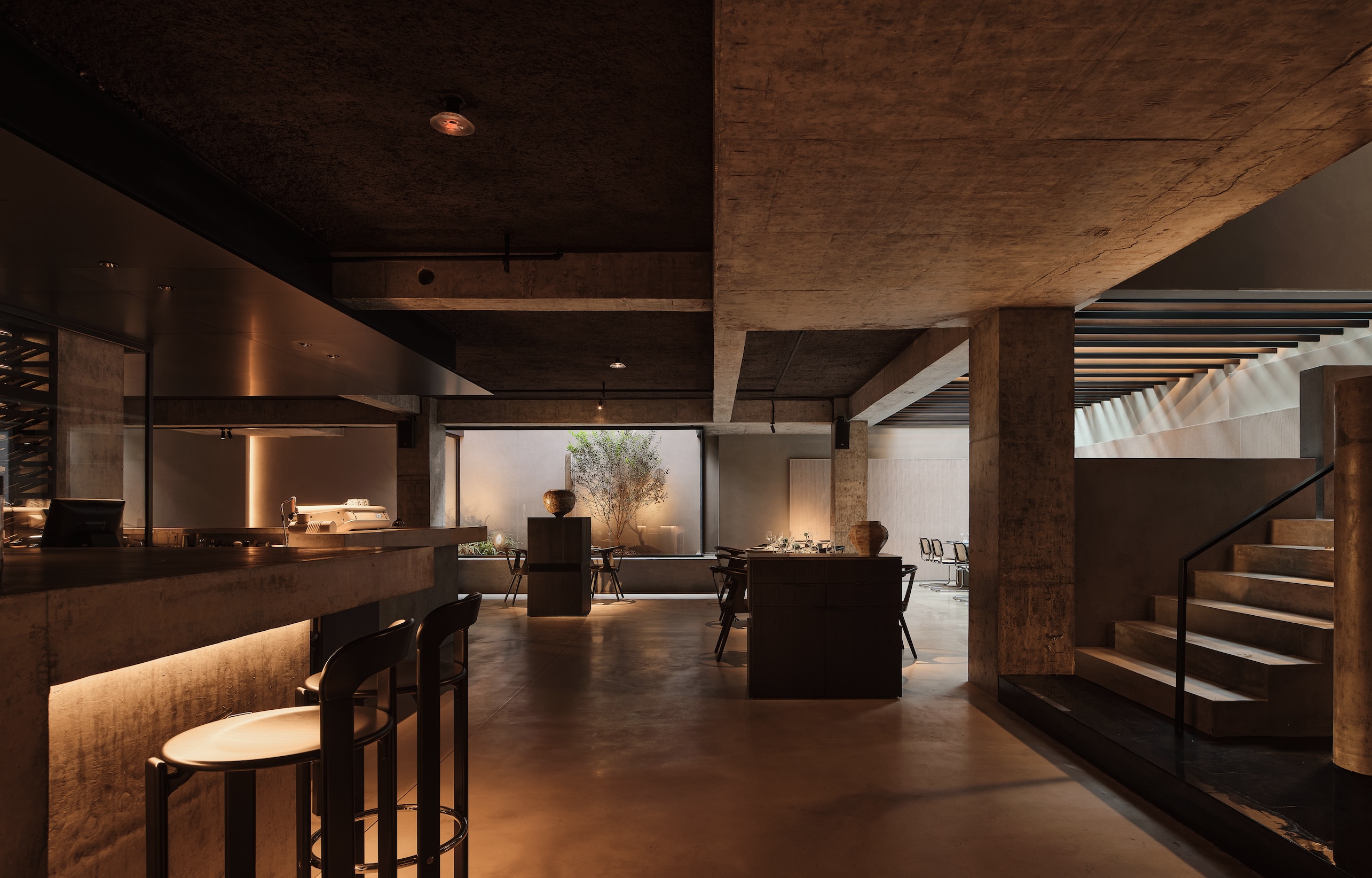
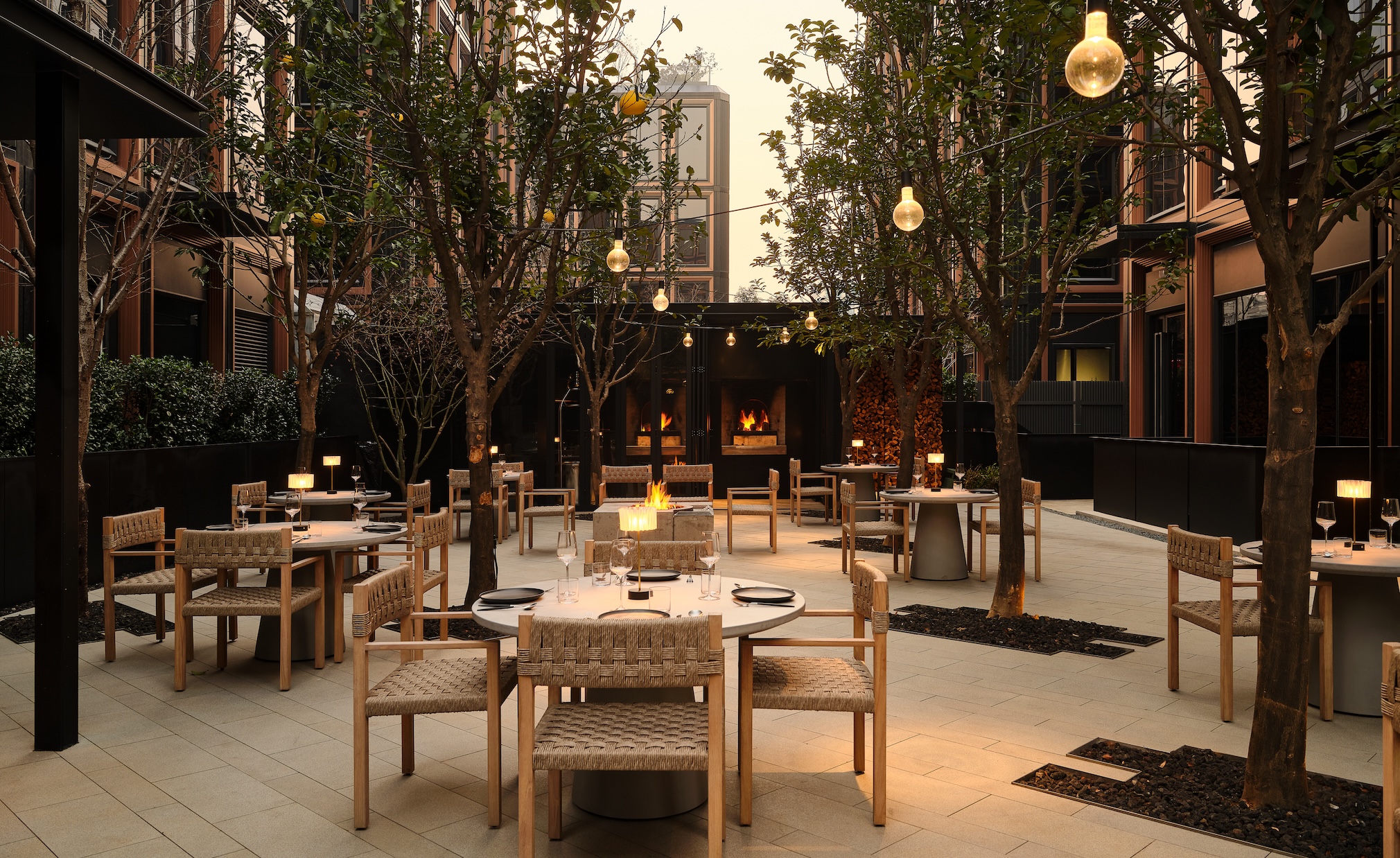
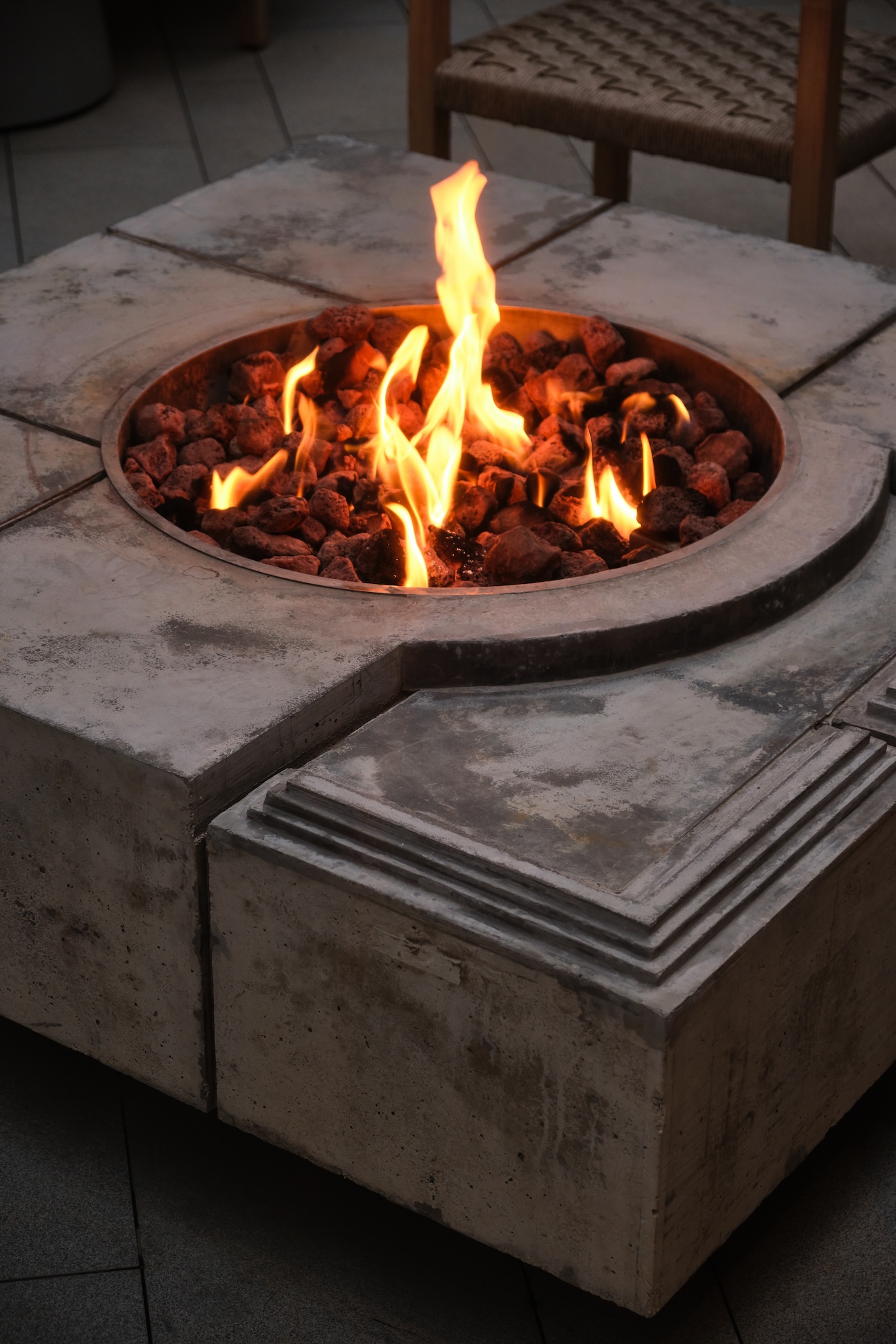
The transformation of architectural space focuses on the connection and echo with the original building’s structure. There are two floors in the restaurant: the main dining area with an outdoor garden and the underground bar dining area. In order to connect these two areas, we expanded the garden entrance first. Also, we dismantled the original metal column ornament and use the dismantled metal plates and concrete to create a new column with the same shape as the original column. Meanwhile, we pushed this new column outward without destroying the rhythm of the original facade, and thus widened the canopy, naturally realizing the space transition of the indoor and outdoor. The enclosed garden is a square space, which is reminiscent of the orderly agrumeto in the West. We chose local citrons and combined the tree array with the seat, the central fireplace and the light strings between the trees, creating a romantic and breezy atmosphere for dining in the orchard.

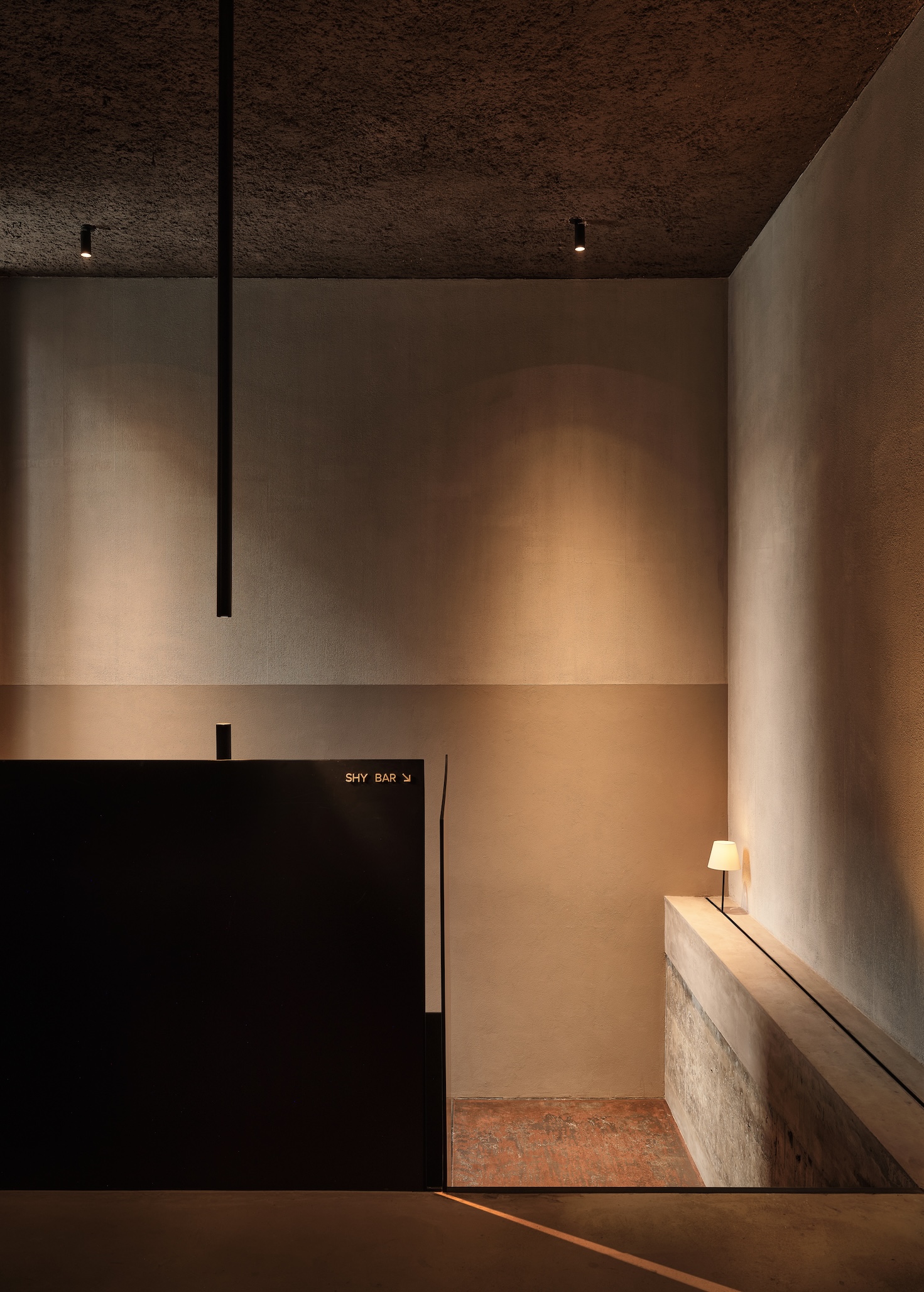
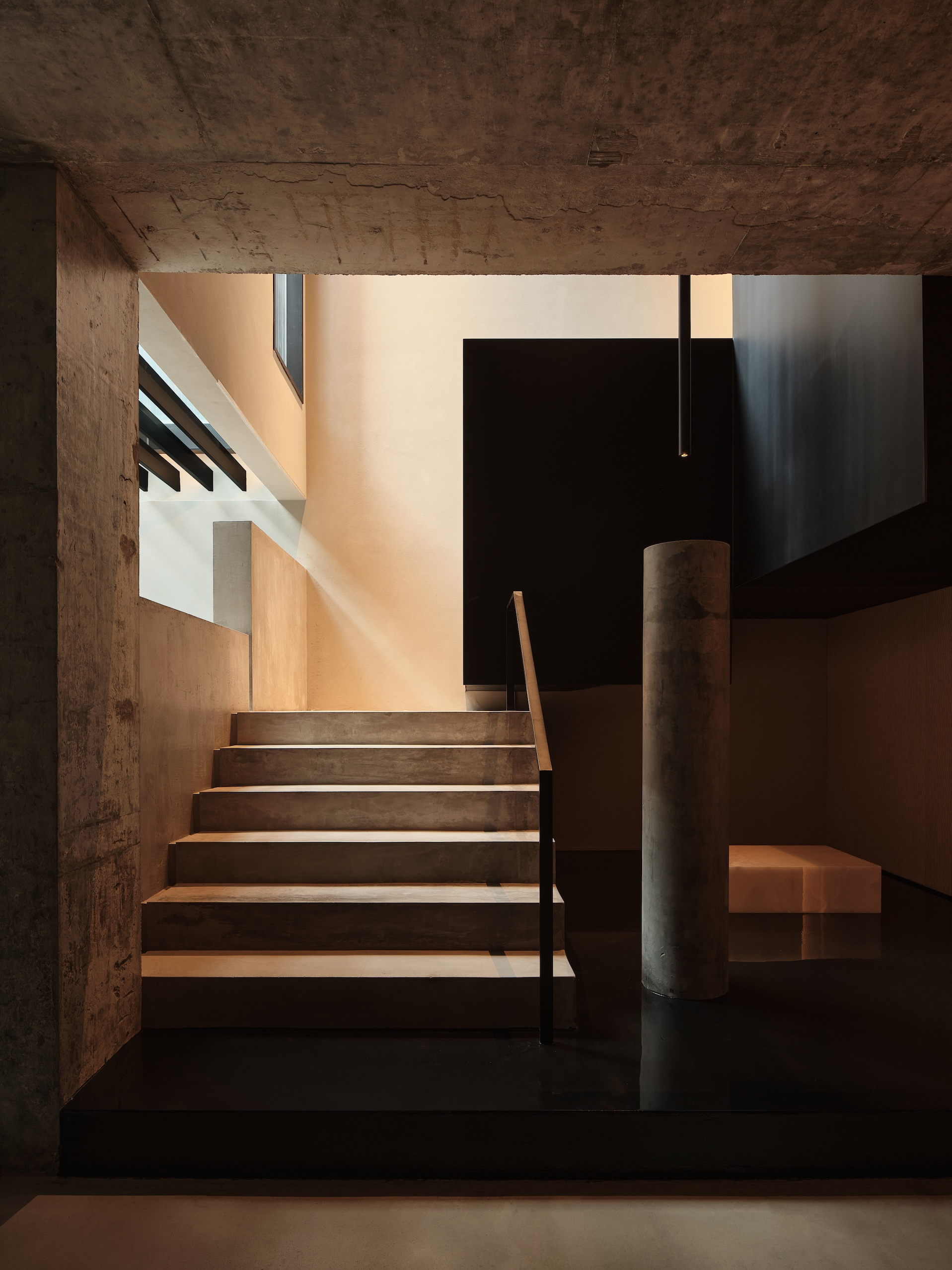
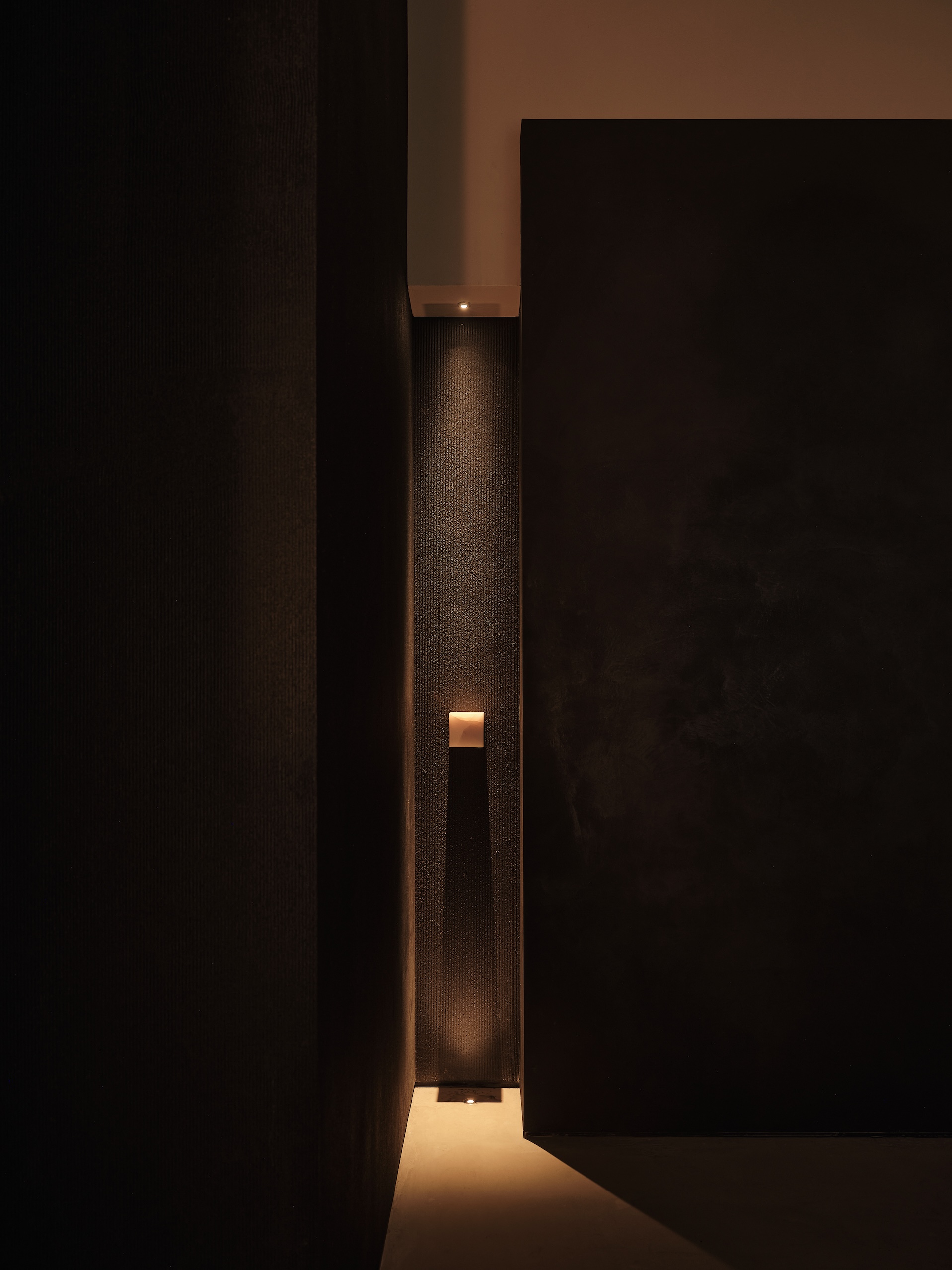
Secondly, we extended the staircase to connect the upper and lower floors. Combined with the light, the traffic space serves as a sensory transition. From the palpable light and shadow at the landing of the staircase, the steel railing panels are designed to be high enough to block views, allowing people to experience the space gradually opening up as they climb down the steps. When people step down, the light merges with a sculpture suspended on a black mirror-finishing wall, where the light source comes from overhead and guides those ascending the stairs.

Light not only is the striking point of a space but also exaggerates the mood of the space. Especially for restaurants, the creation of an atmosphere is essential. The whole restaurant adopts an open space, partial spotlights or ceiling lamps with table lamps, and some small point lights are appropriately set in some key places. The whole space is dominated by warm color light, gestating moderate and reserved spatial sentiments. The ventilation pipe and other equipment rowing on the ceiling have been delicately combed and designed, all of which are stored on one side, and the external package is made of sound-absorbing materials, which are inconspicuously hidden into the bottom of the beam. Natural light shines into the underground space through skylights, planting wells and skylight corridors, casting a rhythmic light and shadow on the walls.

The design of the building’s facade echoes the theme “shy”, hoping to leave a low-profile and mysterious impression from the exterior as well. The window frame serves as a link between the interior and exterior, and we chose to weaken the interaction between the interior and exterior in a subtle way, using partial blocking to reveal only part of the dining table and chair legs, so that viewers passing by outdoors can’t see what’s on the table and who’s dining there. Mini-paintings hanging on the wall make each pane of the window frame a scene and make the facade gallery-like, attracting people to get closer to appreciate it. While more imagination is introduced in between such obscurity. The design transformation of the “馐(Gourmet)·shy table” responds to the brand’s tone and concept–modesty, low profile, delicacy and introversion in every detail, and at the same time opens up more ideas for designing the space of this ordinary office building.

CONSTRUCTION 施工过程

SHY TABLE RESTAURANT 馐西餐厅

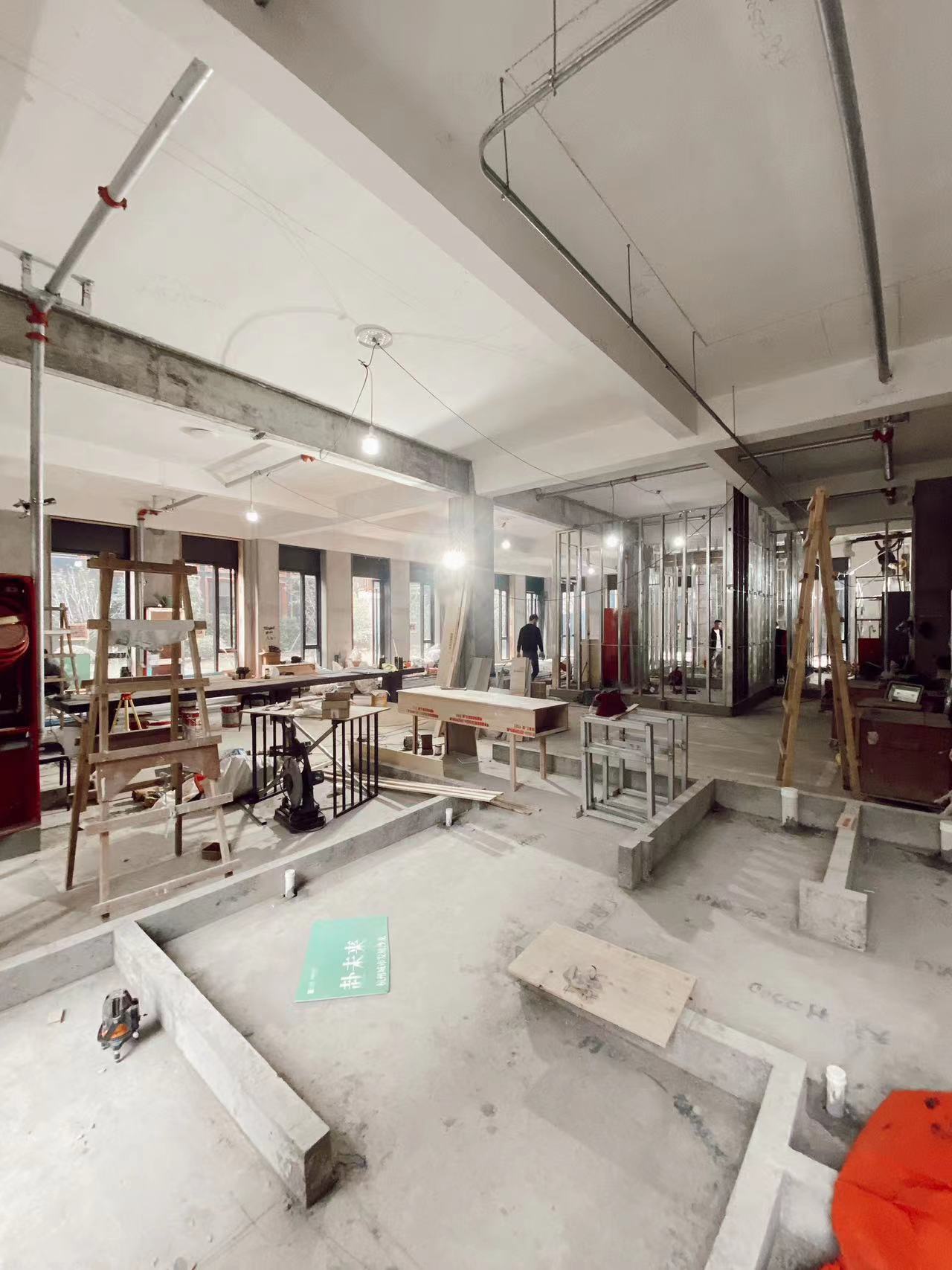
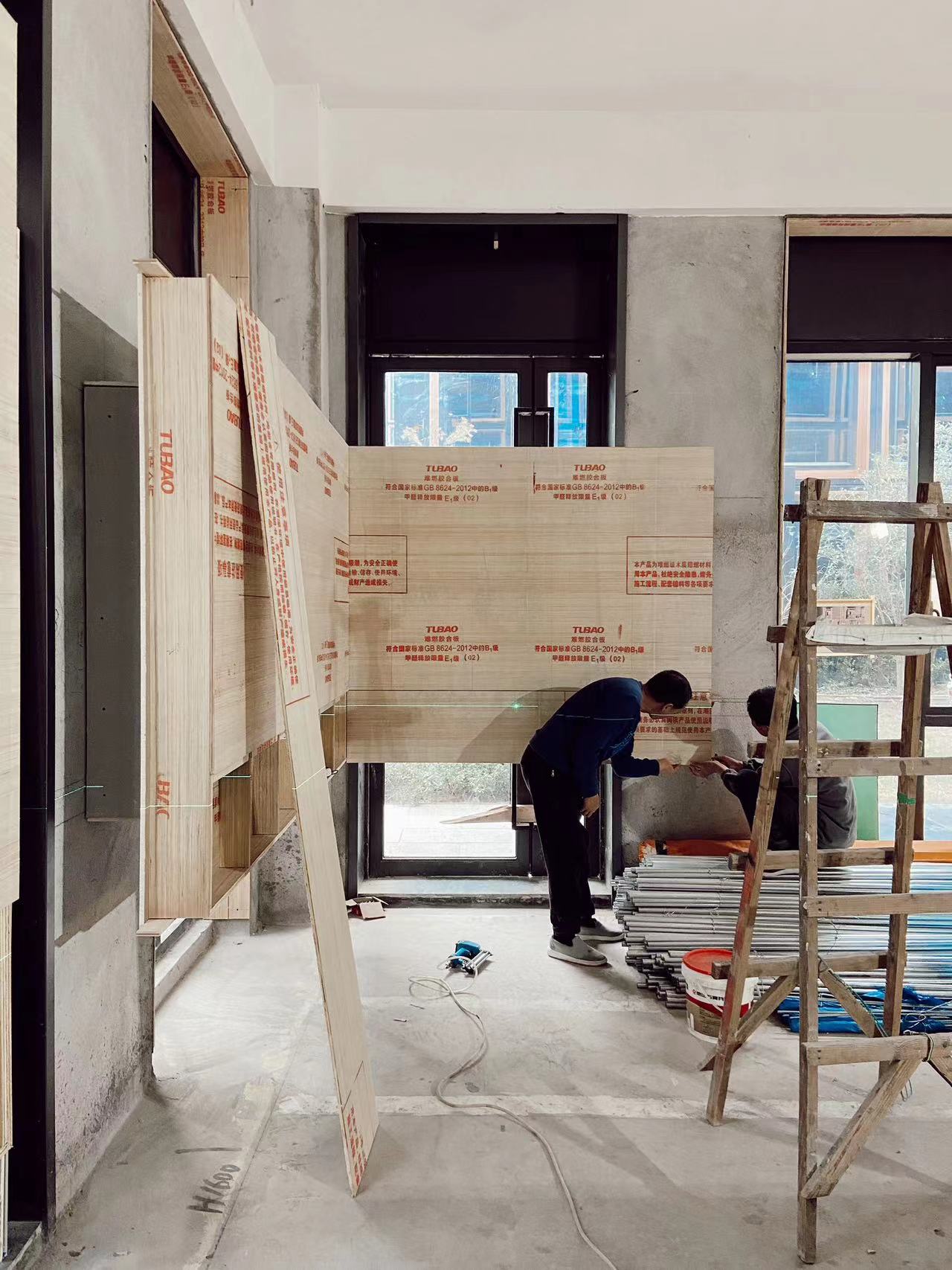
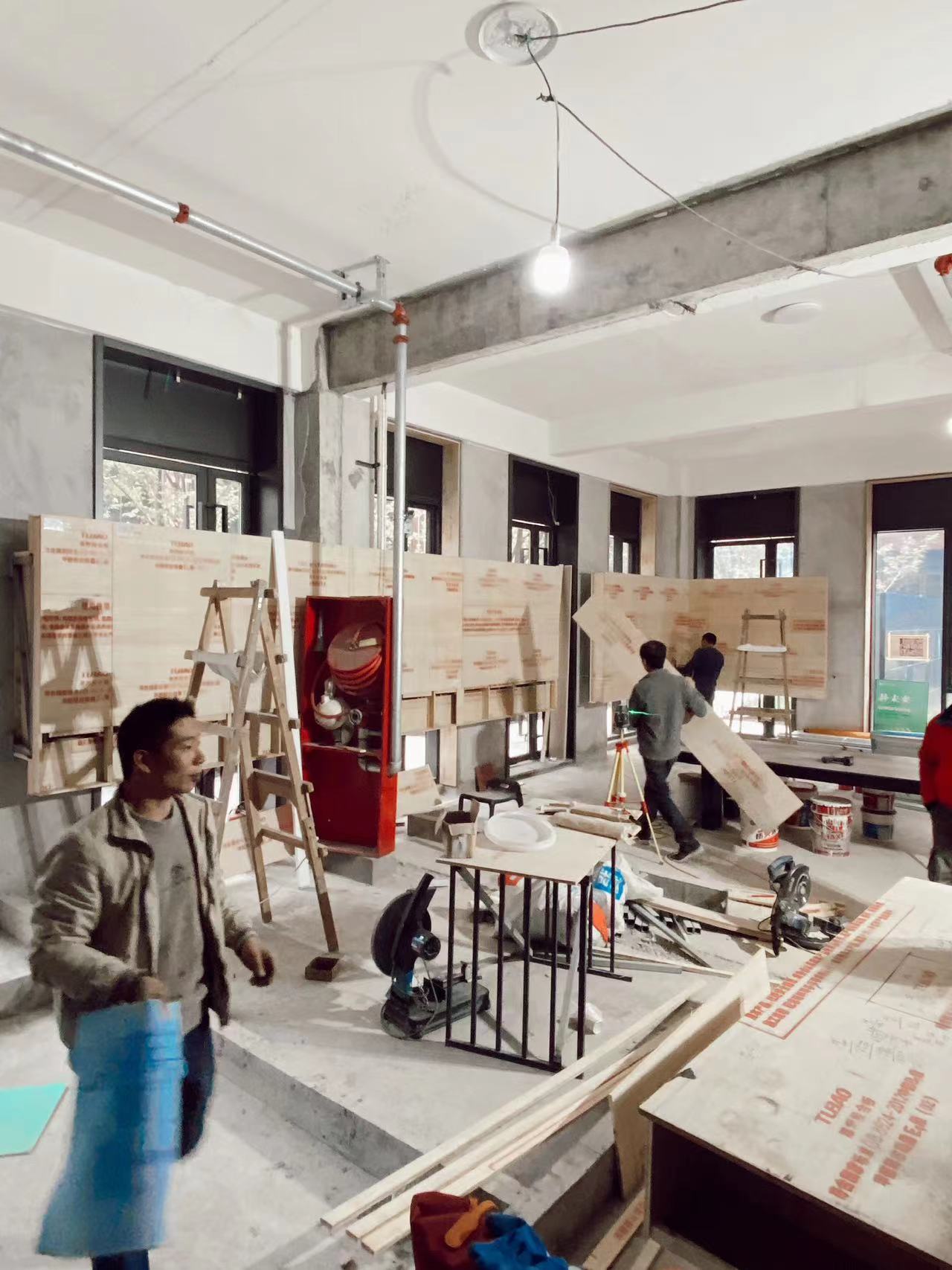
LOCATION 地址  | PUGLIA-ITALY 普利亚
CATEGORY 类型  |   RESIDENTIAL  住宅

HISTORIC BUILDING RENOVATION 历史建筑改造
ARCHITECTURE
建筑
INTERIOR 室内设计

AREA 165 m²

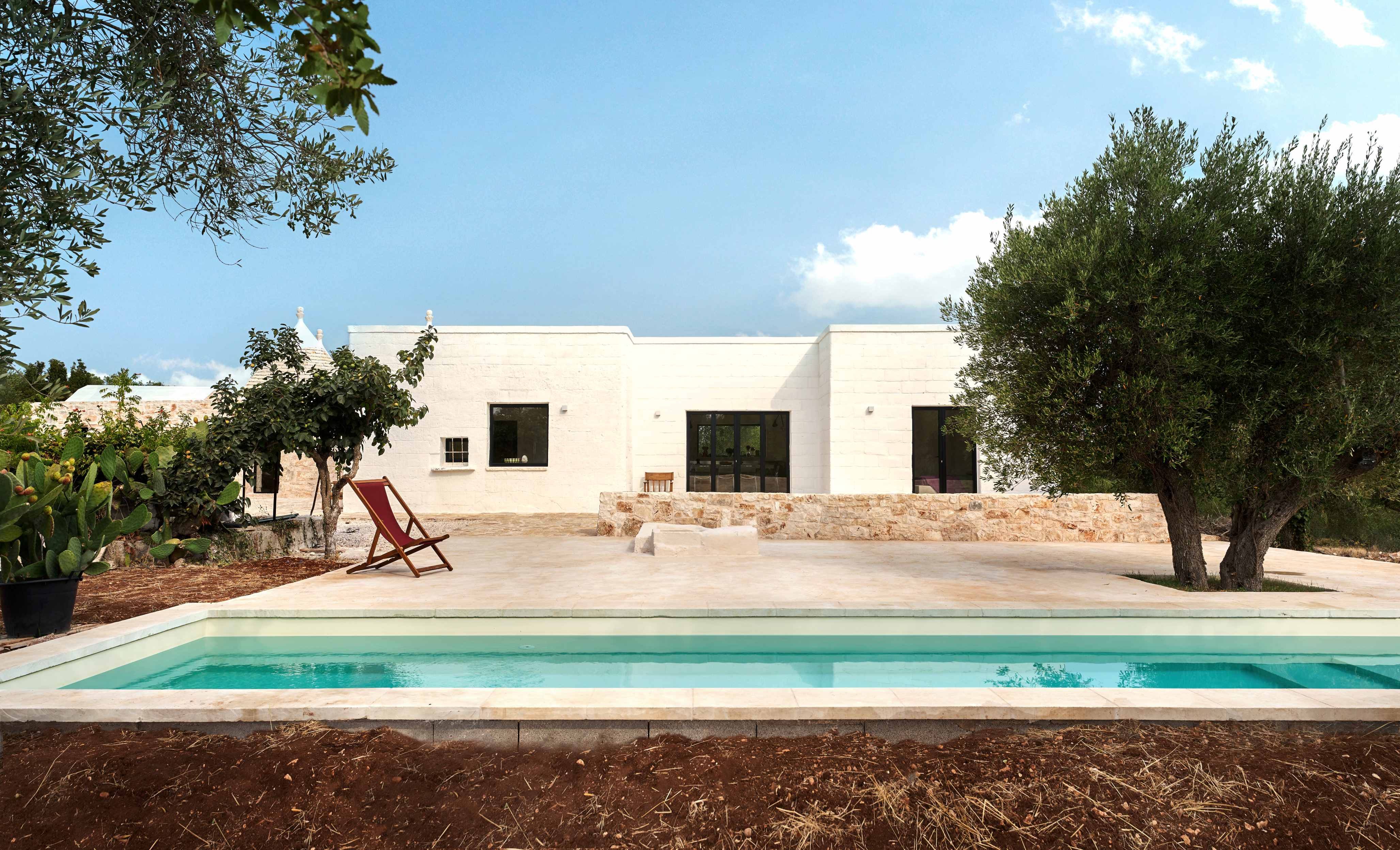
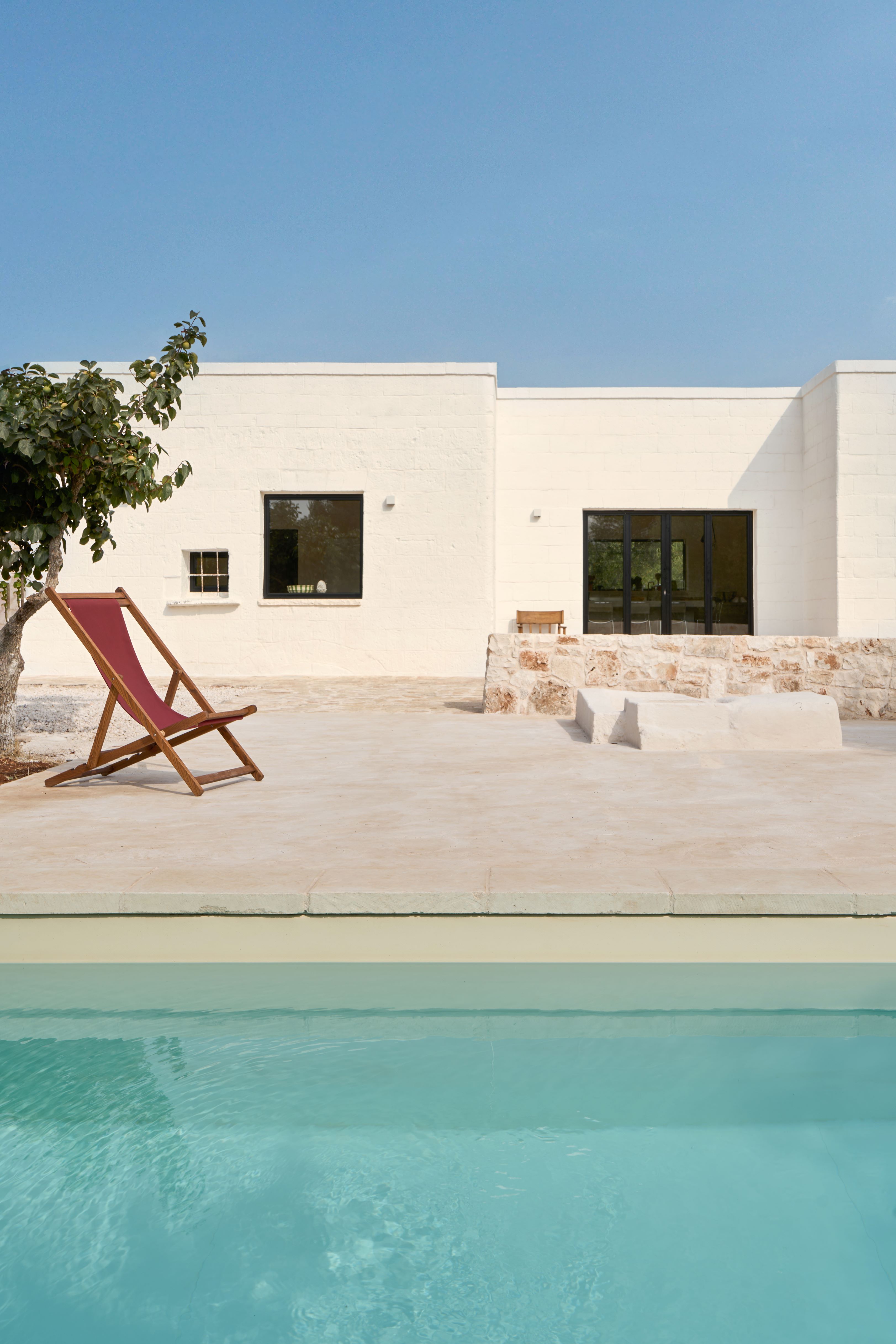
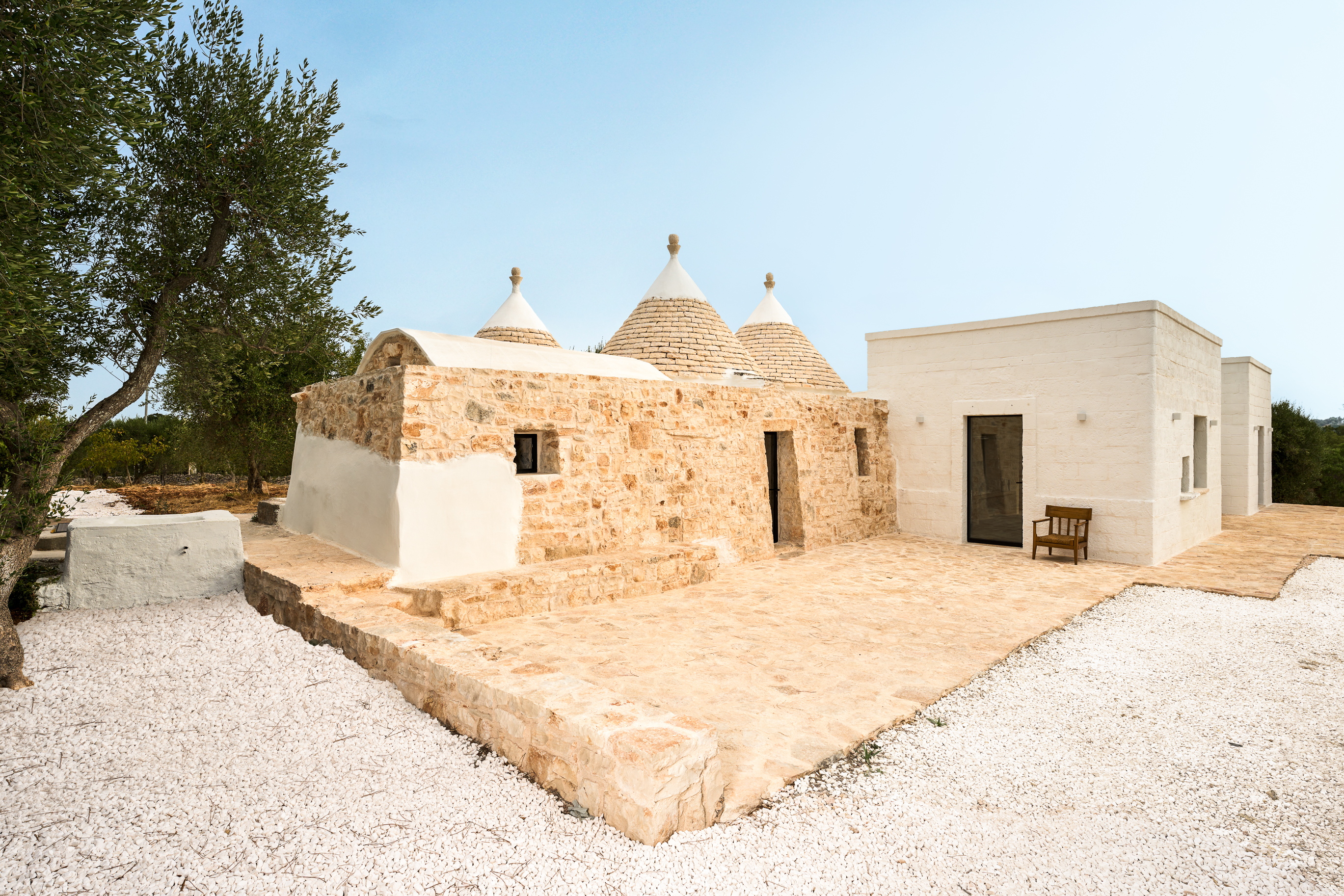
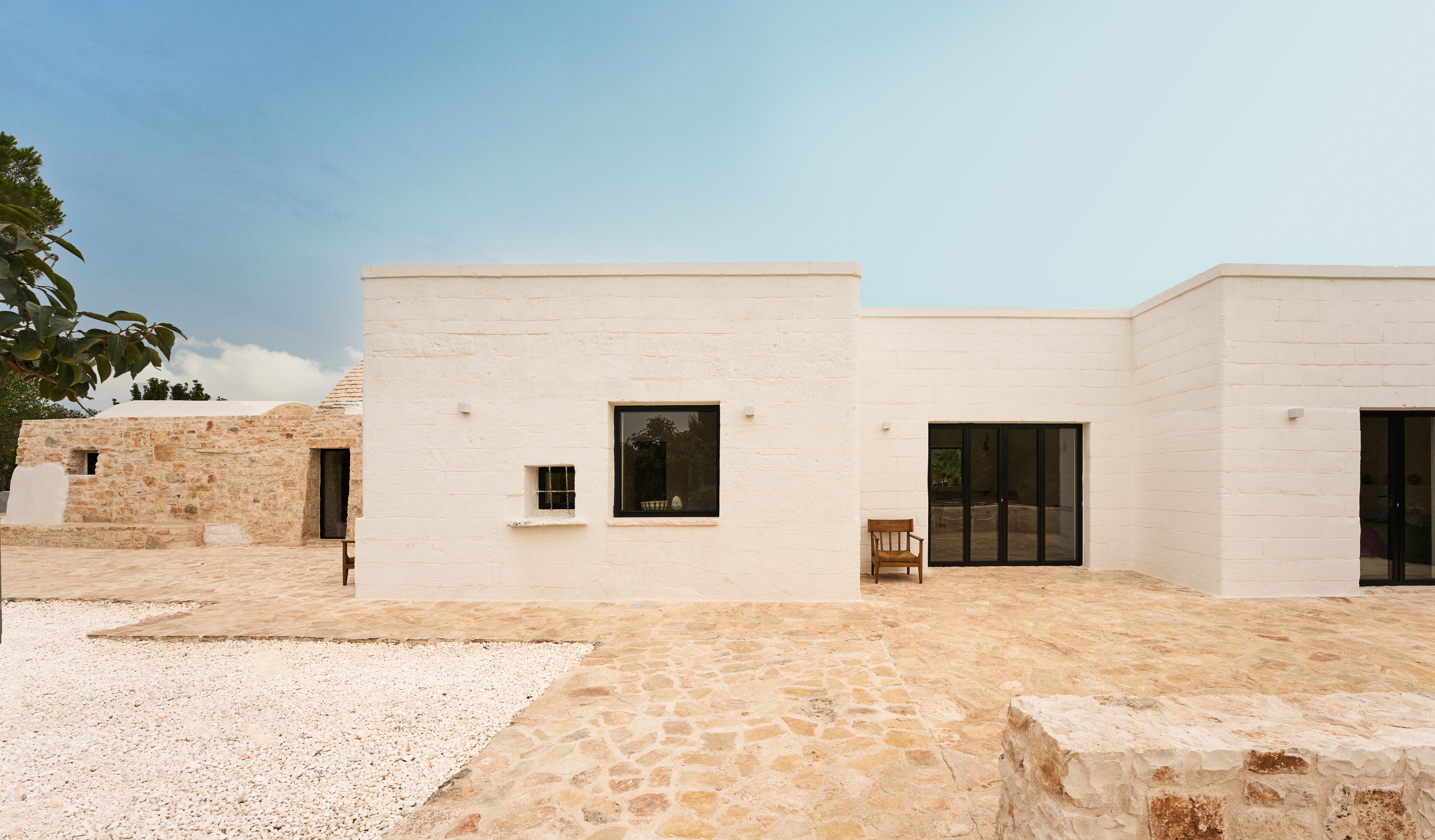
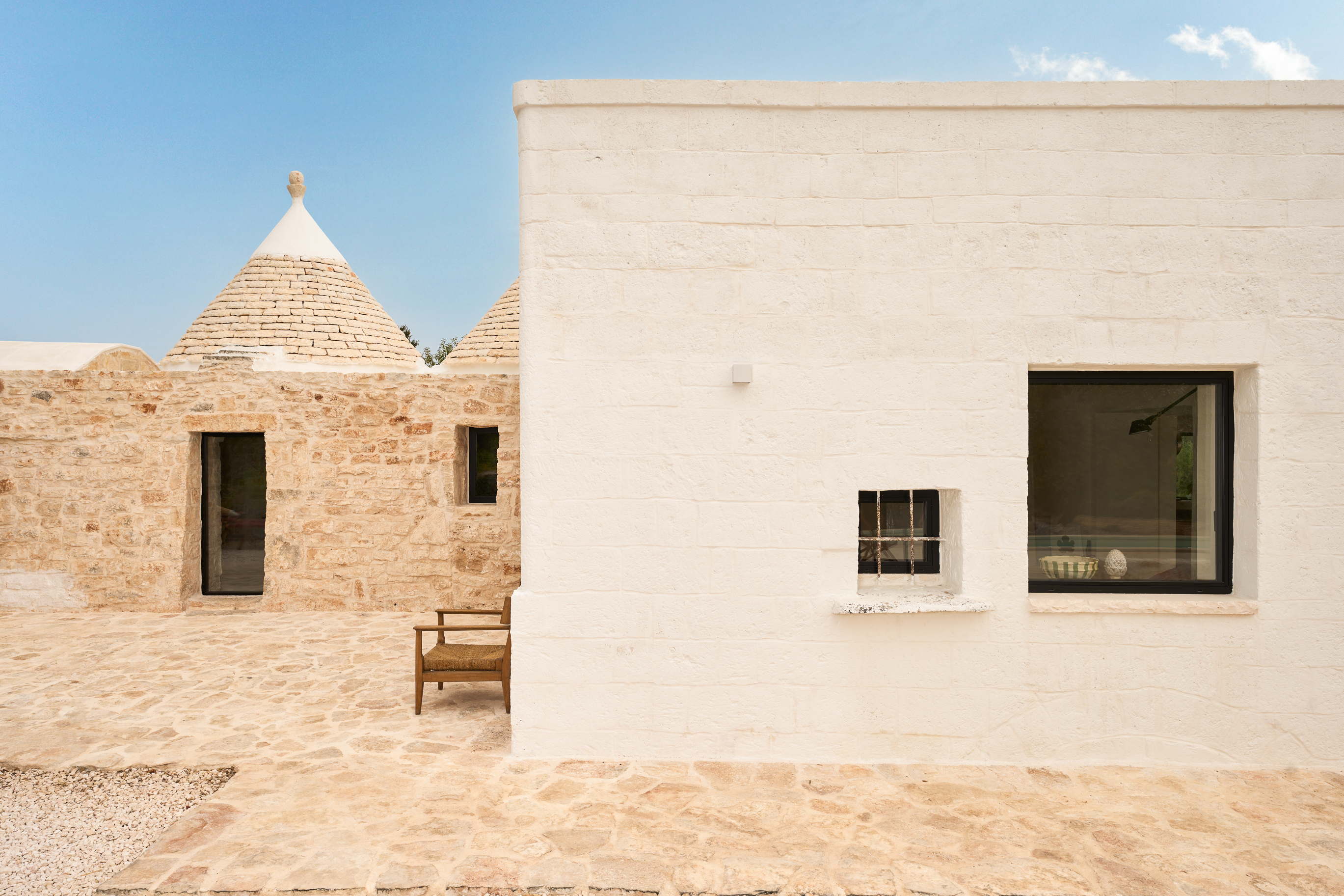
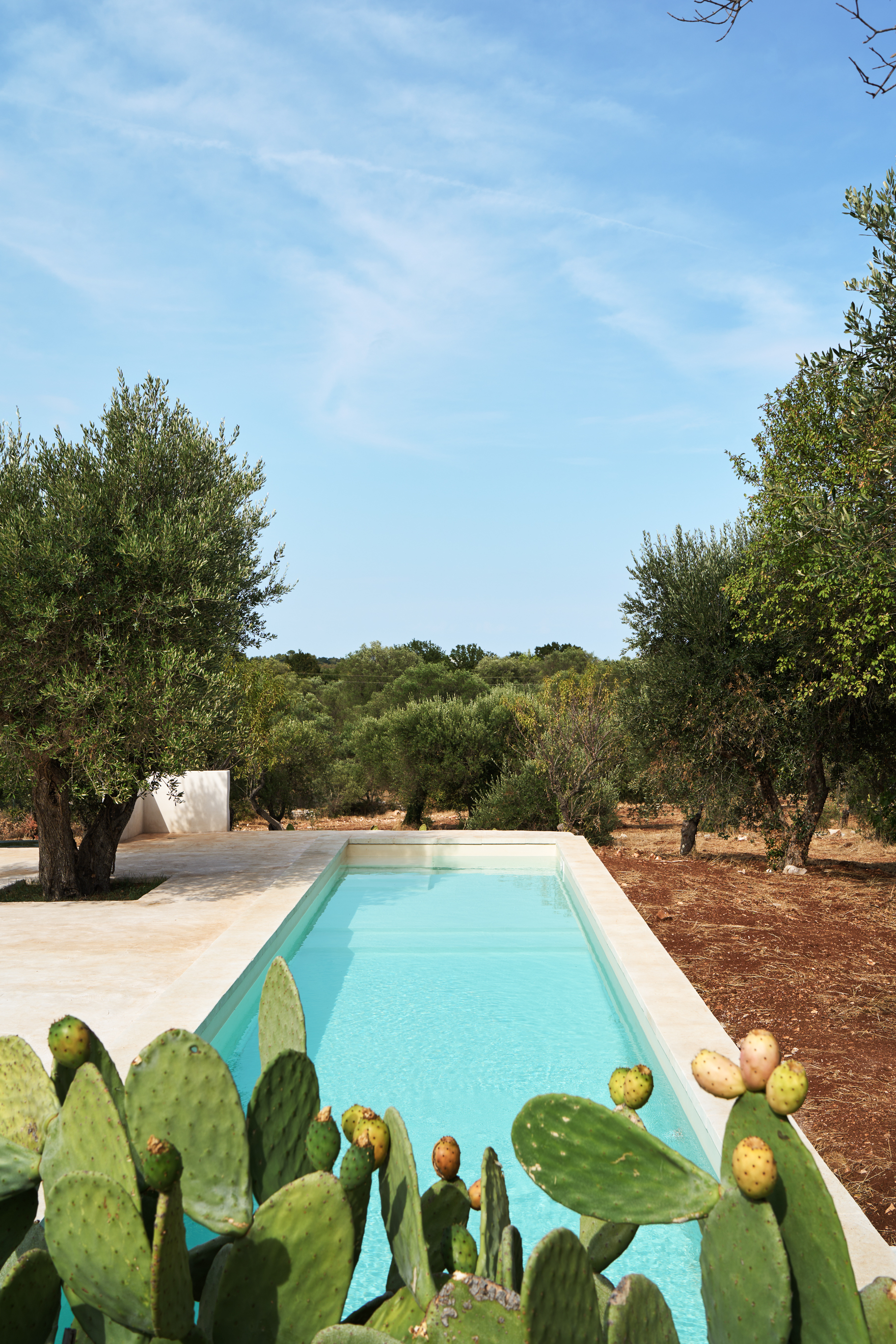
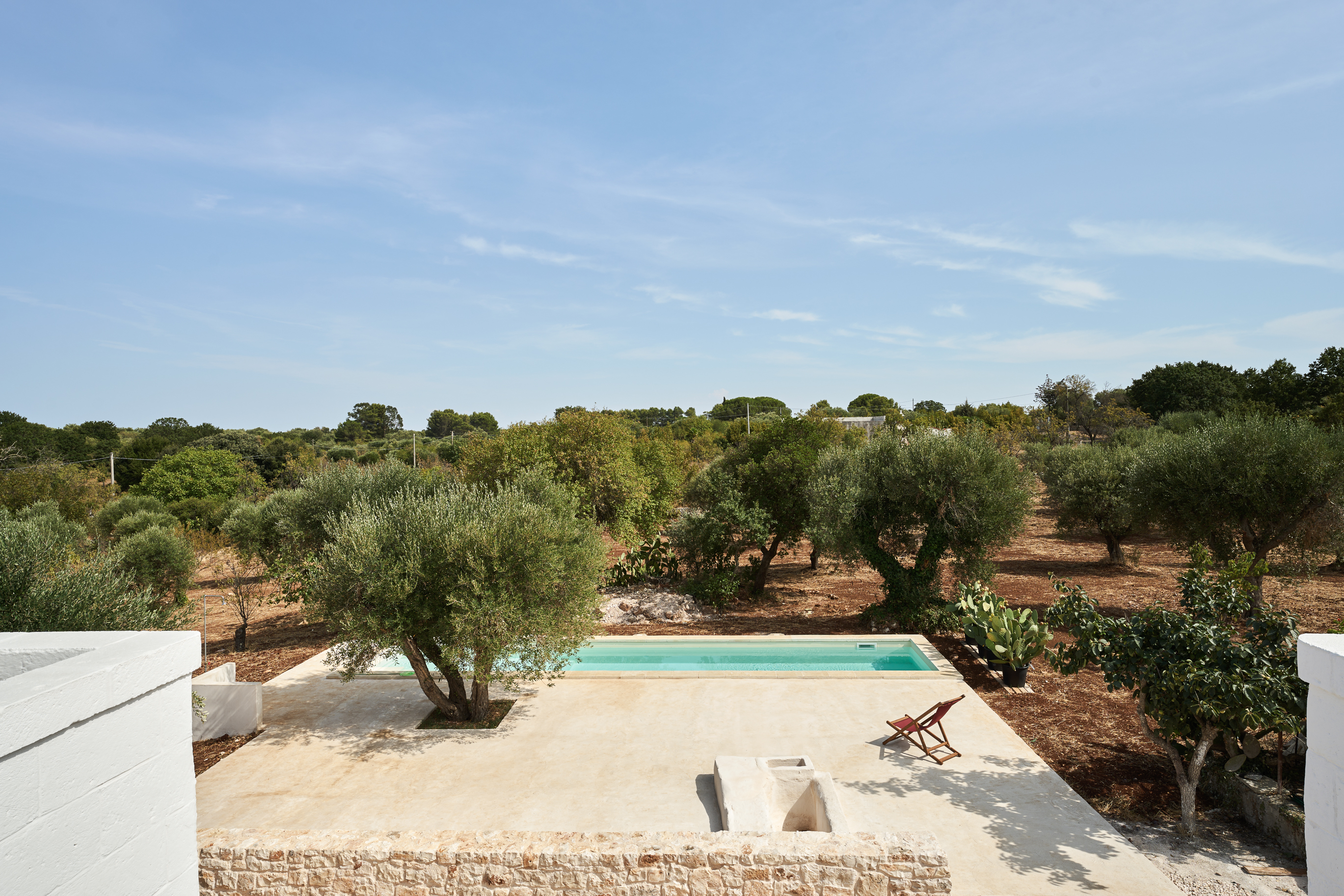
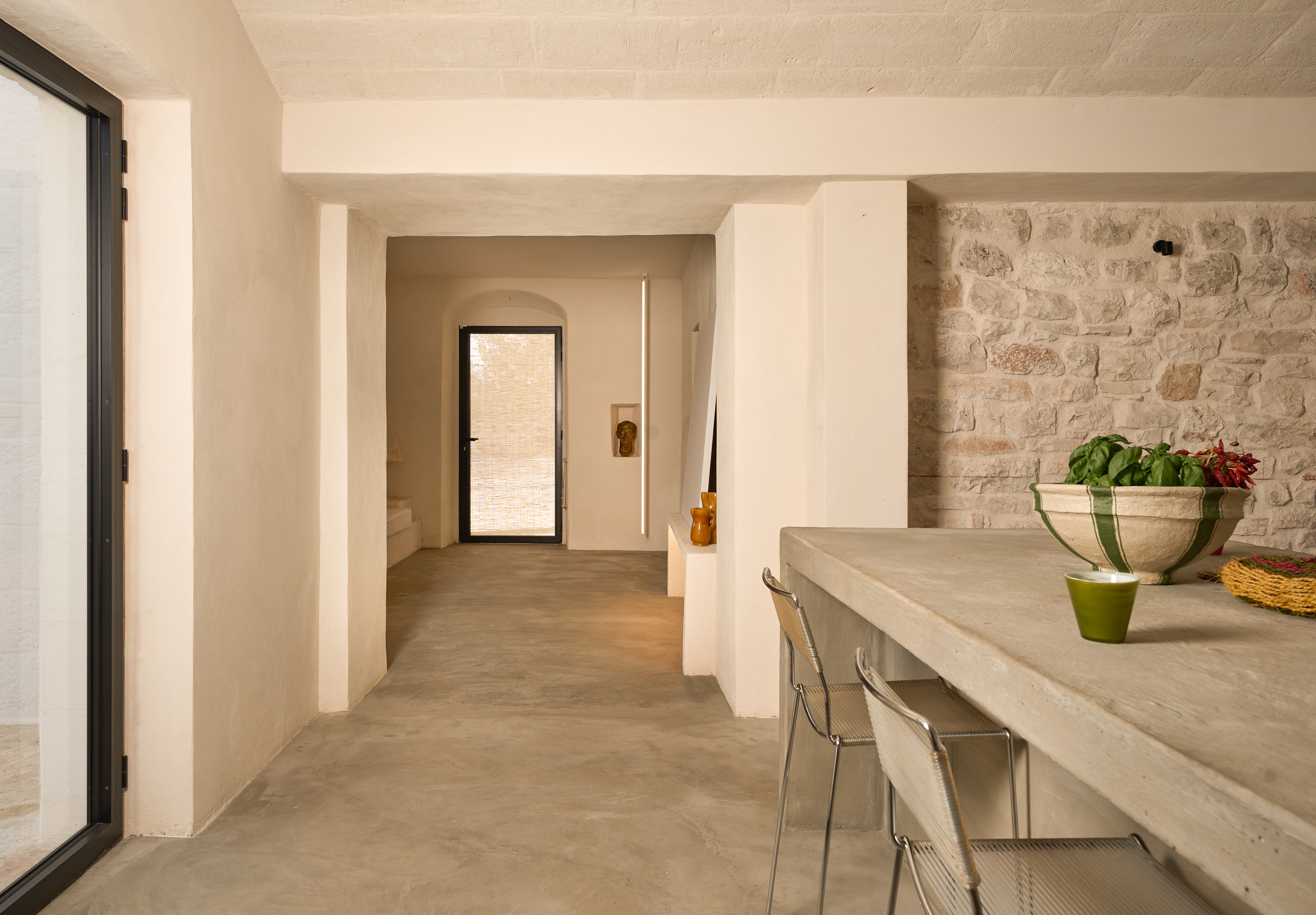
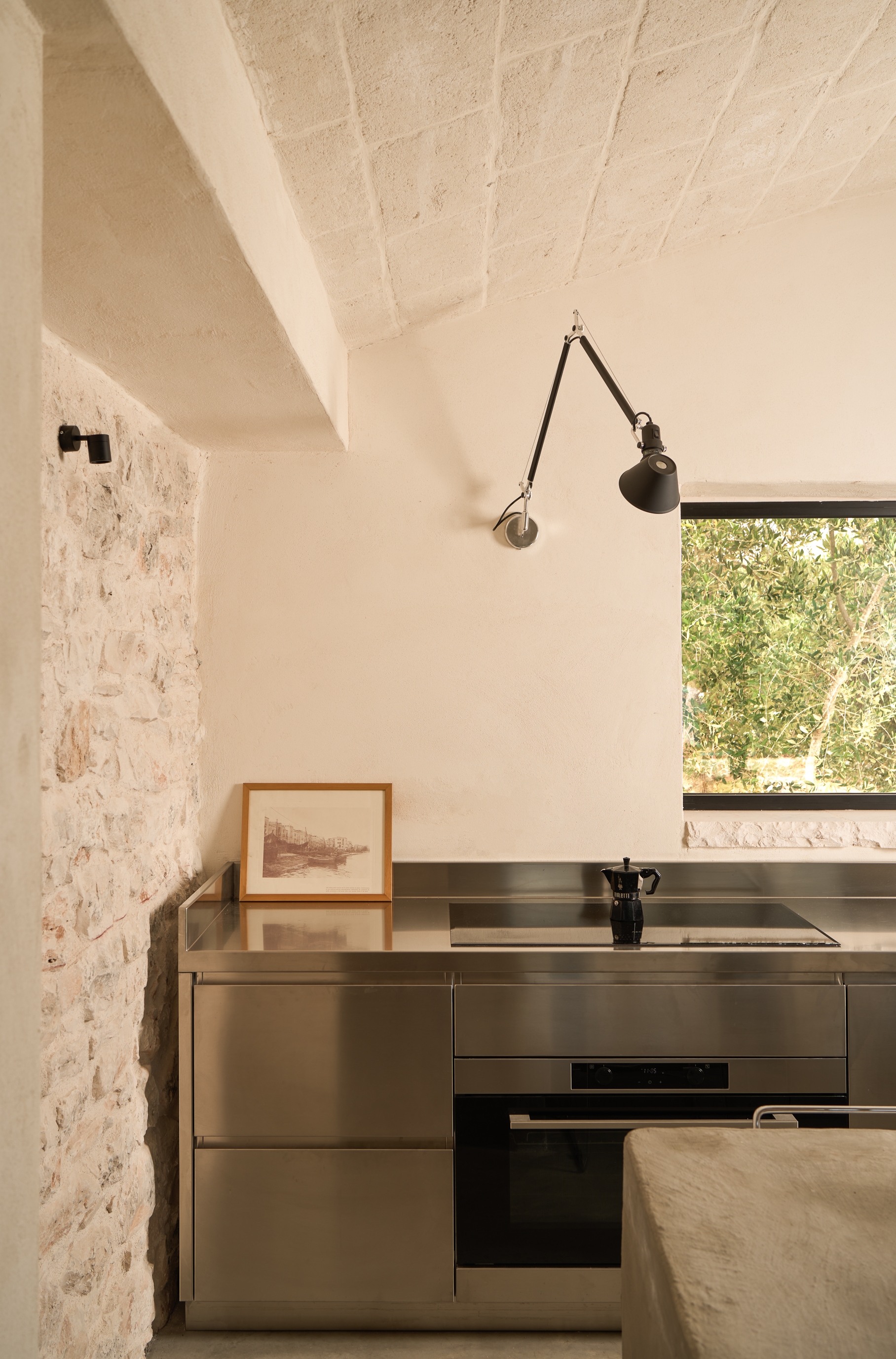
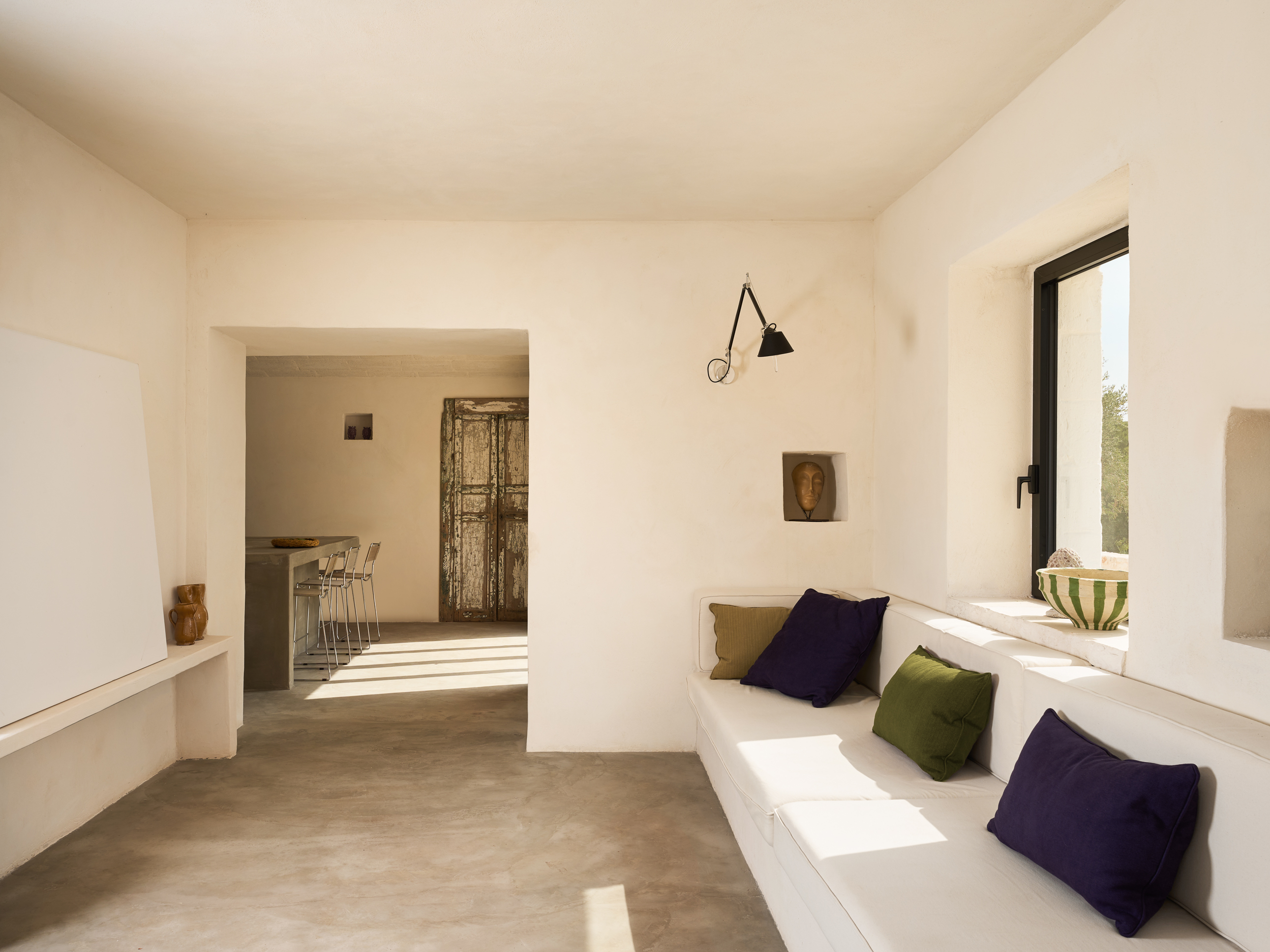
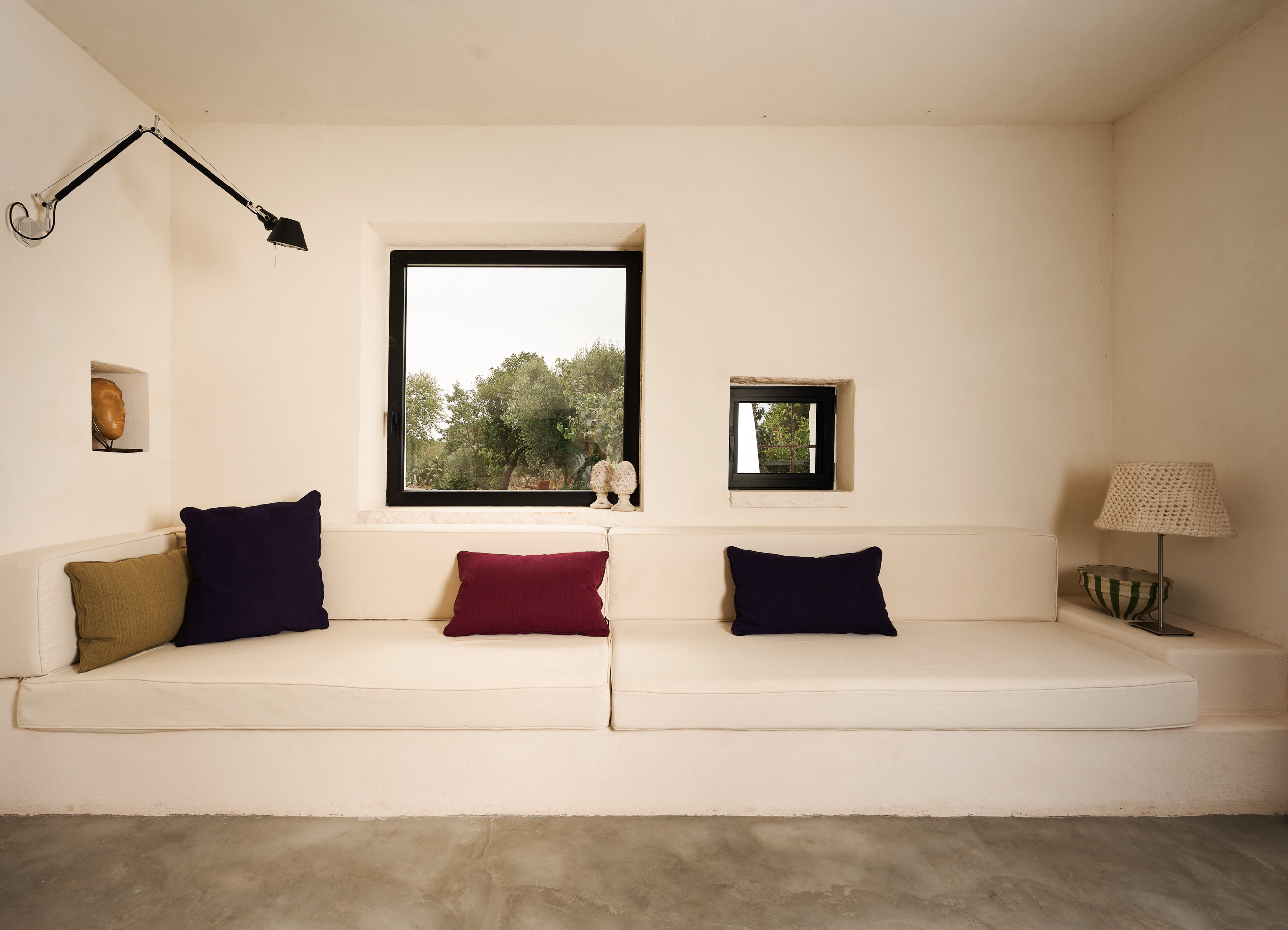
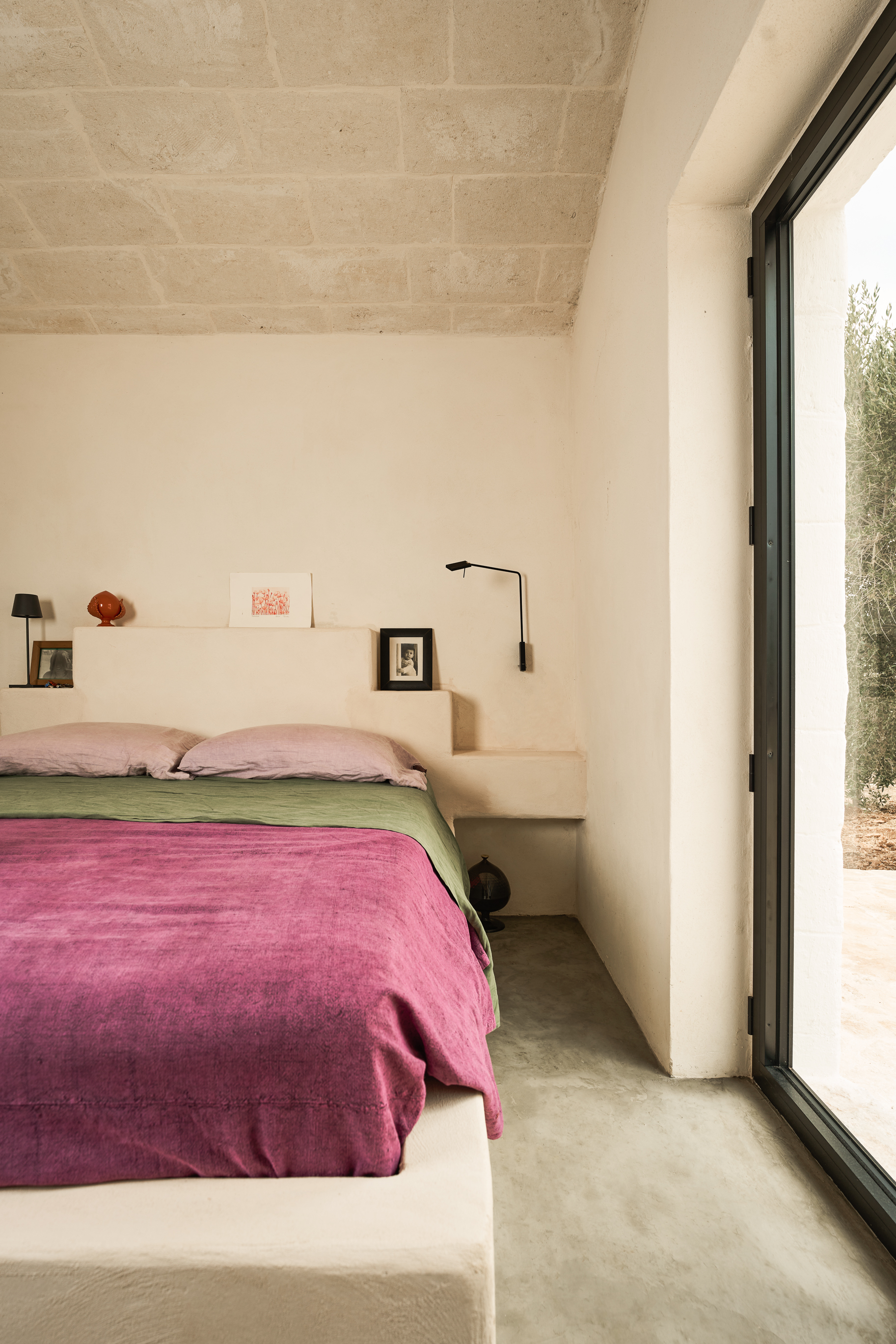
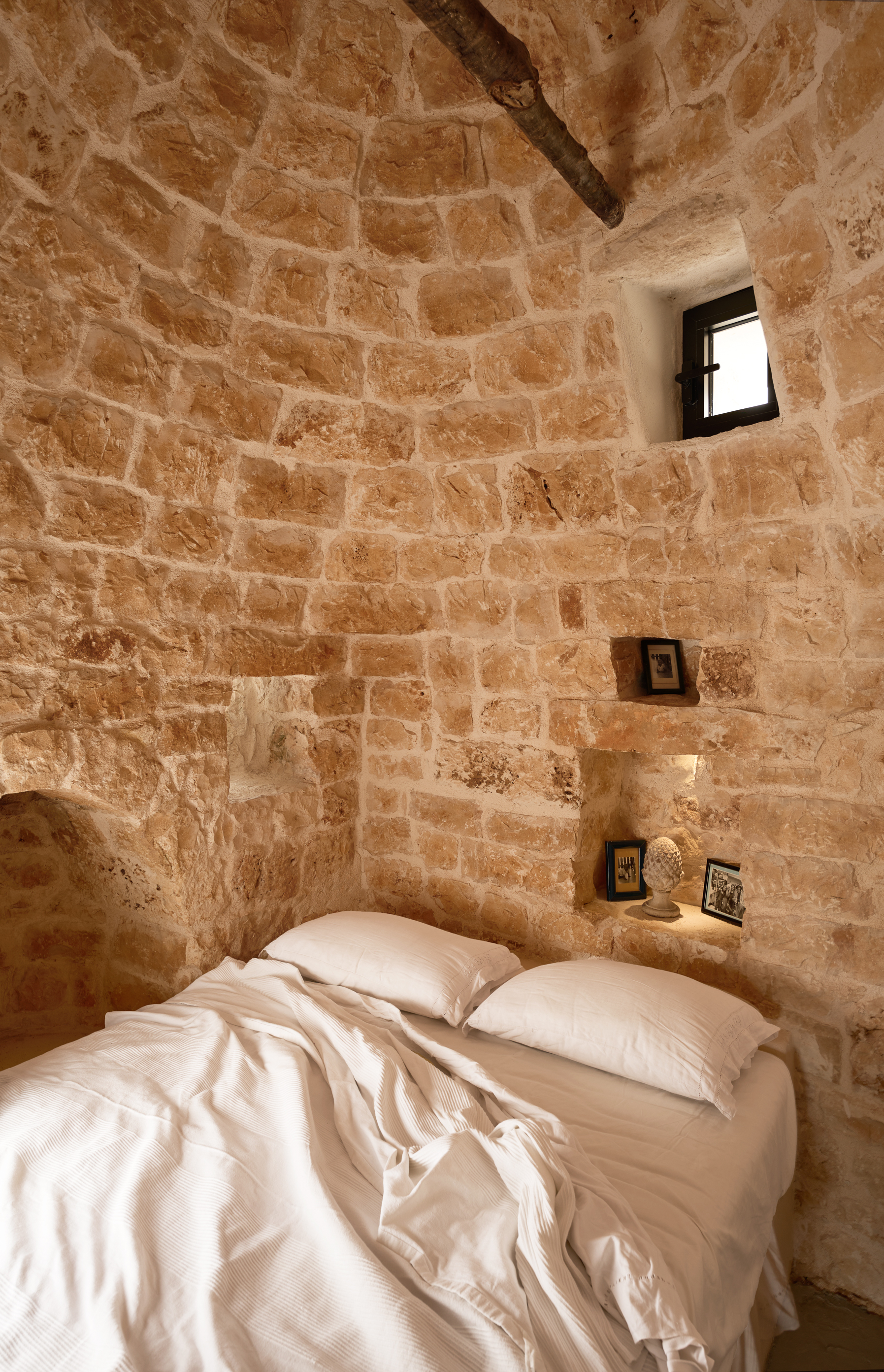
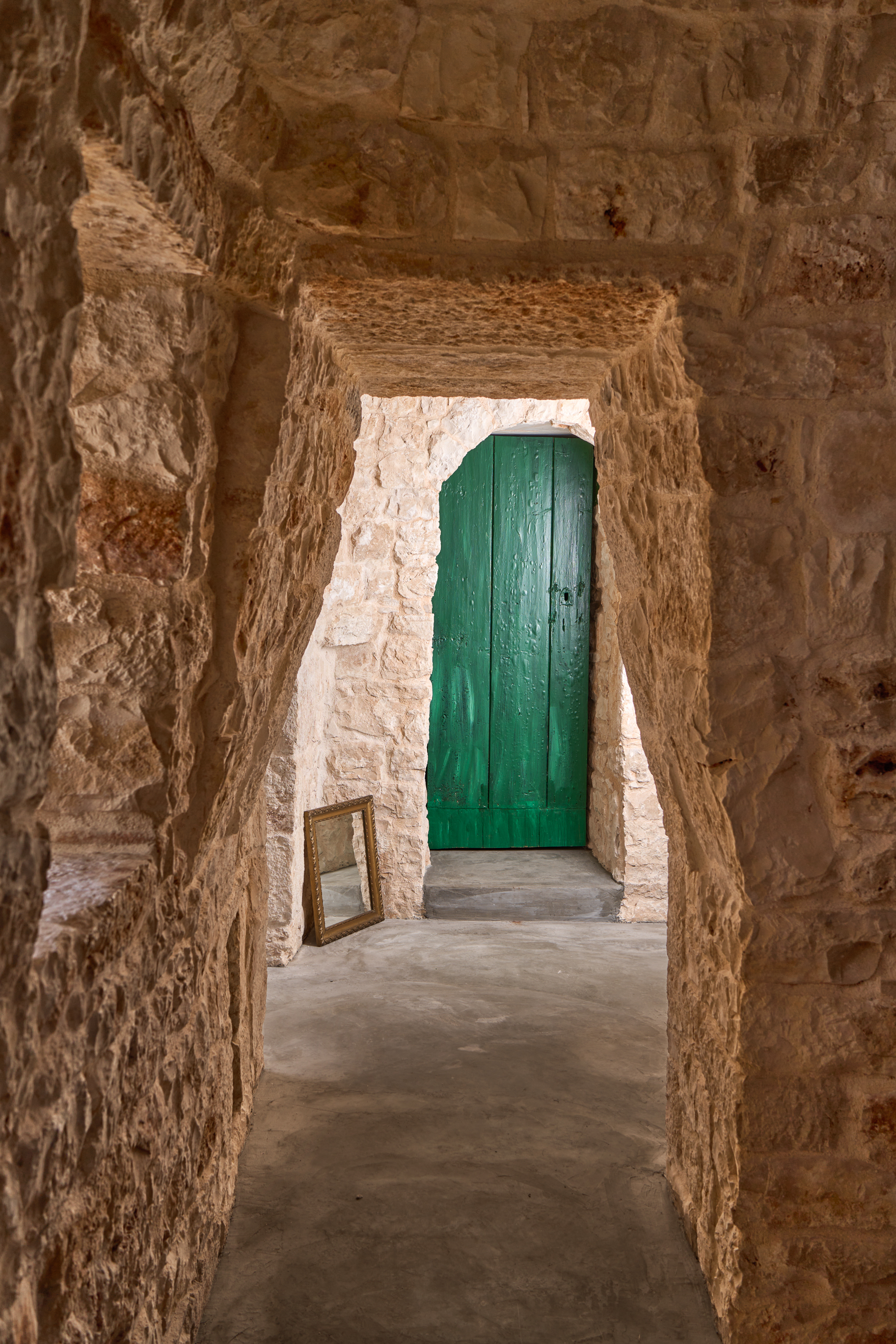
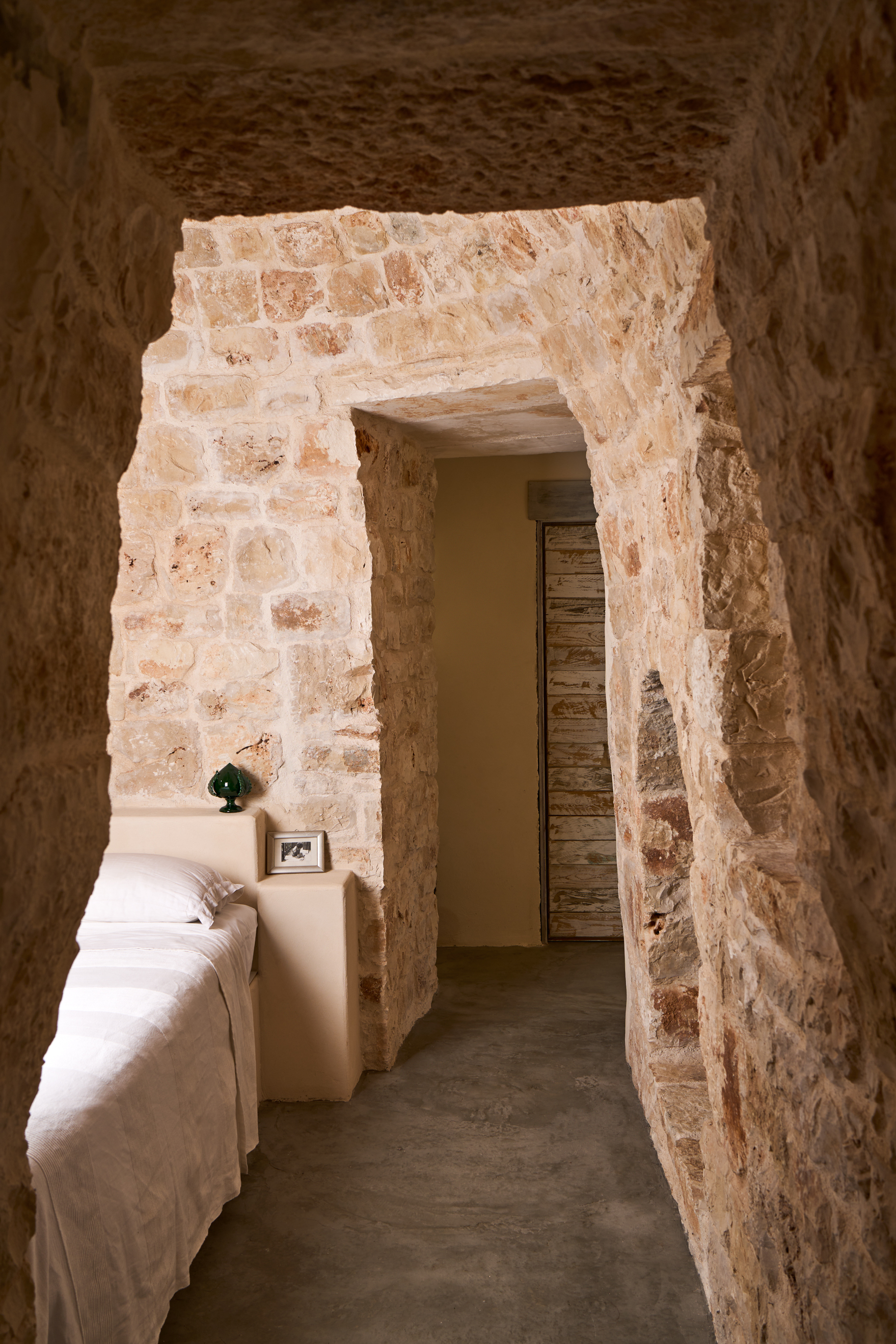
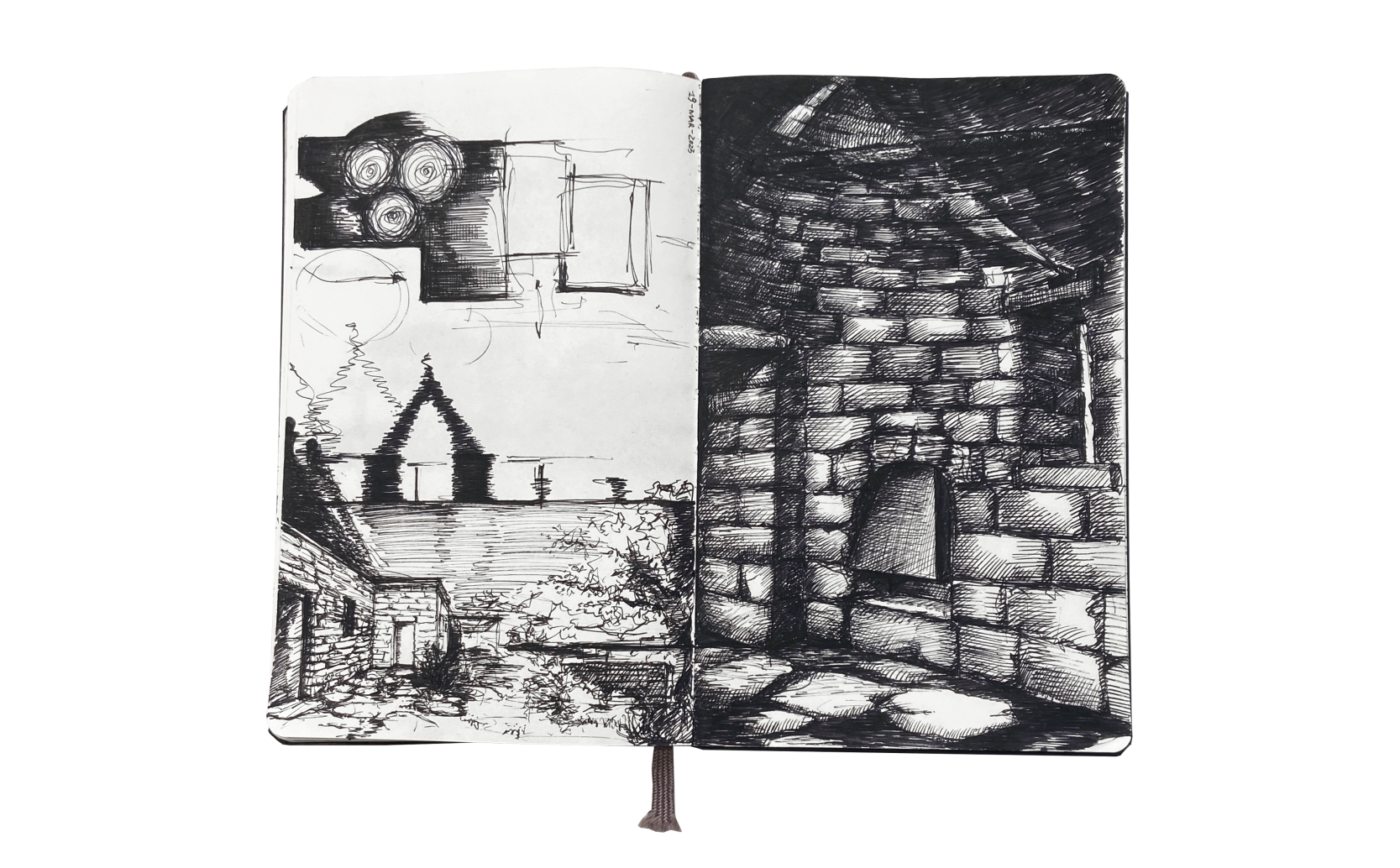
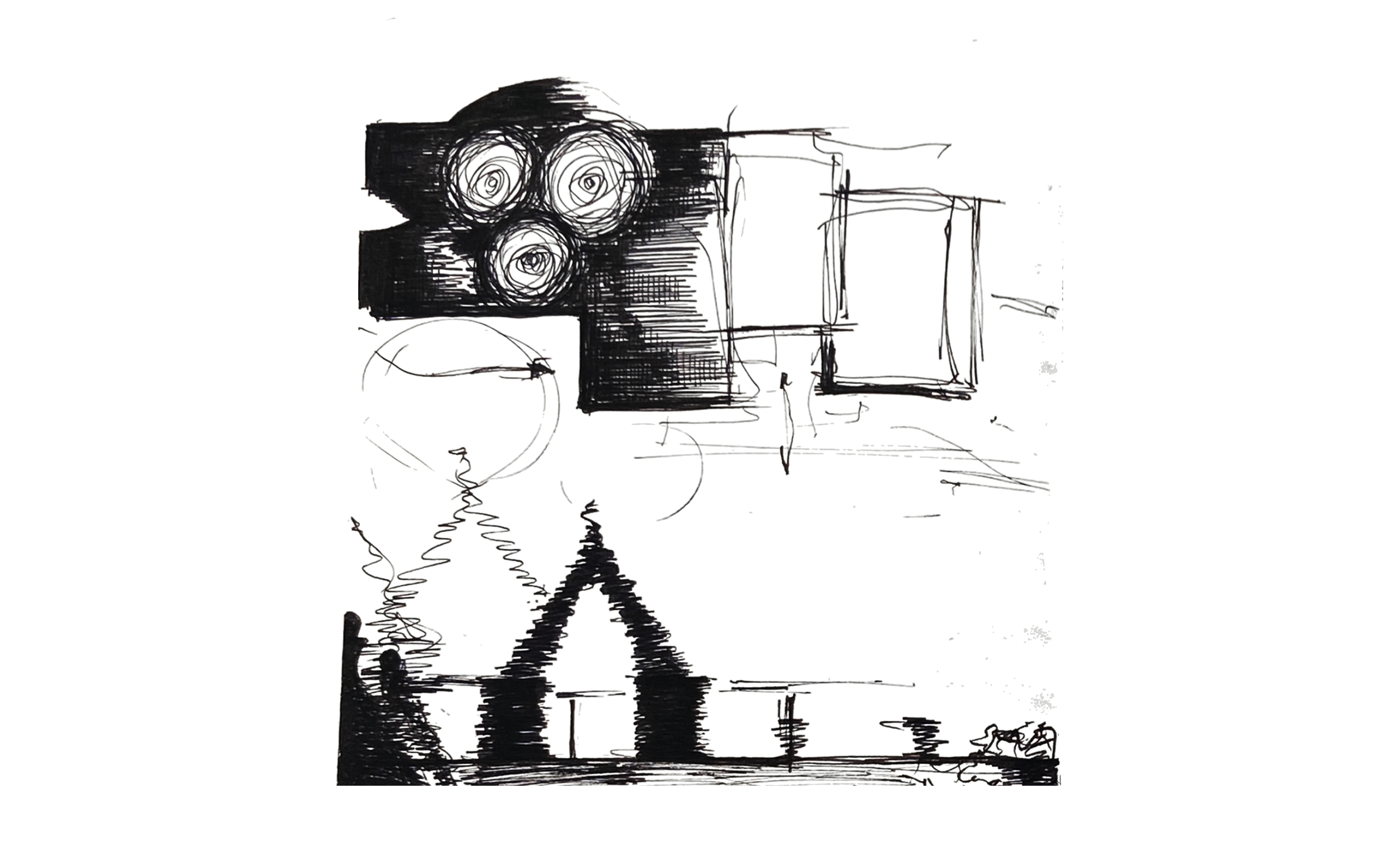
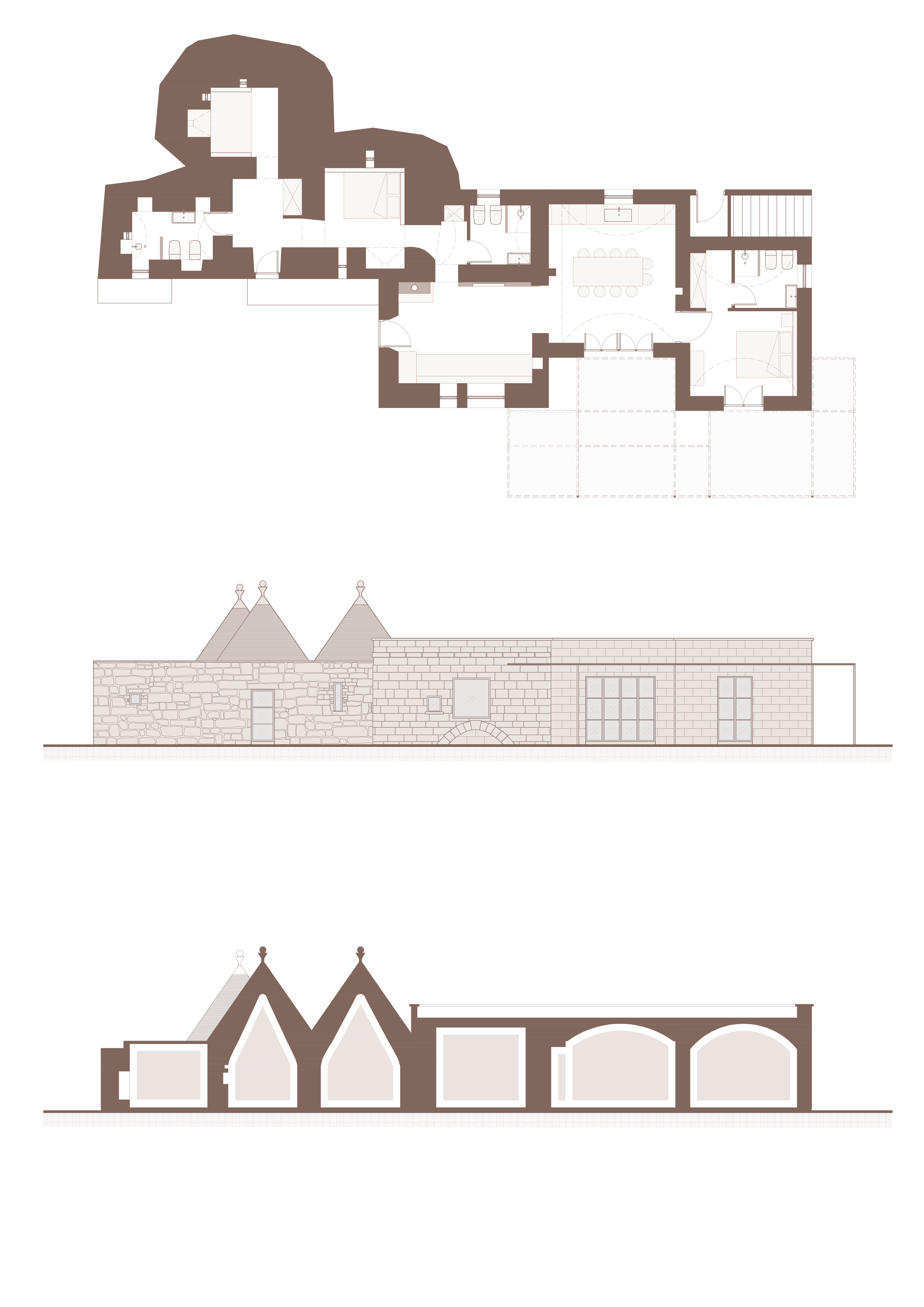
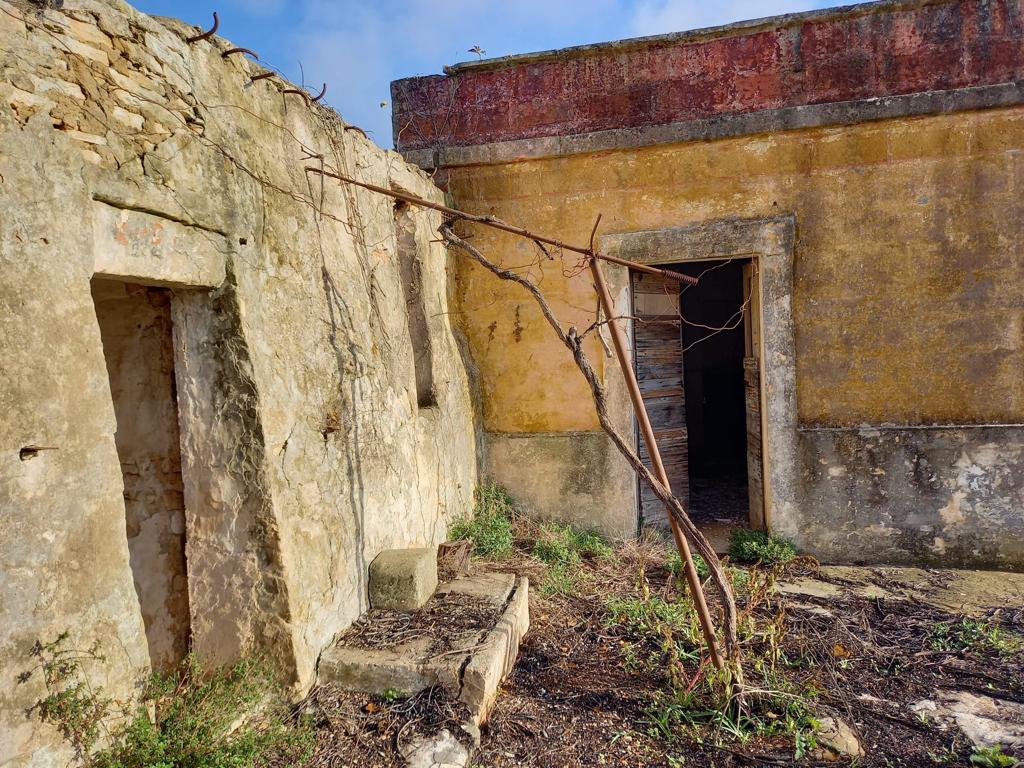
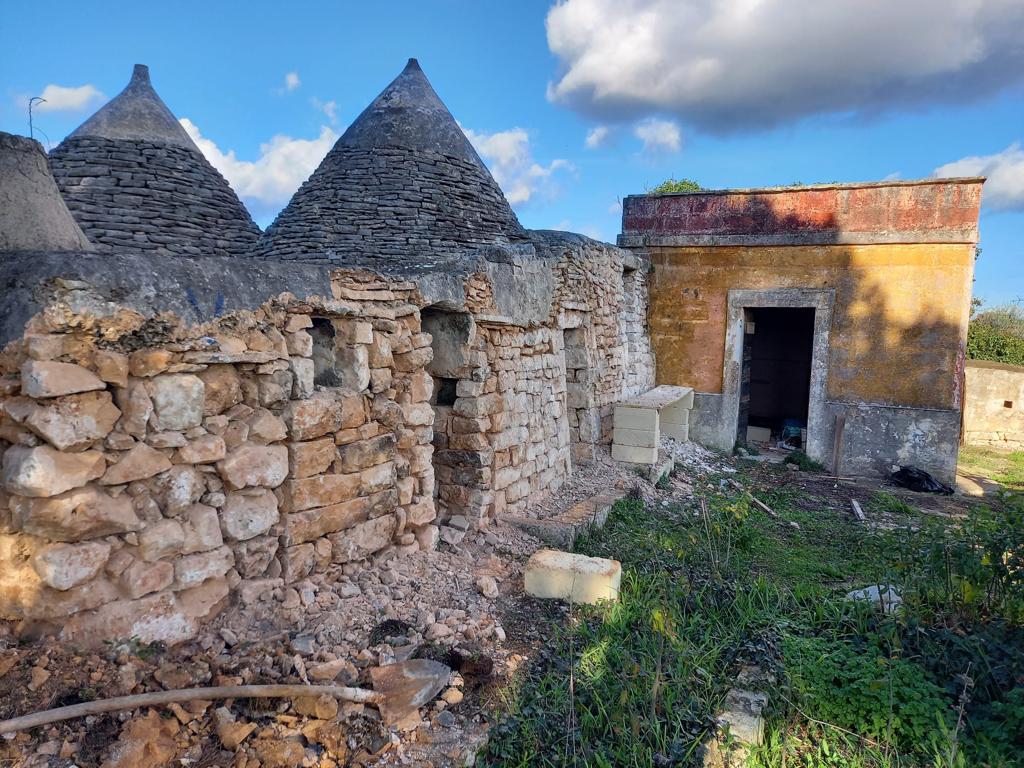
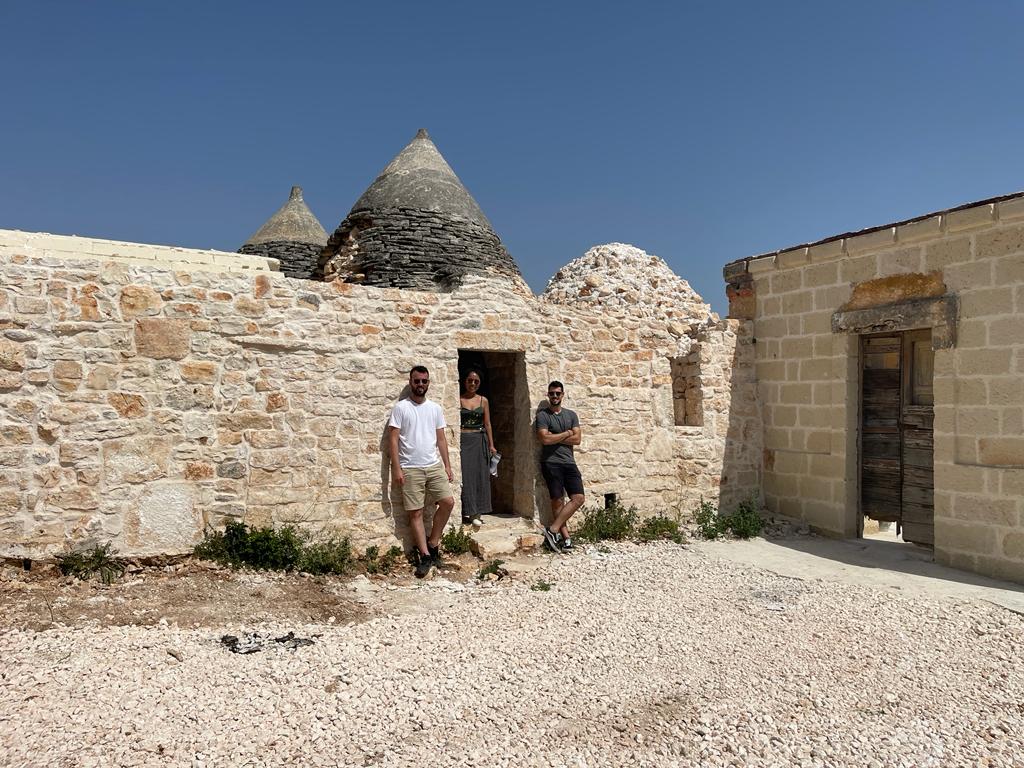
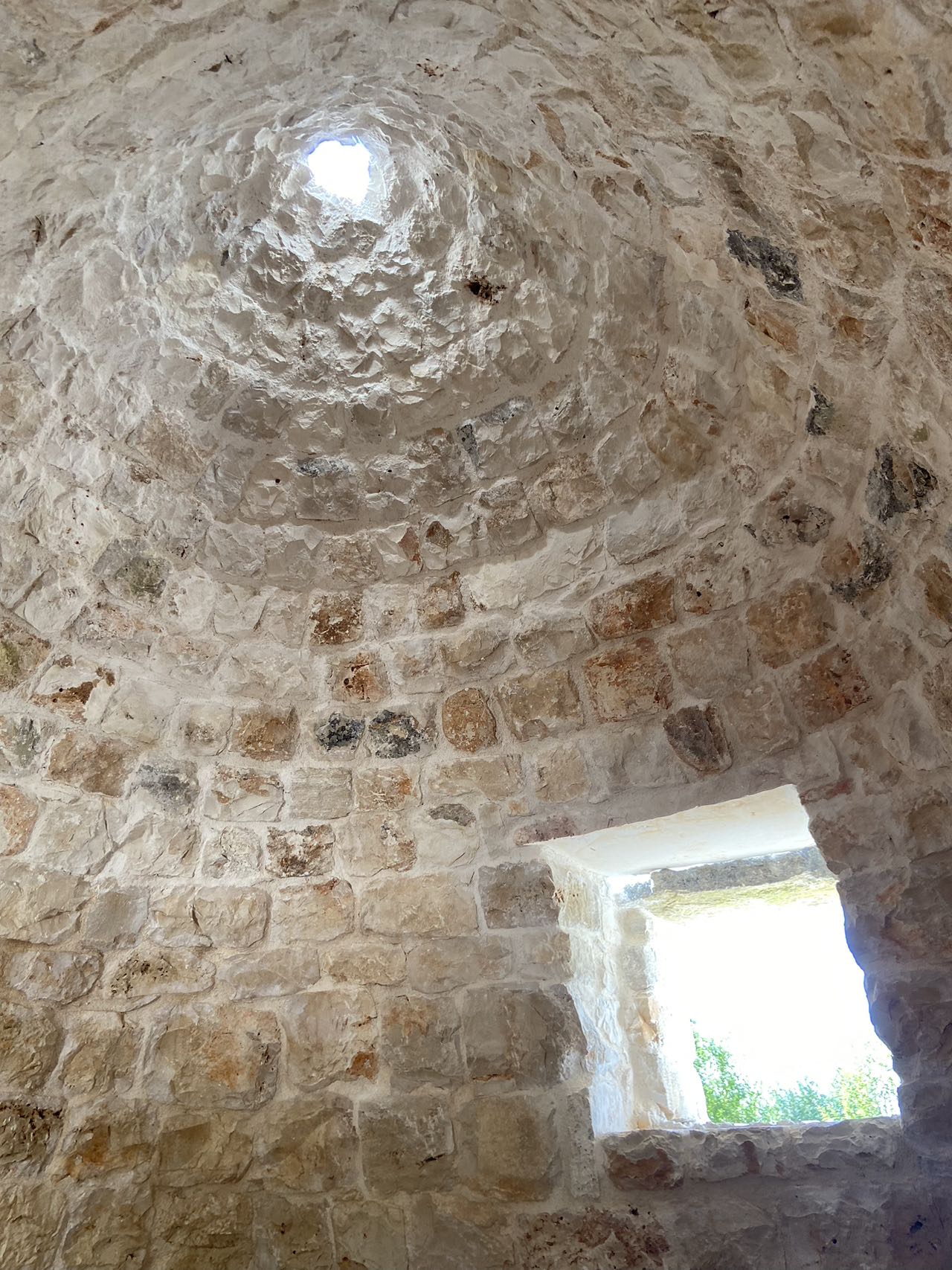
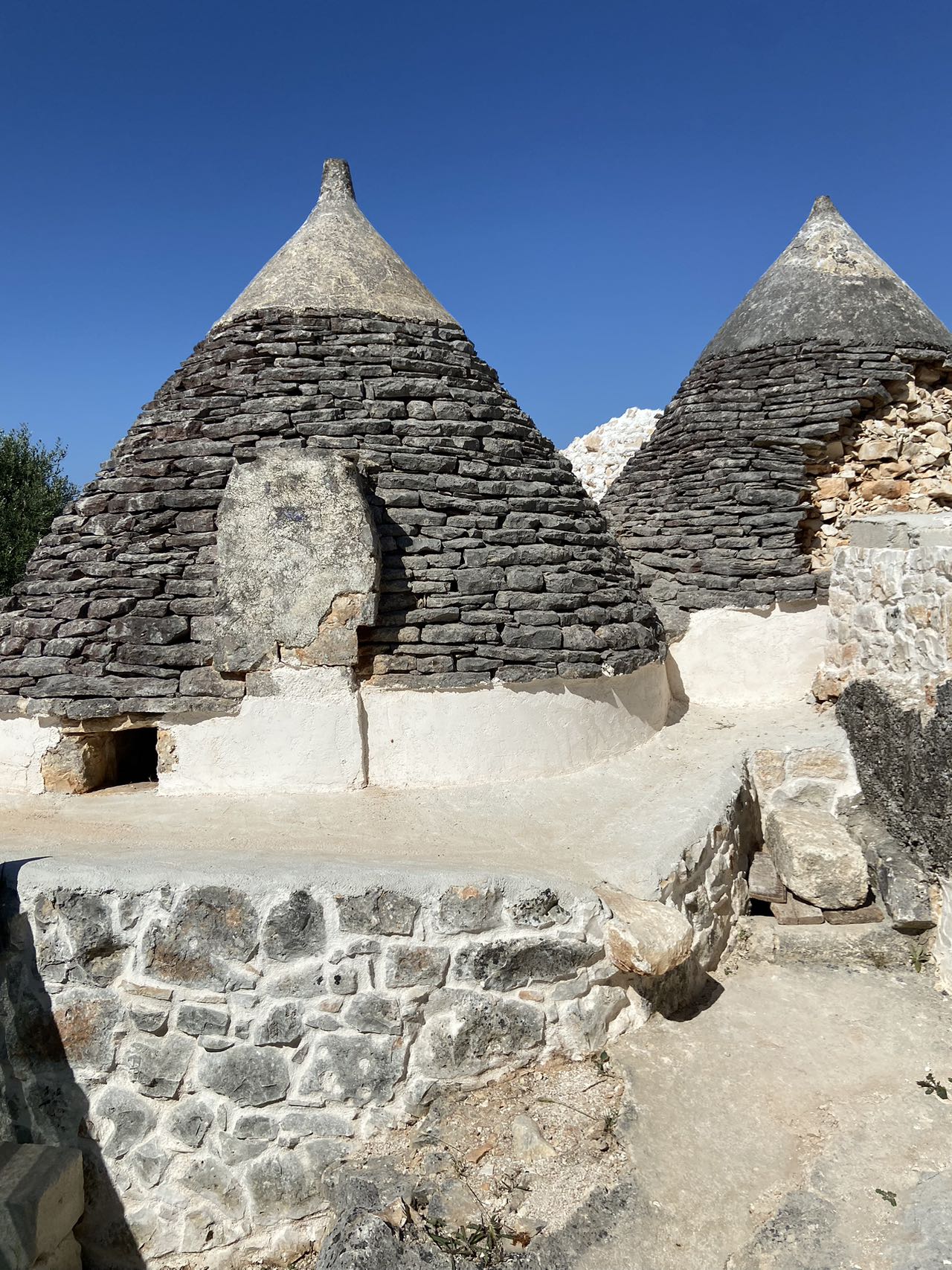
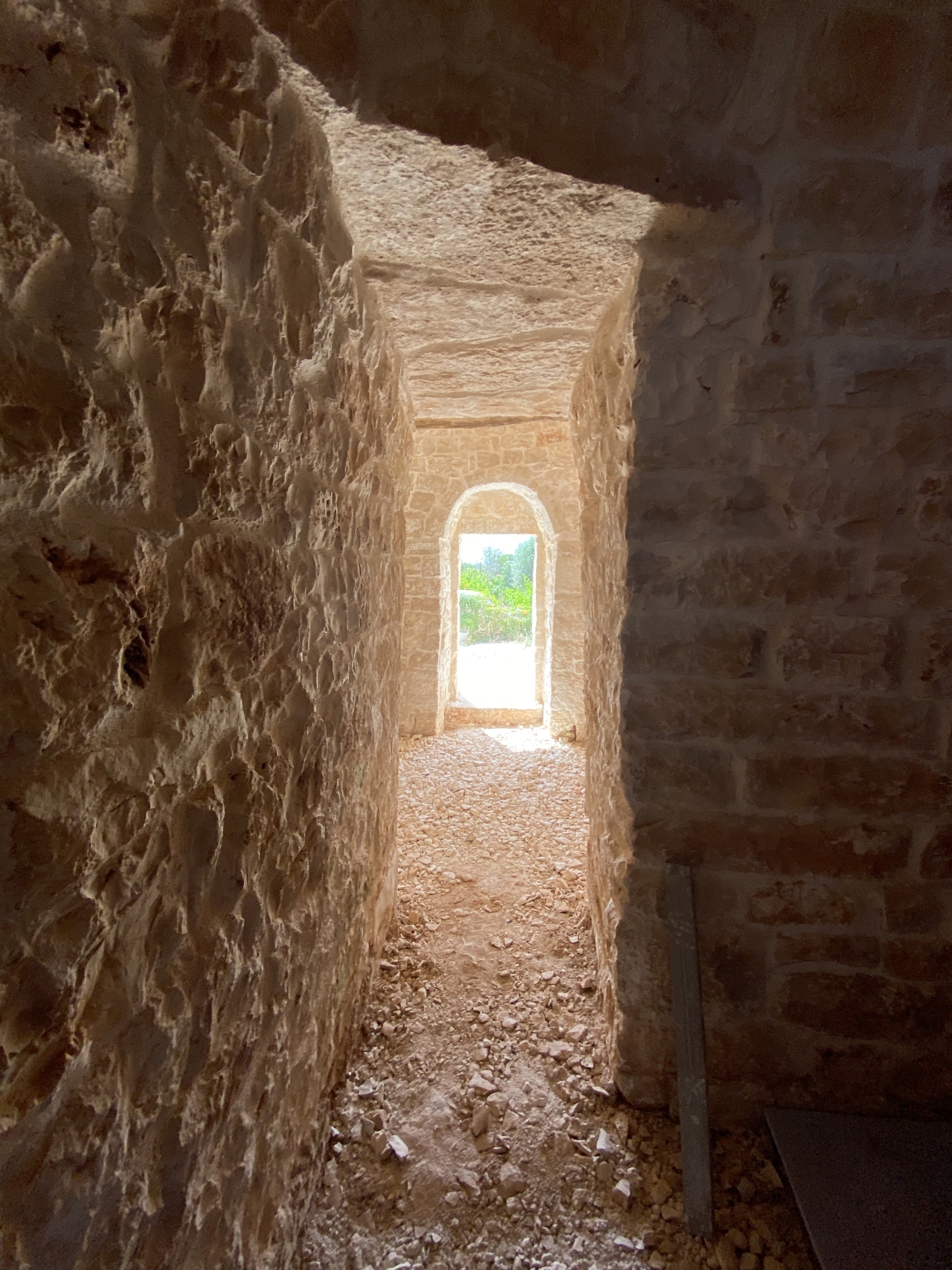
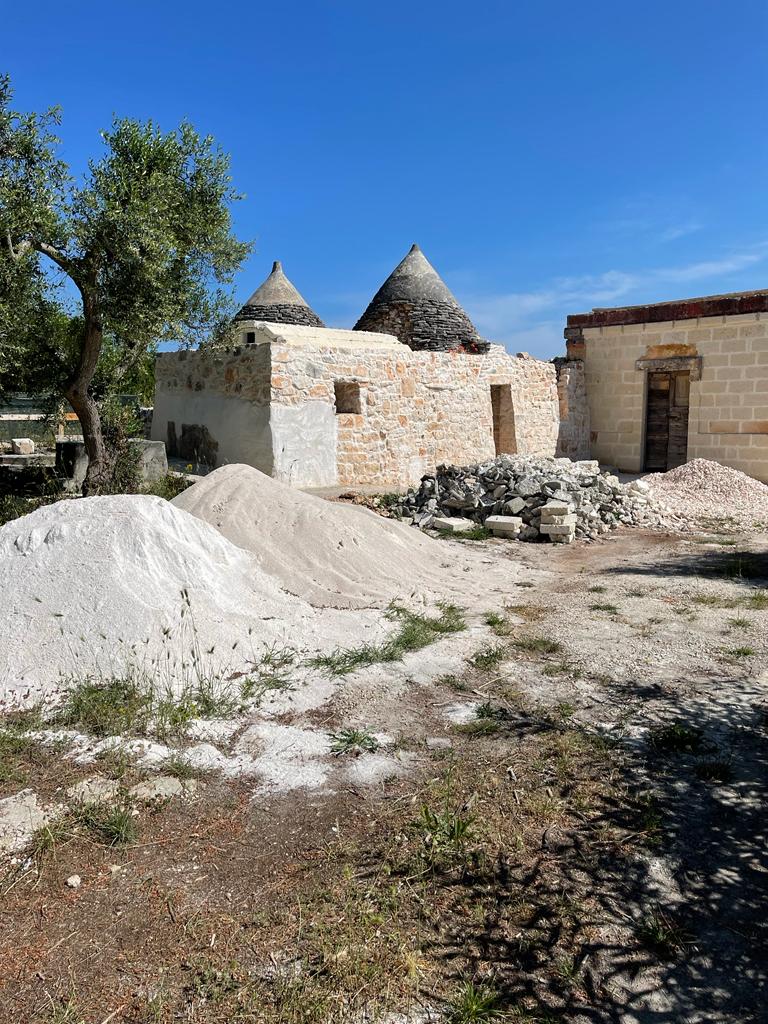
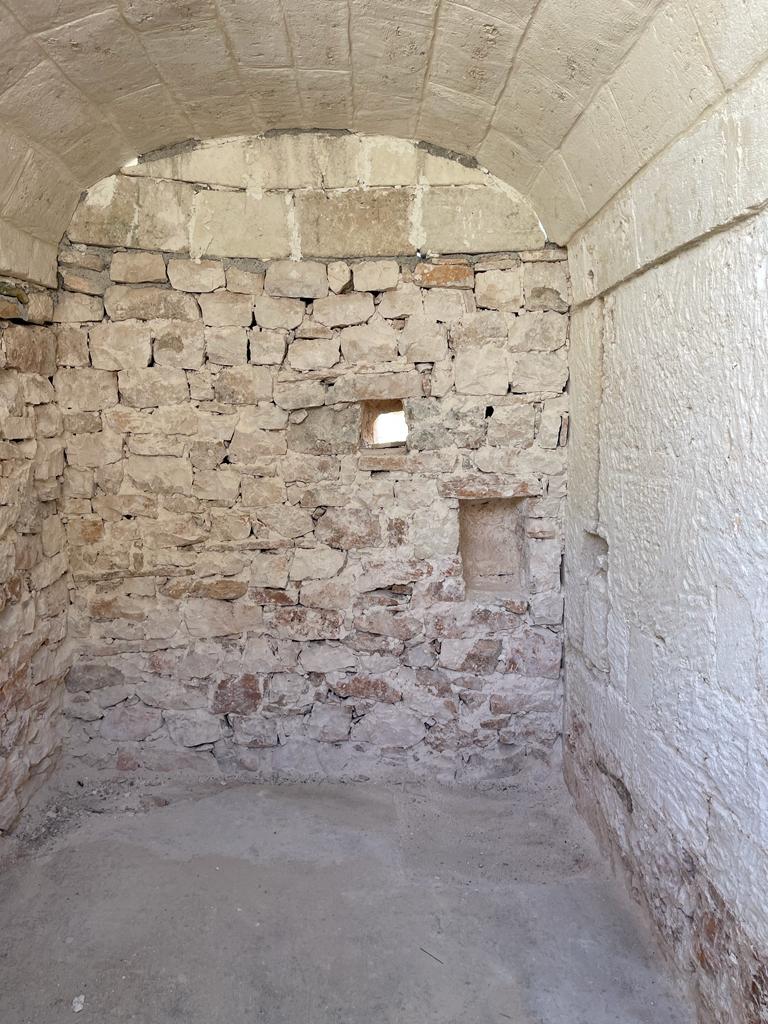
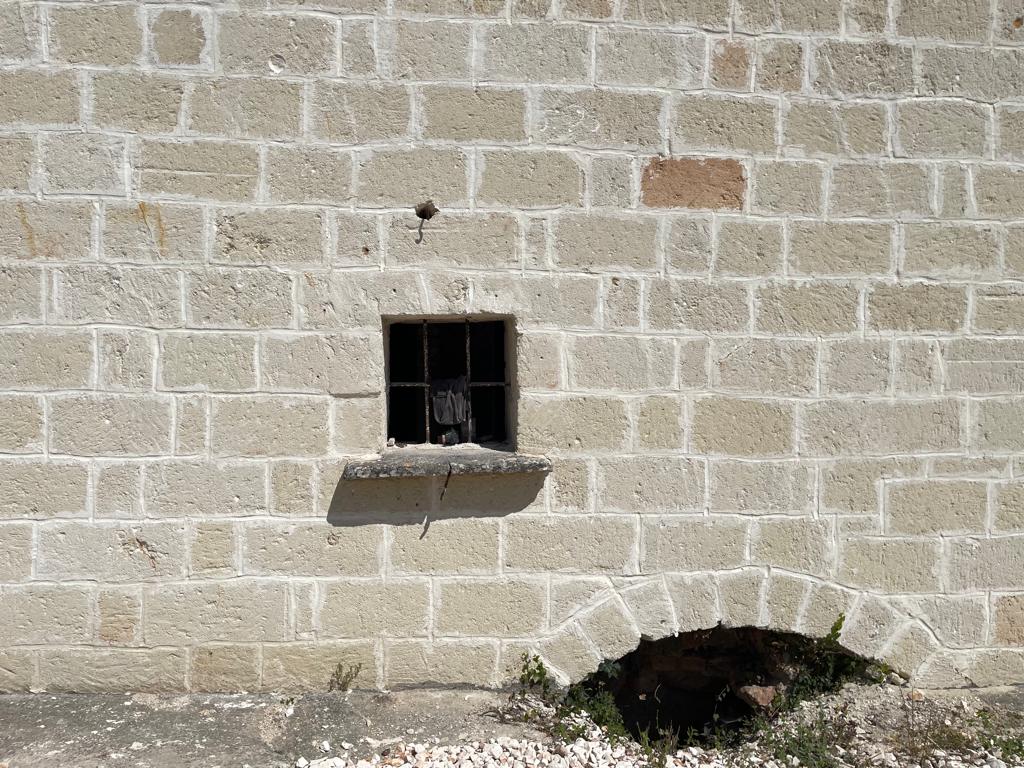
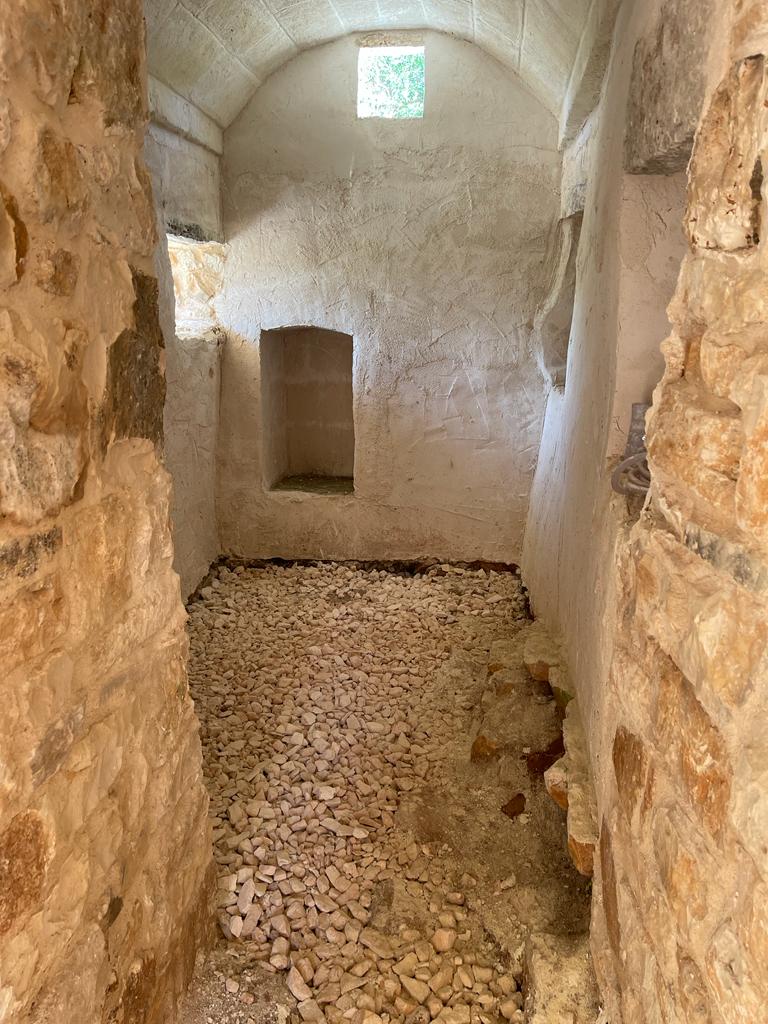
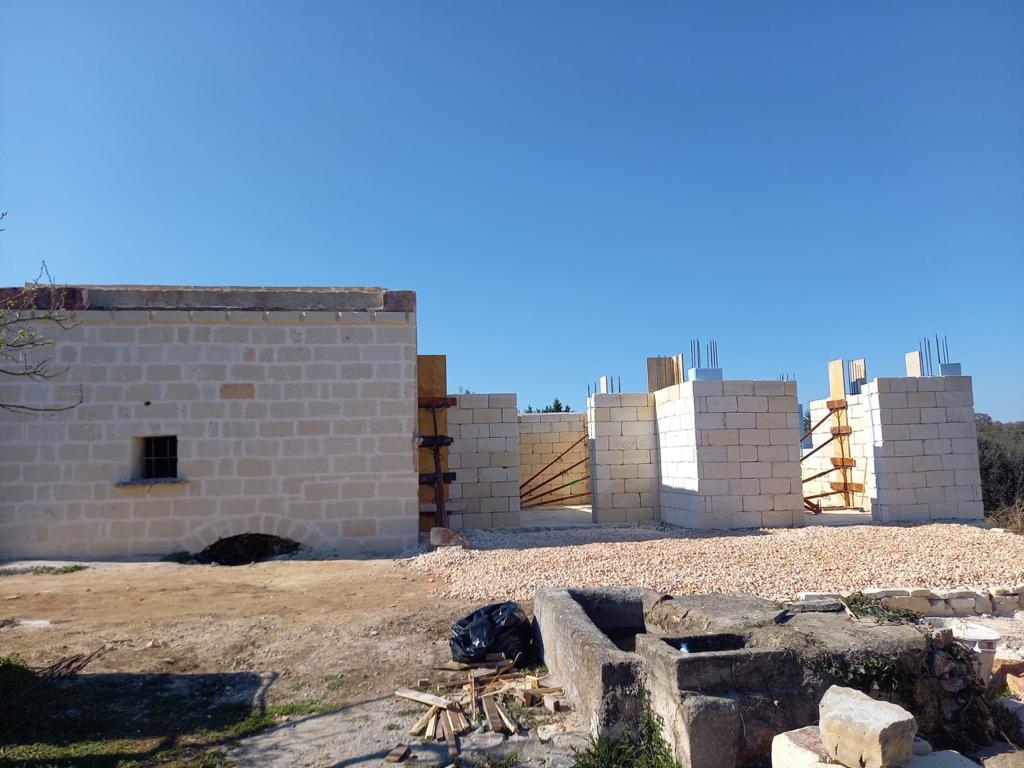
In this project, our design team collaborated with local Trullo master craftsman Cosimo to create a vacation home for the Franco family, blending historical essence with modern design. Situated in the Valle d’Itria, this Trullo represents the rich traditional structure and profound historical charm that have made Trulli an emblem of the Puglia region. However, the project was not without its challenges, as bridging the gap between traditional craftsmanship and modern design proved complex.

八荒设计团队与当地的Trullo石匠大师Cosimo合作,为Franco家族打造了一座将历史与现代设计完美融合的度假屋。这座Trullo建筑位于意大利普利亚的伊特里亚谷地,其传统结构和深厚的历史韵味使其成为普利亚地区的象征性建筑。然而,这一项目并非易事,八荒团队在与Cosimo的合作过程中遇到了重重挑战。

READ MORE 更多

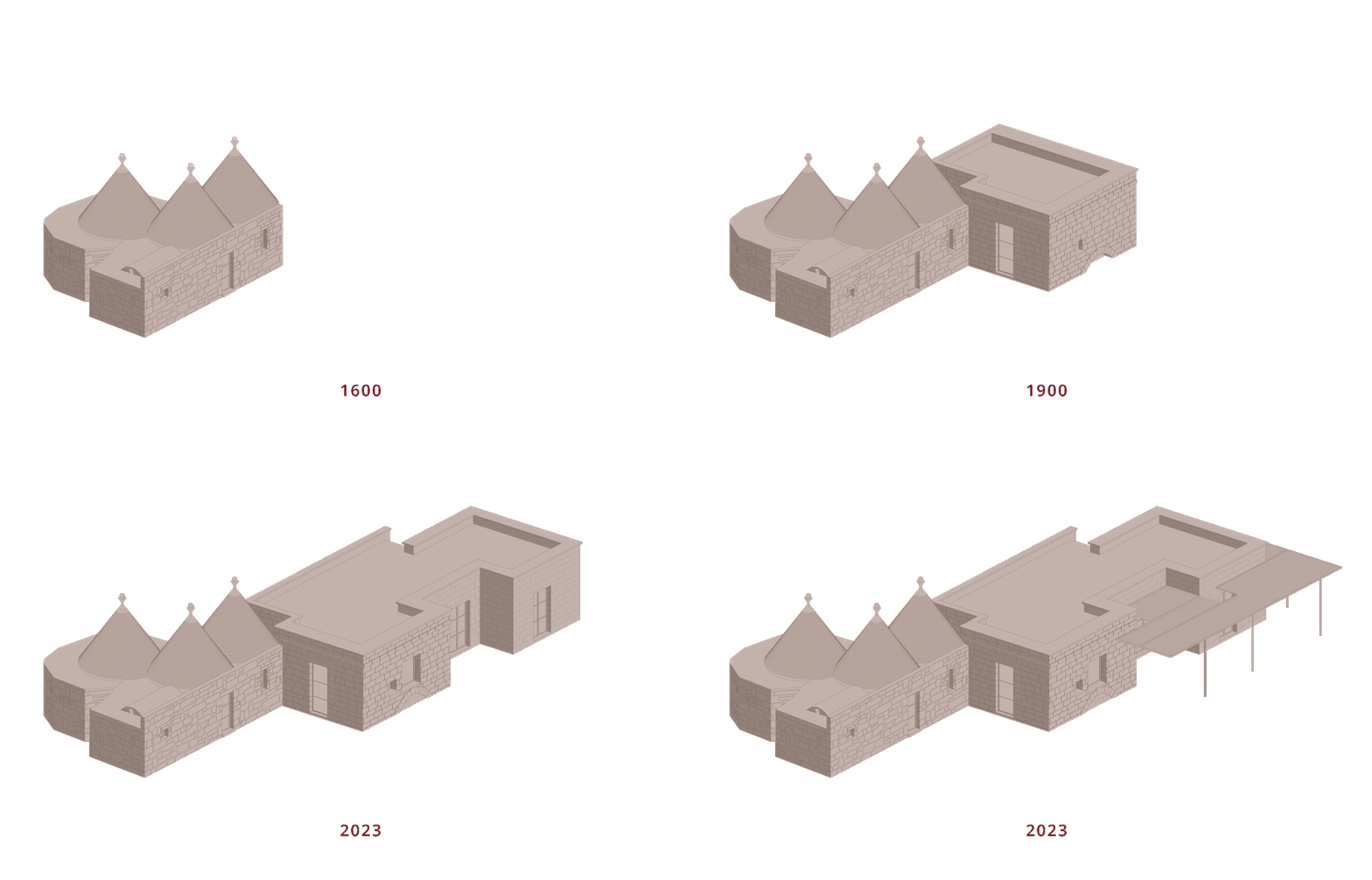
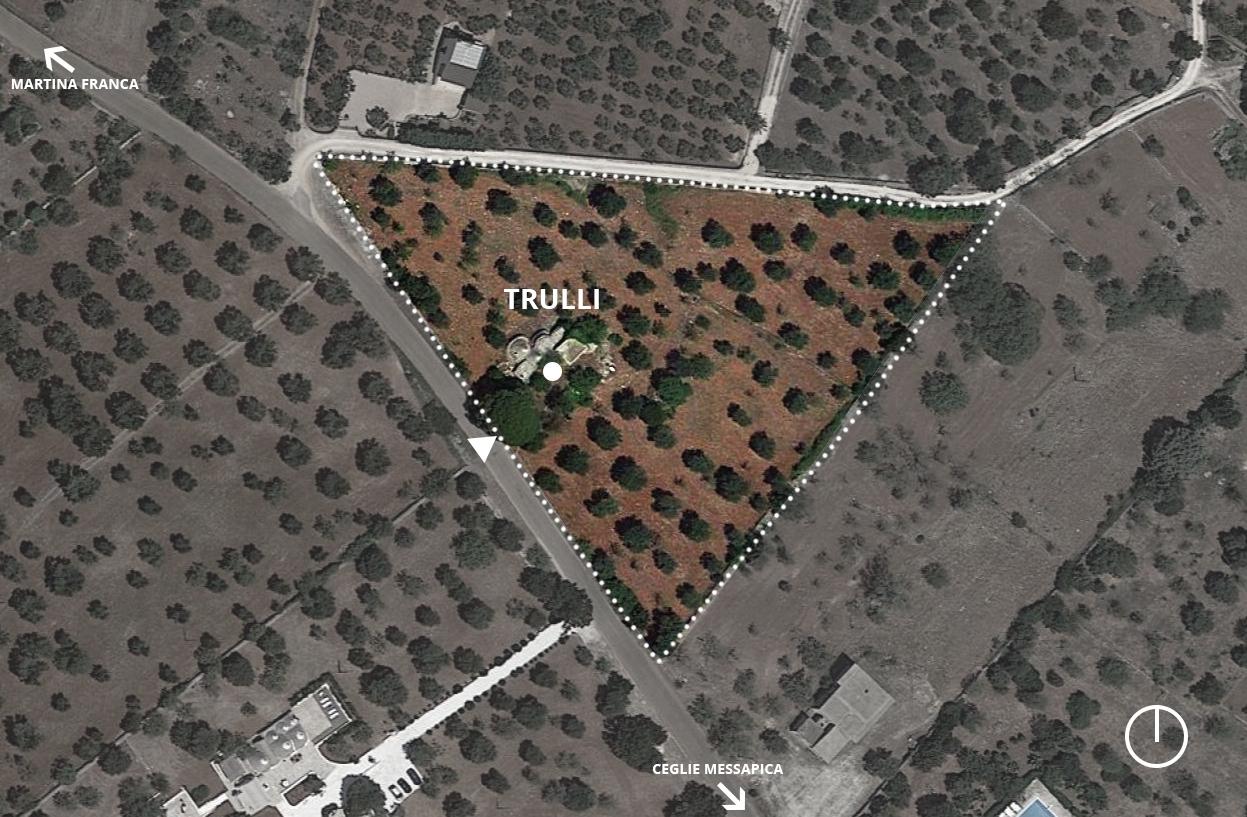
The Valle d’Itria in Puglia, Italy, is home to the iconic Trullo architecture—distinctive conical structures unique to the southern Murgia region. Spotting these structures instantly signals your arrival in Puglia. Trulli have existed for hundreds of years, though the oldest surviving examples date back only to the 16th century. This is likely because Trulli were typically built as temporary dry-stone dwellings, designed to be dismantled whenever necessary. This practice was primarily a way to avoid property taxes—imagine tax collectors arriving in Locorotondo, Alberobello, or Fasano only to find piles of stones instead of houses. Once the inspectors left, the Trulli were swiftly rebuilt, and the locals moved back in.

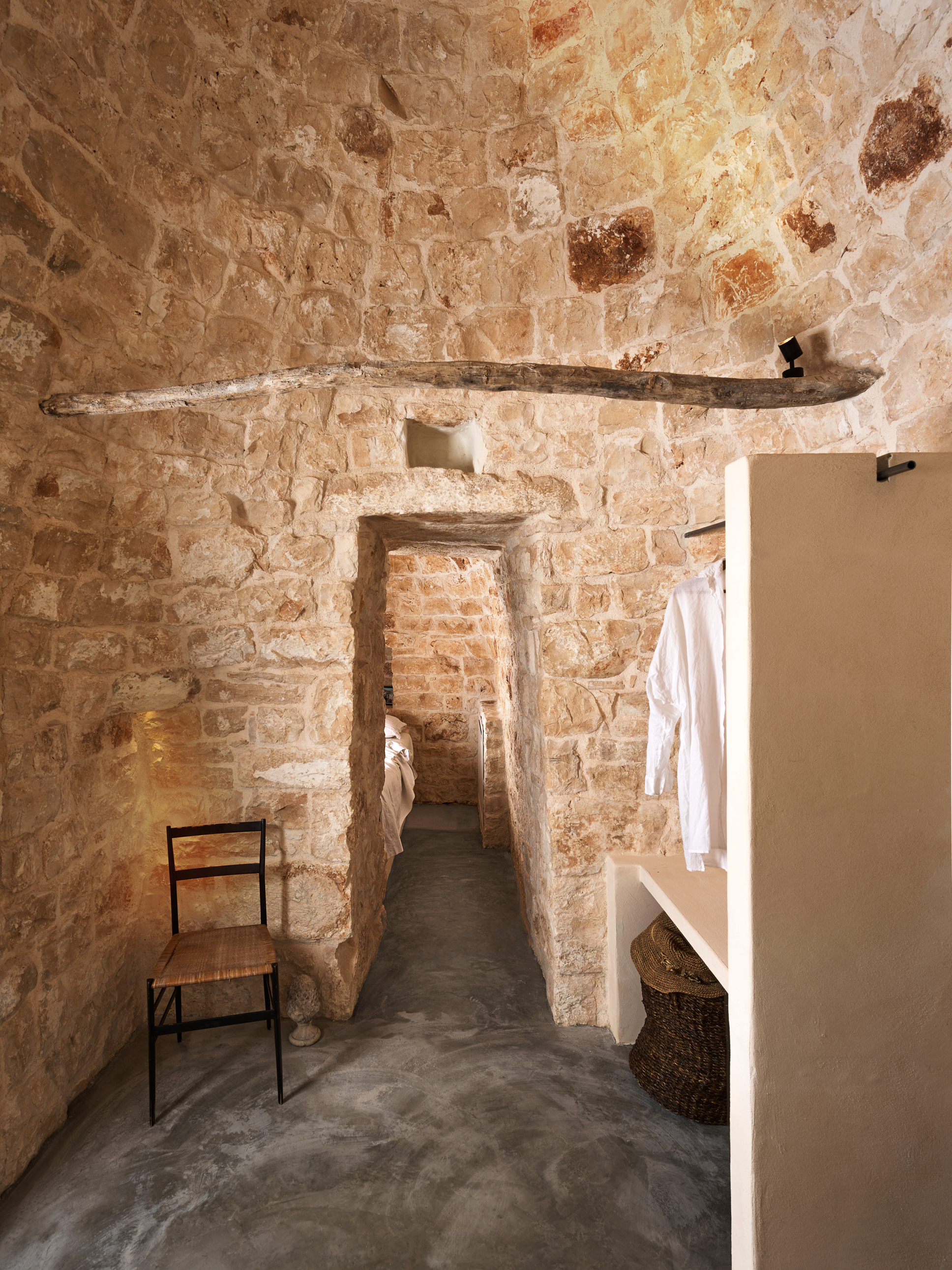
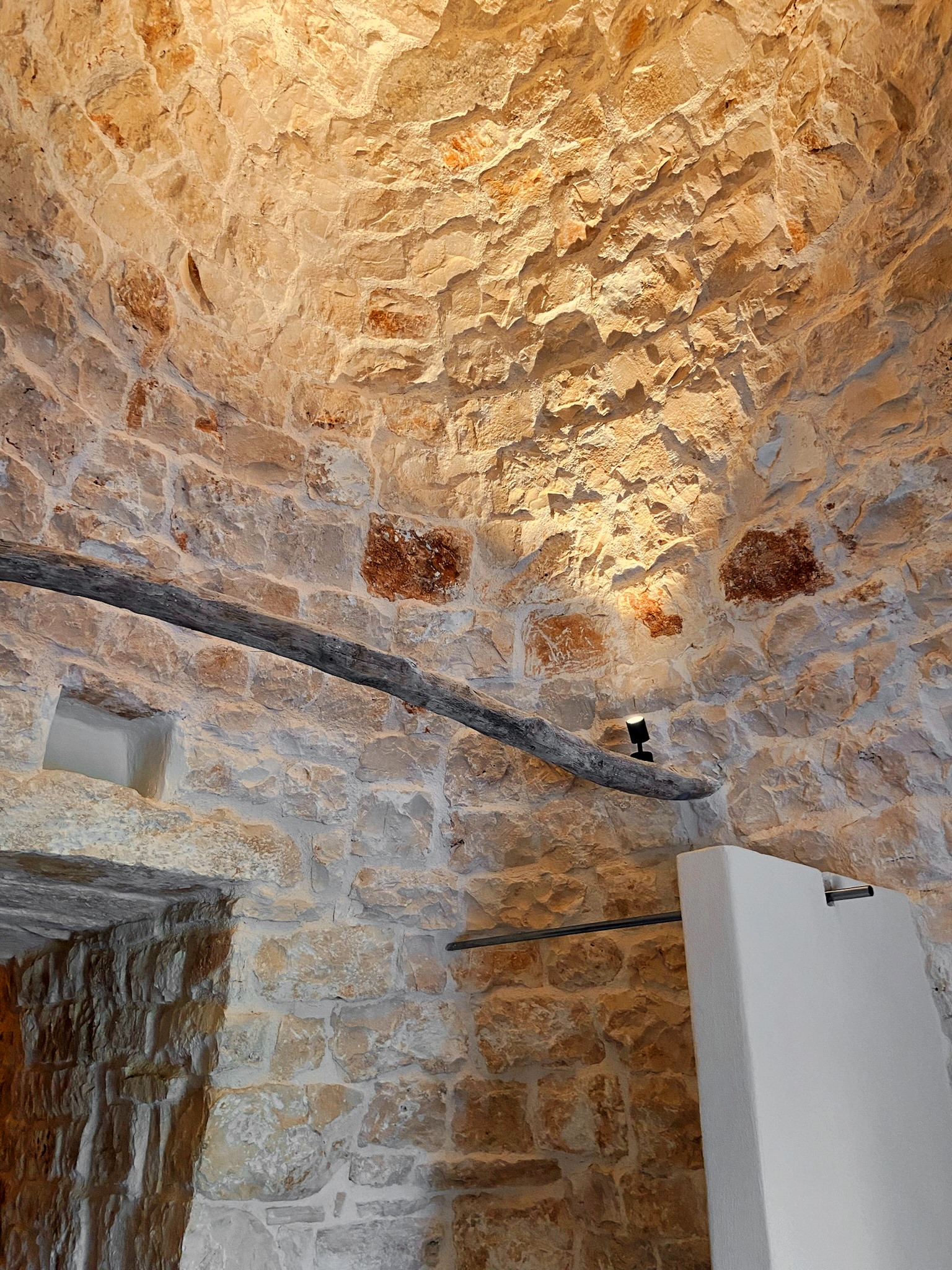
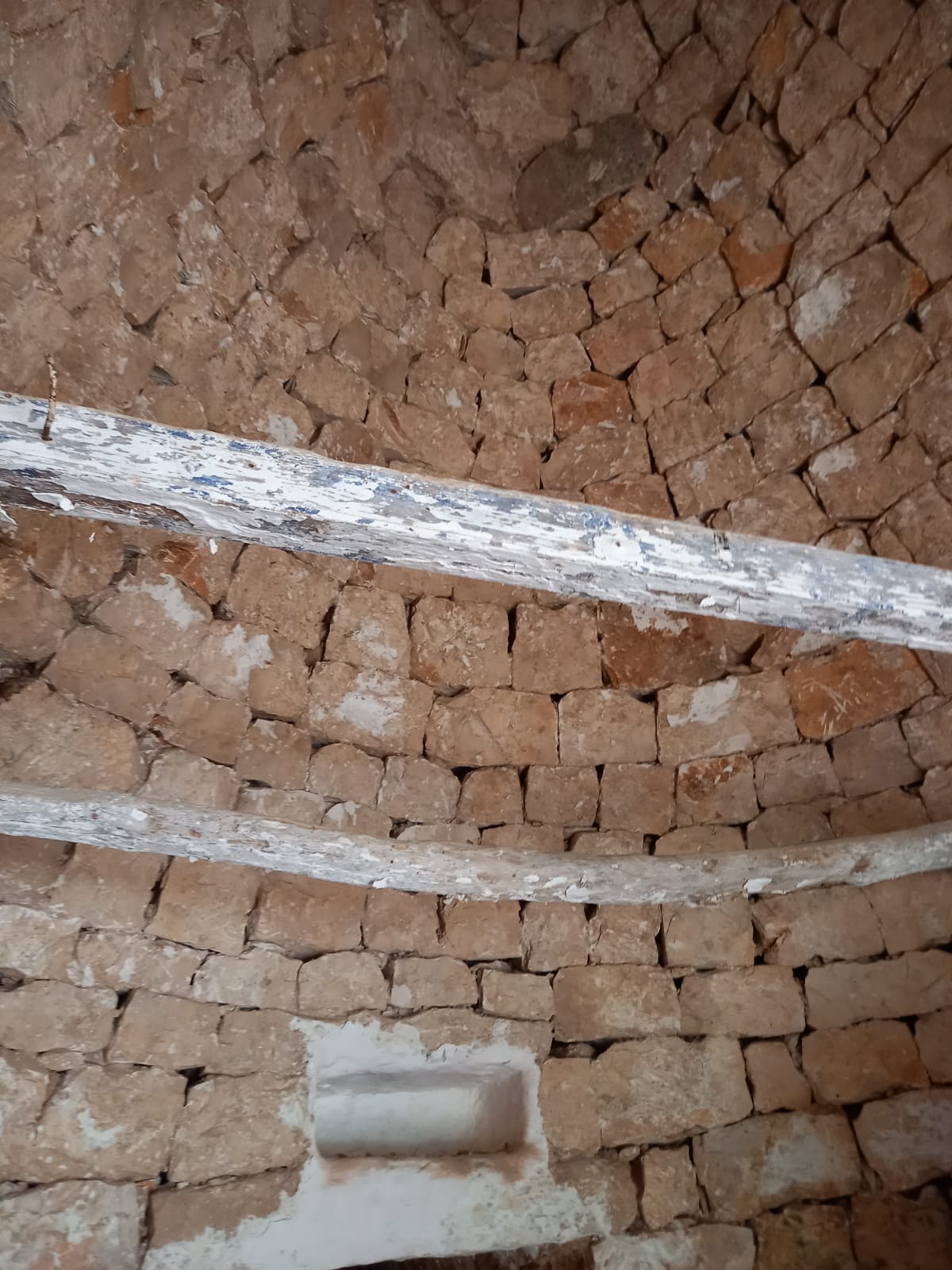
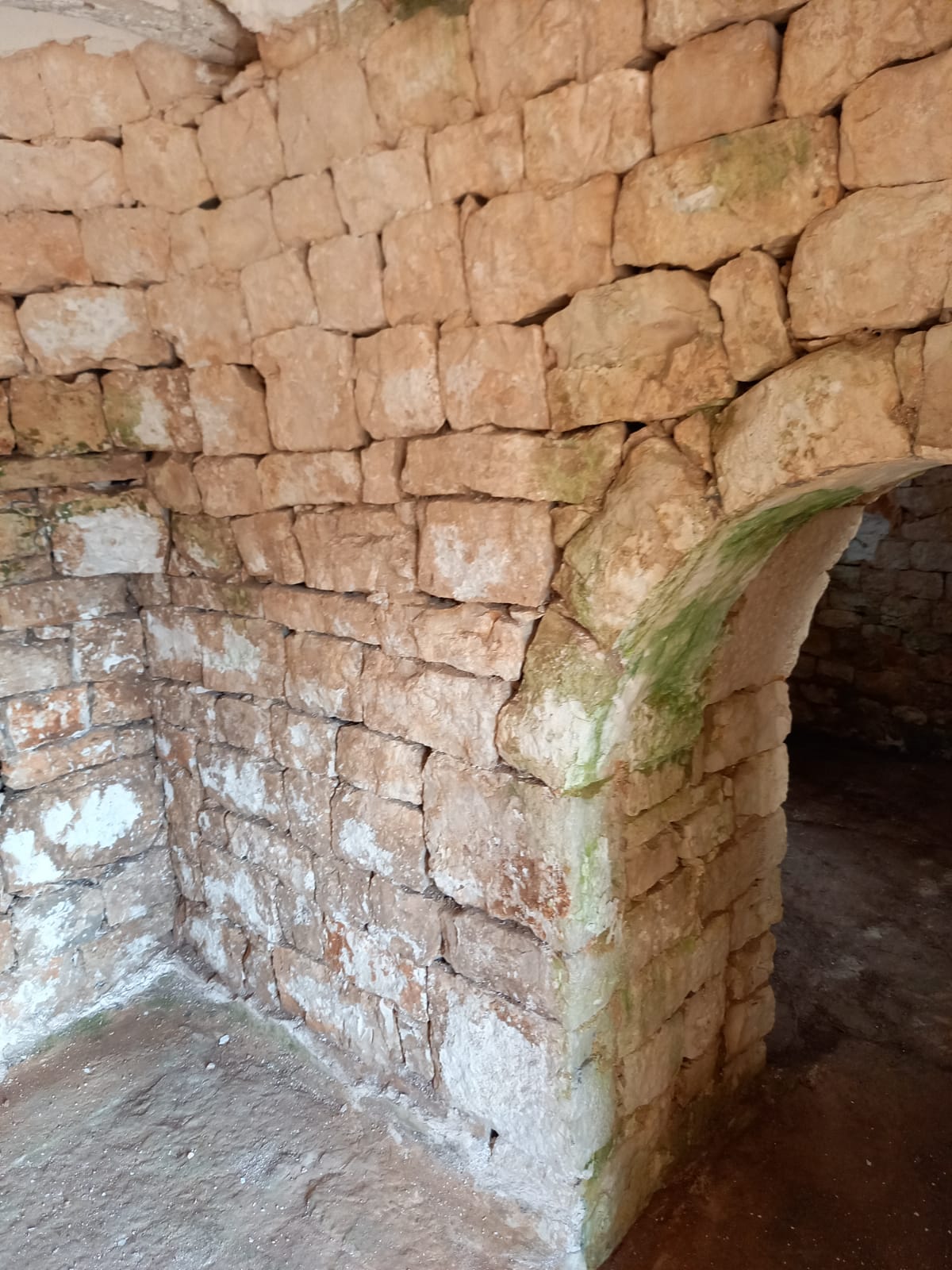
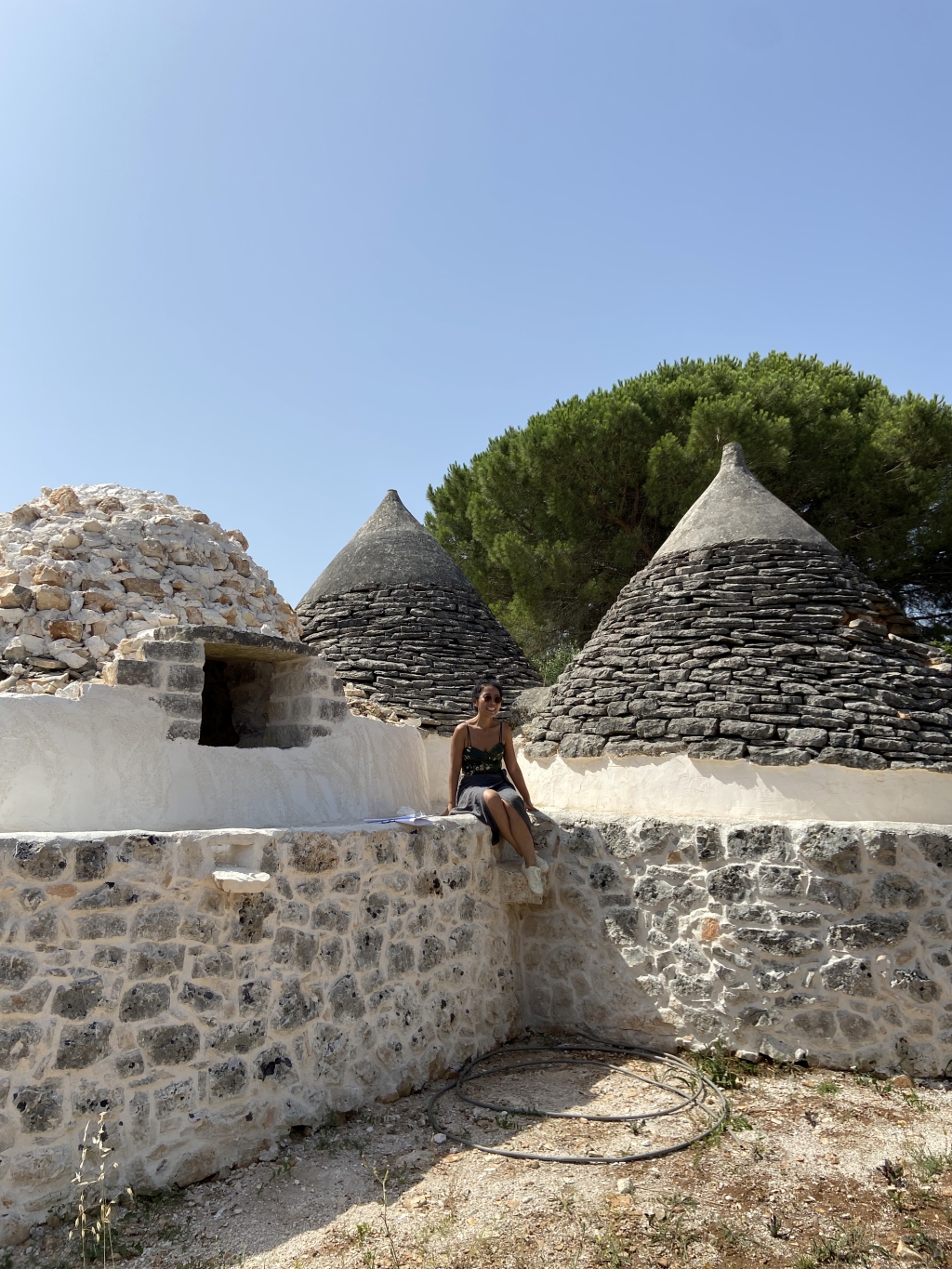
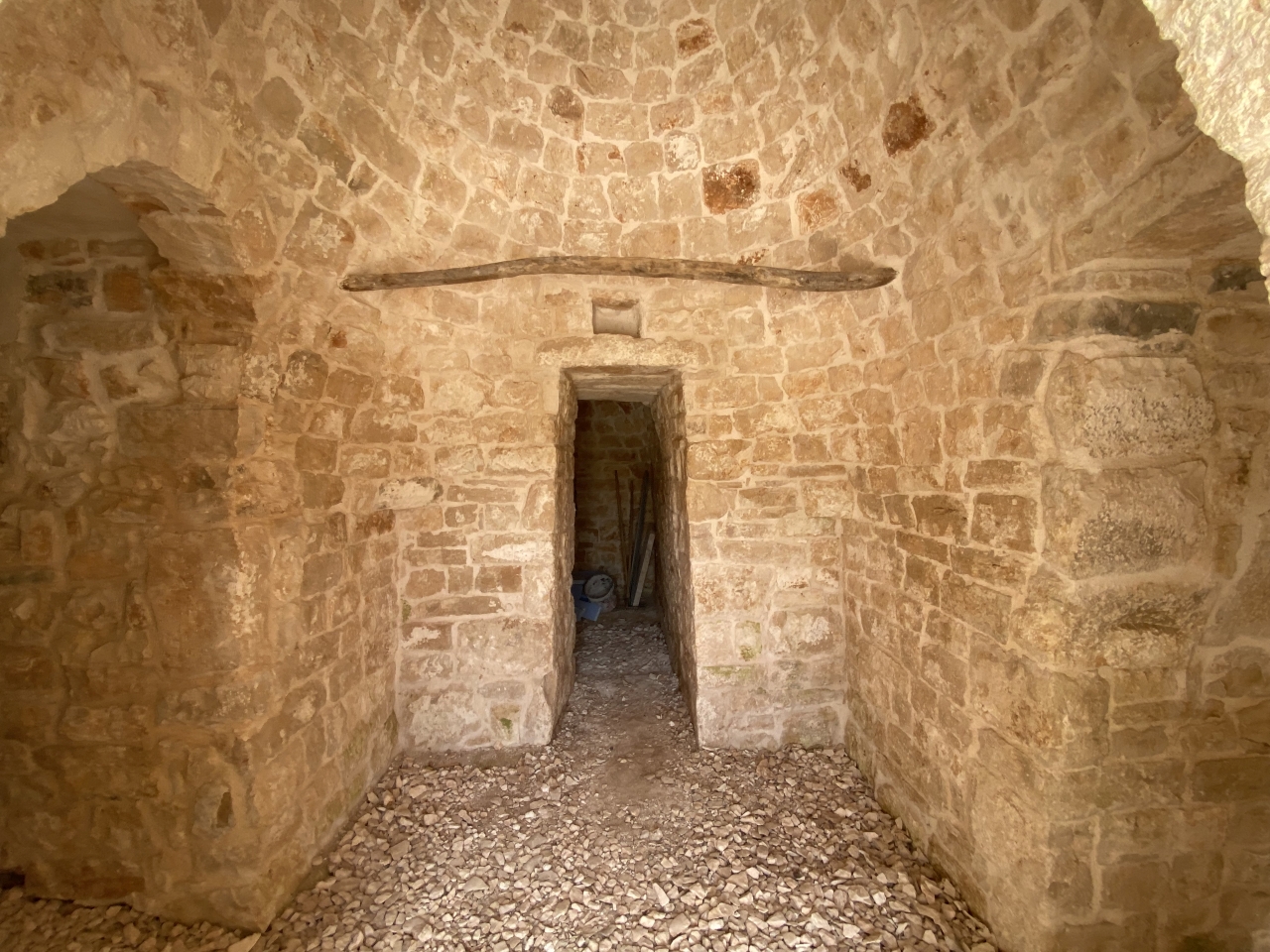
A typical Trullo has a cylindrical base topped with a conical roof made of limestone tiles. Despite the absence of cement, the thick white-painted stone walls provided cool interiors during summer and warmth in winter. The roofs were often adorned with protective symbols like the evil eye, crosses, or astronomical signs, capped with ornamental flourishes. The Trulli of Alberobello, recognized for their unique architectural features and historical significance, have been designated as one of Puglia’s two UNESCO World Heritage Sites and are well worth visiting.

While many Trulli are still inhabited by locals, a growing number have been transformed into luxurious holiday homes, often featuring swimming pools, making them a popular trend in recent years.

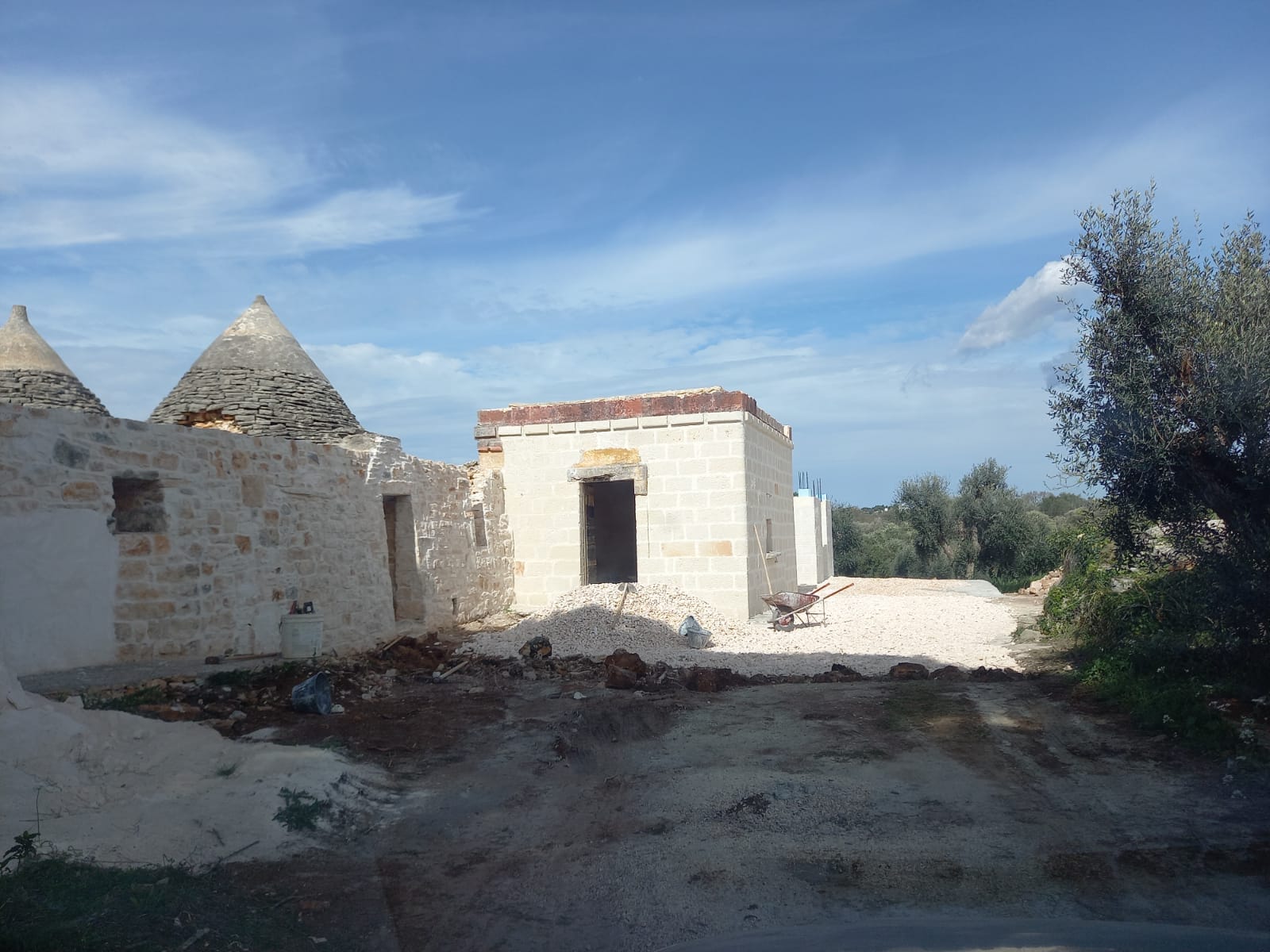
The Studio BAHAN design team collaborated with local Trullo master craftsman Cosimo to create a vacation home for the Franco family, blending historical essence with modern design. Situated in the Valle d’Itria, this Trullo represents the rich traditional structure and profound historical charm that have made Trulli an emblem of the Puglia region. However, the project was not without its challenges, as bridging the gap between traditional craftsmanship and modern design proved complex.

Cosimo’s construction methods were deeply rooted in tradition. He was well-versed in every step of the Trullo-building process but struggled to interpret modern architectural drawings. His approach relied on intuition and hands-on experience rather than the precise coordinates and annotations provided in contemporary plans. This disconnect initially stalled the project, as Cosimo was unable to align his work with the design team’s vision.

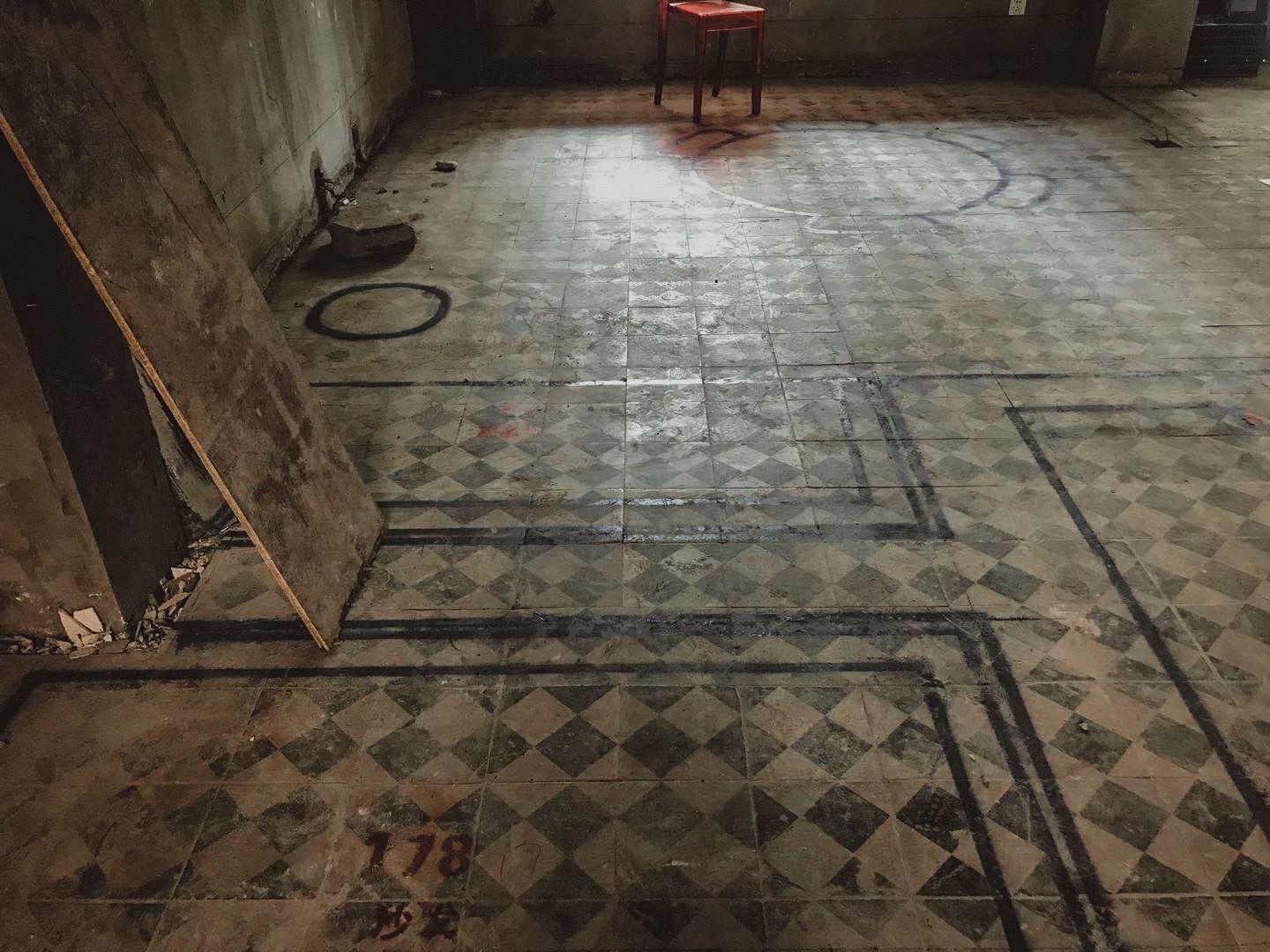
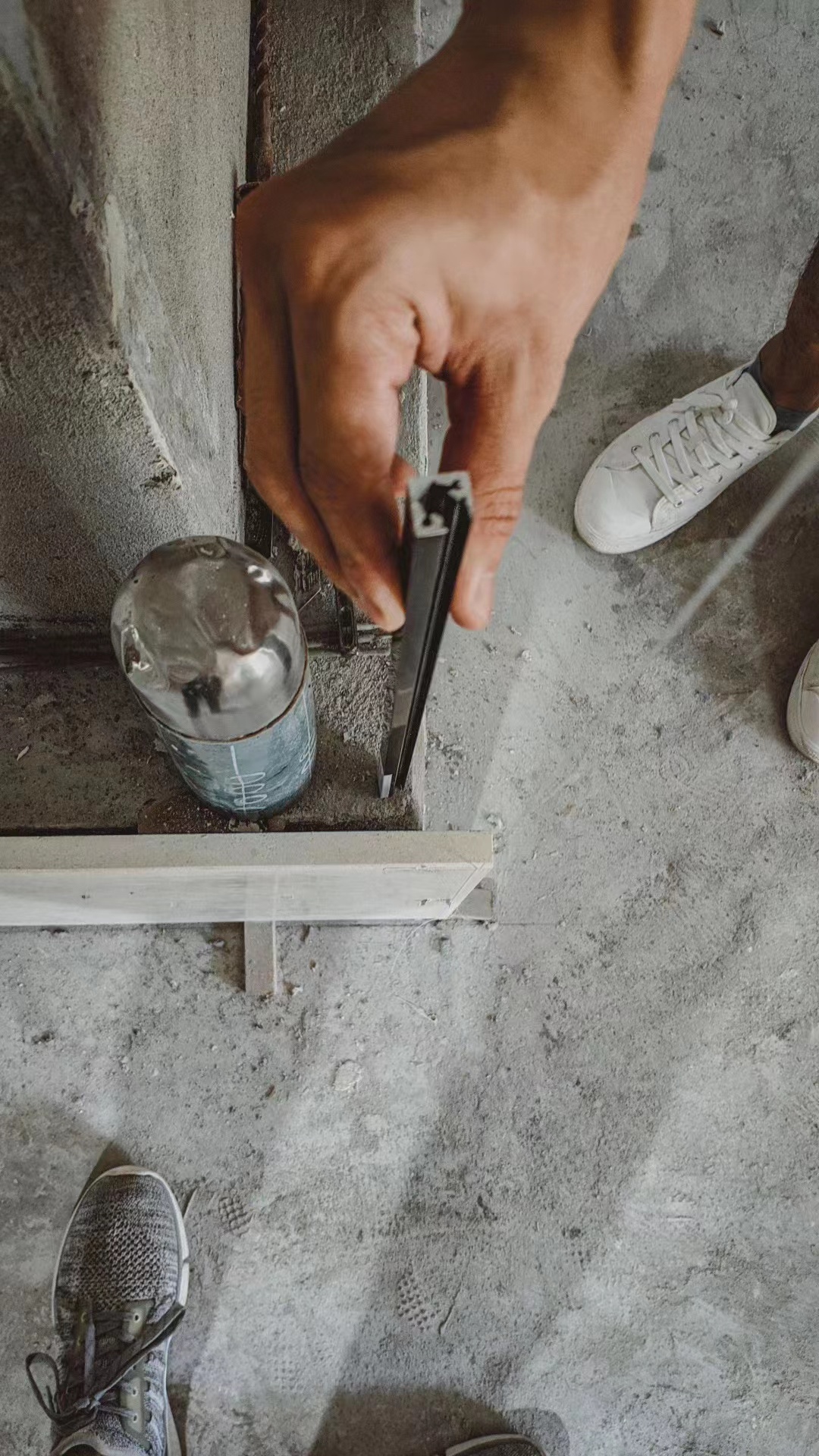
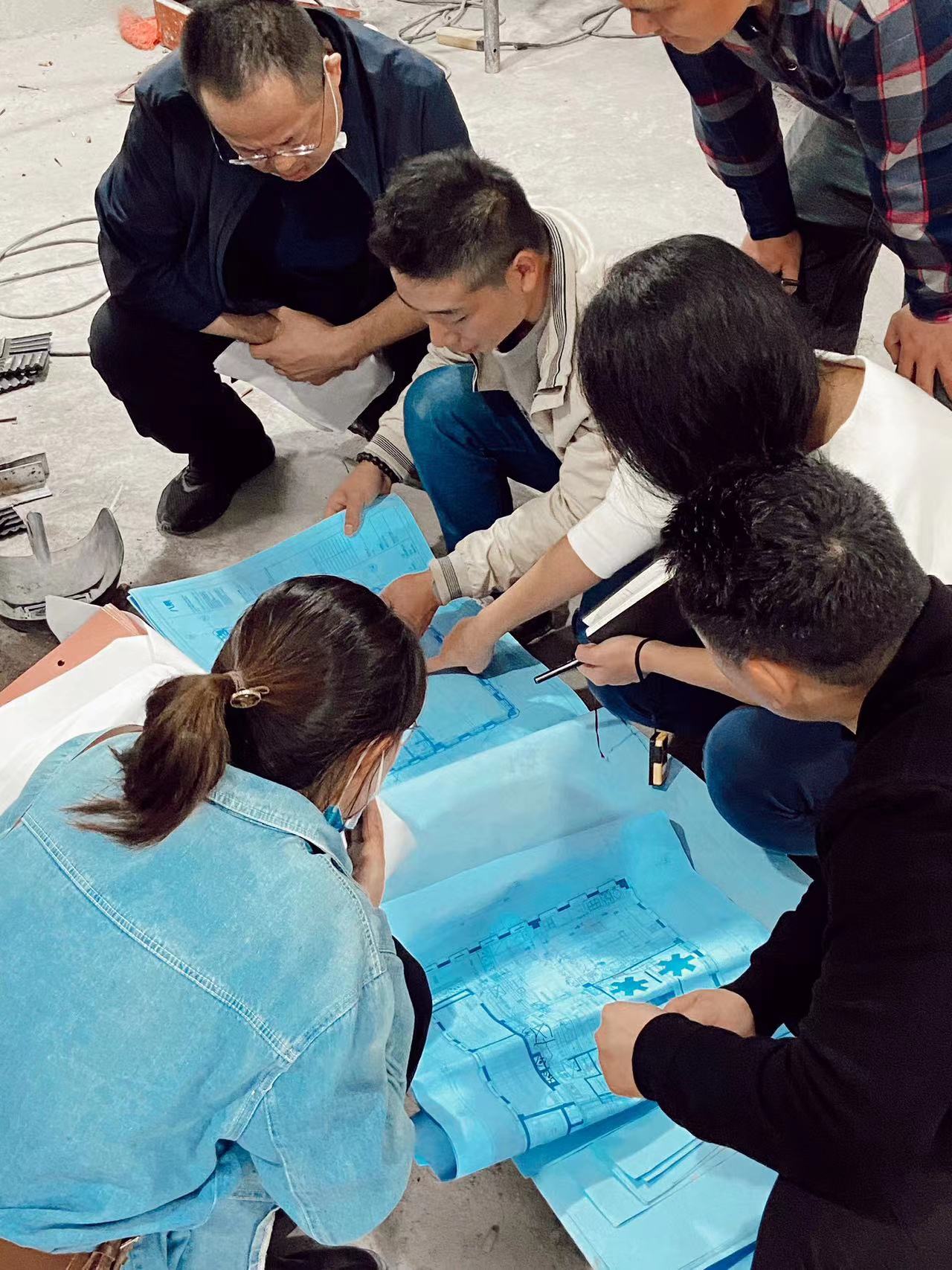
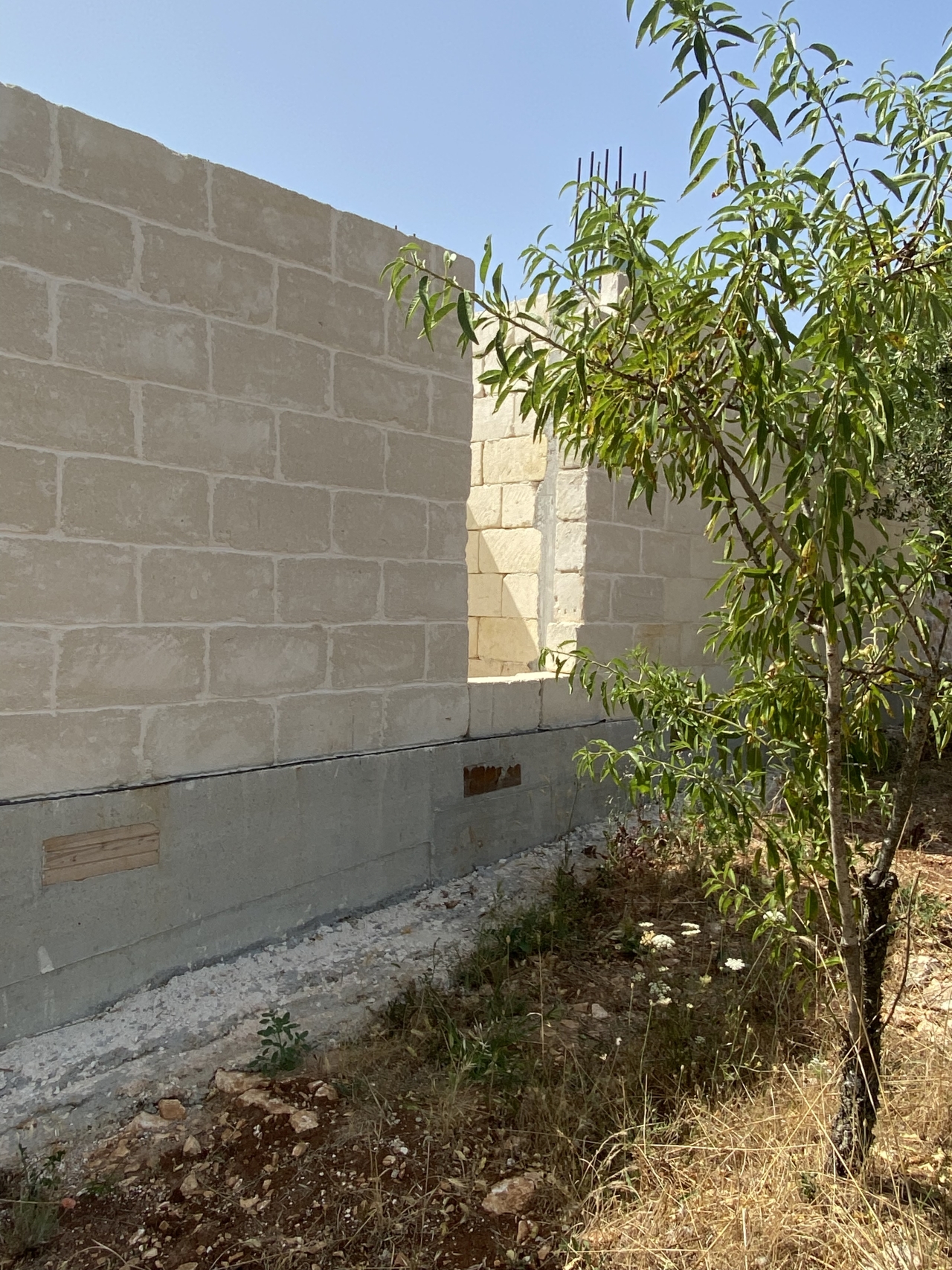
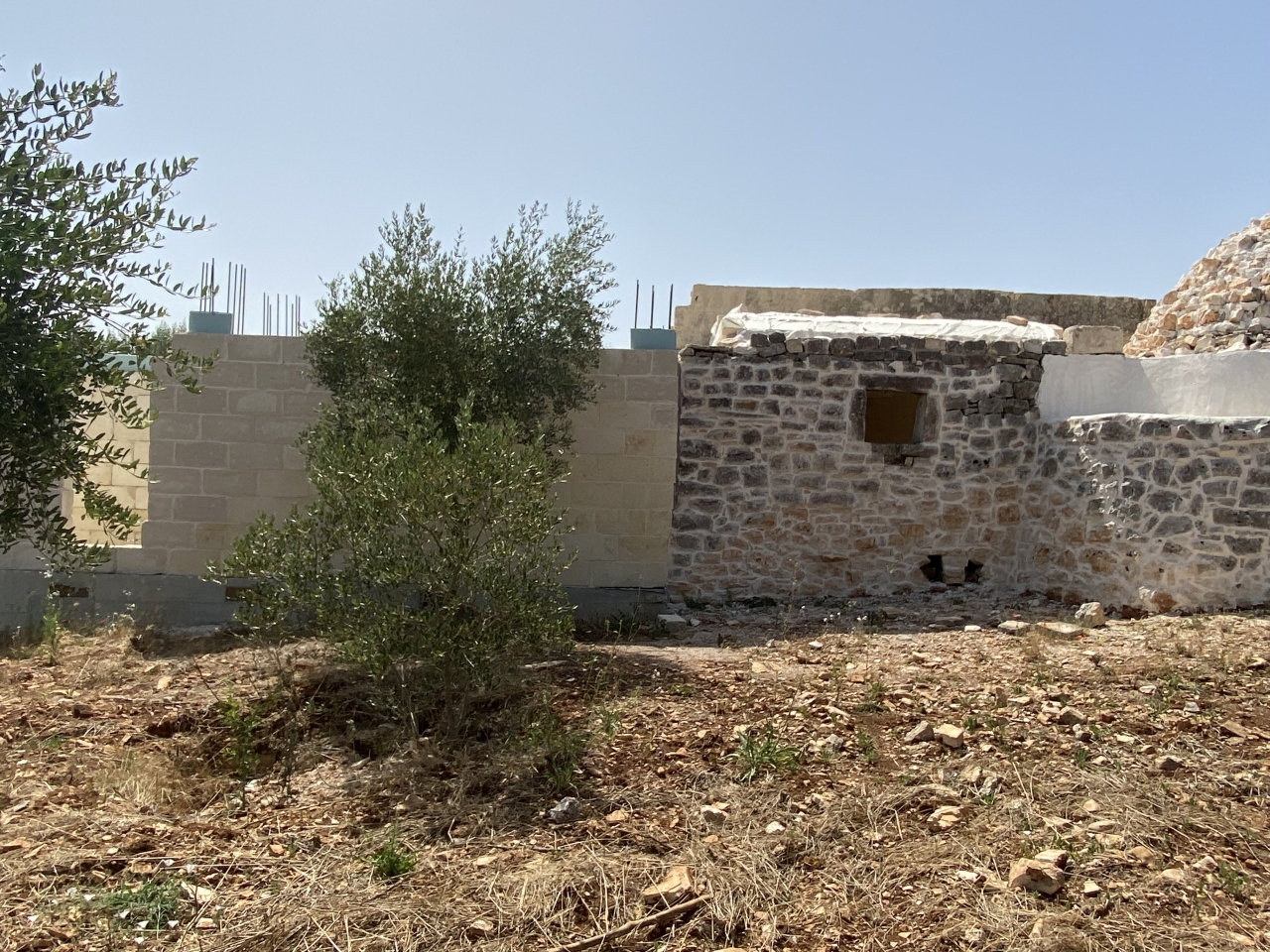
To overcome this hurdle, the BAHAN team explored various methods to establish effective communication and guidance. After prolonged adjustments and compromises, they devised an innovative solution: the designers worked directly on-site, using colored spray paint to mark specific construction points on walls and floors. This visual and intuitive method enabled Cosimo and his team to execute the design accurately without relying on conventional blueprints. Moreover, the designers patiently explained the concepts and ideas behind the design, helping Cosimo gradually integrate modern elements into his traditional craft.

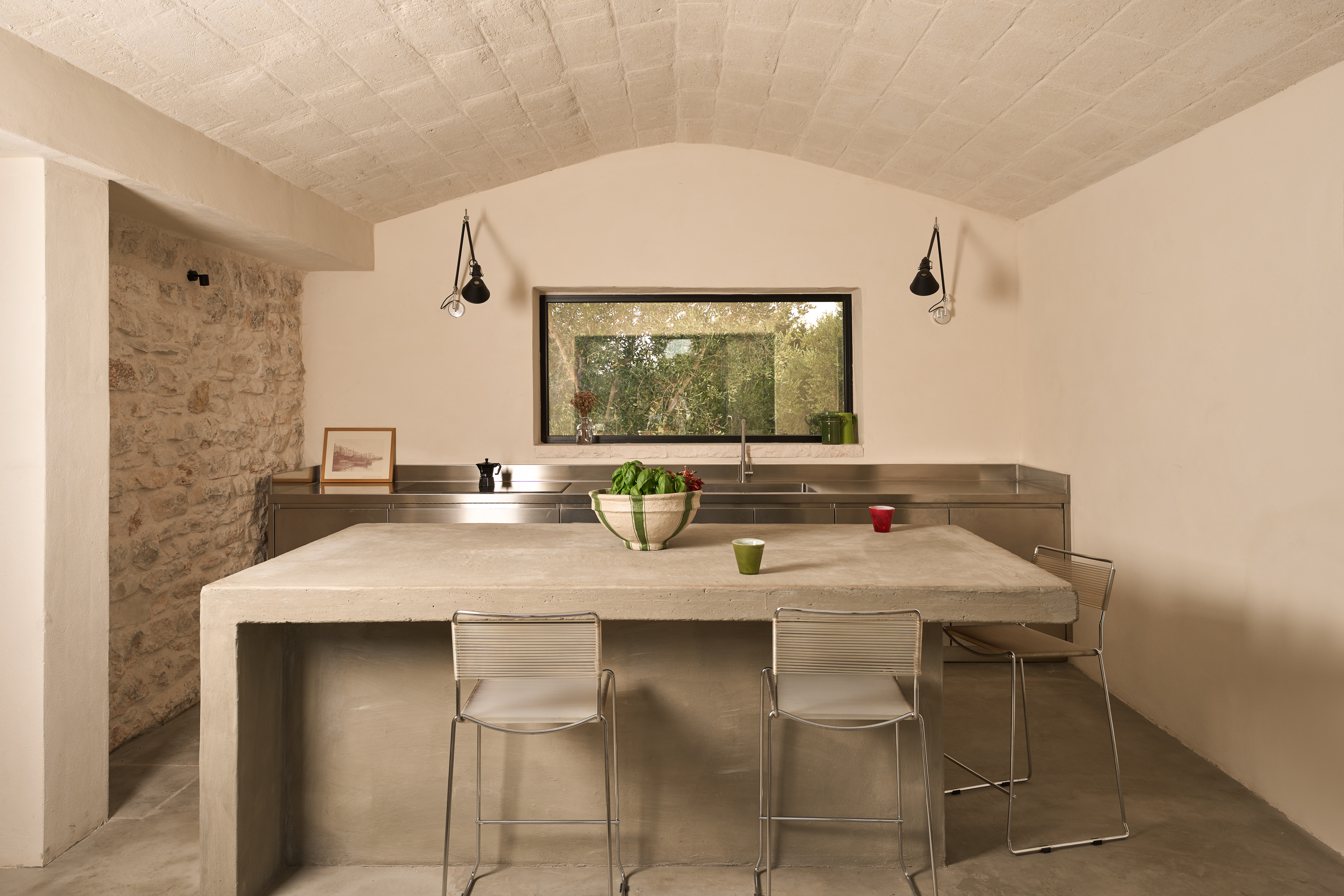
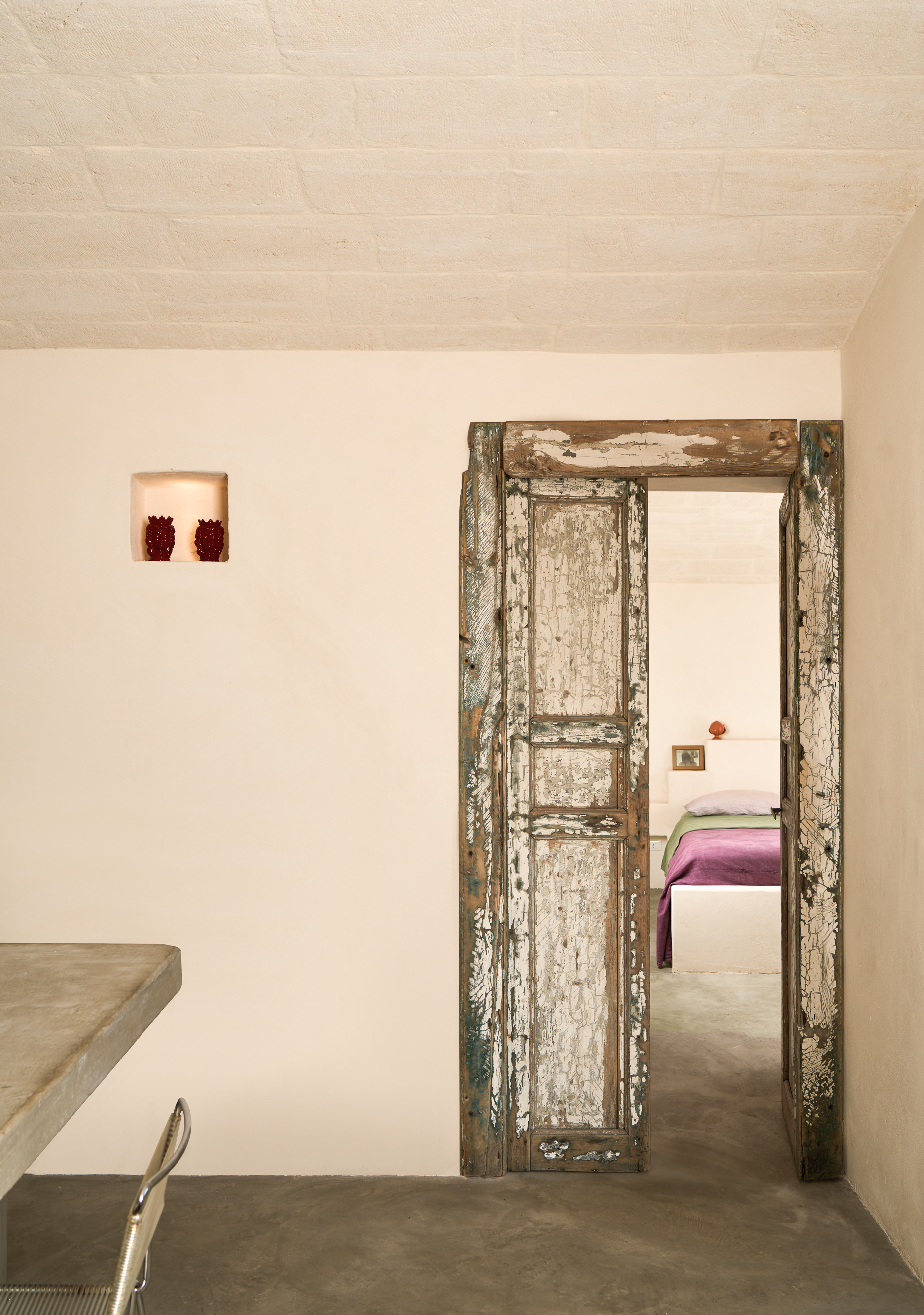
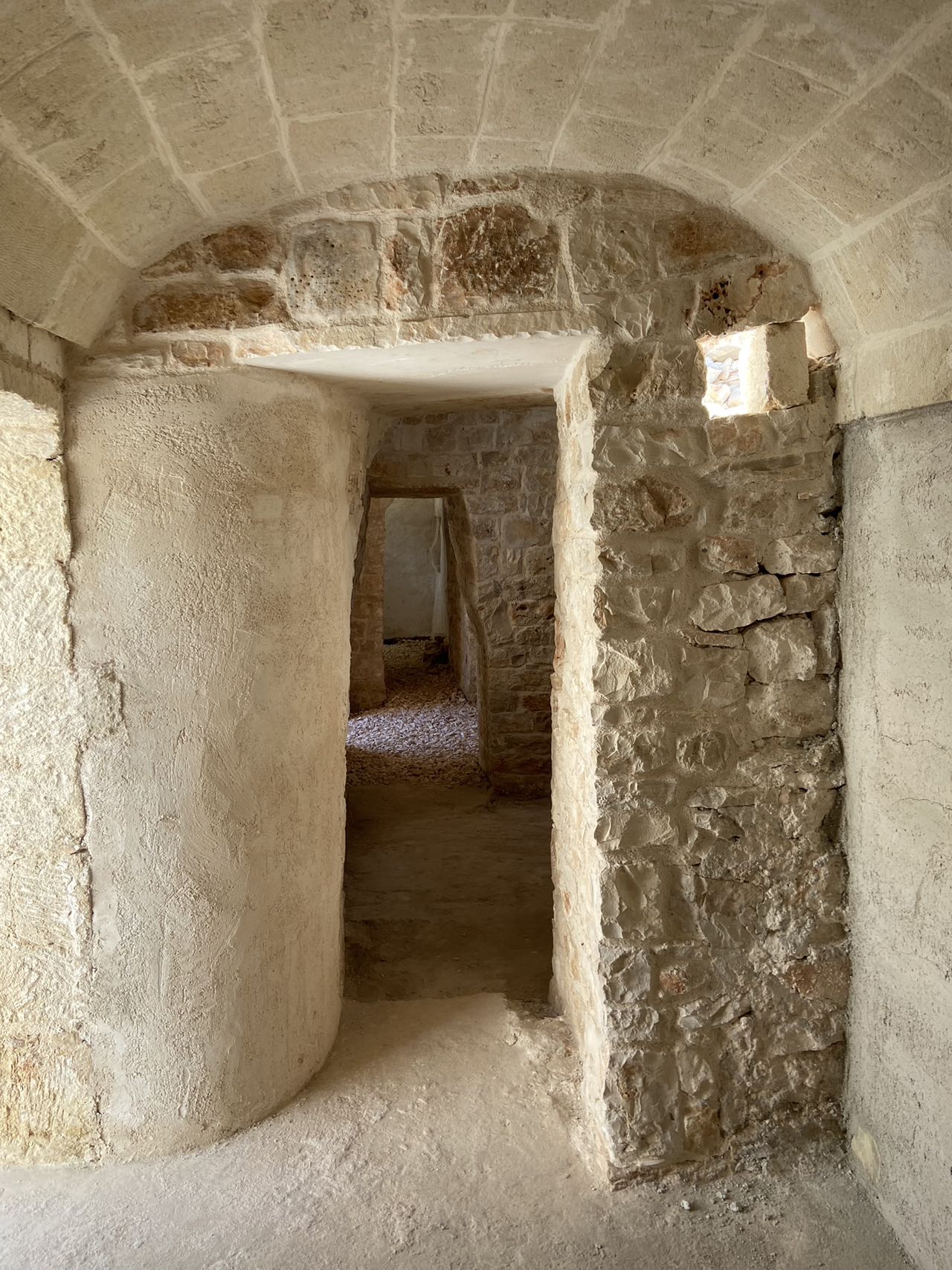
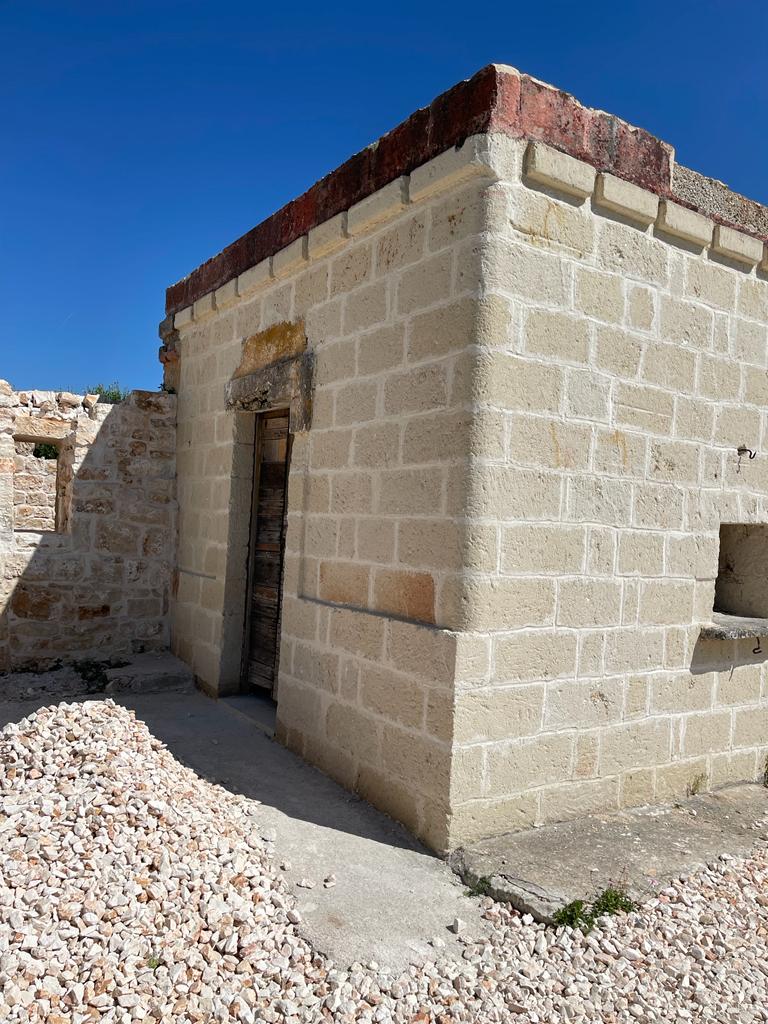
During the construction process, the BAHAN team paid meticulous attention to highlighting the spatial experience of the conical roof and refining interior layouts. This approach preserved the historical characteristics of the Trullo while introducing modern comforts and aesthetics. Ultimately, the project resulted in a Trullo that retained its thick white stone walls and iconic roof while embracing the conveniences and beauty of contemporary living, breathing new life into this historic structure.

This collaboration not only marked a productive partnership between the BAHAN team and local artisans but also initiated a profound dialogue between tradition and modernity. The project demonstrates how historical architecture can be reimagined to meet the needs of modern life, creating exciting new possibilities for heritage preservation.

意大利普利亚的伊特里亚谷地(Valle d’Itria)标志性的Trullo建筑,是南部Murgia地区特有的圆锥形建筑,一看到它们,就知道来到了普利亚。Trulli建筑已有数百年历史,但现存最古老的Trulli仅追溯到16世纪。这可能是因为Trulli通常作为临时的干砌石住所建造,可以随时拆除。这种做法主要是为了应对税务官的到来, 试想,当税务官到Locorotondo、Alberobello或Fasano时,看到的只是石堆而没有房屋的情景。等检查官走了之后,Trulli又会迅速重建,当地人便重新搬回居住。
典型的Trullo建筑有一个圆柱形的基座和覆盖石灰岩瓦片的圆锥形屋顶。虽然没有使用水泥,但厚重的白色石墙在夏季保持凉爽,在冬季保暖。屋顶上通常会绘制防邪眼、十字或星象符号,并装饰有顶部饰物。Alberobello的Trulli因其独特的建筑特点和历史意义而被列入普利亚的两处联合国教科文组织世界遗产之一,非常值得一游。
虽然许多Trulli仍由当地人居住,但也有不少被改造成配有泳池的高档度假屋,成为近些年的新浪潮。
八荒设计团队与当地的Trullo石匠大师Cosimo合作,为Franco家族打造了一座将历史与现代设计完美融合的度假屋。这座Trullo建筑位于意大利普利亚的伊特里亚谷地,其传统结构和深厚的历史韵味使其成为普利亚地区的象征性建筑。然而,这一项目并非易事,八荒团队在与Cosimo的合作过程中遇到了重重挑战。

Cosimo的施工方式非常传统,熟悉每一步Trullo的工艺流程,但无法理解现代建筑图纸,导致设计与施工之间难以匹配。对于Cosimo来说,他习惯了用直观的方式建造Trullo,依赖经验和手感,而不是现代图纸中精确的坐标和标注。这种差异导致他无法根据八荒团队的设计定位准确施工,项目进展一度停滞不前。

为了弥合这一差距,八荒团队进行了多次尝试,探索有效的沟通和指导方式。经过长时间的磨合,他们最终找到了创新的解决方案:设计师亲临现场,利用彩色喷雾在墙面和地面上标记施工点,直观地将设计意图传达给Cosimo和他的团队。这样,Cosimo可以根据标记进行精确施工,而无需依赖图纸理解细节。此外,设计师还耐心地解释了设计背后的理念,帮助Cosimo逐步理解现代设计的元素,并在传统技艺中融入这些新元素。

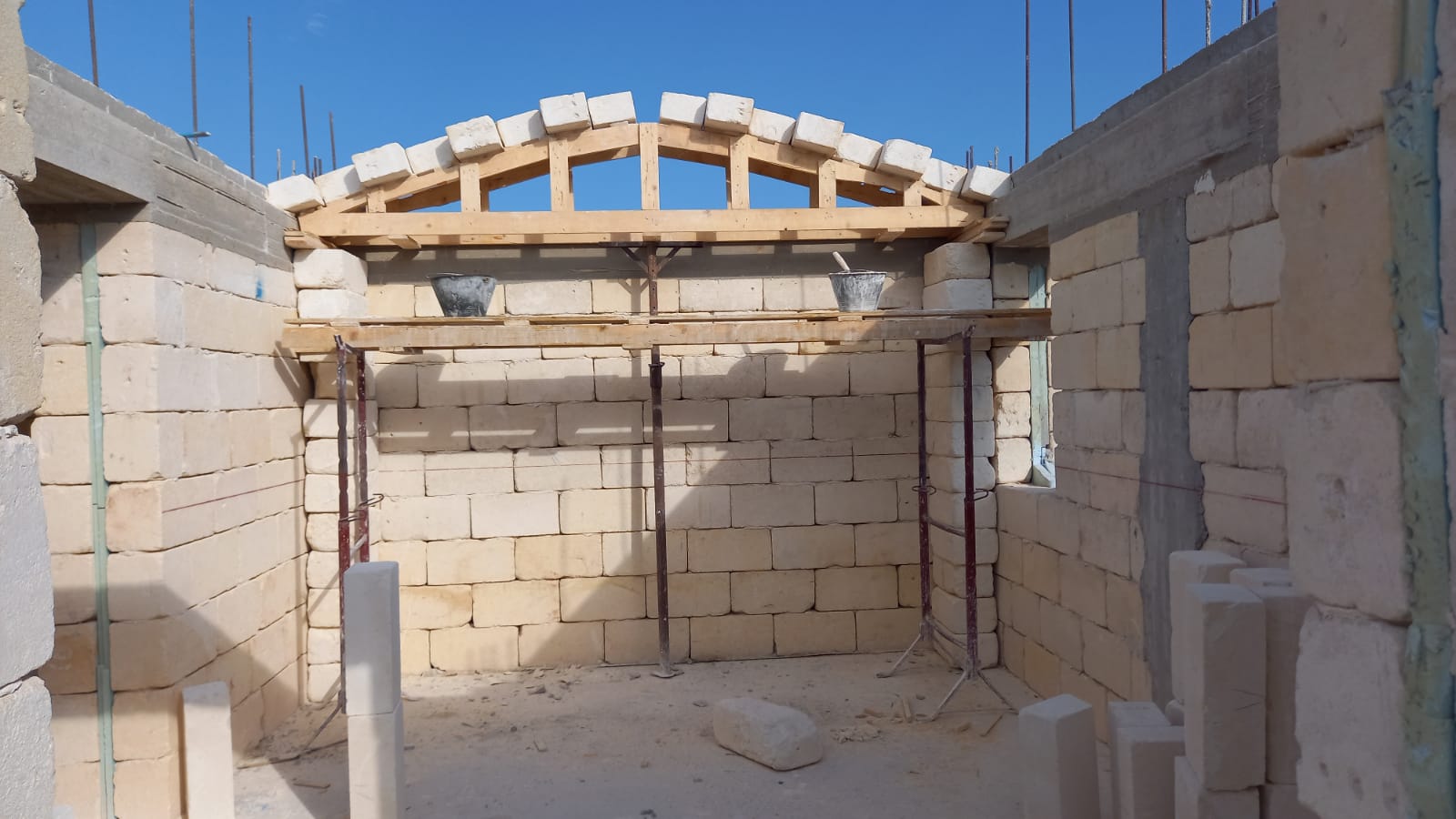
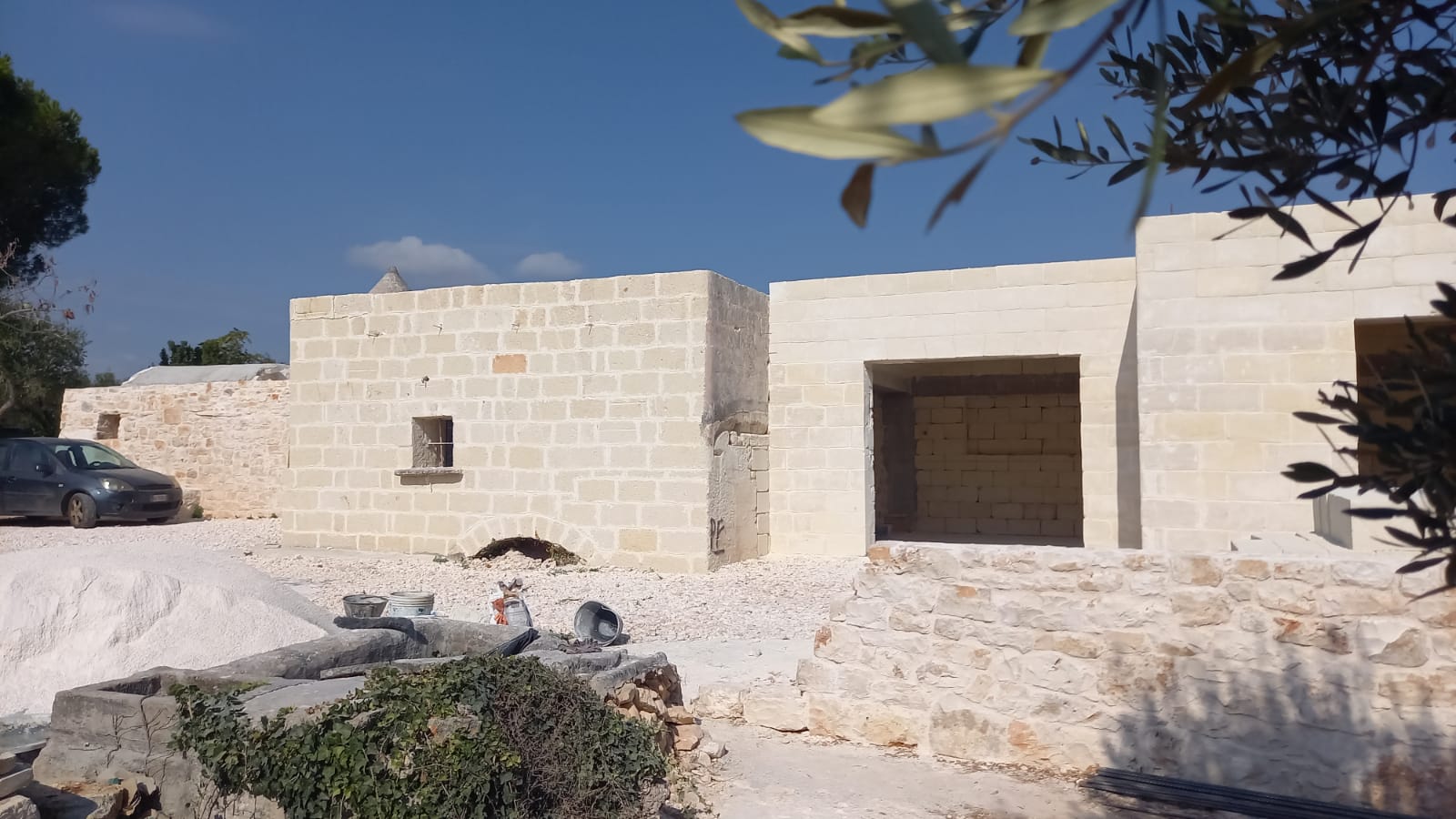
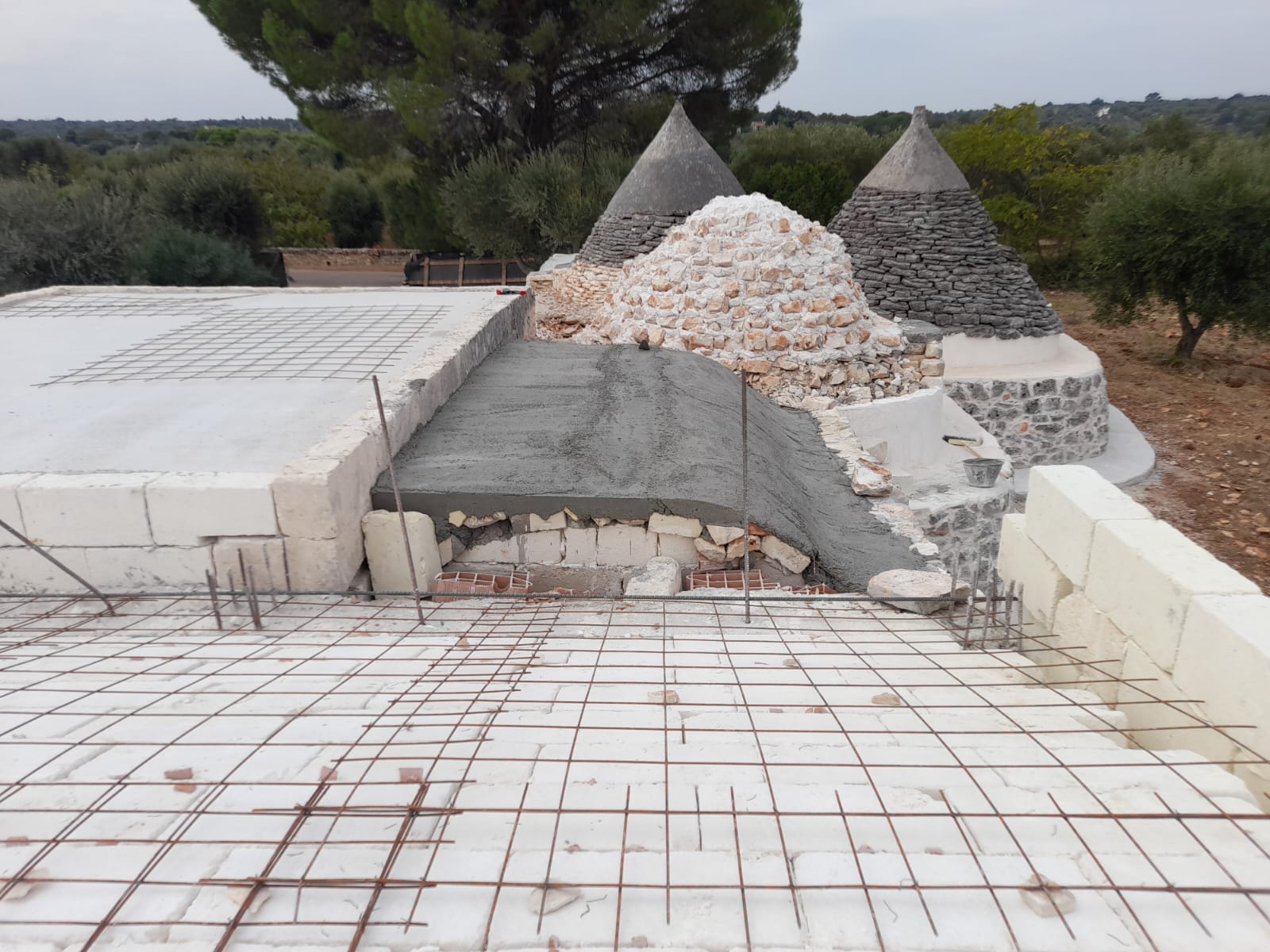
在施工过程中,八荒团队还细致地突出圆锥屋顶的空间体验以及内部布局等细节,以保持Trullo的历史特色,同时满足现代舒适生活的需求。最终,这座Trullo在保留厚重的白色石墙和锥形屋顶的同时,融入了现代生活方式的便利与美感,焕发出新的生命力。通过这次项目,八荒团队与当地工匠之间不仅完成了一次富有成效的合作,更开启了一段传统与现代深度对话的故事,展现了历史建筑在现代生活中的新可能。

MAP  地图

ORIGINAL TRULLI  特鲁利原建筑

CONSTRUCTION 施工过程

PURO APARTMENT 私人公寓

LOCATION 地址  |  SHANGHAI 上海
CATEGORY 类型  |  RESIDENTIAL  住宅

INTERIOR 室内设计
FEE 软装设计

AREA 204 m²

Mobile Art within Living Space | Puro Apartment
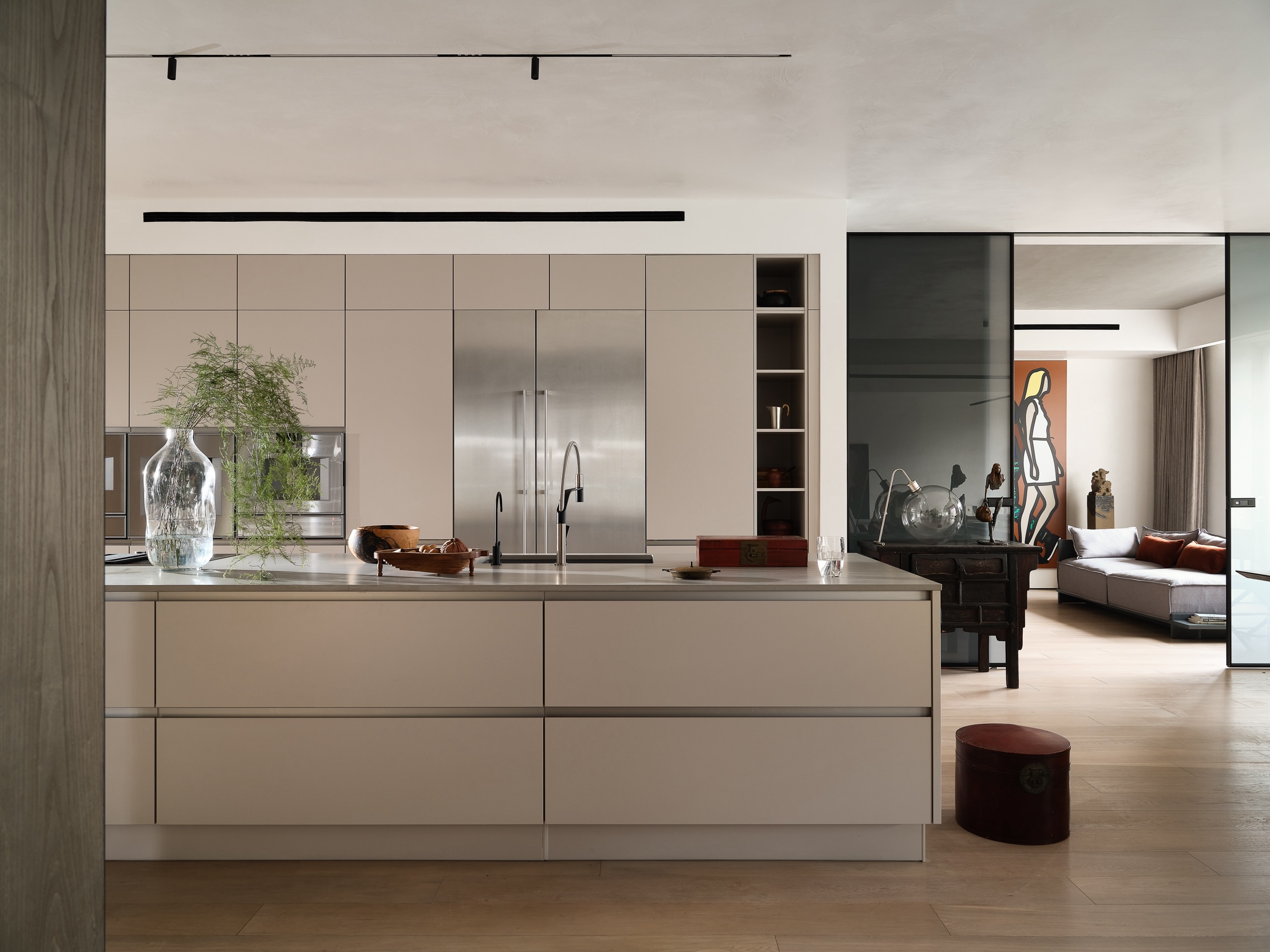
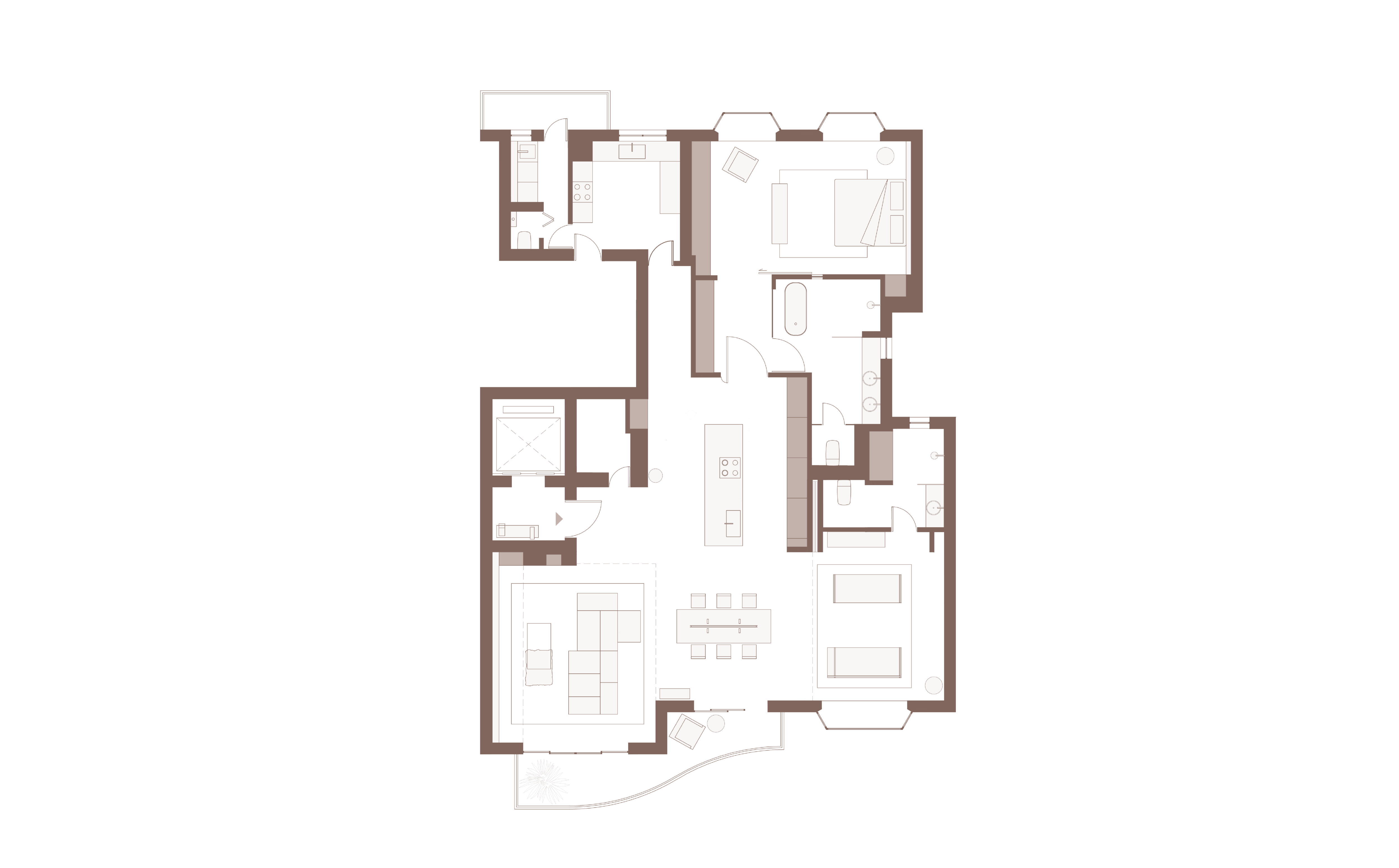
This art-infused apartment, situated in the center of Shanghai, originally featured a three-bedroom, two-living-room layout. The owner, an art collector with a love for unfettered, limitless living, provided ample freedom for the design. We aimed to create an open, artistic abode, enabling the free movement of people and art. The sense of home begins the moment the elevator doors open. The redesigned elevator hall, clad in uniform stone, extends with the aid of lighting and mirrors. In terms of the overall layout, the original master bedroom on the south side was opened up and integrated into the living room, forming a large, open, south-facing space that serves as the living area. The two rooms on the north side were combined into one quieter and more private master bedroom, ultimately transforming the apartment into a one-bedroom, one-living-room space.

居住空间里的流动艺术|“一室户”公寓
这套充满艺术气息的公寓位于市中心,原始户型为三室两厅,户主热爱艺术收藏,喜欢自由无拘且不设限的生活,这也给设计提供了充分的自由度,我们希望帮户主打造一处富有艺术性的开放居所,让人和艺术自由流转。归家感始于电梯开门那一刻,重新设计的电梯厅采用统一石材,配合灯光与镜面延伸。整体布局上,将南面的原主卧室打开,融入客厅形成一整个南向开敞大空间作为起居室。北面两个房间合并成主卧,更安静私密,最终改造成一室一厅。

READ MORE 更多

“A landscape painting, as an image, is like a gap or an opening, a hole through which the eye of the mind can enter space. A portrait—whether of a person, an animal, or a building—is the exact opposite; they burst out, into our space, to meet us.”

— Julian Opie, British contemporary artist

Now the new expansive, continuous living space required the establishment of hierarchies to maintain appropriate centrality in different areas to create migratory circulating routes. The living room, reception area, and open island kitchen each form an island centered around a piece of furniture, around which people’s activities and conversations unfold freely. The centerpiece of the living room is a dining table steeped in history and stories, around which the owner’s daily work and gatherings with friends revolve. This table is crafted from a piece of brass and two semi-transparent resin panels joined together, dovetailed with a solid wood tabletop that reveals exquisite brass lines. The resin panels divide the long table into three equal parts, paired with armchairs in the form of intersecting seats, welcoming each seated guest equally. The brass plate will change color over time, bearing the marks of age, while the resin panels allow light from the opposite side to filter through, connecting with the surrounding space.

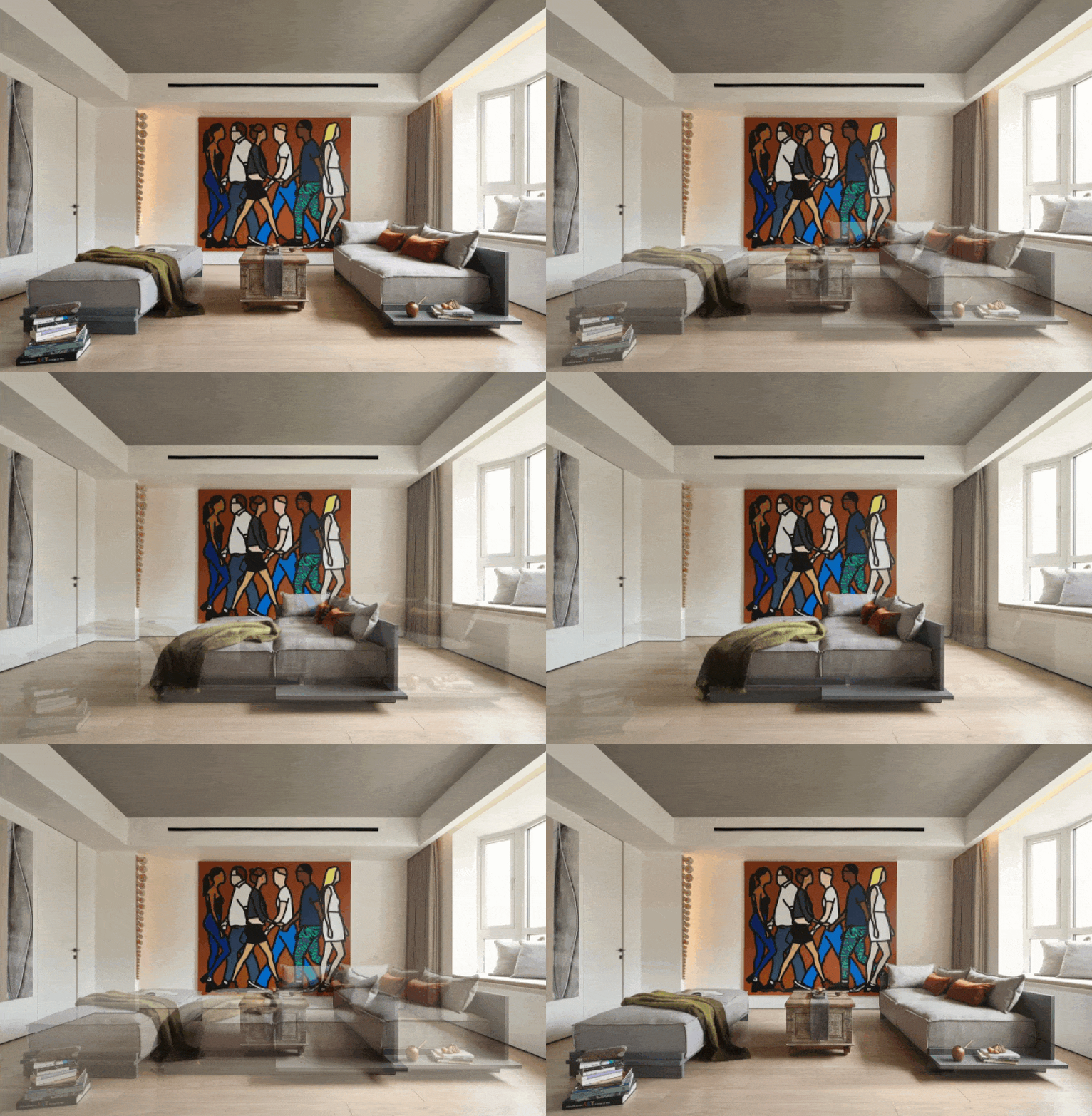
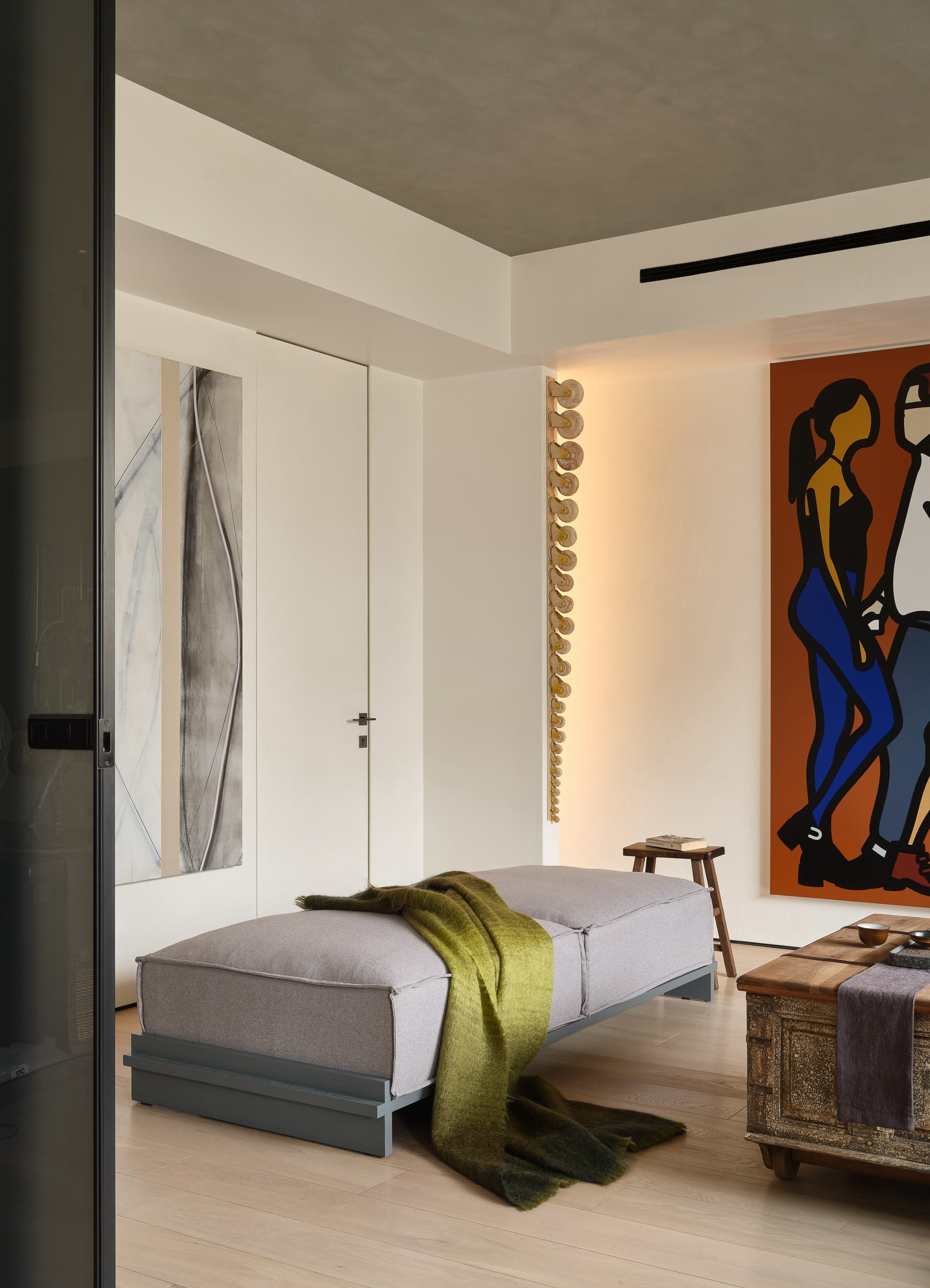
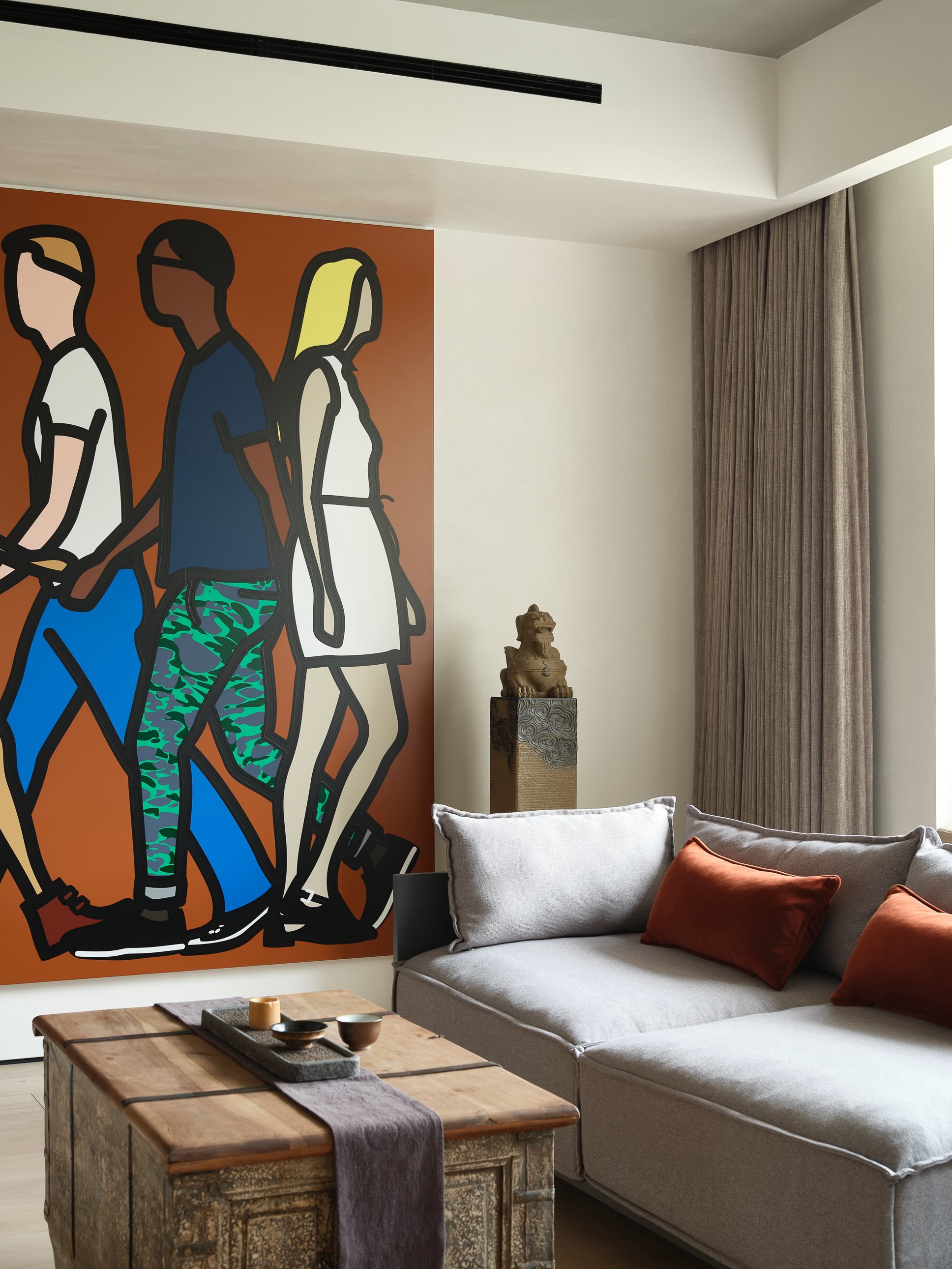
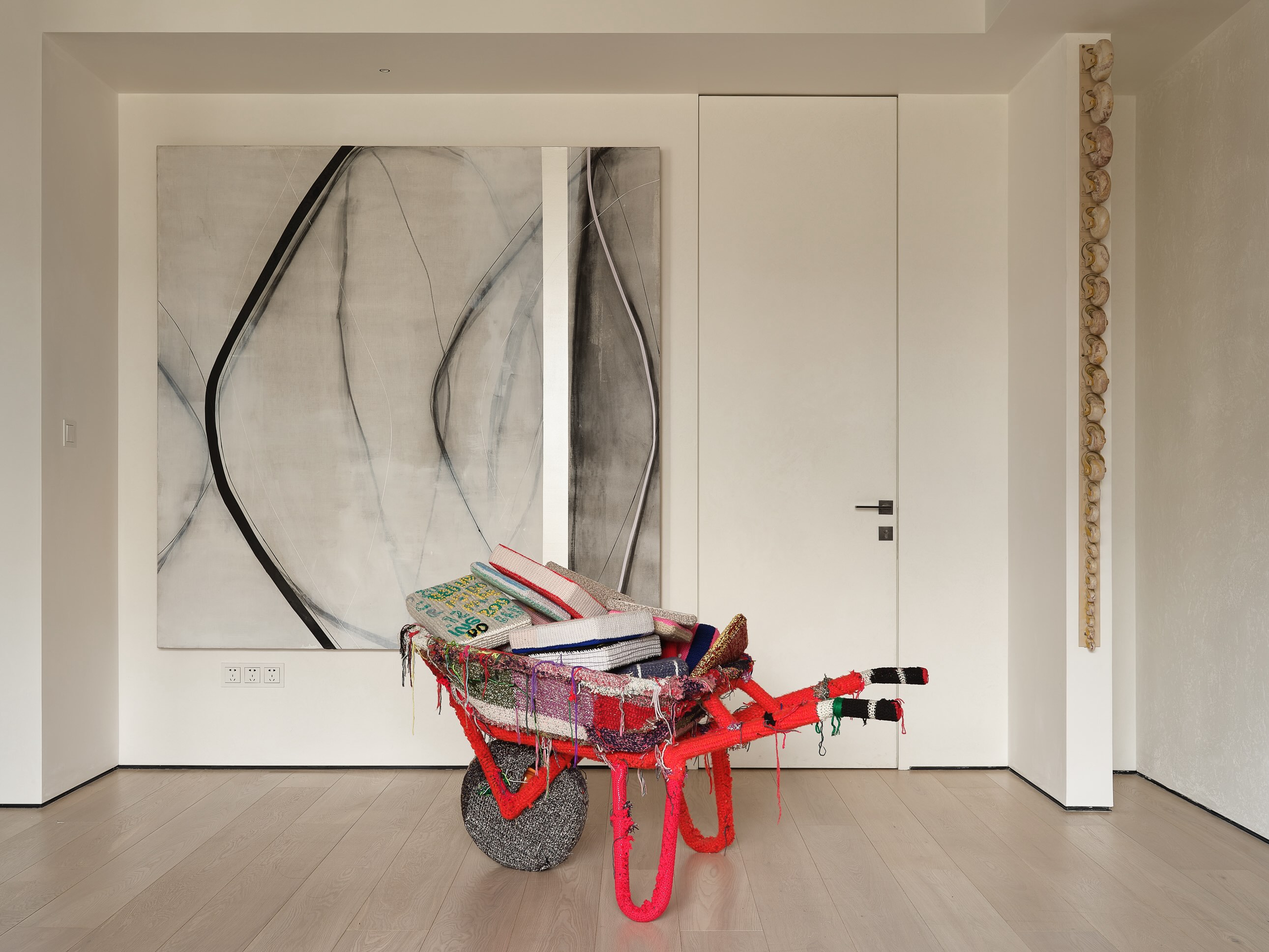
The lounge area at the other end of the dining table is relatively more private; it can serve as a temporary guest room when the sliding door is closed and opens up to connect the space when the door is open. Hanging in the center of the wall is Julian Opie’s portrait “Walking in Hackney.2.2016,” the owner’s favorite large artwork, and the only fixed piece in the space. The people coming and going in the painting resonate with the fluidity of the space, as if the figures could step into the room to meet the viewers. The orange background sets a lively tone for the entire living room. Lighting design in the corners extends the space, outlining another art installation, “Spine.” Other artworks, like the people coming and going in the lounge area, freely circulate within the space, even imbuing the simple guest bathroom with artistic flair.

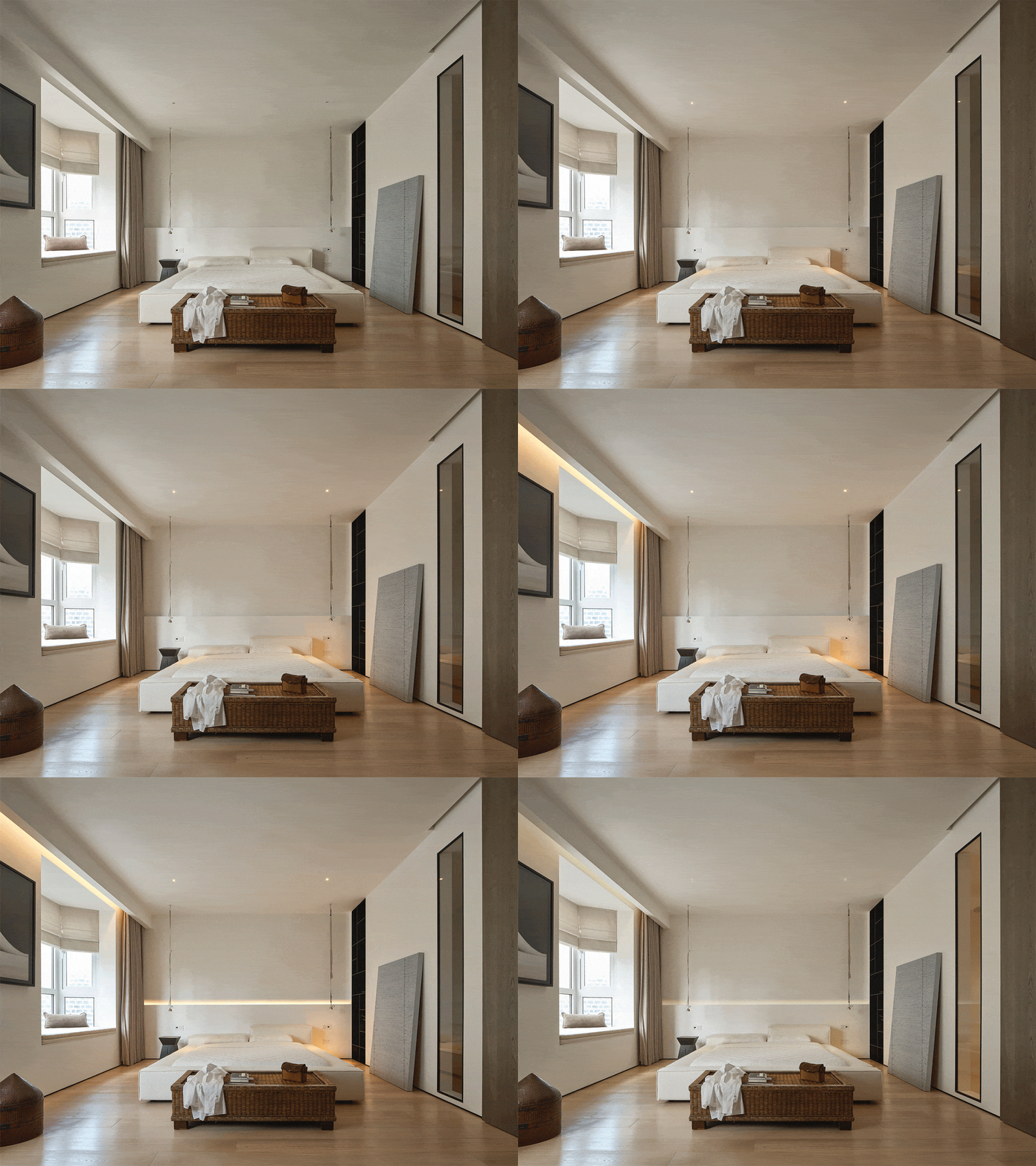
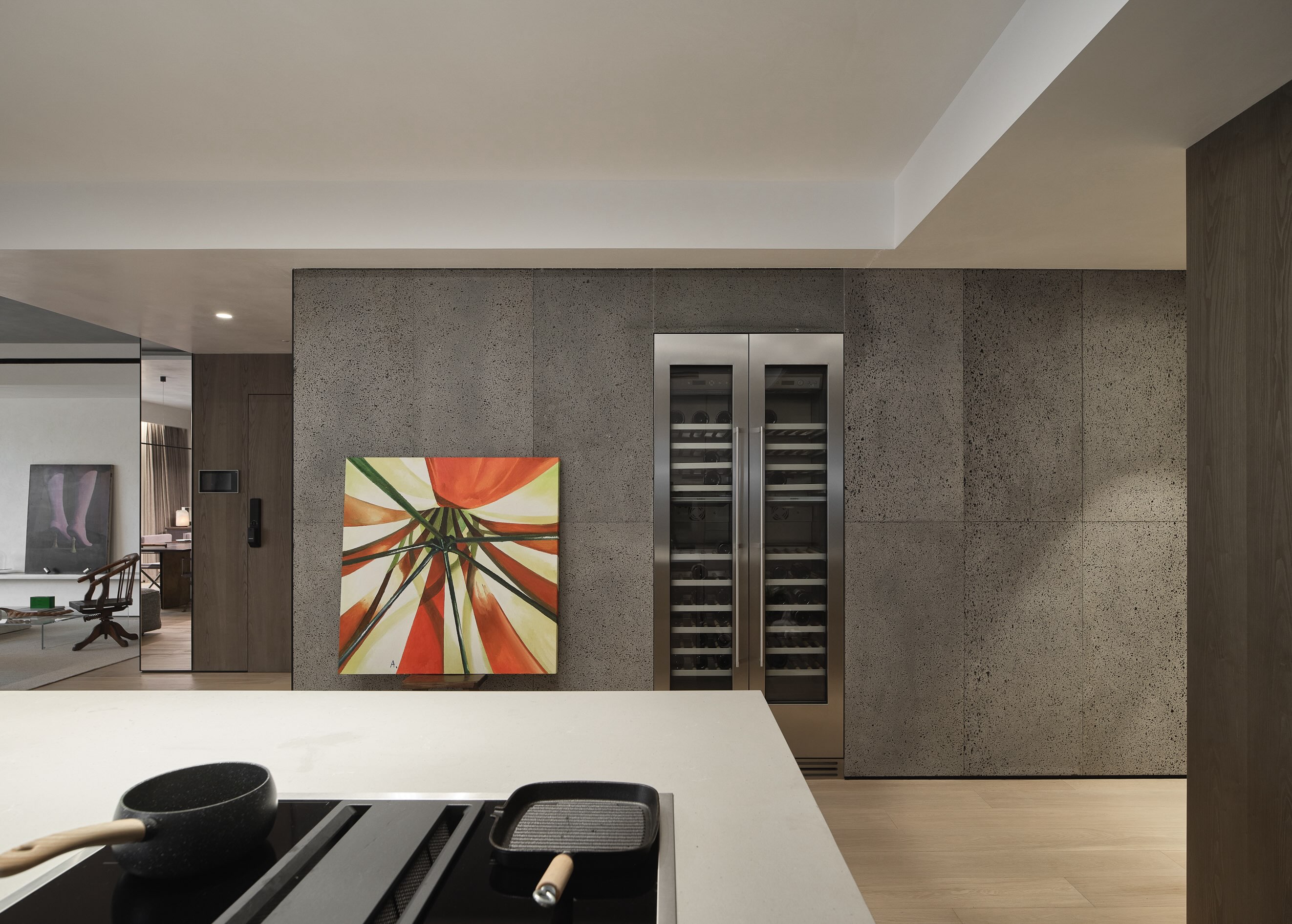
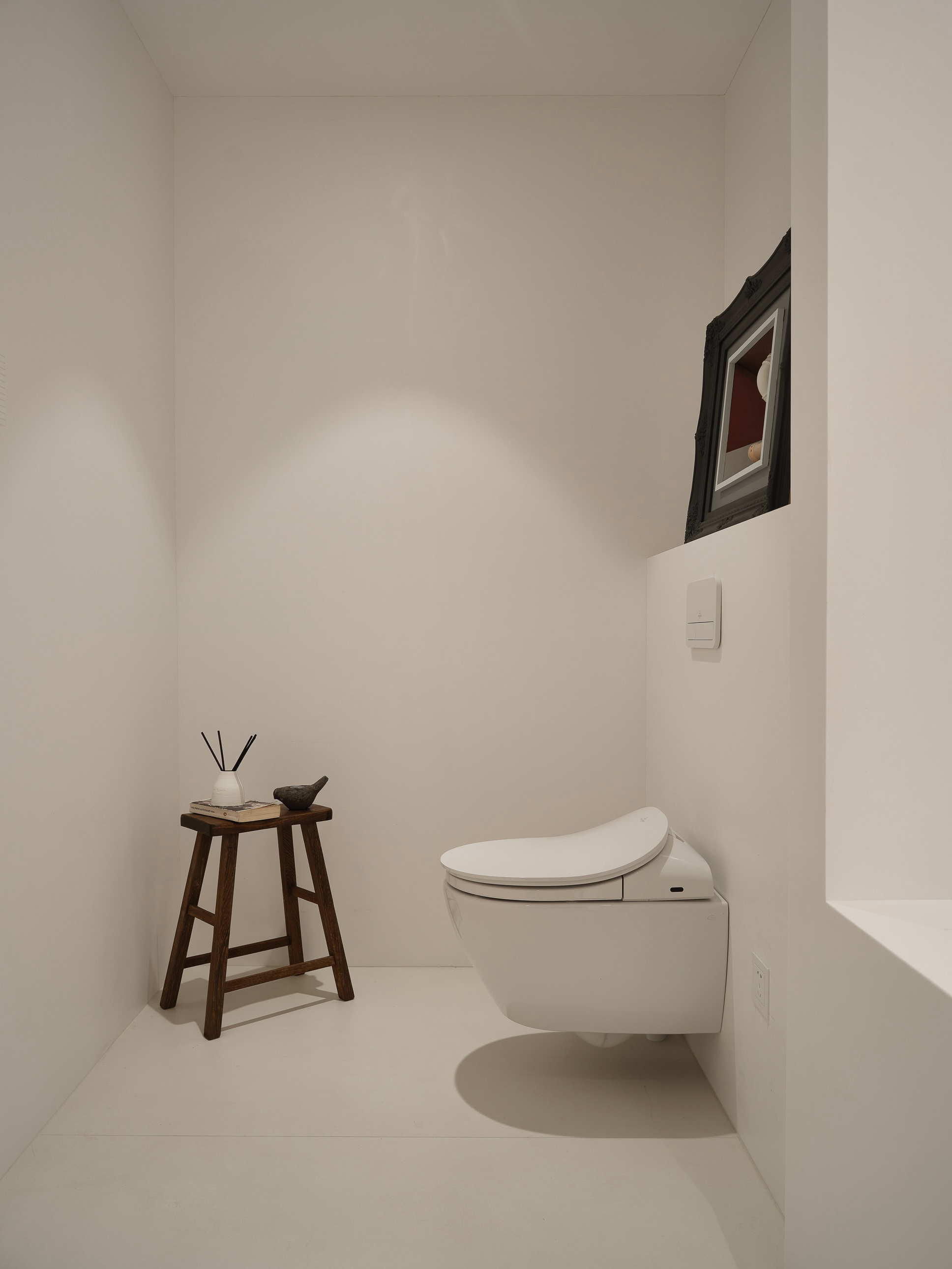
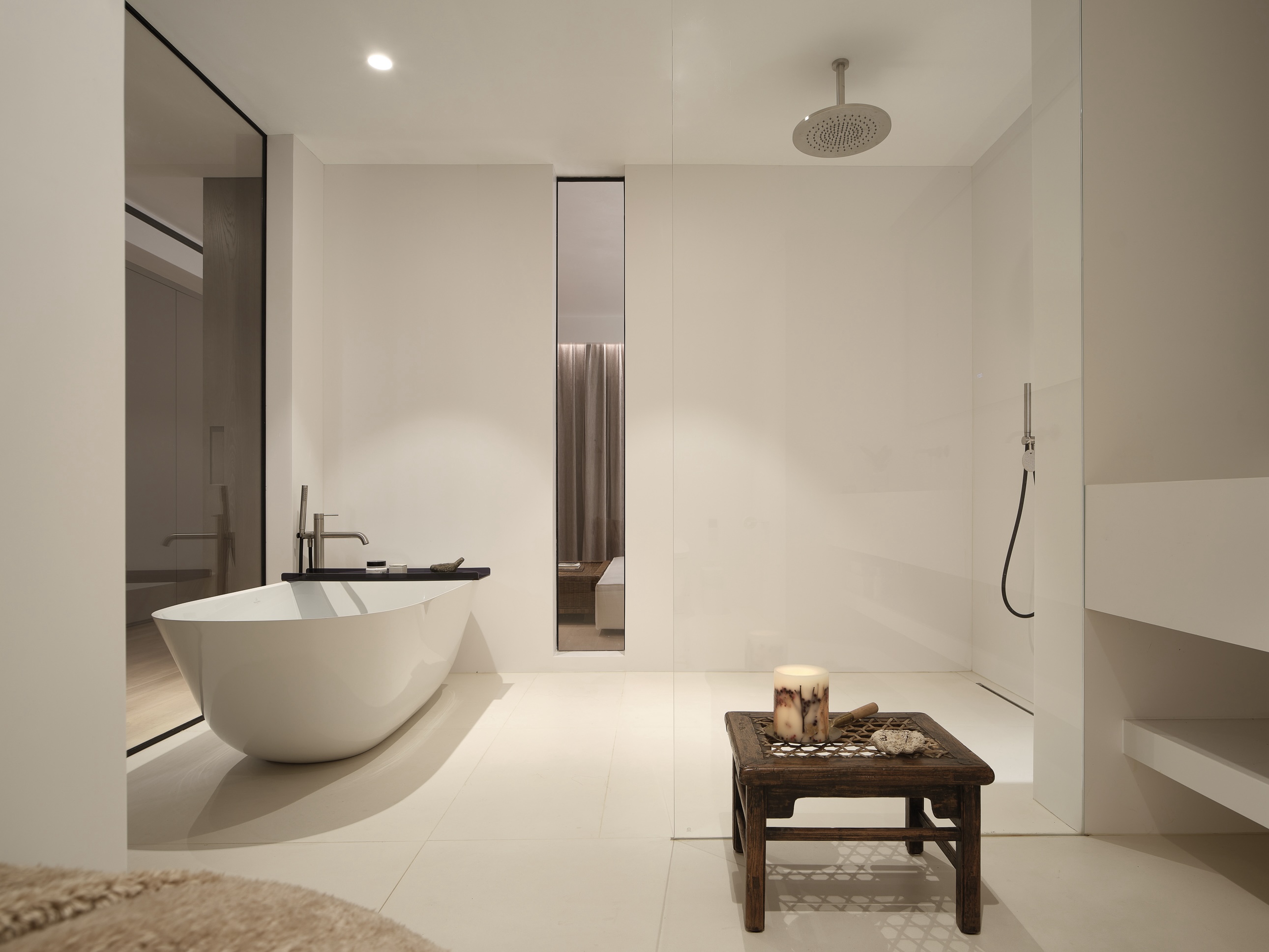
On one side of the open kitchen is a wall of volcanic rock and a stainless steel wine cabinet, creating a contrast between the rough and the sharp. On the other side of the wood-colored wall, behind an invisible axis door, is the private master bedroom. Passing through the open walk-in closet and the master bathroom on the right, the bedroom features simple lighting design to create a tranquil environment. The main bathroom shower space is located behind a narrow window and can be shielded by the sliding door of the walk-in closet. Given the limited ceiling height, we adopted a no-ceiling design, with concealed lighting as much as possible, accented by artistic light sources to create a warm home atmosphere.

Besides the owner’s collection of artworks and furniture, our custom-designed furniture serves both as decoration and sculpture, seamlessly blending into the living space. The shoe-changing bench in the elevator hall and the dining table in the living room are both from our furniture brand, “CAOZITOU.” The bench is made from seabed stone from France, each piece containing different shell densities, revealing the traces of shells upon close inspection, imbuing the bench with solidity and vitality. Furthermore, it also serves as a lighting fixture, welcoming the homeowner with a night light at the entrance.

Life is ever-changing and full of possibilities, and the specific use of space is no longer limited to a single function. The soul of residential space design lies in the owner’s aesthetics and lifestyle. As designers, we need to maintain an appropriate distance between our clients, balancing tension and relaxation. We must meticulously design every detail while allowing enough freedom, including the flexibility of space usage over time, providing enough room for imagination, and embracing all the possibilities of life.

风景画作为一个图像,就像一个空隙或缺口,是思想的眼得以进入空间的孔洞。而肖像画——不论是人、动物或建筑物的肖像,则正好相反,它们冲出来,进入我们的空间,与我们相遇。
—— 朱利安・奥培(Julian Opie),英国当代艺术家

开敞后连续的大空间需要有层次和领域,保留不同区域适当的中心性,形成洄游路线。客厅、会客室和开放式中岛厨房,每处空间以一个家具为中心形成岛屿性,人的活动和对话围绕这些“岛屿”自由展开。客厅的C位是一张有故事的餐桌,户主日常办公、朋友聚会等主要生活场景都围绕它展开。餐桌由一块黄铜和两片半透明的树脂板插接,再与实木桌面隼接,桌面露出精致的铜线。树脂板将长桌隔成三等分,搭配交椅形式的扶手椅,平等地招待每一位落座的客人。黄铜板随着时间的推移会变色留下岁月的痕迹,树脂板插接口透出桌对面的光,与周围的空间相连通。
餐桌另一端的会客厅,相对更私密,移门关闭时可作为临时客卧,打开状态下则开敞连通。墙面正中间悬挂的是朱利安・奥培的市人物肖像画《走在哈克尼区》 (Walking in Hackney.2.2016,Julian Opie),这幅业主收藏的最喜爱的大幅画作是空间里唯一固定的艺术品,画面上人来人往与空间的流动性相呼应,仿佛画面中的人物会进入这个空间,与观者相遇,橙色的背景给整个客厅定下热闹的基调。墙角的灯光设计延伸空间,勾勒出另一个艺术装置《脊柱》的轮廓,其余艺术品如会客厅的人来人往,自由流转于空间中,就连简洁的客卫也富有艺术气息。
在开放厨房的一侧是火山岩墙面和不锈钢酒柜,两种材质形成拙与锐的对比。另一侧木色墙面上隐形中轴门后就是私密的主卧。穿过开放步入式衣柜和右手旁的主卫,卧室里简洁的灯光设计打造安静的环境。窄窗背后是主卫淋浴空间,可用步入式衣柜的移门遮挡。作为家的居所,加上层高条件有限,我们整体采用无吊顶设计,灯带尽可能藏在周边,局部点缀以艺术性光源,烘托温馨的家居氛围。
除了户主收藏的艺术品和家具,我们为其定制设计的家具既是装饰又是雕塑,陈列融入居家空间中。电梯厅的换鞋长凳与客厅的餐桌均出自我们的家具品牌“草字头”,长凳的材料产自法国的海底石,每块石材里包含的贝壳密度不同,仔细触摸和观察可见贝壳留下的痕迹,使整个长凳扎实而富有生命力。此外它也是一个灯光装置,在入口作为迎接归家的夜灯。

生活千变万化,充满各种可能性,空间的具体使用不再局限于单一功能。住宅空间设计的灵魂是主人的审美和生活方式,作为设计师需要保持适当的距离,张弛有度。既需要精心设计每处细节,又需要给予足够的自由,包括空间使用在时间更迭变化中的自由度,赋予足够的想象空间,允许和接纳生活一切的可能性。

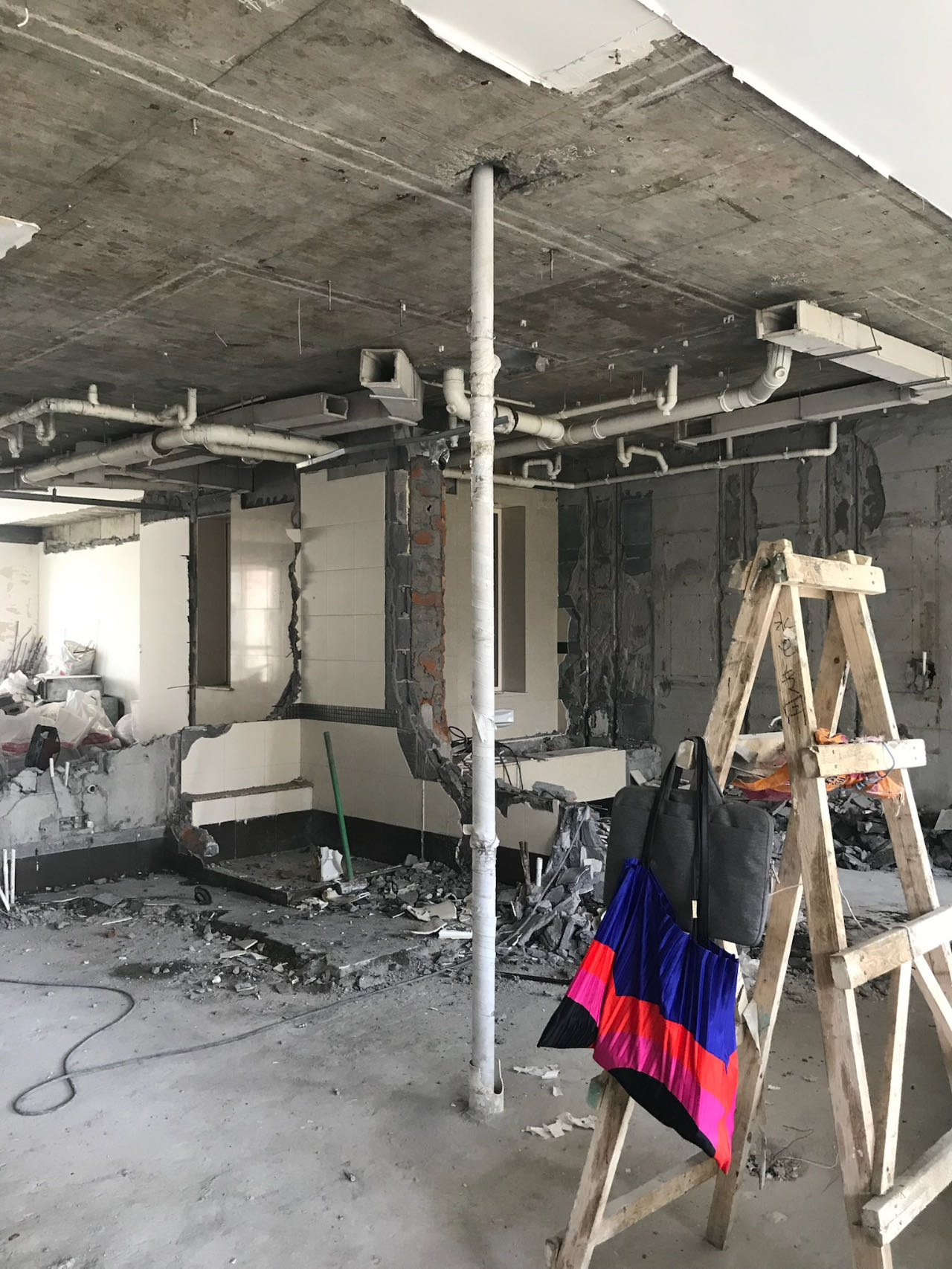
CONSTRUCTION 施工过程

PURO APARTMENT 私人公寓

CHARCOHOL RESTAURANT 巧客餐厅酒吧

BEFORE

AFTER

02-entrance 02
03-entrance 03
04-foyer 01_key visual column
04-foyer 04_key visual column
05-wood arcade 02
05-wood arcade 01
06-charcoal main hall 02_bar
06-charcoal main hall 07_arch
06-charcoal main hall 07_detail
07-ash arcade 01
07-ash arcade 02
07-ash arcade 04
08-detail 01_furniture

LOCATION 地址  |  SHANGHAI 上海
CATEGORY 类型  |  F&B 餐饮

ARCHITECTURE 建筑
INTERIOR 室内设计
FEE 软装设计
VISUAL IDENTITY 视觉识别设计

AREA 300 m²

READ MORE 更多

When Time Axis & Temperature Axis Cross
—CHARCOHOL Restaurant & Cocktail Bar

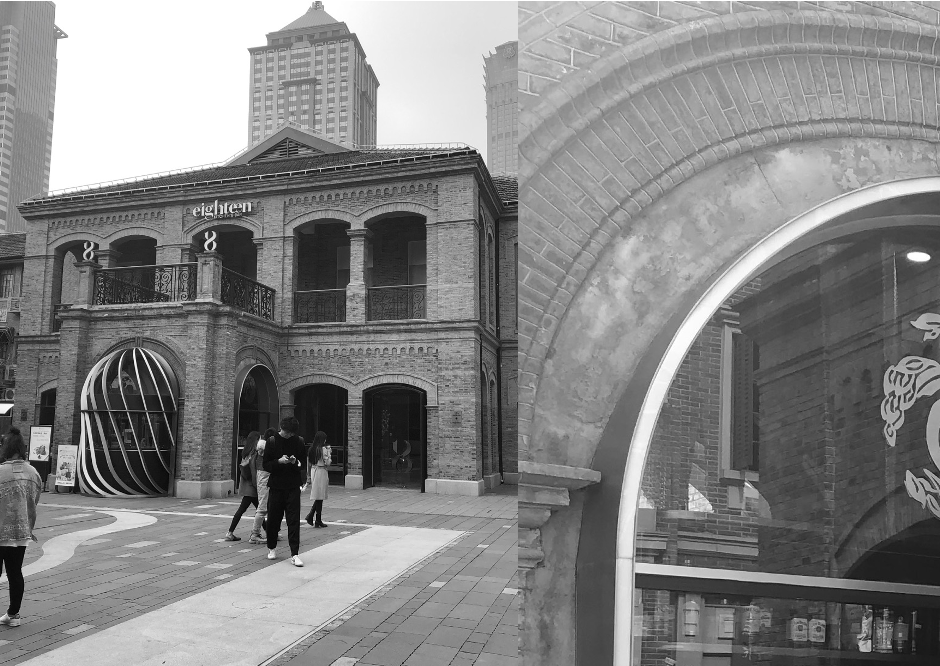
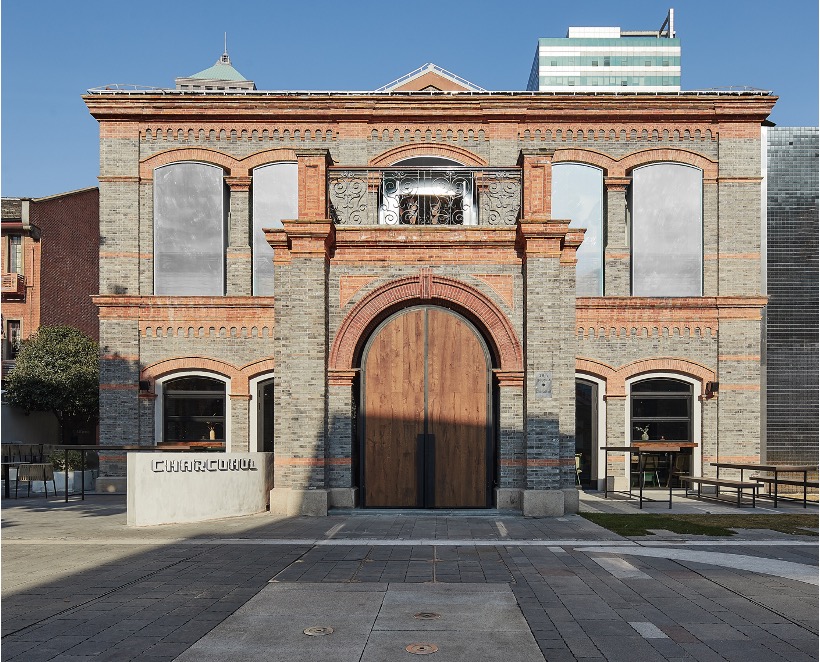
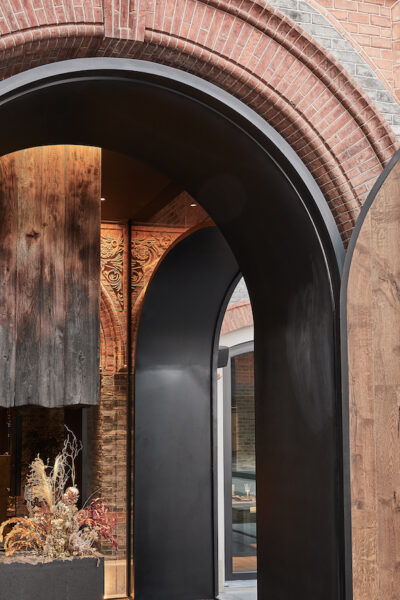
Located in a heritage building in Fengsheng Li in the center of Shanghai, CHARCOHOL is a restaurant and cocktail bar specializing in charcoal-grilled global cuisine and craft cocktails. STUDIO8 was commissioned to design the visual identity, architecture re-use, interior, landscape and soft decoration for the project.

Creating an exclusive food experience always starts with a strong concept in mind, which gradually evolves until it’s finalized with carefully selected details. When Chef Mandela Zhu first met STUDIO8’s design principals, Shirley and Andrea, he told them the food and drinks of his new bar are greatly inspired by forest and fire. The miraculous chemistry of taste happens when carefully selected simple ingredients are cooked at the right temperature for the right time. In a way, design is very similar to culinary arts. STUDIO8 was very inspired by the chef’s cooking principles in all of their F&B projects. This is why Shirley and Andrea named the restaurant CHARCOHOL, a combination of charcoal and alcohol, also the concept of CHARCOHOL’s logo.

STUDIO8 embarked on creating a space that reflects the chef’s vision and ultimately goes beyond it. Inspired by the transformative nature of charcoal and its role in food creation, the design unfolds around an axis of time, crossed by an axis of temperature.

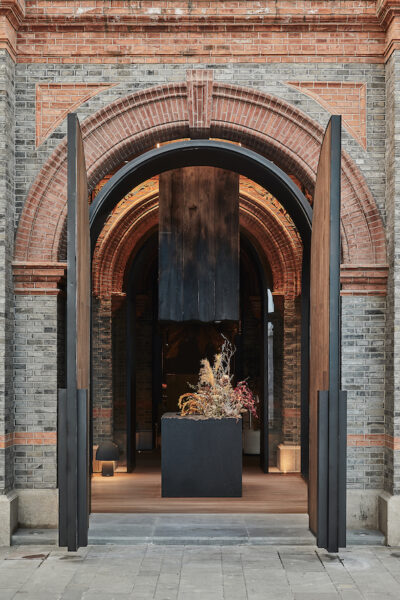
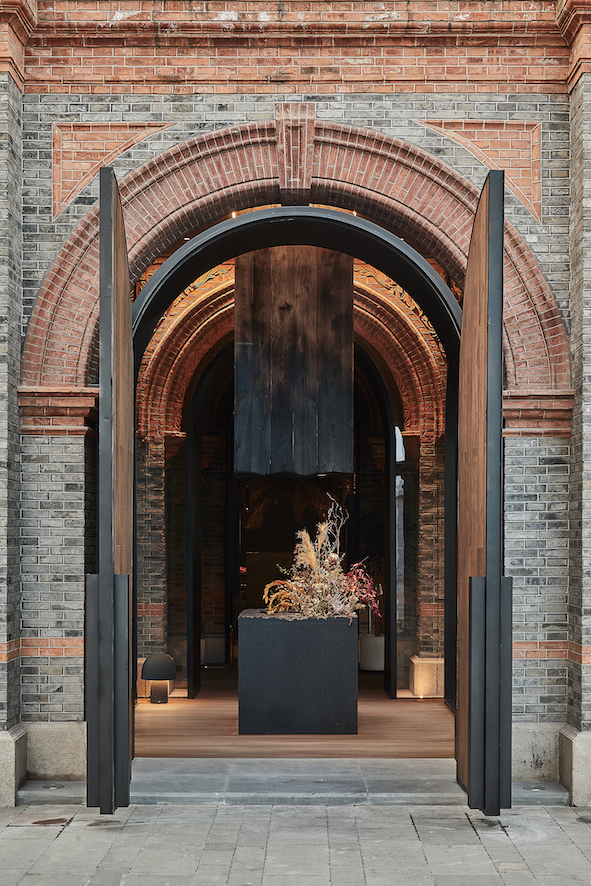
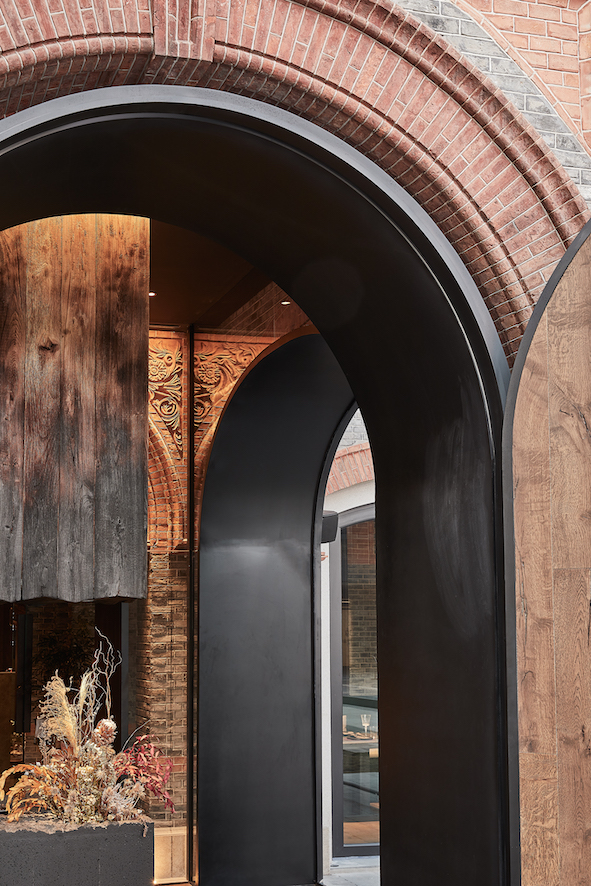
From south to north, stretching across the main entrance, three dining halls conceptualize the transformation of wood to charcoal and finally to ash. The notion of the dining concept is summed up in the small portico at the entrance, where a half-burnt wooden column hangs from the ceiling and ends in a lava stone block on the floor, welcoming the guests.

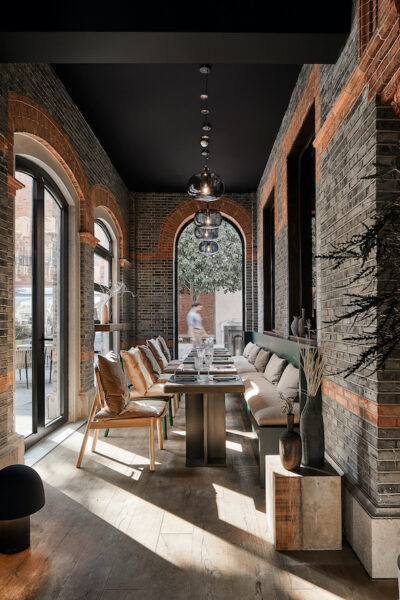
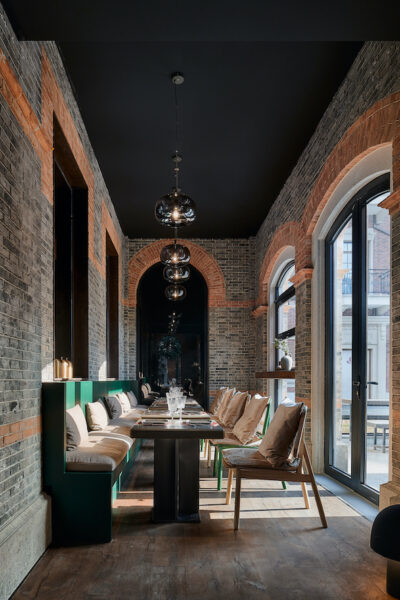
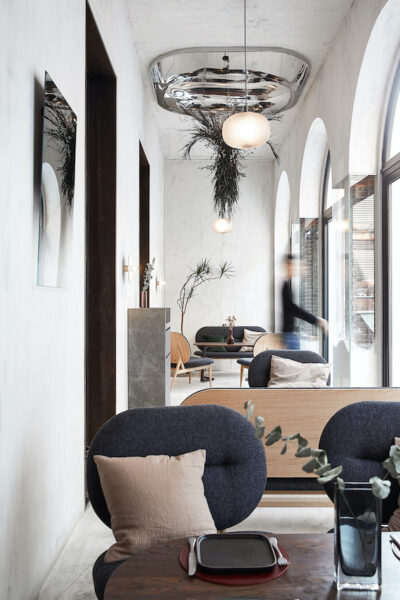
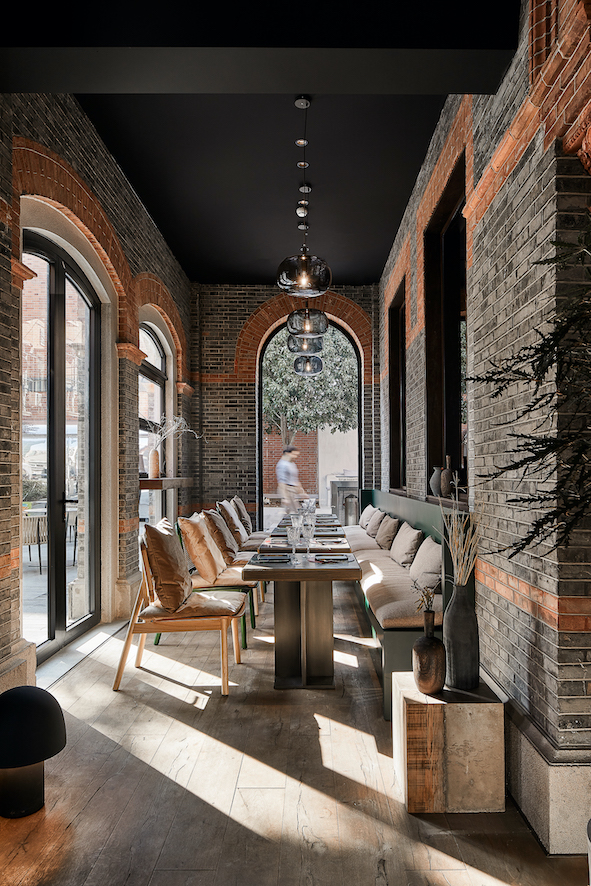
Consequently, the first hall implements wood flooring and preserves the untouched original walls of the building, while the main hall is converted to total black. At the end of the space follows the third hall, which once again shows some of the original brick wall and is finished with white-grey plastered walls. A glass box with ashes adorns this space as well. In the orthogonal direction, one can observe the temperature axis, spanning from the kitchen to the fireplace and projected on the ground through reddish tiles.

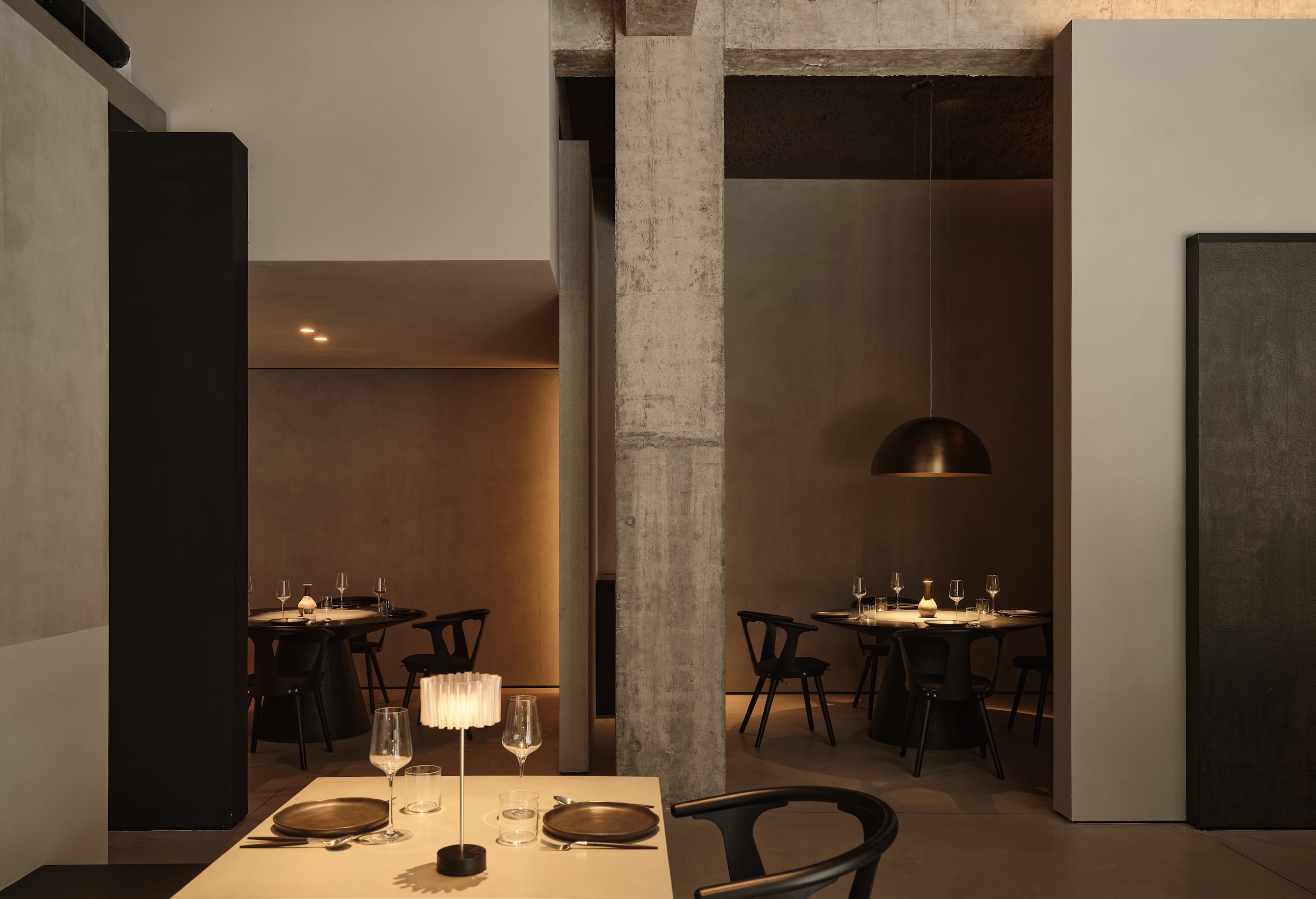
In line with the concept, each dining hall obtains its own particular ambience from partially custom-made furniture, lighting and installation. The wood hall opens towards the main plaza of Fengsheng Li, where sunlight shines through the trees onto the brick walls. In the center of CHARCOHOL is the main black hall, the most intimate and cozy area in the whole space. The rough texture of the black walls and floors reflects light differently throughout the day, creating a changing ambience. At the cross of the time and the temperature axes, above the bar, a giant installation of fanned palm leaves arranged by STUDIO8 hangs underneath the reflective stainless steel dome, celebrating the banquet of food and drink. Along the time axis in the ash area, another installation made of banana leaves and eucalyptus seeds hangs like a bouquet chandelier, representing renewal from ash.

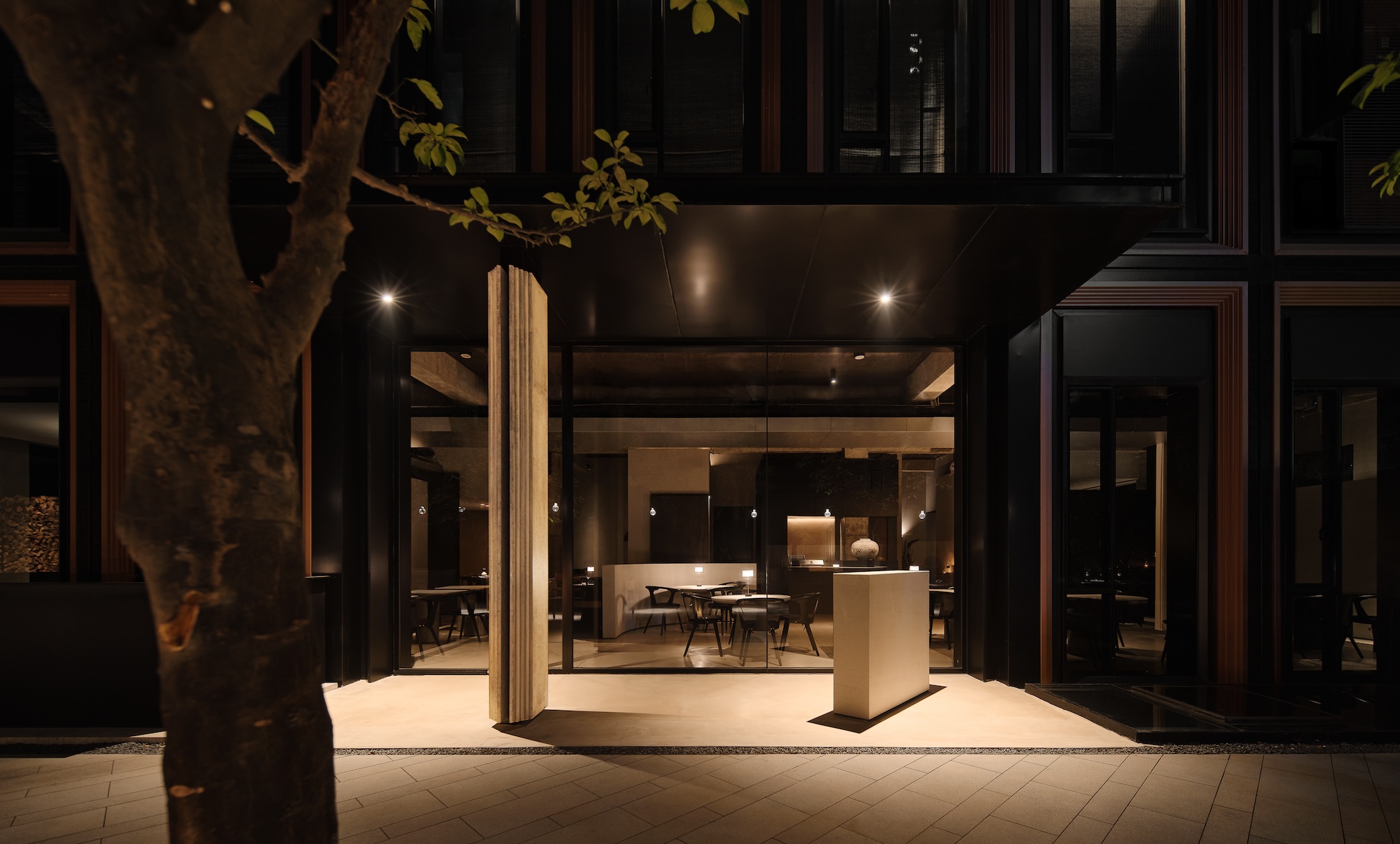
Considering that the restaurant occupies a historic house in the center of Shanghai, the renovation demands a respectful attitude towards the architectural heritage. Therefore, special details were developed to connect the new facade elements and the old structure. The newly added steel and glass structure is completely detached from the original building, and a system of special wall washer lighting highlights the beauty of the architecture, giving it the quality of a museum.

CHARCOHOL also has an outdoor seating area, which carries on the design of the ash area and is an extension of the temperature axis. The main feature here is the glass room, where guests can enjoy freshly baked food from the nearby brick stove. The garden also has a mix of aromatic flowers and herbs, some of which are used in the kitchen.
当时间与温度交织于空间
—CHARCOHOL巧客餐厅与鸡尾酒吧设计

CHARCOHOL位于上海市静安区丰盛里的一栋老建筑中,是一家重点打造特色炭烤美食和手工创意鸡尾酒的鸡尾酒餐吧。八荒设计负责了CHARCOHOL从品牌视觉识别系统和建筑改造,到室内、景观及软装的整体设计。

在世界各地的高端餐饮界,美食的创造总是从一个鲜明的概念开始,通过对食材的精心挑选、对烹饪方式的巧妙设计、对火候的精准把握,以及呈现细节的完美拿捏,最后形成一种独一无二的美食体验。这一点,餐饮和设计,不乏相似之处。在八荒设计的所承接的所有餐饮空间项目中,他们总是受到主厨烹饪理念的启发,把美食的概念作为空间设计的灵感。这一次,当主厨料理小熊找到Shirley和Andrea的时候,小熊告诉他们自己的灵感来自于森林和火。他说:“简单优质的食材在对的时间和温度的作用下,就能成为最精彩的美食。”这也是为什么Shirley和Andrea提出将餐厅命名为CHARCOHOL。“CHAR”来自于碳CHARCOAL、“COHOL”来自于酒精ALCOHOL,CHARCOHOL意味碳和酒精的结合。这也是餐吧logo的设计概念——一段盛着酒精的碳。

理解了主厨的烹饪概念后,八荒提炼了两个重要元素作为空间设计的概念:时间与温度。整个空间由南向北,从玄关、玄廊,至主厅、后室,顺着木炭燃烧的“时间轴”展开。在空间的中心位置与东西方向的“温度(火)轴”交叉。

由南至北,穿过主入口玄关,玄关以后的餐吧空间被分为三个区域,以时间轴为逻辑,描述从“木”燃烧至“碳”,最后变为“灰烬”的过程。木-碳-灰烬的概念在主入口玄关浓缩体现为一根从天花悬落至半空的木桩,从天花起,由木逐渐燃烧至木炭,直至地面火山岩制成的黑色“碳”底座,作为迎客台。

绕过迎客图腾来到第一个餐吧空间-玄廊,木地板和穿插的绿色家具代表了“木”的森林概念,八荒设计保留了原建筑门廊立面的砖墙。然后来到主厅,这里是“木”燃烧至“碳”的空间,因此所有地面和墙面都转变成炭黑色。穿过主厅来到后室,“灰烬”的空间为灰白色,透过靠近尽头的墙边的灰,再次隐约可见原建筑砖墙。餐吧中间的由西至东,温度轴连接厨房、吧台,由代表火的红色地砖连接餐饮空间西墙的壁炉。

为了加强每一个用餐区域的概念,八荒利用灯光、道具和装置,精心打造每个区域的氛围。“木”玄廊面对丰盛里广场,阳关透过植物,洒在原建筑砖墙上,树影婆娑。“碳”主厅的墙面和地面虽是黑色,但都有随着光影变化的粗糙肌理。在吧台正中时间轴与温度轴交叉的位置,八荒设计亲手制作了预示着餐饮盛宴的大型蒲葵装置,再由天花的镜面穹顶反射延伸,仿佛悬挂于天空。与之呼应的“灰烬”后室中心的小镜面穹顶下则悬挂了预示重生的芭蕉叶和尤加利果装置。

考虑到CHARCOHOL项目所在建筑的历史性,八荒希望最大程度地尊重和保留原建筑。在将原半室外的玄关及门廊空间改为室内用餐空间的改造过程中,为了避免破坏原建筑立面的装饰,八荒设计了与整个建筑立面完全分离的独立钢结构、玻璃系统,非但没有触碰原建筑立面,还从门廊内侧通过巧妙的灯光点缀,向博物馆一样着重勾勒突出了建筑的美。

八荒设计还设计了CHARCOHOL的室外花园,作为“温度轴”的延伸,延续“灰”后室的材质。花园的中心是一个烧烤私宴功能的玻璃耐候钢板的阳光房。阳光房的花园里种有各种烹饪用的香草及花果,人们可以在这里享受阳光、咖啡,和休闲炭烤等美味。

BEFORE AND AFTER 改造前和改造后

CHARCOHOL RESTAURANT 巧客餐厅酒吧

06-charcoal main hall 02_bar